Plot Explained Spoilers guaranteed!
Plot Explained

Browse by genre

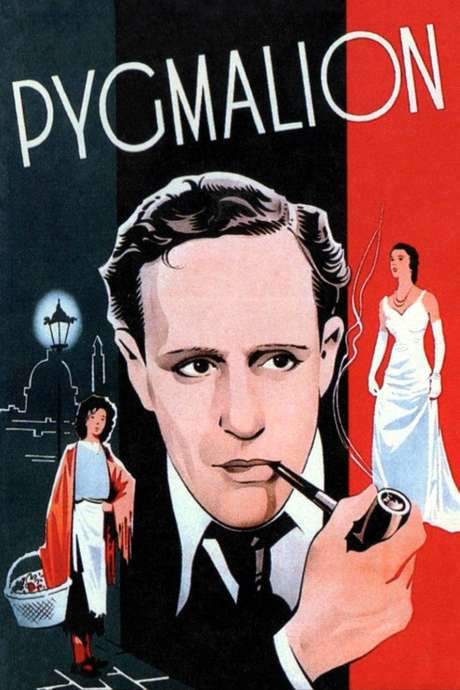
Pygmalion (1938) movie poster

Timeline

Pygmalion (1938) Timeline Explained – Every Event in Order

Release, runtime and language
1938 · 96 mins · English
Loading streaming availability…
Directed by
Anthony Asquith
Starring
Ivor Barnard, Everley Gregg, Leslie Howard, Cathleen Nesbitt, Wendy Hiller, Anthony Quayle

Professor Henry Higgins boasts he can turn Cockney flower girl Eliza Doolittle into a lady in six months, prompting Colonel Pickering to fund the wager through an agreement with her dustman father. Eliza moves into Higgins’s home for rigorous speech training, while other characters also undergo their own transformations.

On this page (7)
  1. 1 Where to watch
  2. 2 Events in order (10)
  3. 3 Timeline questions answered
  4. 4 The book behind the movie
  5. 5 Movie threads
  6. 6 Movies like Pygmalion
  7. 7 Every angle
Loading streaming availability…

10 events in order · contains spoilers

Pygmalion Timeline: Events in Chronological Order

Every key event of Pygmalion (1938) in order, scene by scene, with when and where it takes place. Use it to untangle flashbacks, time jumps and parallel storylines, to refresh your memory before the sequel or to find the exact scene you are thinking of.

  1. Covent Garden incident sparks Higgins and Pickering

    While transcribing conversations of passers-by one evening, Higgins is mistaken for a policeman, triggering protests from Eliza Doolittle and bystanders. Colonel Pickering, a fellow linguist from India, arrives to meet him. Higgins flatly asserts that with his method he could teach Eliza to speak so well that she might pass as a duchess.

    When
    Evening
    Where
    Covent Garden, London
  2. Eliza seeks elocution lessons; a wager is placed

    Eliza arrives at Higgins' house the next morning to request elocution lessons. Colonel Pickering offers to pay all expenses if Higgins can fulfill his boast. Higgins outlines his plan to transform Eliza's speech, setting up the challenge. Eliza's father, Alfred Doolittle, then arrives to demand compensation for the loss of his daughter; Higgins offers him £10, but Doolittle insists on only £5, arguing his status as part of the 'undeserving poor'.

    When
    Morning
    Where
    Higgins' house, London
  3. Eliza bathed; Doolittle presses for payment

    Eliza is taken upstairs to be bathed by Mrs Pearce, while Alfred Doolittle remains downstairs, pressing for compensation. Higgins teases the moment with a grudging offer and explains how the lessons will shift Eliza's place in society. The contrast between Higgins's experimental approach and Doolittle's roguish pragmatism underscores the social stakes of Eliza's transformation.

    When
    Late morning
    Where
    Higgins' house, London
  4. Eliza's 'internship' at Mrs Higgins' gathering

    Eliza attends an at-home gathering hosted by Mrs Higgins and speaks with a refined accent, yet she punctuates her conversation with slang and profanity. Freddy Eynsford-Hill, a young admirer, is drawn to her despite the social faux pas. Mrs Higgins expresses disgust that Eliza's guardians treat her like a plaything rather than a person.

    When
    Evening
    Where
    Mrs Higgins' home, London
  5. Weeks of coaching lead to an embassy reception

    Over several weeks, Eliza undergoes rigorous coaching as Higgins and Pickering escort her to an embassy reception. Higgins fears that the Hungarian Count Aristid Karpathy, famed for identifying origins of high society by speech, will expose Eliza. To everyone's relief, Eliza deceives Karpathy and is mistaken for a Hungarian heiress rather than a native speaker.

    When
    Evening
    Where
    Embassy, London
  6. Return from the reception; Eliza's neglected contribution

    On the return from the embassy, Higgins and Pickering congratulate themselves on their 'success' while neglecting Eliza's contribution and feelings. Eliza quarrels with Higgins, throws his slippers at him in anger, and declares she has become unsuited to her former life. She leaves to take refuge with Mrs Higgins.

    When
    Night
    Where
    Higgins' house, London
  7. Morning revelations: Doolittle's bequest

    The following morning Higgins visits his mother and learns that Eliza remains with her. Alfred Doolittle arrives to complain about how Higgins has disrupted his life. He reveals that a bequest from an American millionaire has forced him into the role of a respectable moralist, and plans to marry his unwed partner with Eliza, Pickering, and Mrs Higgins's support.

    When
    Morning
    Where
    Higgins' house, London
  8. Doolittle's London church wedding

    With the bequest looming, Doolittle prepares for a fashionable London church wedding to his unwed partner. He pleads for the support of Eliza, Pickering, and Mrs Higgins to see him through the ceremony. The group contemplates the social implications of reputation and respectability.

    When
    Afternoon
    Where
    London church, London
  9. Eliza asserts independence; chooses Freddy

    Meanwhile, Eliza rejects Higgins's insistence that she return home and asserts she wants independence. She explains she would prefer to marry Freddy, who is charming but has no income, highlighting the tension between romance and economic security.

    When
    Before the wedding
    Where
    Higgins' home, London
  10. The recording and the uncertain future

    After the group departs for the wedding, Higgins returns to his study and accidentally plays a recording of Eliza's first visit. He is stunned by hearing the real Eliza, who mockingly quotes her former self. She then appears at his door, asks for her slippers, and their future relationship is left purposefully unresolved.

    When
    Night
    Where
    Higgins' study, London

Last updated: October 09, 2025 at 10:47

Was this helpful?

Timeline questions answered

Pygmalion Timeline Explained: Your Questions Answered

When does it happen, and why in that order? The questions people ask about the chronology of Pygmalion (1938): time jumps, flashbacks, cause and effect between scenes and the correct order of events, each answered with spoilers.

Q1

Why does Higgins claim he could pass Eliza off as a duchess?

Higgins believes that accent and speech determine social class more than birth or wealth. He argues that with his phonetic expertise, he can teach Eliza to speak with such refinement that she could deceive even experts like Count Karpathy. The bet with Pickering is less about money and more about proving his linguistic theory, that a person's speech is the primary marker of their place in society.

Foreshadowing: Earlier in Covent Garden, Higgins demonstrates his ability to identify a person's origins by listening to their dialect, showing his confidence in this method.

  • Higgins bet
  • duchess
  • Pickering wager
  • language theory
  • social class
Q2

Why does Eliza become resentful after the embassy reception?

Although Eliza successfully passes as a Hungarian heiress and earns Karpathy's praise, Higgins and Pickering celebrate their method's success without acknowledging her hard work and emotional investment. They treat her transformation as a victory for their experiment rather than recognizing her as a person who risked everything. This neglect of her feelings is what prompts her to leave.

Foreshadowing: Mrs Higgins earlier warns that the men treat Eliza like a project or toy rather than a person with genuine feelings.

  • Eliza resentment
  • embassy reception
  • Higgins neglect
  • emotional investment
  • transformation cost
Q3

Why does Eliza throw slippers at Higgins?

The slippers symbolize Eliza's role as a servant in Higgins' household. By throwing them at him, she rejects being treated as his personal attendant and objects to his assumption that she will simply return to serving him after the embassy triumph. The act represents her assertion of independence and refusal to be taken for granted.

Foreshadowing: This moment echoes earlier scenes where Higgins expects Eliza to fetch his things without gratitude.

  • Eliza slippers
  • independence rejection
  • servant role
  • household dynamics
  • defiance
Q4

Why does Alfred Doolittle suddenly become respectable?

An American millionaire leaves Doolittle a bequest, which forces him to adopt the role of a respectable moralist to claim the money. This ironic twist means his natural roguish charm, which made him refuse even simple charity, now obliges him to marry his longtime partner in a proper church wedding. The bequest traps him in the very respectable society he once mocked.

Foreshadowing: Earlier, Doolittle proudly declares himself part of the undeserving poor who only want enough for drink, rejecting middle-class morality.

  • Alfred Doolittle bequest
  • American millionaire
  • respectable role
  • morality twist
  • social mobility
Q5

Why does Eliza say she would rather marry Freddy?

Eliza chooses Freddy despite his lack of income because he treats her as a romantic interest rather than an experiment. Freddy is charmed by her genuinely, while Higgins views her primarily as a linguistic project. Eliza values being seen as a woman rather than a subject, even if Freddy cannot provide financial security. This choice highlights her desire for genuine connection over material comfort.

Foreshadowing: Freddy's fascination with Eliza begins at Mrs Higgins' gathering, where he's drawn to her despite her social faux pas.

  • Eliza Freddy marriage
  • romance vs experiment
  • genuine connection
  • financial security
  • personal worth
Q6

Why doesn't Karpathy expose Eliza at the embassy?

Karpathy, famed for detecting social origins through speech, is so impressed by Eliza's flawless delivery that he believes she must be a Hungarian princess or heiress. Her mastery of the upper-class accent exceeds his expectations, leading him to assume high birth rather than suspecting a Cockney flower girl. His error validates Higgins' method but also highlights how speech alone can manipulate social perception.

Foreshadowing: Higgins specifically worries about Karpathy's ability to expose Eliza, making his failure to do so a major triumph.

  • Karpathy embassy
  • expose Eliza
  • Hungarian heiress
  • speech deception
  • social perception
Q7

What does Mrs Higgins mean by treating Eliza like a toy?

Mrs Higgins observes that both Higgins and Pickering view Eliza as an interesting project rather than a person with her own aspirations and feelings. They discuss her future and manipulate her circumstances without consulting her wishes. This objectification concerns Mrs Higgins, who warns that the experiment disregards Eliza's emotional needs and personal agency.

Foreshadowing: This concern foreshadows Eliza's later rebellion against being treated as an experiment.

  • Mrs Higgins toy
  • Eliza treatment
  • project not person
  • emotional needs
  • personal agency
Q8

What is the significance of the recording at the end?

Higgins accidentally plays his recorded proof of Eliza's original Cockney speech, which contrasts sharply with her transformed voice. Hearing her raw, unpolished self confronts Higgins with the magnitude of her transformation, and perhaps makes him realize he values the person behind the experiment. When Eliza appears mocking her former self, she asserts that she has grown beyond his control while maintaining a connection to him.

Foreshadowing: The recording device was used earlier to analyze Eliza's speech patterns during training.

  • recording ending
  • original voice
  • transformation proof
  • Eliza growth
  • Higgins realization
Q9

Why does Eliza insist on independence rather than returning to Higgins?

Eliza argues that after her transformation, she can no longer return to her former life selling flowers, yet she has no established place in society. She threatens to open her own elocution lessons to earn a living, asserting she can use what Higgins taught her for her own benefit. This demand for independence reflects her growth from a passive subject into an autonomous person.

Foreshadowing: After the embassy, Higgins naively assumes Eliza will simply resume her previous role in his household.

  • Eliza independence
  • elocution lessons
  • autonomy
  • social place
  • transformation consequence
Q10

Does Eliza return to Higgins at the end?

The ending deliberately leaves their relationship unresolved. When Eliza appears at Higgins' study door asking for her slippers, it could mean she's returning to him as an equal partner or simply claiming her belongings before leaving for good. The film suggests potential for a genuine partnership based on mutual respect, but Eliza's assertiveness and Higgins' pride make their future uncertain.

Foreshadowing: Earlier conflicts established the tension between Higgins' need for control and Eliza's growing independence.

  • ambiguous ending
  • Eliza Higgins relationship
  • future together
  • partnership possibility
  • unresolved ending
Q11

Why does Pickering agree to fund Higgins' experiment?

Pickering, a fellow linguist, is intrigued by Higgins' bold claim that he could transform Eliza into a duchess. As a man of means but also genuine intellectual curiosity, Pickering offers to cover all expenses for the training, room, board, clothing, and social opportunities, in exchange for witnessing whether Higgins' method actually works. The wager satisfies both his scientific interest and his social conscience.

Foreshadowing: Pickering traveled from India specifically to meet Higgins, indicating his deep respect for Higgins' linguistic work.

  • Pickering funding
  • wager expenses
  • linguist interest
  • experiment cost
  • social conscience

Movie threads

More Movies Like Pygmalion, by Mood & Story

Curated lists built around what makes Pygmalion tick: the same mood, the same kind of story or the same emotional payoff. Each list explains why these movies belong together.

Movies with transformative mentorships like Pygmalion

Stories where a mentor reshapes an underdog to challenge the rigid class system. If you enjoyed the dynamic between Eliza Doolittle and Professor Higgins in Pygmalion, this collection features movies with similar stories of transformative mentorships. Discover other films where unconventional teachers guide underdogs, leading to personal triumphs and complex questions about identity, class, and independence.

  • witty
  • societal observation
  • character-driven
  • bittersweet
  • sophisticated
  • mentorship
  • Tone: bittersweet, witty, reflective
  • Pacing: steady, character-driven
Why these movies?

The story pattern: The narrative follows a clear 'experiment' structure: a mentor proposes a wager or project to prove a point, the protégé undergoes rigorous training, and a public test of their new identity serves as the climax. The central conflict then shifts from the external challenge to the internal power struggle between mentor and student, exploring themes of agency, gratitude, and resentment.

Why they belong together: These films are grouped together because they share a focus on the intense, often fraught relationship of a mentorship that seeks to remake a person. They blend witty, intelligent dialogue with a serious examination of social mobility, resulting in a tone that is both sophisticated and bittersweet, celebrating success while questioning its personal cost.

Witty social satire movies similar to Pygmalion

Sharp, sophisticated comedies that use humor to dissect class and manners. For viewers who loved the sharp societal critique and elegant humor of Pygmalion, this section highlights similar witty social satires. Find other sophisticated comedies and dramas that use clever dialogue and character dynamics to explore themes of class, society, and transformation with a reflective, bittersweet edge.

  • witty
  • reflective
  • societal observation
  • sophisticated
  • bittersweet
  • character-driven
  • Tone: witty, bittersweet, sophisticated
  • Pacing: steady, dialogue-focused
Why these movies?

The story pattern: The plot is often a premise—a wager, a scheme, or an unexpected guest—that disrupts a microcosm of society, allowing the characters' true natures and the flaws of the system to be revealed through sparkling dialogue. The narrative journey is less about action and more about the gradual exposure of hypocrisy and the subtle shifts in power and understanding between characters.

Why they belong together: These movies are united by their sophisticated tone and primary focus on language as a tool of both power and comedy. They share a steady pacing that allows for character development and thematic exploration, creating a cohesive vibe that is intellectually engaging, reflective, and delightfully sharp-tongued.

If you liked this

Movies Like Pygmalion

Similar movies to Pygmalion: the same genre, themes or kind of story. Each one comes with its own plot summary, timeline and ending explained.

Browse all movie summaries

Every angle

Pygmalion (1938) Explained: Plot, Timeline & Characters

Everything about Pygmalion in one place: what happens in the plot summary, the timeline in chronological order, the characters and meaning and a spoiler-free summary. What's After the Movie adds the cast, box office and post-credit scenes.

Coming soon on iOS and Android

The Plot Explained Movie Summary App

Plot summaries, endings explained and timelines on your phone. Catch up on any movie in minutes, save your favorites and never miss a twist again.

Be the first to know when we launch. Your email stays private, always.

Learn more about the app