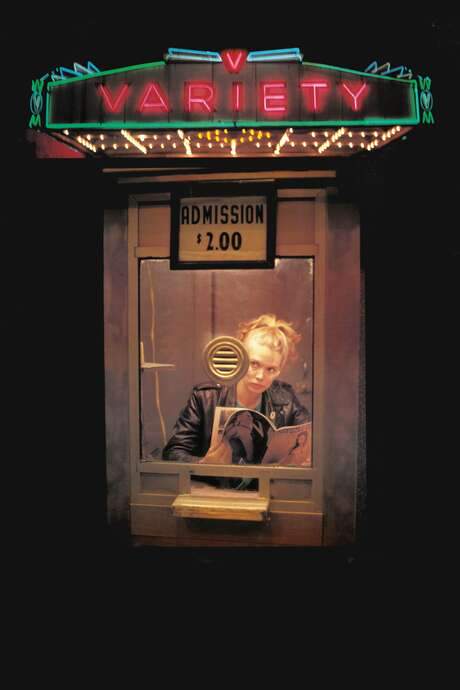
Year: 2002
Runtime: 18 mins
Language: English
Director: Joachim Trier
Charles Procter, a businessman, rushes home after spilling coffee on his trousers. In his building’s underground garage he finds a car burning with a dead man inside and discovers video footage of the victim shaving before dousing himself and the car with petrol, igniting it. Obsessed, Procter investigates bizarre motive behind self‑immolation.
Warning: spoilers below!
Haven’t seen Procter yet? This summary contains major spoilers. Bookmark the page, watch the movie, and come back for the full breakdown. If you're ready, scroll on and relive the story!
Read the complete plot breakdown of Procter (2002), including all key story events, major twists, and the ending explained in detail. Discover what really happened, and what it all means.
Charles Procter shaves and heads to work, but a spills coffee sends him back home to change. In the garage, he discovers a car on fire with a dead man inside, and nearby a video camera on a tripod. He grabs the camera and brings it home. The footage inside shows a man going through his morning routine, briefly meets Girl with a dog, then pours petrol on the car and himself, steps into the car, and lights himself on fire. The image is stark and unsettling, and the act unfolds with cold precision, inviting questions about who is behind the camera and why it exists.
Procter replays the video multiple times, trying to make sense of what he has found and what it might mean for him. When the police arrive to question him about the incident, they learn that the dead man had lived a few floors above him, and his name is Paul Ferguson. Despite the arresting questions, Procter does not reveal the video or its contents to the officers, choosing to keep his discovery to himself as the investigation unfolds.
Motivated by a growing need to understand the video, Procter goes to the park in search of the girl from the footage. He eventually spots her as she walks by and deduces where she lives. He rings her door and identifies himself as someone from the police, attempting to make a connection or extract information. The girl does not know the man in the video; she has the dog that the man had asked her to look after, and she explains that she never returned the dog as requested.
As the days go by, Procter cannot stop watching the video, each replay tightening the mystery around the burning car, the dead man, and the woman with the dog. He leaves his home again, engaging with the world only through the lens of this enigmatic recording. The closing images show the video freezing at a moment where Procter is looking directly into the camera, a still that lingers as if asking a question without offering an answer. The film maintains a cool, restrained tone throughout, inviting the viewer to piece together connections from Procter’s observations and the unsettling secrets the video seems to hold.
Last updated: February 20, 2026 at 18:44
Explore frequently asked questions about Procter (2002) with spoiler-rich answers covering the full plot summary, major story beats, character motivations, hidden details, and ending meaning. This movie summary FAQ helps explain confusing scenes, plot twists, and narrative decisions in clear, searchable detail.
Procter chooses not to reveal the video to the police because he becomes fixated on understanding the mystery himself. Rather than turning over the footage as evidence, he privately investigates the details shown in the recording. His decision to withhold evidence also raises moral questions about his own judgment and priorities as he becomes consumed by the case.
The video shows Paul Ferguson going through his morning routine before dousing himself and the car with petrol, suggesting the recording was deliberately planned rather than impulsive. The presence of the camera on a tripod indicates he wanted to document the act itself, though the film never reveals his specific motivation for doing so. This calculated approach raises questions about whether he wanted to leave a statement, create a message, or simply have his final act witnessed.
The girl appears briefly in the video during Paul's morning encounter, where he asks her to look after his dog. When Procter tracks her down, she reveals she never returned the dog as Paul had requested. The dog becomes a tangible link between Paul and the outside world, suggesting he had planned to leave something behind after his death. Her existence proves Paul's final morning had ordinary interactions right before his self-immolation.
Procter's obsession stems from the video's unsettling connection to his own life, he discovered it in his building's garage, and the man's routine mirrors his own morning. The footage seems to speak directly to him, blurring the line between observer and observed. His repeated viewings suggest he is searching for meaning or a hidden message that might explain why this happened in his building.
The final freeze-frame shows Procter himself looking directly into the camera, creating an unsettling mirror effect. This suggests the video may have been watching Procter back, or that he has become indistinguishable from Paul Ferguson in his obsession. The ambiguous ending leaves unresolved whether the camera was set up as a trap, a message, or simply a coincidence that mirrors his own fixation.
The girl tells Procter she does not know Paul Ferguson despite having interacted with him that morning. Their encounter was brief and transactional, he asked her to watch his dog, not to learn about his life. This disconnect highlights how ordinary Paul's final morning appeared to others, masking his imminent plan. Her ignorance underscores that Paul's suicide was known only to himself.
The video disturbs Procter partly because Paul's morning routine mirrors his own, shaving, leaving for work, encountering the same woman in the building. Finding the suicide in his garage makes the mystery personally invasive. The footage forces him to question whether this was random or somehow related to him, feeding his obsessive need to understand the connection.
The police question Procter because he was the one who discovered the burning car in his building's garage. They inform him that the victim lived a few floors above him, making Procter a natural witness. However, Procter lies by omission, never mentioning the video camera he took from the scene, which keeps the key evidence hidden from the investigation.
Procter lies about his identity to gain the girl's trust and extract information about Paul Ferguson. By presenting himself as a police officer, he hopes she will be more cooperative and reveal details about her encounter with the man. This deception shows how far Procter is willing to go in his investigation, crossing ethical lines to satisfy his curiosity.
The film never reveals Paul's explicit motive, leaving his reasons ambiguous. The video shows no signs of distress during his routine, only cold, methodical preparation. Possible motivations could include personal despair, a statement about modern isolation, or something entirely unknowable. His deliberate recording suggests he wanted his act to mean something, even if that meaning remains elusive.
Discover curated groups of movies connected by mood, themes, and story style. Browse collections built around emotion, atmosphere, and narrative focus to easily find films that match what you feel like watching right now.
When a character's life is disrupted by a stranger's inexplicable act.Explore films similar to Procter, where a character's life is consumed by an investigation into a stranger's bizarre and unsettling actions. If you liked the methodical and tense descent into obsession, these movies offer a similarly compelling and psychologically complex experience.
These stories typically begin with a catalyst—a strange event or discovery—that hooks the protagonist. The plot unfolds as a procedural investigation, but the focus is internal, charting the investigator's growing fixation, often at the cost of their own stability and normal life. The mystery is often left partially unresolved, emphasizing the psychological impact over a tidy solution.
Movies are grouped here based on their shared core of a character-driven, obsessive investigation into a disturbing mystery. They share a tense, methodical mood, a slow-burn pacing that builds unease, and a focus on the psychological unraveling of the protagonist rather than action-oriented thrills.
Stories told with a detached, analytical gaze on dark human behavior.Discover movies like Procter that use a detached, methodical style to explore dark psychological themes. If you appreciated the film's cold tension and intellectual approach to a grim mystery, these selections share a similar vibe of unsettling stories told with clinical precision.
The narratives in these films are often linear investigations or character studies, but the emotional core is muted by a stylistically cold presentation. The focus is on the 'how' and 'why' of a disturbing event, analyzed with a methodical pace that amplifies the underlying tension and moral ambiguity without resorting to graphic sensationalism.
These movies are united by their specific tone and mood: a tense, cold, and detached atmosphere that presents psychologically heavy material in a restrained, almost analytical way. They prioritize a slow-building, intellectual unease over emotional manipulation or high-intensity action.
Don't stop at just watching - explore Procter in full detail. From the complete plot summary and scene-by-scene timeline to character breakdowns, thematic analysis, and a deep dive into the ending - every page helps you truly understand what Procter is all about. Plus, discover what's next after the movie.
Track the full timeline of Procter with every major event arranged chronologically. Perfect for decoding non-linear storytelling, flashbacks, or parallel narratives with a clear scene-by-scene breakdown.
Discover the characters, locations, and core themes that shape Procter. Get insights into symbolic elements, setting significance, and deeper narrative meaning - ideal for thematic analysis and movie breakdowns.