Plot Explained Spoilers guaranteed!
Plot Explained

Browse by genre

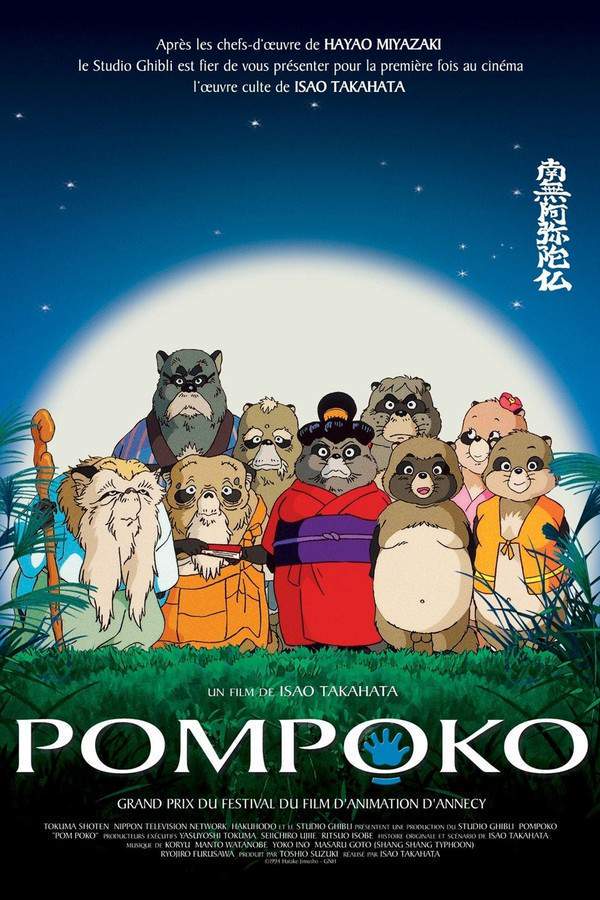
Pom Poko (1995) movie poster

Characters & Themes

Pom Poko (1995) Characters, Setting & Themes Explained

Release, runtime and language
1995 · 119 min · Japanese
Loading streaming availability…
Directed by
Isao Takahata
Starring
Yuriko Ishida, Bunshi Katsura Vi, Beichô Katsura, Gannosuke Ashiya, Makoto Nonomura, Nijiko Kiyokawa

Driven by a deep connection to their forest home, a lively group of raccoons use their shape-shifting abilities to playfully disrupt and challenge the plans of developers who threaten to destroy their habitat. They employ clever disguises and mischievous tactics in an attempt to protect the natural world they cherish.

On this page (7)
  1. 1 Where to watch
  2. 2 Characters explained (4)
  3. 3 Where & when it takes place
  4. 4 Themes & meaning (3)
  5. 5 Character & meaning questions
  6. 6 Movie threads
  7. 7 Every angle
Loading streaming availability…

4 main characters · contains spoilers

Pom Poko Characters Explained: Who Is Who

The main characters of Pom Poko (1995), heroes and villains: what drives them, how they change over the course of the story and what each of them reveals about the film's bigger ideas.

  • Oroku

    played by Yuriko Ishida

    Oroku serves as the wise matriarch of the tanuki, guiding them through their struggles and advocating for unity. Her wisdom is pivotal in motivating the group to resist encroachment on their home. Despite the challenges, she embodies resilience and a deep connection to their ancestral traditions.

    • 👵 Wisdom
    • 🦝 Leadership
    • 🌟 Guidance
  • Gonta

    played by Gannosuke Ashiya

    Gonta emerges as the fierce chief of the tanuki, embodying bravery and a fighting spirit. As a leader, he adopts radical tactics to confront the threats posed by human development. His desperation grows as he realizes the futility of their struggle, ultimately leading to a tragic sacrifice.

    • 🦊 Courage
    • 🚀 Activism
    • ⚔️ Sacrifice
  • Shoukichi

    played by Beichô Katsura

    Shoukichi is portrayed as a resourceful and curious young tanuki who transitions between the human realm and his original form. His journey illustrates the duality of existence in an urban environment and the longing for belonging among his kind. His eventual return signals hope for reconnection with lost heritage.

    • 👶 Curiosity
    • 🌍 Duality
    • 🤗 Belonging
  • Seizaemon

    played by Shigeru Izumiya

    Seizaemon, the wise elder, represents the traditional values of the tanuki society. His experience provides insight into the historical connection between the tanuki and their environment, highlighting the importance of keeping their culture alive in times of crisis.

    • 👴 Tradition
    • 📜 History
    • 🌲 Culture

Last updated: October 22, 2024 at 21:22

Was this helpful?

Setting

Where and When Does Pom Poko Take Place?

The setting of Pom Poko (1995): the year and time period, the places and locations, and how they shape the characters, the mood and the tension of the story.

Time period

1960s - early 1990s

The film is set against the backdrop of the late 1960s through the early 1990s, a period marked by rapid suburban expansion in Japan. This era saw significant societal changes, with nature increasingly at odds with urban development. The Heisei era, beginning in 1989, is particularly relevant as it highlights evolving attitudes towards the environment and traditional values.

Location

Tama Hills, Tokyo, Shikoku

The story unfolds primarily in the Tama Hills, a picturesque region on the outskirts of Tokyo, symbolizing a blend of nature and suburban life. This area is known for its rich biodiversity but faces threats from urbanization. Shikoku, another integral setting, represents a harmonious coexistence with the tanuki, emphasizing a stark contrast to the encroaching development.

  • 🏞️ Nature
  • 🌐 Urban Development

Last updated: October 22, 2024 at 21:22

Was this helpful?

3 major themes

Pom Poko Meaning: Themes & Message Explained

What is Pom Poko (1995) really about? The emotional, social and philosophical themes the film keeps returning to, its symbolism and the message beneath the surface.

  • Environmentalism

    Environmentalism is a central theme, as the tanuki fight to protect their home from destructive development. Their struggle reflects the broader discourse on nature conservation and urban sprawl. The film urges audiences to consider the impact of human activities on wildlife and their habitats.

  • Unity and Cooperation

    The necessity of unity and cooperation among the tanuki underscores the importance of collective action in the face of adversity. Their collaboration symbolizes the potential of diverse groups coming together for a common cause, reflecting societal calls for community involvement in environmental issues.

  • Loss and Nostalgia

    Loss and nostalgia permeate the narrative, as the tanuki reminisce about their once-thriving habitat now threatened by urbanization. This theme captures the emotional toll of environmental degradation and the bittersweet longing for a past that can no longer exist in the face of progress.

Last updated: October 22, 2024 at 21:22

Was this helpful?

Character & theme questions

Pom Poko Characters & Meaning: Your Questions Answered

The questions people ask about Pom Poko (1995): who the characters really are, their relationships, what the symbols mean, where it takes place and what the movie is really about. Each answer contains spoilers.

Q1

Where does the story take place?

The narrative unfolds primarily in the Tama Hills, a region on the outskirts of Tokyo. This setting in Pom Poko symbolizes the blend of nature and suburban life, highlighting the conflict between biodiversity and urbanization.

  • tama hills
  • tokyo
  • setting
  • location
  • nature
  • urban
Q2

What time period is the movie set in?

The film is set from the late 1960s through the early 1990s, covering a period of rapid suburban expansion in Japan. This era in Pom Poko reflects significant societal changes where nature increasingly clashed with urban development.

  • 1960s
  • 1990s
  • era
  • time
  • japan
  • expansion
Q3

What is the main theme of the movie?

Environmentalism is the central theme, as the tanuki fight to protect their home from destructive development. Pom Poko urges audiences to consider the impact of human activities on wildlife and their natural habitats.

  • environmentalism
  • nature
  • conservation
  • habitat
  • protection
  • theme
Q4

Who is the leader of the tanuki group?

Gonta emerges as the fierce chief of the tanuki, embodying bravery and a fighting spirit. In Pom Poko, he adopts radical tactics to confront the threats posed by human development, driven by desperation.

  • gonta
  • leader
  • chief
  • tanuki
  • bravery
  • tactics
Q5

What role does Oroku play in the community?

Oroku serves as the wise matriarch of the tanuki, guiding them through their struggles and advocating for unity. Her wisdom in Pom Poko is pivotal in motivating the group to resist encroachment on their home.

  • oroku
  • matriarch
  • wisdom
  • unity
  • guidance
  • tanuki
Q6

What message does the film convey about unity?

The necessity of unity and cooperation among the tanuki underscores the importance of collective action in the face of adversity. Pom Poko reflects societal calls for community involvement in environmental issues through this collaboration.

  • unity
  • cooperation
  • collective
  • action
  • community
  • message
Q7

What is the significance of Shikoku in the setting?

Shikoku represents a harmonious coexistence with the tanuki, emphasizing a stark contrast to the encroaching development. This location in Pom Poko highlights what is lost when nature is overtaken by urban sprawl.

  • shikoku
  • location
  • harmony
  • contrast
  • development
  • setting
Q8

Who is Shoukichi in the story?

Shoukichi is portrayed as a resourceful and curious young tanuki who transitions between the human realm and his original form. His journey in Pom Poko illustrates the duality of existence in an urban environment and the longing for belonging.

  • shoukichi
  • young
  • tanuki
  • human
  • realm
  • belonging
Q9

Why is there a sense of nostalgia in the story?

Loss and nostalgia permeate the narrative, as the tanuki reminisce about their once-thriving habitat now threatened by urbanization. Pom Poko captures the emotional toll of environmental degradation and the bittersweet longing for a past that can no longer exist.

  • nostalgia
  • loss
  • habitat
  • emotional
  • degradation
  • past
Q10

What does Seizaemon represent among the tanuki?

Seizaemon, the wise elder, represents the traditional values of the tanuki society. His experience in Pom Poko provides insight into the historical connection between the tanuki and their environment.

  • seizaemon
  • elder
  • tradition
  • values
  • history
  • connection
Q11

What is the overall tone of the movie?

The tone is dominantly bittersweet, weaving playful mischief with profound melancholy as victories are temporary. Pom Poko balances whimsical comedic elements against serious stakes of survival and loss.

  • tone
  • bittersweet
  • melancholy
  • whimsical
  • comedy
  • survival
Q12

How does the Heisei era relate to the story?

The Heisei era, beginning in 1989, is particularly relevant as it highlights evolving attitudes towards the environment and traditional values. This context in Pom Poko frames the societal changes during the period of rapid suburban expansion.

  • heisei
  • era
  • 1989
  • environment
  • values
  • society

Movie threads

More Movies Like Pom Poko, by Mood & Story

Curated lists built around what makes Pom Poko tick: the same mood, the same kind of story or the same emotional payoff. Each list explains why these movies belong together.

Folklore resistance movies like Pom Poko

Communities use ancient magic and trickery to fight the encroachment of progress. Explore movies like Pom Poko where communities use ancient magic and folklore to resist modern development. These films blend environmental themes with mythical elements, offering bittersweet tales of resistance, adaptation, and the poignant clash between tradition and progress.

  • mythical
  • urgent
  • melancholic
  • whimsical
  • reflective
  • hopeful
  • Tone: bittersweet, whimsical, melancholic
  • Pacing: steady, episodic
Why these movies?

The story pattern: These narratives follow a community as it rallies against an existential threat, using its unique cultural or magical strengths. The conflict often escalates from mischievous pranks to more serious confrontations, leading to a resolution that involves sacrifice, adaptation, or a bittersweet acknowledgment of change.

Why they belong together: Movies are grouped here by their shared focus on a collective struggle against modernization, the imaginative use of folklore as a narrative device, and a tone that balances whimsical antics with the serious, melancholic stakes of cultural and environmental loss.

Bittersweet animal allegories similar to Pom Poko

Animated animal stories with deep, bittersweet themes about community and survival. Find movies similar to Pom Poko that use animal characters to tell profound, bittersweet stories. These animated allegories explore environmentalism, community, and change with a mix of humor and heartbreak, perfect for viewers who appreciate depth in family-friendly animation.

  • bittersweet
  • playful
  • tragic
  • nostalgic
  • reflective
  • hopeful
  • Tone: bittersweet, playful, tragic
  • Pacing: steady
Why these movies?

The story pattern: The narrative follows an animal community facing a crisis that mirrors human society's challenges. The journey is character-driven, blending comedic moments born from the animals' nature with serious dramatic stakes. The ending is typically nuanced, offering neither a perfect victory nor utter defeat, but a realistic, bittersweet compromise.

Why they belong together: These films share a specific tone mix: they are accessible and often humorous yet ultimately serious in their thematic concerns. They use the animal perspective to create allegories that are both universal and deeply moving, resulting in a consistently bittersweet viewing experience.

Every angle

Pom Poko (1995) Explained: Plot, Timeline & Characters

Everything about Pom Poko in one place: what happens in the plot summary, the timeline in chronological order, the characters and meaning and a spoiler-free summary. What's After the Movie adds the cast, box office and post-credit scenes.

Coming soon on iOS and Android

The Plot Explained Movie Summary App

Plot summaries, endings explained and timelines on your phone. Catch up on any movie in minutes, save your favorites and never miss a twist again.

Be the first to know when we launch. Your email stays private, always.

Learn more about the app