In a quiet Tuscan village, a poor carpenter named Geppetto Mino Caprio carves a wooden puppet and names him Pinocchio Gabriele Caprio. Pinocchio darts through the streets, scattering weeds from one corner to the next, until he’s halted by the town’s two carabinieri. When he stubbornly refuses to go home, the carabinieri fear Geppetto might be harming the puppet and detain him, then release Pinocchio. Ignoring cautions from a talking cricket Carlo Valli that Pinocchio silences with a log, the young puppet trudges home and dreams of a freer life, only to wake up to the startling sight of feet that have burned away. Geppetto then fashions new feet, and Pinocchio vows to behave and start school, a pledge that will prove harder to keep than he thinks.
To pursue schooling, Geppetto sells his tunic so the abbey can be paid, while Pinocchio himself barters the book meant for class to catch a puppet-show performance. The show’s puppets come to life, igniting both wonder and trouble: Fire-Eater initially wants to burn him, then changes course and rewards him with gold coins after learning about Geppetto. The puppet is sent home, escorted by the Fox La Volpe and the Cat Maurizio Micheli, who hatch a scheme about the so‑called Fields of Miracles where coins sprout from money trees. Pinocchio, after a night at an inn, ignores the Cricket’s lingering warnings and wanders off, only to be chased by the Fox and Cat as they attempt to steal his money.
A Fairy with blue hair Lucrezia Marricchi takes pity on him and frees him with the help of her servants. With the Cricket still urging him toward virtue and the Fairy offering encouragement, Pinocchio resumes his journey to reunite with his father. Yet the Fox and Cat mislead him again, taking him to the Field of Miracles outside Catchfools, where he plants their coins and later learns from a parrot that he’s been tricked and robbed. A baboon judge imprisons him—where innocence is not easily rewarded—until a dog guard eventually frees him during a local celebration. Pinocchio recognizes the consequences of his choices and decides to become a good boy and attend school the next day.
But trouble follows as bullies seize him and drag him to the seaside. He escapes the police, only to be pulled under by a dog named Alidoro Giorgio Lopez who falls into the sea. Pinocchio’s act of courage saves the dog, who repays the gesture with gratitude when Pinocchio finds himself rescued by the Green Fisherman Il pescatore verde. After a brief mercy from a dove and a farewell to Alidoro, Pinocchio learns that home is still within reach. The dove’s guidance helps him return, only for a rainstorm to continue as he wanders into a warehouse where a lazy boy named Wickley is headed to Amusement World—an adventure that stretches his resolve even further.
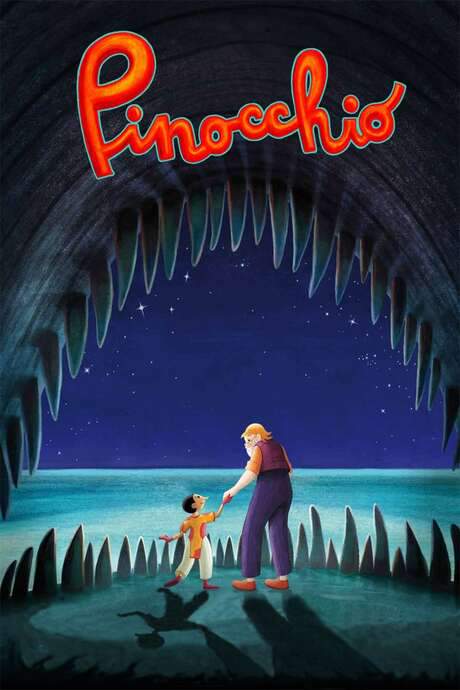
At Amusement World, Pinocchio and Wickley join a larger group of children for a day of seemingly innocent fun. But the ride ends in tragedy when the crowd discovers all the kids have become donkeys to support the park’s workings. Pinocchio and Wickley suffer the same fate, with Wickley dragged away by a clown while Pinocchio is cast into the circus’s ring. The Ringmaster discards him as useless, and he’s dumped into the sea. Miraculously, he returns to his puppet form and is swallowed by a giant fish, where he reunites with Geppetto, who had set out in search of him after a dangerous storm. They escape when the fish yawns and sleepily opens its mouth, and the dawn light their way home.
On the shore, the police and Alidoro arrive to aid them as the fairy with blue hair appears once more, plants a kiss on Pinocchio’s head, and vanishes just as Geppetto and the others reach the beach. The next morning brings a remarkable transformation: Pinocchio awakens as a real boy, turning his shirt into the kite Geppetto once had when he was a child. Father and son walk side by side through the village, their laughter and song echoing as the kite lifts into the sky, closing the tale with a quiet sense of wonder and renewed hope.