



Plot Explained Spoilers guaranteed!
Plot Explained

Browse by genre

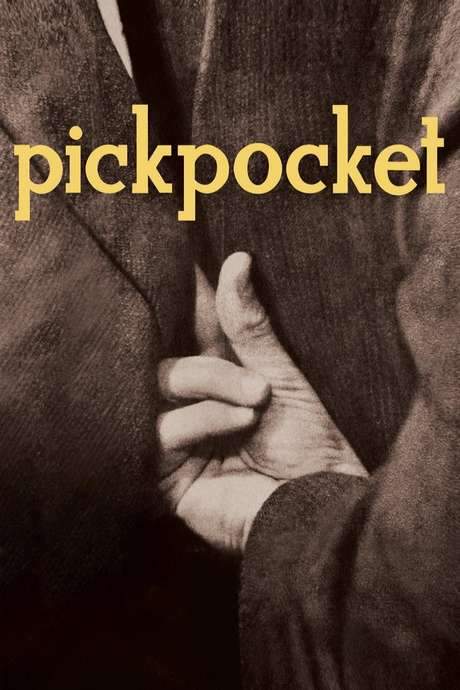
Pickpocket (1959) movie poster

Characters & Themes

Pickpocket (1959) Characters, Setting & Themes Explained

Release, runtime and language
1959 · 75 mins · French
Directed by
Robert Bresson
Starring
Pierre Étaix, Jean Pélégri, Martin LaSalle, Dominique Zardi, Pierre Leymarie, Marika Green

After a whimsical stint as a pickpocket lands Michel in jail, his mother dies soon after his release. Ignoring his friend Jacques and neighbor Jeanne’s concerns, he joins petty thieves to hone his skill. While a police inspector watches, Michel seeks honest work, yet the lure of stealing remains hard to resist.

On this page (9)
  1. 1 Where to watch
  2. 2 Characters explained (8)
  3. 3 Where & when it takes place
  4. 4 Themes & meaning (3)
  5. 5 Character & meaning questions
  6. 6 The book behind the movie
  7. 7 Movie threads
  8. 8 Movies like Pickpocket
  9. 9 Every angle

Where to watch

Where to Watch Pickpocket (1959)

Where can you watch Pickpocket? Stream, rent or buy it in the US, including on Amazon Video, Apple TV Store and Fandango At Home: current JustWatch availability with up-to-date prices.

Streaming availability powered by JustWatch

8 main characters · contains spoilers

Pickpocket Characters Explained: Who Is Who

The main characters of Pickpocket (1959), heroes and villains: what drives them, how they change over the course of the story and what each of them reveals about the film's bigger ideas.

  • Michel (Martin Lasalle)

    Michel is an unemployed, prideful young man living in Paris who resents conventional work and is drawn to crime as a shortcut to meaning. He is restless, impulsive, and capable of charm, yet morally squinting and self-justifying. His relationship with his sick mother is distant, and his fixation on crime strains friendships with Jacques and Jeanne. He mutters existential justifications and ultimately faces the consequences of his choices.

    • 🔎 Antihero
    • 💼 Crime
    • 🕯️ Morality
  • Jeanne (Marika Green)

    Jeanne serves as Michel’s love interest and moral counterweight, torn between affection and disillusionment as Michel’s thefts escalate. She supports him but is forced to confront the toll his choices take on their future together. After having a child with Jacques, she becomes a single mother who eventually visits Michel in jail, revealing her enduring concern for his well-being.

    • 💞 Romance
    • 💔 Family
    • 🕊️ Redemption
  • Jacques (Pierre Leymarie)

    Jacques is Michel’s friend who tries to help him find legitimate work, showing a glimmer of hope amid street life. He becomes part of the social circle around Jeanne, and his relationship with Jeanne results in a child, complicating loyalties. He remains supportive, but ultimately the film’s events test his patience and trust.

    • 🤝 Friendship
    • 🧭 Hope
    • 👨‍👧 Fatherhood
  • Inspector (César Gattegno)

    The lead inspector embodies societal order and judgment. He recognizes Michel’s skills but loses faith in the possibility of reform after a near escape. He reveals a deeper awareness of the case’s backstory, including a prior police report, and warns Michel that the game is up when confronted with the sting operation.

    • 👮 Law
    • 🧭 Authority
    • 🛑 Consequences
  • 1st Accomplice (Kassagi)

    The first accomplice partners with Michel in criminal schemes and is ultimately arrested during the course of their activities. Their collaboration showcases a shared hunger for easy gains, underlining Michel’s glide toward risk and exposure.

    • 🤝 Partnership
    • ⚖️ Crime
  • 2nd Accomplice (Pierre Étaix)

    The second accomplice accompanies Michel in illicit ventures and is also captured. The duo represents how crime accumulates risk and how temptation grows when opportunity appears.

    • 🤝 Partnership
    • ⚖️ Crime
  • The Mother (Dolly Scal)

    Michel’s mother is sickly and emotionally supportive, offering a quiet moral counterpoint to his reckless behavior. Her death marks a turning point for Michel and underscores the cost of neglecting family bonds. She reminds him of his latent talent and where his life could go if he chose a different path.

    • 👩‍👦 Family
    • 💔 Loss
  • Subway Passenger (Dominique Zardi)

    A subway passenger appears briefly as part of the urban backdrop where pickpocketing unfolds. The scene anchors the film’s realism and illustrates how everyday life intersects with crime in the city.

    • 🚇 Everyday life
    • 🕵️ Small role

Last updated: October 04, 2025 at 19:16

Was this helpful?

Setting

Where and When Does Pickpocket Take Place?

The setting of Pickpocket (1959): the year and time period, the places and locations, and how they shape the characters, the mood and the tension of the story.

Time period

1950s

Set in a postwar urban Europe, the story traverses cafés, racecourses, and the Paris subway, capturing a city where opportunity and temptation are never far apart. The time period emphasizes a milieu of unemployment and street-level crime, contrasted with moments of tenderness and moral reflection. The plot also follows the protagonist's flight to London, before returning to Paris, highlighting a transient, itinerant life within a tight-knit urban frame.

Location

Paris, London, Longchamp Racecourse

The film unfolds across a densely populated Parisian landscape, with meandering streets, bars, and crowded public spaces that frame Michel’s life. Key locations include Longchamp Racecourse, city bars, subways, and a nightlife that mirrors the era’s public spaces. The settings juxtapose glamour with poverty, underscoring the social texture of mid-century Paris and the lure of quick gains in a bustling metropolis.

  • 🏙️ City
  • 🗼 Paris
  • 🚦 Urban
  • 🗺️ Landmarks

Last updated: October 04, 2025 at 19:16

Was this helpful?

3 major themes

Pickpocket Meaning: Themes & Message Explained

What is Pickpocket (1959) really about? The emotional, social and philosophical themes the film keeps returning to, its symbolism and the message beneath the surface.

  • Morality

    The film probes how rules govern ordinary life versus the allure of personal justice. Michel argues that so-called superior men should not be bound by common laws, echoing Dostoyevsky's nihilistic psychology. The inspector represents the social order that refuses to bend for charisma or talent, forcing a reckoning with guilt and consequences. The narrative suggests that moral choices persist even when temptations seem irresistible.

  • Family

    Michel’s relationship with his ill mother anchors the emotional core of the story, exposing his neglect as he chases criminal thrills. The mother's quiet wisdom and eventual death reveal a moral center that Michel ignores at his peril. Jeanne’s presence and the revelation about their shared child complicate loyalties and illuminate the cost of crime on loved ones. The eventual reconciliation is slim, underscoring how family bonds endure despite estrangement.

  • Freedom vs Rules

    Michel’s life is driven by a relentless urge to escape conventional limits, rationalizing theft as a path to dignity. The repeated failures and near-misses highlight the fragile line between freedom and danger. The sting operation at Longchamp seals his fate, reminding him that personal control erodes under temptation. The film frames freedom as something morally contested, not simply a right to act without consequence.

Last updated: October 04, 2025 at 19:16

Was this helpful?

Character & theme questions

Pickpocket Characters & Meaning: Your Questions Answered

The questions people ask about Pickpocket (1959): who the characters really are, their relationships, what the symbols mean, where it takes place and what the movie is really about. Each answer contains spoilers.

Q1

Where is Pickpocket set?

Pickpocket is set primarily in Paris, France, during the 1950s. The film utilizes the city's dense urban landscape, including meandering streets, bars, subways, and the Longchamp Racecourse, to frame Michel's life of petty crime. The setting juxtaposes glamour with poverty, reflecting the social texture of postwar Paris where opportunity and temptation coexist.

  • paris
  • 1950s
  • urban setting
  • city
  • france
Q2

What time period does the movie take place in?

The film is set in the 1950s, depicting postwar urban Europe. This era was marked by high unemployment and street-level crime, providing the perfect milieu for Michel's criminal pursuits. The story also briefly follows Michel to London before his return to Paris, highlighting the transient nature of his existence.

  • 1950s
  • postwar
  • europe
  • time period
  • 1950s paris
Q3

What are the main themes of Pickpocket?

Pickpocket explores three interconnected themes: morality versus personal justice, the importance of family, and the tension between freedom and rules. The film probes how societal laws govern ordinary life while Michel, influenced by Dostoyevsky's nihilistic psychology, argues that superior men should not be bound by common laws. The story also examines how Michel's criminal path destroys his relationship with his mother and strains his connections with Jeanne and Jacques.

  • morality
  • family
  • freedom
  • rules
  • themes
  • dostoyevsky
Q4

Who is Michel in Pickpocket?

Michel is an unemployed, prideful young man living in Paris who resents conventional work and is drawn to crime as a shortcut to meaning. He is restless, impulsive, and capable of charm, yet morally ambiguous and self-justifying. His relationship with his sick mother is distant, and his fixation on theft strains his friendships. Throughout the film, he mutters existential justifications for his actions until he ultimately faces the consequences.

  • michel
  • protagonist
  • character
  • paris
  • thief
Q5

Who is Jeanne in Pickpocket?

Jeanne serves as Michel's love interest and moral counterweight in the film. She is torn between affection for Michel and disillusionment as his thefts escalate. After having a child with Jacques, she becomes a single mother but eventually visits Michel in jail, revealing her enduring concern for his well-being and suggesting a tentative path toward reconciliation.

  • jeanne
  • love interest
  • character
  • michel
  • supportive
Q6

What does the inspector represent in Pickpocket?

The inspector embodies societal order and judgment. He recognizes Michel's skills and talent but ultimately loses faith in the possibility of reform after Michel's near escape. He represents the social order that refuses to bend for charisma or talent alone, forcing a reckoning with guilt and consequences. His confrontation with Michel at the sting operation marks the climax of this thematic tension.

  • inspector
  • police
  • society
  • order
  • law
  • michel
Q7

What is the significance of the Longchamp Racecourse in Pickpocket?

The Longchamp Racecourse is a key location in Pickpocket where Michel participates in a sting operation that ultimately seals his fate. This setting represents the culmination of Michel's criminal career, a high-stakes moment where his skills are put to the ultimate test. The racecourse, with its crowds and wealth, symbolizes the lure of easy gains that has defined Michel's journey throughout the film.

  • longchamp
  • racecourse
  • crime
  • sting
  • arrest
  • london
Q8

What role does family play in Pickpocket?

Family is a central theme in Pickpocket, primarily through Michel's relationship with his sick mother. Michel neglects his mother as he chases criminal thrills, and her death marks a turning point in the story. His mother represents a moral center that Michel ignores at his peril. The film also explores how Michel's choices affect his potential family with Jeanne, as their child is raised by Jacques, underscoring the cost of crime on loved ones.

  • family
  • mother
  • jeanne
  • child
  • neglect
  • death
Q9

What does Pickpocket say about freedom versus rules?

Pickpocket frames freedom as morally contested rather than simply a right to act without consequence. Michel's life is driven by an urge to escape conventional limits, rationalizing theft as a path to dignity and freedom. However, the repeated failures and near-misses highlight how personal control erodes under temptation. The inspector's pursuit represents the rules that Michel tries to evade, and the sting at Longchamp reminds Michel that true freedom cannot be found through crime.

  • freedom
  • rules
  • crime
  • temptation
  • michel
  • society
Q10

Does Pickpocket take place only in Paris?

While Pickpocket is primarily set in Paris, the story briefly follows Michel to London after his crimes escalate. This brief exile highlights his transient, itinerant lifestyle within the postwar urban world. His return to Paris ultimately leads to his capture, suggesting that escape from his circumstances, whether geographic or moral, is impossible.

  • london
  • paris
  • travel
  • exile
  • escape

Movie threads

More Movies Like Pickpocket, by Mood & Story

Curated lists built around what makes Pickpocket tick: the same mood, the same kind of story or the same emotional payoff. Each list explains why these movies belong together.

Slow burn moral descent stories like Pickpocket

Character-driven dramas where a quiet obsession leads to an existential reckoning. If you appreciated the methodical, psychological unraveling in Pickpocket, this collection features movies with similar moral complexity. Discover other character studies where a protagonist's obsessive path leads to alienation and an eventual, often bittersweet, confrontation with their choices.

  • existential
  • somber
  • alienated
  • tense
  • introspective
  • compulsive
  • Tone: melancholic, grim, introspective
  • Pacing: slow, deliberate
Why these movies?

The story pattern: The narrative pattern centers on a protagonist who, driven by an internal compulsion or philosophical curiosity, engages in a transgressive act. The story unfolds slowly, charting their increasing skill and alienation, often under the watchful eye of an authority figure. The climax is typically not an action set piece but a moment of profound moral or emotional collapse, sometimes followed by a glimmer of connection or understanding.

Why they belong together: These films are grouped by their shared commitment to exploring the psychology of transgression. They prioritize a melancholic tone, slow pacing, and heavy emotional weight, creating a cohesive experience for viewers interested in philosophical crime dramas and deep character studies.

Movies about lonely redemption like Pickpocket

Stories of profound loneliness where human connection offers a painful, limited hope. For viewers moved by the bittersweet final connection in Pickpocket, this list features films with similar emotional arcs. Explore stories of isolated characters who find a painful, limited form of hope or redemption after a period of profound alienation and despair.

  • lonely
  • alienated
  • somber
  • redemptive
  • bittersweet
  • introspective
  • Tone: melancholic, bittersweet
  • Pacing: slow, reflective
Why these movies?

The story pattern: The journey involves a protagonist who is emotionally or physically cut off from the world, often due to their own actions or a philosophical stance. They endure significant loss and despair. The story's resolution doesn't offer a simple fix; instead, it presents a fragile, authentic human connection that breaks through their isolation, making the ending feel bittersweet rather than triumphant.

Why they belong together: These movies share a specific emotional mix: a foundation of heavy sadness and alienation, punctuated by a climax that offers a nuanced, bittersweet hope. The tone is consistently melancholic, and the pacing allows the weight of the loneliness and the significance of the connection to fully resonate.

If you liked this

Movies Like Pickpocket

Similar movies to Pickpocket: the same genre, themes or kind of story. Each one comes with its own plot summary, timeline and ending explained.

Browse all movie summaries

Every angle

Pickpocket (1959) Explained: Plot, Timeline & Characters

Everything about Pickpocket in one place: what happens in the plot summary, the timeline in chronological order, the characters and meaning and a spoiler-free summary. What's After the Movie adds the cast, box office and post-credit scenes.

Coming soon on iOS and Android

The Plot Explained Movie Summary App

Plot summaries, endings explained and timelines on your phone. Catch up on any movie in minutes, save your favorites and never miss a twist again.

Be the first to know when we launch. Your email stays private, always.

Learn more about the app