Year: 2016
Runtime: 112 mins
Language: Hindi
Director: Pavan Kirpalani
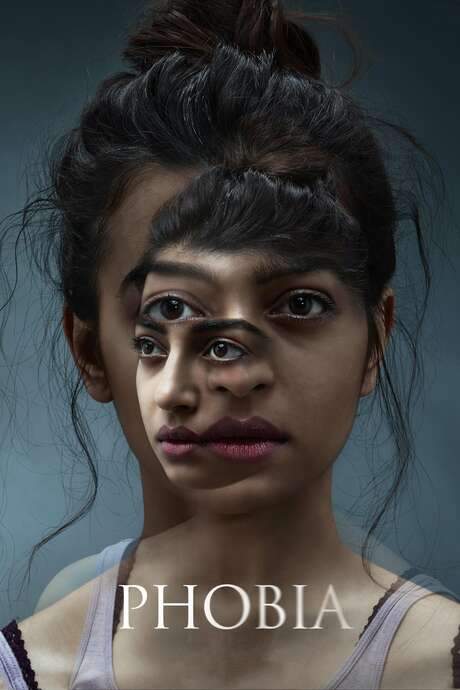
When Your Biggest Enemy Is You. A talented artist tries to curb her phobia of being in public places, only to be convinced that a malevolent spirit is haunting her.
Warning: spoilers below!
Haven’t seen Phobia yet? This summary contains major spoilers. Bookmark the page, watch the movie, and come back for the full breakdown. If you're ready, scroll on and relive the story!
Read the complete plot breakdown of Phobia (2016), including all key story events, major twists, and the ending explained in detail. Discover what really happened—and what it all means.
Mehak Deo, Radhika Apte, is a highly talented artist whose life takes a dark turn after a traumatic event—being molested by a taxi driver—that leaves her battling a severe form of agoraphobia, a deep fear of public spaces and crowded social life. This anxiety reshapes her days and makes even routine interactions feel overwhelming. Her sister, Anusha, Nivedita Bhattacharya, initially stands by her side, offering support, but the weight of Mehak’s peculiarity wears on her, especially as it starts affecting her own 5-year-old son and daily life.
Shaan, Satyadeep Misra, a close friend, steps in to help by taking Mehak to an empty apartment, hoping that a change of environment and a degree of solitude might ease her mind and encourage a gradual return to normalcy. In the new setting, Mehak forms a bond with Nikki, Yashaswini Dayama, a college student who lives nearby. Their budding friendship brings a glimmer of normalcy into a life otherwise shadowed by fear. Nearby, Manu, Ankur Vikal, a neighbor with anger management issues, is also part of a community laughter club, giving a glimpse of the varied personalities that populate the building.
As the story unfolds, Manu’s heartbreak over his girlfriend Jiah Khurana, Amrita Bagchi, who has left him, threads through the mood of the place. Jiah had previously resided in Mehak’s new apartment and vanished without paying rent or reclaiming her deposit, leaving behind most of her belongings. Mehak stumbles upon Jiah’s diary, which details a turbulent, abusive relationship with Manu due to his temper. From these pages, Mehak forms a troubling interpretation: she believes Manu could have killed Jiah. Her conviction grows as she experiences vivid, nightmare-like visions—images of Jiah’s death including a severed finger in a freezer, a red knife on a bathroom floor, a male intruder in her own room, and a wounded woman in a bathtub—visions that feel unmistakably real to her.
This leads Mehak to reach out to Jiah’s parents to voice her suspicions, though Shaan remains doubtful. The tension escalates when Jiah herself reappears, confronting them about the phone call Mehak made to her parents. Jiah then reveals she has reconciled with the now-reformed Manu, which casts doubt on Mehak’s suspicions and leaves Mehak to question her own grip on reality.
In a charged confrontation, Shaan confesses a long-standing love for Mehak and attempts to kiss her. She rejects him sharply, accusing him of exploiting her vulnerability and exploiting her mental state. As their exchange unfolds, the precise sequence of events mirrors her visions, and Mehak comes to the stark realization that these were premonitions of her own future. She concludes that she herself is in danger from Shaan, whom she identifies as the intruder and the wounded figure in her earlier dreams.
Paranoia gives way to fevered action as she lunges at Shaan with a knife. His attempts to calm her only intensify the moment, and in the struggle her finger is accidentally severed. Shaan acts quickly to call for an ambulance while carefully preserving the severed finger in the freezer. He manages to restrain her within the apartment, locking him in the bedroom as she steps out into the world, momentarily free from the claustrophobic fear that has haunted her.
The climax brings Mehak’s visions and her reality into a fierce alignment. As she steps into the open to seek help, a painting she had created earlier begins to echo the moment—hands reaching out in the artwork mirror the actual events that leave her injured, underscoring a surreal harmony between imagination and reality and signaling that she has, at least for the moment, found a way to confront and overcome her condition.
Last Updated: October 09, 2025 at 16:01
Discover curated groups of movies connected by mood, themes, and story style. Browse collections built around emotion, atmosphere, and narrative focus to easily find films that match what you feel like watching right now.
Stories where the protagonist's fractured perception blurs reality with terror.If you liked Phobia and its exploration of a traumatized artist's perspective, you'll find similar tension in these movies that feature unreliable narrators. This list includes psychological thrillers and horror films where reality is distorted through the lens of a character's mental state, creating a similarly unsettling and paranoid viewing experience.
The narrative unfolds from the perspective of a character dealing with trauma, mental illness, or extreme stress, making their perception inherently unreliable. The plot often involves a central mystery or threat that may or may not be real, leading to a climax that re-contextualizes previous events and leaves the audience grappling with ambiguity.
Movies are grouped here based on their shared core mechanic: building tension and mystery by filtering the story through a potentially delusional protagonist. They create a specific, immersive kind of dread by aligning the viewer's experience with the character's uncertain reality.
Intense stories where fear is internal and the setting is a prison of perception.For viewers seeking the intense, anxious, and confined feeling of Phobia, this list features similar films that master claustrophobic psychological horror. These movies trap characters and audiences alike in situations of extreme mental distress, blending horror and thriller elements to explore themes of agoraphobia, paranoia, and internal demons.
These narratives typically confine the protagonist physically, mentally, or both, amplifying their psychological distress. The central conflict is internal—a battle against a phobia, past trauma, or a breakdown of sanity. The tension builds steadily as the walls, both literal and metaphorical, close in, leading to a violent or ambiguous confrontation with the self.
These movies are united by their primary focus on creating a visceral sense of claustrophobia and psychological entrapment. They share a high-intensity, heavy emotional weight, and a tense tone that stems from the character's internal struggle rather than a simple external threat.
Don't stop at just watching — explore Phobia in full detail. From the complete plot summary and scene-by-scene timeline to character breakdowns, thematic analysis, and a deep dive into the ending — every page helps you truly understand what Phobia is all about. Plus, discover what's next after the movie.
Track the full timeline of Phobia with every major event arranged chronologically. Perfect for decoding non-linear storytelling, flashbacks, or parallel narratives with a clear scene-by-scene breakdown.
Discover the characters, locations, and core themes that shape Phobia. Get insights into symbolic elements, setting significance, and deeper narrative meaning — ideal for thematic analysis and movie breakdowns.
Get a quick, spoiler-free overview of Phobia that covers the main plot points and key details without revealing any major twists or spoilers. Perfect for those who want to know what to expect before diving in.
Visit What's After the Movie to explore more about Phobia: box office results, cast and crew info, production details, post-credit scenes, and external links — all in one place for movie fans and researchers.