Plot Explained Spoilers guaranteed!
Plot Explained

Browse by genre

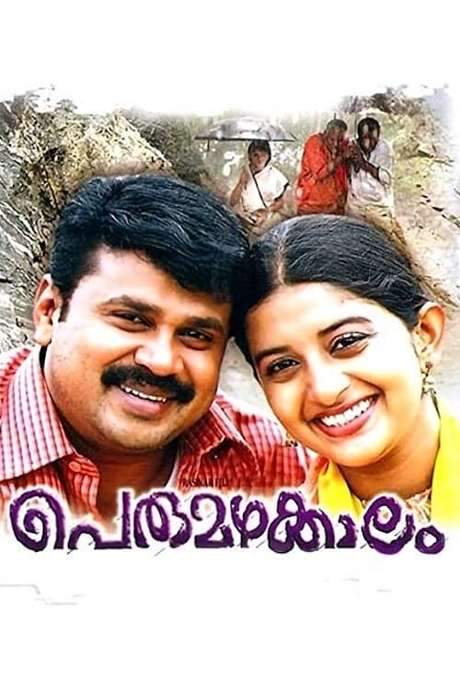
Perumazhakkalam (2004) movie poster

Timeline

Perumazhakkalam (2004) Timeline Explained – Every Event in Order

Release, runtime and language
2004 · 146 mins · Malayalam
Directed by
Kamal
Starring
Biju Menon, Meera Jasmine, Babu Namboothiri, Sadiq, Salim Kumar, Mamukkoya

When it rains hard, the film follows the fallout from the murder of Reghu Rama Iyer (Vineeth) in Saudi Arabia. Under Sharia law, Akbar (Dileep) is convicted and sentenced to beheading, but the verdict can be reversed only if the victim’s wife, Ganga (Kavya Madhavan), grants forgiveness. Akbar’s own wife, Razia (Meera Jasmin), is thrust into this agonising moral dilemma.

On this page (4)
  1. 1 Events in order (15)
  2. 2 Timeline questions answered
  3. 3 Movie threads
  4. 4 Every angle

15 events in order · contains spoilers

Perumazhakkalam Timeline: Events in Chronological Order

Every key event of Perumazhakkalam (2004) in order, scene by scene, with when and where it takes place. Use it to untangle flashbacks, time jumps and parallel storylines, to refresh your memory before the sequel or to find the exact scene you are thinking of.

  1. Marriage of Akbar and Raziya

    Akbar and Raziya are happily married, starting a life together back home. Shortly after, Akbar leaves for Saudi Arabia to seek employment. The couple begins a long-distance chapter that tests their bond but keeps them hopeful for the future.

    When
    Before leaving for Saudi Arabia
    Where
    India
  2. Akbar's life in Saudi Arabia and friendships

    Akbar builds a new life in Saudi Arabia and forms a close circle with Raghu Rama Iyer and John Kuruvilla. The trio become firm friends, sharing work and camaraderie. Their bonds provide Akbar with support while he adapts to a new country.

    When
    Early in his stay
    Where
    Saudi Arabia
  3. Loan to Haneefa and its consequences

    Akbar lends money to Haneefa, hoping to help a fellow Indian. Haneefa borrows the money and later absconds with it. Efforts to recover the funds prove futile, straining Akbar's finances and reputation.

    When
    During the loan period
    Where
    Saudi Arabia
  4. The fatal confrontation

    During a confrontation with Haneefa, Akbar strikes but misses and accidentally kills Raghu Rama Iyer. The death shocks the community and triggers serious legal consequences. Akbar is left to bear the blame for Raghu's death as events spiral toward a trial.

    When
    During the altercation
    Where
    Saudi Arabia
  5. Saudi court delivers the death penalty

    A Saudi court sentences Akbar to death for the unintended killing. The sentence marks the turning point of his life and places his family in a desperate predicament. The only possible escape is a pardon letter from Raghu's wife, Ganga.

    When
    After the sentencing
    Where
    Saudi Arabia
  6. Mercy mission to Palakkad

    Raziya and her father Abdu travel to Palakkad, India to plead for mercy and secure the pardon letter. They carry the hope of saving Akbar's life. Their journey marks a risky, emotionally charged appeal to Raghu's family.

    When
    Post-sentencing
    Where
    Palakkad, India
  7. Staying with a friend's family

    They stay at Kunjikannan's house, an old friend of Abdu, as they navigate local customs and opposition. The hospitality provides some relief, but the social hurdles remain high. The visit intensifies the stakes of their plea.

    When
    During their stay
    Where
    Palakkad, India
  8. Ganga's initial refusal and Raziya's persistence

    Raziya makes multiple attempts to meet Ganga, but Raghu's relatives resist contact. She persists, seeking any opportunity to speak with Ganga about mercy. The tension reveals the community's rigid code and the personal cost of forgiveness.

    When
    During the visit
    Where
    Palakkad, India
  9. Temple meeting and Ganga's initial stance

    Raziya finally meets Ganga when the latter visits a temple, but Ganga refuses to forgive at that moment and leaves. The meeting underscores the emotional wall between the two families. The encounter deepens the emotional stakes of the pardon.

    When
    During the Palakkad visit
    Where
    Temple, Palakkad
  10. Ostracism of Raziya

    Raziya is thrown out from the community compound by Raghu's relatives, severing her social ties. The incident starkly demonstrates the social ostracism attached to the case. Raziya endures humiliation as she fights for mercy.

    When
    During the visit
    Where
    Palakkad, India
  11. Ganga decides to pardon

    Realizing the weight of the decision, Ganga decides to pardon Akbar. However, Raziya has already returned home. Ganga travels to Raziya's hometown to sign the pardon letter herself, risking further social backlash.

    When
    After Palakkad trip
    Where
    Raziya's hometown
  12. Return and ostracism after the pardon

    On returning home, Ganga is ostracised by her in-laws and the community for her act of mercy. The social costs mirror the personal toll endured by Akbar's family abroad. Yet the act of mercy leaves a fragile thread of reconciliation in place.

    When
    After signing
    Where
    Ganga's home
  13. Akbar's return from imprisonment

    Akbar completes a three-year sentence and returns home to be reunited with his family. They visit Ganga, whose pardon has altered their lives in subtle, complicated ways. The reunion hints at a fragile peace amid the lingering judgments of the community.

    When
    Three years after sentencing
    Where
    India
  14. Ganga's new livelihood

    Ganga begins selling snacks to support herself, adapting to a life shaped by the ordeal. She continues to live in Palakkad, quietly rebuilding a sense of normalcy. Her resilience marks a quiet, ordinary endurance after extraordinary events.

    When
    After Akbar's return
    Where
    Palakkad, India
  15. Children's bond and a hopeful ending

    The children of the families bond with each other, unaware of the parents' complicated past. Their innocent friendship offers a note of reconciliation amid social tensions. The story closes on a small, hopeful moment of everyday life.

    When
    Present
    Where
    Palakkad

Last updated: February 20, 2026 at 18:43

Was this helpful?

Timeline questions answered

Perumazhakkalam Timeline Explained: Your Questions Answered

When does it happen, and why in that order? The questions people ask about the chronology of Perumazhakkalam (2004): time jumps, flashbacks, cause and effect between scenes and the correct order of events, each answered with spoilers.

Q1

Why did Akbar kill Raghu Rama Iyer?

Akbar killed Raghu accidentally during a confrontation with another Indian worker named Haneefa. Akbar had lent money to Haneefa, who then disappeared without repaying it. When Akbar finally found Haneefa and confronted him, Akbar tried to strike him but missed, and the blow accidentally hit Raghu Rama Iyer, who was standing nearby. The death was unintended but led to serious consequences under Saudi Arabian law.

Foreshadowing: Earlier in the film, Akbar's decision to lend money to Haneefa creates the chain of events that leads to the fatal confrontation.

  • akbar
  • raghu
  • killing
  • accident
  • haneefa
  • saudi arabia
Q2

How can Akbar's death sentence be reversed under Saudi law?

Under Saudi Arabian Sharia law, Akbar was sentenced to death for killing Raghu. However, the verdict could be reversed if Raghu's widow, Ganga, granted forgiveness by signing a pardon letter. This is the only legal mechanism that could save Akbar's life, which is why Raziya travels to Palakkad to plead with Ganga.

Foreshadowing: The film establishes early on that Akbar and Raghu were close friends, making the tragedy even more poignant and the legal consequence more devastating.

  • death sentence
  • sharia law
  • pardon
  • ganga
  • forgiveness
  • saudi court
Q3

Why did Ganga initially refuse to sign the pardon?

Ganga initially refused to sign the pardon letter because she faced intense social pressure and opposition from Raghu's family and community in Palakkad. Raghu's in-laws resisted any contact with Raziya and viewed forgiveness as a betrayal of the dead. Ganga was also concerned about the ostracism she would face if she chose mercy over vengeance, which is why she refused to meet Raziya at first and slipped away from the temple.

Foreshadowing: The community's rigid stance against forgiveness is established early when Raziya is thrown out of the compound by Raghu's relatives.

  • ganga
  • refusal
  • social pressure
  • community
  • ostracism
  • raghu family
Q4

Why did Ganga eventually decide to forgive Akbar?

Ganga eventually decided to forgive Akbar after much internal struggle, choosing compassion and conscience over fear of social backlash. She realized that holding onto anger would only perpetuate suffering for both families. Despite knowing she would face ostracism from her community and in-laws, Ganga traveled to Raziya's hometown and signed the pardon letter, viewing mercy as the morally right choice.

Foreshadowing: Ganga's internal conflict is shown throughout her scenes, with her eventually prioritizing personal morality over communal expectations.

  • ganga
  • forgiveness
  • mercy
  • compassion
  • courage
  • moral choice
Q5

What happened to Ganga after she signed the pardon?

After signing the pardon letter, Ganga returned home to Palakkad and was ostracized by her in-laws and the community for choosing mercy over conformity. She was cast out by those who believed her act was a betrayal. To support herself, Ganga began selling snacks, living a quiet life while carrying the social consequences of her courageous decision.

Foreshadowing: The film foreshadows this outcome through the earlier opposition Raziya faced in Palakkad.

  • ganga
  • ostracism
  • community
  • in-laws
  • snacks
  • rejection
Q6

Why was Raziya thrown out of the community in Palakkad?

Raziya was thrown out of the community compound in Palakkad by Raghu's relatives because she persisted in her attempts to meet Ganga and seek forgiveness. Her persistence was seen as disrespectful to Raghu's memory and defied the community's rigid code against contact with the victim's family. This act of social ostracism was meant to discourage her quest for mercy.

Foreshadowing: Earlier scenes show Raghu's relatives resisting any interaction with Raziya and her father.

  • raziya
  • ostracism
  • palakkad
  • community
  • rejected
  • raghu family
Q7

What happened to Haneefa after the incident?

Haneefa was the Indian worker who borrowed money from Akbar and then vanished with it, triggering the confrontation that led to Raghu's death. The summary indicates that efforts to recover the money failed, but Haneefa's ultimate fate is not detailed in the film. He remains a catalyst for the tragedy rather than a central figure in its resolution.

Foreshadowing: The loan to Haneefa and his disappearance set the entire tragedy in motion.

  • haneefa
  • money
  • debt
  • disappeared
  • loan
Q8

How long was Akbar imprisoned and what happened when he returned?

Akbar served a three-year sentence in Saudi Arabia for the unintended killing of Raghu. After completing his sentence, he returned to India and was reunited with his family. They then visited Ganga, whose pardon had altered their lives. The reunion is tempered by memory and restraint, as the adults carry the knowledge of what happened, while their children form bonds that mirror a harmony the parents are still working toward.

Foreshadowing: The film establishes the three-year sentence early in the legal proceedings.

  • akbar
  • release
  • return
  • three years
  • family
  • reunion
Q9

Why do the children become friends at the end of the film?

The children of Akbar and Ganga's families bond with each other at the end, playing together despite being unaware of the complicated past between their parents. Their innocent friendship represents a note of reconciliation and hope for the future. It mirrors the fragile, hopeful equilibrium the adults are working toward, showing how the next generation might bridge the divide that the tragedy created.

Foreshadowing: The film ends with the children playing together, symbolizing the possibility of reconciliation.

  • children
  • bond
  • friendship
  • hopeful
  • reconciliation
  • future
Q10

What does the title Perumazhakkalam mean?

Perumazhakkalam is a Malayalam phrase that translates to 'Great Flood' or 'Heavy Rains'. The title symbolically refers to the emotional and moral storms that test the characters throughout the film, as well as the life-altering consequences that come crashing down on the families involved in the tragedy.

Foreshadowing: The movie description opens with 'When it rains hard,' connecting to the title's symbolism.

  • title
  • meaning
  • perumazhakkalam
  • flood
  • rain
  • symbolism

Movie threads

More Movies Like Perumazhakkalam, by Mood & Story

Curated lists built around what makes Perumazhakkalam tick: the same mood, the same kind of story or the same emotional payoff. Each list explains why these movies belong together.

Movies with agonizing moral dilemmas like Perumazhakkalam

Stories centered on an impossible choice that tests a character's deepest values. If you were captivated by the heavy moral choice in Perumazhakkalam, this list features similar films where characters face impossible decisions. These dramas offer tense, emotionally weighty stories exploring forgiveness, justice, and sacrifice.

  • moral conflict
  • agonizing
  • tense
  • emotional burden
  • weighty
  • psychological
  • Tone: tense, somber, morally complex
  • Pacing: slow, deliberate, character-focused
Why these movies?

The story pattern: These narratives are built around a central, difficult decision that a protagonist must make. The plot unfolds as the character wrestles with conflicting duties, emotional attachments, and societal expectations, leading to a climax where the choice is made, followed by an exploration of its lasting, often bittersweet, consequences.

Why they belong together: Movies are grouped here because they share a focus on a single, gut-wrenching moral decision as their core engine. They prioritize psychological depth and emotional weight over action or plot twists, creating a tense and somber viewing experience centered on human ethics.


Movies with bittersweet reconciliation like Perumazhakkalam

Hopeful resolutions born from tragedy, where peace comes with a cost. For viewers who appreciated the complex, bittersweet resolution of Perumazhakkalam, this list highlights films about overcoming enmity or grief. Discover similar stories where forgiveness and understanding emerge from tragedy, leaving characters forever changed.

  • bittersweet
  • hopeful
  • redemptive
  • emotional
  • somber
  • healing
  • Tone: bittersweet, hopeful, melancholic
  • Pacing: slow, steady, emotional
Why these movies?

The story pattern: These films follow a journey from a devastating event—often a loss or a betrayal—through a period of grief, anger, or conflict, culminating in an act of forgiveness or understanding. The resolution brings a sense of peace or hope, but it is tempered by the enduring memory of the initial pain, resulting in a nuanced, bittersweet conclusion.

Why they belong together: These movies are united by their emotional arc, which moves from tragedy toward a resolution that is hopeful yet scarred. They share a tone that balances sadness with redemption, focusing on the difficult but ultimately healing power of human connection across chasms of pain or prejudice.

Every angle

Perumazhakkalam (2004) Explained: Plot, Timeline & Characters

Everything about Perumazhakkalam in one place: what happens in the plot summary, the timeline in chronological order, the characters and meaning and a spoiler-free summary. What's After the Movie adds the cast, box office and post-credit scenes.

Coming soon on iOS and Android

The Plot Explained Movie Summary App

Plot summaries, endings explained and timelines on your phone. Catch up on any movie in minutes, save your favorites and never miss a twist again.

Be the first to know when we launch. Your email stays private, always.

Learn more about the app