





Plot Explained Spoilers guaranteed!
Plot Explained

Browse by genre

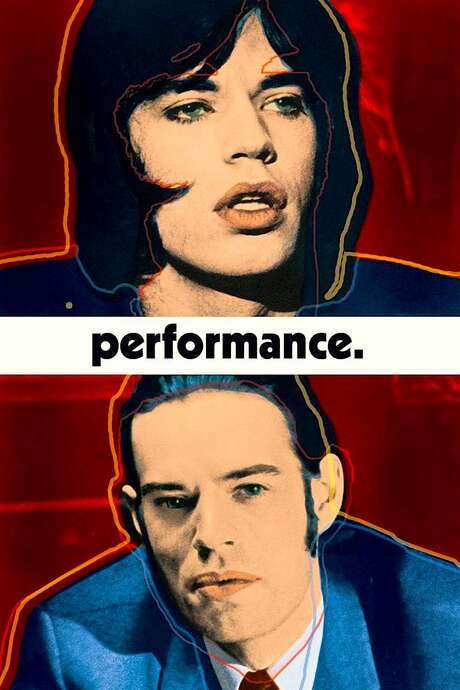
Performance (1970) movie poster

Characters & Themes

Performance (1970) Characters, Setting & Themes Explained

Release, runtime and language
1970 · 106 mins · English
Directed by
Nicolas Roeg, Donald Cammell
Starring
Ian McShane, Mick Jagger, Kenneth Colley, Allan Cuthbertson, Jane Lapotaire, James Fox

The film weaves fantasy and reality, vice and its reverse, through the intersecting lives of two unlikely figures. Chas Devlin, a hardened underworld “performer” skilled in violence and intimidation, crosses paths with Turner, a reclusive rock star. Their meeting ignites an exotic, explosive collision of crime and music.

On this page (8)
  1. 1 Where to watch
  2. 2 Characters explained (8)
  3. 3 Where & when it takes place
  4. 4 Themes & meaning (3)
  5. 5 Character & meaning questions
  6. 6 Movie threads
  7. 7 Movies like Performance
  8. 8 Every angle

Where to watch

Where to Watch Performance (1970)

Where can you watch Performance? Stream, rent or buy it in the US, including on Amazon Video, Apple TV Store and Fandango At Home: current JustWatch availability with up-to-date prices.

Streaming availability powered by JustWatch

8 main characters · contains spoilers

Performance Characters Explained: Who Is Who

The main characters of Performance (1970), heroes and villains: what drives them, how they change over the course of the story and what each of them reveals about the film's bigger ideas.

  • Chas Devlin (James Fox)

    An East London gang member who excels at intimidation and violence, yet carries a volatile personal history with Maddocks. He infiltrates Turner’s world by adopting a new persona, revealing a capacity for vulnerability as he navigates betrayal, recruitment, and escape. His arc culminates in a drastic act of violence that redefines his loyalties.

    • 🗡️ Gangster
    • 🧠 Calculating
    • 🌀 Transformative
  • Turner (Mick Jagger)

    A reclusive, eccentric former rock star who has 'lost his demon' and lives in a world of art, sexuality, and excess. He cultivates an unconventional household with Pherber and Lucy, challenging social norms and testing Chas’s boundaries. Turner’s fate is sealed when Chas shoots him, underscoring the volatility of fame and desire.

    • 🎤 Music
    • 🎭 Complex
    • 🌀 Enigmatic
  • Pherber (Anita Pallenberg)

    A woman living with Turner who uses cunning and manipulation to influence Chas’s emergence and actions. She participates in the household’s subversive dynamics and becomes a catalyst for Chas’s psychological transformation through shared risk and psychedelic experimentation.

    • 🧠 Manipulative
    • 🫀 Compelling
    • 🌀 Ally
  • Lucy (Michèle Breton)

    A resident of Turner’s circle with whom Turner enjoys a non-possessive, bisexual ménage à trois. Lucy forms a caring connection with Chas, acting as a bridge between his violence and his capacity for gentleness. Her presence anchors a softer counterpoint to the surrounding hostility.

    • 💞 Relationship
    • 🪞 Reflection
    • 🎭 Complex
  • Joey Maddocks (Anthony Valentine)

    Owner of a betting shop who becomes a flashpoint for conflict with Flowers. Maddocks’s friction with Chas triggers a chain of events that destabilizes the underworld alliance and reveals the fragile line between business and brutality.

    • 💼 Business
    • 🗡️ Rivalry
    • 🧱 Friction
  • Tony Farrell (Kenneth Colley)

    A trusted friend who becomes a conduit for Flowers and a pawn in the chase to capture Chas. Tony’s role illustrates how alliances can be instrumentalized by those with power, and how personal bonds are exploited for strategic ends.

    • 🤝 Dependence
    • 🧭 Betrayal
    • 🧬 Loyalty
  • Noel (Ian McShane)

    A Black musician and part of the world that Chas encounters in the Notting Hill Flat. Noel’s presence adds a layer of musical culture to the backdrop and contributes to the atmosphere of performance and disguise that threads through the plot.

    • 🎶 Music
    • 🗺️ Scene-setting
    • 🌀 Mystery
  • Harry Flowers

    The gang leader who dictates terms and ultimately orders the removal of threats to his operation. His dominance over the criminal ecosystem drives the pursuit of Chas and the escalating violence that punctuates the story.

    • 🗡️ Power
    • ⚖️ Control
    • 🧭 Ruthless

Last updated: October 04, 2025 at 15:30

Was this helpful?

Setting

Where and When Does Performance Take Place?

The setting of Performance (1970): the year and time period, the places and locations, and how they shape the characters, the mood and the tension of the story.

Time period

1960s

Set against a late-1960s London backdrop, the story blends counterculture vitality with a dangerous underworld. The era’s music, fashion, and psychedelic sensibilities color the characters’ identities and decisions. The tension between public persona and private violence mirrors the decade’s explorations of freedom and risk.

Location

Notting Hill Gate, London

The action unfolds in urban London, centering on Notting Hill Gate where Chas hides in a rented room. The city’s gritty streets and smoky interiors frame a world of gang politics, betrayal, and sudden violence. Towards the end, the narrative shifts toward the countryside, hinting at a brief escape from the city’s claustrophobic atmosphere.

  • 🗺️ Urban London
  • 🎭 Crime
  • 🎶 Music culture

Last updated: October 04, 2025 at 15:30

Was this helpful?

3 major themes

Performance Meaning: Themes & Message Explained

What is Performance (1970) really about? The emotional, social and philosophical themes the film keeps returning to, its symbolism and the message beneath the surface.

  • Identity

    Chas undergoes a dramatic shift in self-presentation, adopting a feminine guise and experimenting with clothing and role-playing. This exploration of identity sits at the heart of the narrative, revealing fragility beneath a hard-edged exterior. The interplay with Turner and Pherber accelerates this self-discovery amid danger.

  • Power & Violence

    A brutal underworld is ruled by Flowers, who orders and enforces with lethal precision. Violence serves both as control and currency, escalating as loyalties fracture. The climactic act of turning on Turner epitomizes the fragile balance of power that governs the story.

  • Art & Performance

    The film treats performance as both livelihood and disguise, with Turner’s past fame and the characters’ musical pretensions shaping their choices. Pherber and Turner manipulate appearances to influence Chas, blurring art with manipulation. The tension between authentic emotion and performative identities underscores the story’s mood.

Last updated: October 04, 2025 at 15:30

Was this helpful?

Character & theme questions

Performance Characters & Meaning: Your Questions Answered

The questions people ask about Performance (1970): who the characters really are, their relationships, what the symbols mean, where it takes place and what the movie is really about. Each answer contains spoilers.

Q1

Where is Performance set?

The film takes place primarily in urban London, centering on Notting Hill Gate where Chas hides in a rented room. The city's gritty streets and smoky interiors create a backdrop for the story's gang politics and betrayal. Near the end, the narrative briefly shifts to the countryside, offering a fleeting escape from the city's claustrophobic atmosphere.

  • london
  • notting hill
  • setting
  • urban
  • british
Q2

When does the movie take place?

Performance is set in late 1960s London, capturing the era's counterculture vitality alongside a dangerous underworld. The decade's music, fashion, and psychedelic sensibilities influence the characters' identities and decisions. This time period reflects the tension between public persona and private violence that defined the era's explorations of freedom and risk.

  • 1960s
  • london
  • era
  • time period
  • counterculture
Q3

What is the identity theme in Performance about?

Chas undergoes a dramatic shift in self-presentation, adopting a feminine guise and experimenting with clothing and role-playing. This exploration of identity sits at the heart of the narrative, revealing fragility beneath a hard-edged exterior. The interplay with Turner and Pherber accelerates this self-discovery amid danger.

  • identity
  • transformation
  • chas
  • gender
  • exploration
Q4

How does power and violence shape the story?

A brutal underworld is ruled by Flowers, who orders and enforces with lethal precision. Violence serves both as control and currency, escalating as loyalties fracture. The climactic act of turning on Turner epitomizes the fragile balance of power that governs the story, showing how quickly alliances can collapse.

  • power
  • violence
  • flowers
  • underworld
  • control
  • loyalty
Q5

What does Art & Performance mean in the film?

The film treats performance as both livelihood and disguise, with Turner's past fame and the characters' musical pretensions shaping their choices. Pherber and Turner manipulate appearances to influence Chas, blurring art with manipulation. The tension between authentic emotion and performative identities underscores the story's mood.

  • performance
  • art
  • authenticity
  • identity
  • manipulation
Q6

Who is Chas Devlin?

Chas Devlin is an East London gang member who excels at intimidation and violence, carrying a volatile personal history with Maddocks. He infiltrates Turner's world by adopting a new persona, revealing a capacity for vulnerability as he navigates betrayal, recruitment, and escape. His arc culminates in a drastic act of violence that redefines his loyalties.

  • chas devlin
  • james fox
  • gang member
  • character
Q7

Who is Turner in the movie?

Turner is a reclusive, eccentric former rock star who has 'lost his demon' and lives in a world of art, sexuality, and excess. He cultivates an unconventional household with Pherber and Lucy, challenging social norms and testing Chas's boundaries. Turner's fate is sealed when Chas shoots him, underscoring the volatility of fame and desire.

  • turner
  • mick jagger
  • rock star
  • fame
  • celebrity
Q8

What is Pherber's role in the story?

Pherber is a woman living with Turner who uses cunning and manipulation to influence Chas's emergence and actions. She participates in the household's subversive dynamics and becomes a catalyst for Chas's psychological transformation through shared risk and psychedelic experimentation.

  • pherber
  • anita pallenberg
  • manipulation
  • turner household
Q9

Who is Lucy in Performance?

Lucy is a resident of Turner's circle with whom Turner enjoys a non-possessive, bisexual dynamic. She forms a caring connection with Chas, acting as a bridge between his violence and his capacity for gentleness. Her presence anchors a softer counterpoint to the surrounding hostility.

  • lucy
  • michèle breton
  • turner household
  • connection
Q10

Who is Harry Flowers?

Harry Flowers is the gang leader who dictates terms and ultimately orders the removal of threats to his operation. His dominance over the criminal ecosystem drives the pursuit of Chas and the escalating violence that punctuates the story, representing the ultimate authority of the underworld.

  • harry flowers
  • gang leader
  • boss
  • underworld
Q11

How does the film blend crime and music culture?

Performance weaves fantasy and reality through the intersecting lives of a gangster and a rock star. The Notting Hill setting becomes a space where gang politics collide with music culture, particularly through Noel's presence. This collision of vice and creativity defines the film's unique atmosphere and tone.

  • crime
  • music
  • culture
  • london
  • collision
Q12

How does the film explore masculinity?

Performance is a tense exploration of masculinity under extreme duress. Chas's hardened exterior slowly dissolves as he enters Turner's world, revealing vulnerability beneath the violence. The film examines how masculinity performs itself, and how identity can be eroded when confronted with unfamiliar environments and manipulations.

  • masculinity
  • identity
  • vulnerability
  • performance
  • duress

Movie threads

More Movies Like Performance, by Mood & Story

Curated lists built around what makes Performance tick: the same mood, the same kind of story or the same emotional payoff. Each list explains why these movies belong together.

Identity crisis thrillers like in Performance

Stories where a character's identity unravels in a confined, psychologically oppressive space. Find more movies like Performance, where characters undergo profound identity crises. These films often feature confined settings, psychological manipulation, and a blurring of reality, perfect for viewers who enjoy intense, character-driven stories of personal transformation under duress.

  • claustrophobic
  • identity crisis
  • psychological
  • anxious
  • oppressive
  • hallucinatory
  • Tone: dark, psychologically intense, bleak
  • Pacing: steady, methodical, building pressure
Why these movies?

The story pattern: These narratives typically follow a character who enters a new, insular world—a secluded house, a cult, or a criminal underworld—that challenges their core identity. Through psychological games, drugs, or forced conformity, their old self dissolves, leading to a new, ambiguous, or tragic persona by the story's end.

Why they belong together: Movies are grouped here for their shared focus on the psychological process of identity loss. They create a claustrophobic, anxious mood through steady pacing, high intensity, and themes of transformation, making the viewer experience the character's disorientation firsthand.
Movies where crime clashes with art like Performance

Violent criminal and reclusive artist worlds explosively intersect, changing both forever. If you liked the collision of gangster violence and psychedelic artistry in Performance, explore these similar films. They depict the explosive meeting of disciplined criminal lives and chaotic creative worlds, often with dark, complex narratives and heavy emotional impact.

  • brutal
  • psychedelic
  • confrontational
  • anxious
  • hallucinatory
  • violent
  • Tone: dark, confrontational, psychedelic
  • Pacing: steady, building towards explosion
Why these movies?

The story pattern: The plot follows a figure from a world of order and violence (a gangster, soldier, or enforcer) who is forced into the sphere of a chaotic artist or intellectual. Their clash creates a catalyst for destruction, revelation, or bizarre fusion, leading to an ending where neither world remains unchanged.

Why they belong together: These films share a specific vibe defined by the high-tension contrast between two opposing subcultures. The tone is dark, the pacing is steady as it builds to a climax, and the emotional weight is heavy, driven by themes of violence, masculinity, and existential crisis.

If you liked this

Movies Like Performance

Similar movies to Performance: the same genre, themes or kind of story. Each one comes with its own plot summary, timeline and ending explained.

Browse all movie summaries

Every angle

Performance (1970) Explained: Plot, Timeline & Characters

Everything about Performance in one place: what happens in the plot summary, the timeline in chronological order, the characters and meaning and a spoiler-free summary. What's After the Movie adds the cast, box office and post-credit scenes.

Coming soon on iOS and Android

The Plot Explained Movie Summary App

Plot summaries, endings explained and timelines on your phone. Catch up on any movie in minutes, save your favorites and never miss a twist again.

Be the first to know when we launch. Your email stays private, always.

Learn more about the app