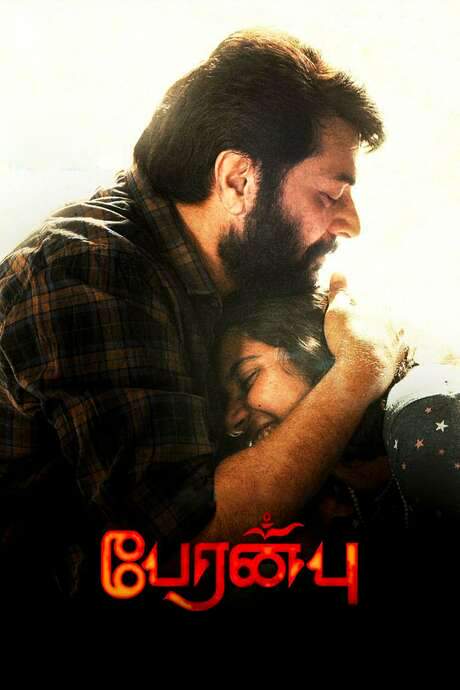
The film unfolds in well-paced chapters, centering on the life of the devoted father Amudhavan and his daughter Pappa. Amudhavan works abroad in Dubai, while his wife Stella stays in India with their 14-year-old daughter, who battles a muscular health condition that leaves her dependent on daily care. The story begins with Stella reaching out from afar, asking him to take responsibility for their child and then walking away from the family, a decision that prompts Amudhavan to return home after a decade to raise [Pappa] in person.
The return to a life in India is anything but simple. Amudhavan finds it hard to bridge the gap created by years spent abroad, and their presence in the neighborhood draws cold shoulders and whispers from neighbors who fear Pappa’s illness. A move to his brother’s house with his own family seems like a fresh start, but even there, misunderstandings fester. His sister-in-law, gripped by unfounded fear for her own child, insists they should leave, making the couple feel unwelcome and vulnerable. They end up back at their own home, where a steady, quiet fight unfolds as locals pressure them to sell the house and abandon the neighborhood they’ve called home for years. Through these pressures, the bond between Amudhavan and [Pappa] thickens, and their fragile world slowly begins to feel more like a shared refuge than a burden.
A turning point comes when Pappa begins menstruating, a moment that brings both fear and tenderness. Amudhavan comforts her with patience and practical help, seeking guidance from a woman named Vijaylakshmi. The figure who appears as a source of support is Viji, who moves in to lend a hand and meet basic needs in exchange for a promise of care and companionship. What starts as reliance gradually deepens into companionship, and the two adults find themselves drawn to one another, leading to a wedding that binds Amudhavan and Viji. Yet the happiness is fragile, because Viji’s true motives soon come to light: she’s not only interested in helping but also in taking ownership of the house by any means, even attempting to harm [Pappa] by pushing her into a well. The revelation that Viji is already married reinforces the heartbreak, and Amudhavan, overwhelmed and betrayed, leaves the house and tries to resume life apart from them, taking on work while enabling [Pappa] to stay behind.
As illness returns to the foreground, Pappa is diagnosed with a fungal infection, and Dr. Dhanapal suggests that she should spend time in a specialized home designed for children with her condition. The decision weighs heavily on Amudhavan, who agrees, torn between caretaking and his own livelihood. On this somber path, he encounters a trans woman named Meera. A kind-hearted Meera offers warmth and practical assistance, helping him search for a new home and providing a glimmer of hope when the future seems bleak. Yet tragedy interrupts their progress: during a visit, Amudhavan learns that Pappa was assaulted by workers at the home, leaving him to grapple with anger and fear for her safety.
In the darkest moment, Amudhavan contemplates ending both their lives and, that night, walks toward the sea with Pappa. They are saved by Meera, whose presence becomes a lifeline in that cruel hour. The final turn of the tale shifts from despair to renewal: Meera teaches Amudhavan about love in all its forms, and the pair ultimately marry. The family adjusts to a life built on trust and mutual care, with [Pappa] thriving under the steadfast love of her father and her stepmother, Meera, who have created a home where she can be supported and cherished. In the end, the story closes on a note of resilience and tenderness, with the family reconciled and the future bright for a girl who has weathered many storms.