Year: 2022
Runtime: More mins
Language: Telugu
Director: Harsha Pulipaka
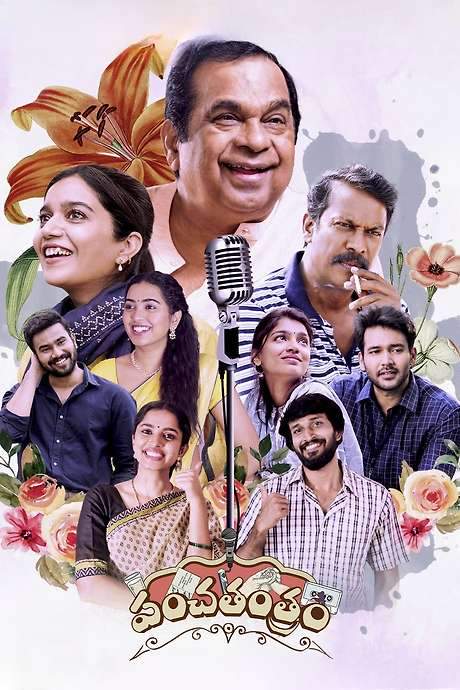
A retired All India Radio announcer, Veda Vyas Murthy, is encouraged by his daughter to fully retire. However, when a publishing house announces a story-narration contest, his passion for storytelling is reignited. He decides to participate and narrates five distinct stories, each exploring a different sense – sight, smell, sound, taste, and touch – bringing ancient tales to life.
Warning: spoilers below!
Haven’t seen Panchathantram yet? This summary contains major spoilers. Bookmark the page, watch the movie, and come back for the full breakdown. If you're ready, scroll on and relive the story!
Read the complete plot breakdown of Panchathantram (2022), including all key story events, major twists, and the ending explained in detail. Discover what really happened, and what it all means.
Five senses, five stories, one late-life dream: a quiet, hopeful journey about aging, ambition, and belief.
Vedavyas Murthy is a 63-year-old widower who lives with his daughter after retiring from All India Radio. When he shares a plan to pivot toward writing novels, his daughter pushes back, urging him to rest and enjoy the quiet of retirement. But Vedavyas resists, insisting that he’s far from finished and ready to chase a new chapter.
The film unfolds around a storytelling competition that pairs Vedavyas with five young writers. Each contestant must narrate five stories under a single overarching theme, and the audience is invited to witness how a single idea can blossom into a whole anthology. The twist lies in Vedavyas’s presence among the finalists—an elder figure surrounded by youth—and how his experience clashes with, yet enriches, the shared mission. The crowd and organizers are surprised to see the old man beside the younger contenders, and some treat him with skepticism or humor. Yet the old man stands his ground, unafraid to claim space for his voice in a landscape that often prioritizes speed over wisdom.
To frame his contribution, Vedavyas articulates his chosen theme and stakes the contest on a bold, artful premise: the five senses. The narrative he presents centers on four words that underline the entire project—Sight, Smell, Sound, Taste, and Touch—each linked to a life event and a set of emotions. The stories, he explains, travel beyond mere sensation; they become conduits for Peace, Fear, Will, Love, and Tenacity, turning intimate moments into universal truths. The storytelling itself becomes a bridge that blurs linguistic boundaries, inviting listeners from different backgrounds to find common ground in shared perception and feeling.
As the competition unfolds, the film delves into Vedavyas’s life off the stage. He is a devoted father who loves his daughter, a man who can still dream vividly even after decades of work in radio. His ambition to write novels is not a betrayal of his past, but a continuation of it—a testament to perseverance and the belief that new stories can emerge at any age. The tension with his daughter mirrors a broader dialogue about creativity, aging, and the pressure to retire one’s passions. Yet Vedavyas keeps telling his story through the five senses, turning each sense into a doorway to a memory, a hope, or a stubborn moment of courage.
The film ultimately celebrates a quiet resilience: the conviction that storytelling can unite generations, defy expectations, and illuminate what it means to stay engaged with life. It invites viewers to reflect on how art, when anchored in lived experience and shared humanity, can transcend barriers—whether linguistic, cultural, or temporal—and affirm that it’s never too late to write the next chapter.
Last updated: March 05, 2026 at 18:39
Explore frequently asked questions about Panchathantram (2022) with spoiler-rich answers covering the full plot summary, major story beats, character motivations, hidden details, and ending meaning. This movie summary FAQ helps explain confusing scenes, plot twists, and narrative decisions in clear, searchable detail.
Vyas enters the competition because his passion for storytelling was reignited when he learned about the contest. After retiring from All India Radio, he wanted to pursue a new chapter by writing novels, and the competition offered him a platform to prove that his voice still matters. His determination stems from refusing to accept that his creative journey ends with retirement.
Vyas's daughter wants him to fully retire and enjoy a quiet life, believing he has worked enough after decades at All India Radio. She pushes back against his plan to start a writing career, seeing it as unnecessary effort at his age. This represents the generational clash between respecting an elder's rest and honoring their continued ambitions.
The five senses theme, Sight, Smell, Sound, Taste, and Touch, forms the structural backbone of the competition. Each sense is linked to a core emotion: Sight to Peace, Smell to Fear, Sound to Will, Taste to Love, and Touch to Tenacity. Vyas uses these senses as doorways to memories, hopes, and moments of courage, transforming simple perception into universal truths.
Vyas is among the finalists despite his age because he was shortlisted based on his storytelling abilities, just like the five young writers. The competition is open to all, and his experience and passion earn him a place. The crowd and organizers are surprised to see an elderly figure among young contenders, but Vyas stands his ground to claim space for his voice.
The Sight story represents Peace through careful observation and inner calm. The Smell story embodies Fear, using scent to trigger memories and emotions. The Sound piece emphasizes Will and resilience, showing how voice can change outcomes. The Taste segment centers on Love, using flavor as a metaphor for connection and memory. The Touch tale explores Tenacity through contact that tests endurance.
The prize for winning the competition is a publishing contract designed to kick-start the winner's writing career. This represents the turning point that could launch a future in literature for whoever emerges victorious, fulfilling Vyas's dream of becoming a novelist.
When Vyas insists he is not done yet, he means that age should not mark the end of creativity or the need to tell stories. He argues that decades of work at All India Radio were not his entire life, and he still has stories to share. This moment sets up his stubborn resolve to pursue a new path rather than simply rest in retirement.
The film uses an anthology-within-a-film structure where Vyas narrates five distinct stories, each exploring one of the five senses. These stories are presented as part of the storytelling competition, with each tale connected to a specific emotion, Peace, Fear, Will, Love, and Tenacity. This format allows the narrative to explore different themes while demonstrating how a single idea can blossom into a complete anthology.
Storytelling bridges generational gaps by creating a space where Vyas's decades of experience enrich the shared mission with young writers. His presence among youth brings both clash and collaboration, showing that narrative can transcend age barriers. The film demonstrates how stories rooted in lived experience can connect listeners from different backgrounds through shared perception and feeling.
Vyas's career at All India Radio is the foundation of his storytelling passion, not a contradiction to his new dream. His ambition to write novels is a continuation of his radio work, a way to tell stories in a different medium. The film presents his writing dream as the next chapter of a lifelong narrative journey rather than a betrayal of his past.
Discover curated groups of movies connected by mood, themes, and story style. Browse collections built around emotion, atmosphere, and narrative focus to easily find films that match what you feel like watching right now.
Characters rediscovering their passion and purpose after retirement or a major life change.If you enjoyed Panchathantram, you'll love these movies about characters rediscovering their artistic spark. Explore heartwarming stories of passion reignited after retirement, films about finding new purpose, and similar uplifting tales of late-life creativity.
The narrative follows a character, often older, who feels a void after a major life transition like retirement. An unexpected opportunity or inner longing pushes them to revisit a past talent or hobby, leading to a journey of self-affirmation, mild external challenges, and ultimately, personal fulfillment.
These films are grouped together because they share a core theme of positive transformation through creativity. They offer a hopeful, gentle tone, focusing on the emotional rewards of pursuing a passion rather than high-stakes external success.
Films that use a framing device to tell multiple distinct tales connected by a theme.Looking for more films like Panchathantram with a nested narrative structure? Discover similar movies that use a framing device to tell multiple tales, anthology films with a connecting theme, and stories about the power of storytelling itself.
A protagonist, often a storyteller, guides the audience through a series of self-contained narratives. These tales are thematically linked—exploring concepts like the five senses, different emotions, or moral lessons—and their collective impact drives the character's development in the main plot.
These movies are linked by their unique narrative architecture. They provide a moderately complex viewing experience, blending the steady progression of a main plot with the variety and creative exploration of multiple short stories.
Don't stop at just watching - explore Panchathantram in full detail. From the complete plot summary and scene-by-scene timeline to character breakdowns, thematic analysis, and a deep dive into the ending - every page helps you truly understand what Panchathantram is all about. Plus, discover what's next after the movie.
Track the full timeline of Panchathantram with every major event arranged chronologically. Perfect for decoding non-linear storytelling, flashbacks, or parallel narratives with a clear scene-by-scene breakdown.
Discover the characters, locations, and core themes that shape Panchathantram. Get insights into symbolic elements, setting significance, and deeper narrative meaning - ideal for thematic analysis and movie breakdowns.