

Plot Explained Spoilers guaranteed!
Plot Explained

Browse by genre

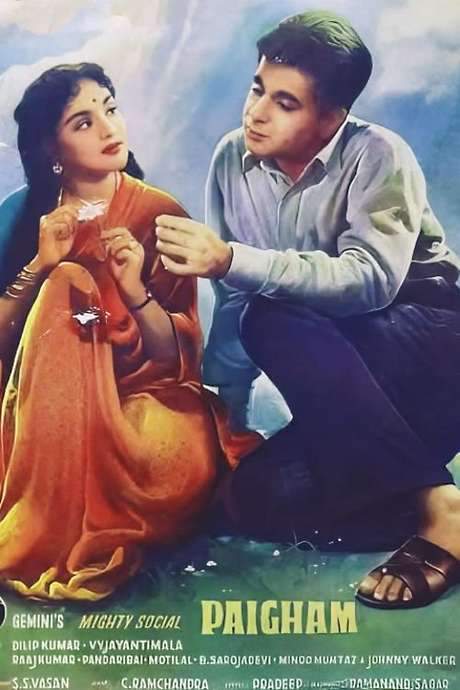
Paigham (1959) movie poster

Timeline

Paigham (1959) Timeline Explained – Every Event in Order

Release, runtime and language
1959 · 183 mins · Hindi
Directed by
S. S. Vasan
Starring
B. Saroja Devi, Johnny Walker, Dilip Kumar, Pandari Bai, S.N. Banerjee, Raaj Kumar

Mrs. Lal, a widow, shares a home with sons Ram and Ratan, daughter Sheela, and Ram’s wife Parvati and their children. Ram works in a mill; Ratan studies engineering in Calcutta. Returning, Ratan joins the mill, falls for typist Manju, angering Malti, daughter. When Sewakram defrauds workers, Ratan starts a union, which his brother Ram opposes.

On this page (5)
  1. 1 Where to watch
  2. 2 Events in order (12)
  3. 3 Timeline questions answered
  4. 4 Movie threads
  5. 5 Every angle

Where to watch

Where to Watch Paigham (1959)

Where can you watch Paigham? Stream, rent or buy it in the US, including on Amazon Video: current JustWatch availability with up-to-date prices.

Streaming availability powered by JustWatch

12 events in order · contains spoilers

Paigham Timeline: Events in Chronological Order

Every key event of Paigham (1959) in order, scene by scene, with when and where it takes place. Use it to untangle flashbacks, time jumps and parallel storylines, to refresh your memory before the sequel or to find the exact scene you are thinking of.

  1. Ratan studies engineering in Calcutta

    Ratan is pursuing engineering studies in Calcutta, indicating his aspirations beyond the family mill. His education sets the stage for later decisions that affect the family’s fortunes. The film uses this background to contrast his ambitions with the family’s traditional loyalties.

    Where
    Calcutta
  2. Ratan returns home and falls for Manju

    Ratan returns to the family and is offered a job at the mill, tying his future to the family business. He falls in love with Manju, a typist at the mill, which upset Malti, Sewakram's daughter. The romance introduces social tensions that complicate the family dynamics.

    Where
    Lal residence / mill
  3. Ratan uncovers fraud at the mill

    Ratan learns that Sewakram has been defrauding mill employees, exposing corruption at the heart of the business. The discovery motivates him to seek reform and stand up for the workers. The revelation strains relations with Sewakram and the powerful owners.

    Where
    Mill
  4. Ratan forms a union

    Inspired by the fraud, Ratan decides to form a workers' union to push for fair practices and accountability. He faces opposition from the mill leadership and from within his own family. The move heightens the fight over control of the mill.

    Where
    Mill
  5. Ram opposes the union

    Ram, loyal to Sewakram, opposes his brother Ratan's union plans, creating a rift between the siblings. His stance reflects the tension between personal loyalty and social justice. The household becomes a battleground for competing loyalties.

    Where
    Lal household
  6. Workers strike

    The union drive leads the workers to go on strike, challenging the operations of the mill. The action tests the resolve of both the workers and the mill owners. Public opinion begins to shift as the conflict escalates.

    Where
    Mill
  7. Ratan is expelled from the house

    In a heated confrontation, Ram throws Ratan out of the house, marking a dramatic break in the family’s unity. The act deepens the fracture between the brothers and threatens the household’s stability. The community begins to see the Lal family through the lens of the dispute.

    Where
    Lal residence
  8. Ratan is blacklisted

    Word spreads that Ratan is working against Sewakram, and he is blacklisted by the mill and other employers. The blacklist cuts off his employment prospects and isolates him from the industry. The social stigma reinforces his resolve to pursue change, though at a personal cost.

    Where
    Community / mills
  9. Sheela's marriage is canceled

    Sheela’s planned marriage to Kundan is canceled, dealing a blow to the family’s prestige. The cancellation underscores the social consequences of the ongoing dispute with Sewakram. The Lal family’s standing in the community continues to erode as a result.

    Where
    Lal household / community
  10. The central conflict looms over the future

    With the strike and the family’s divisions ongoing, the central question remains whether the workers can resist Sewakram’s control. The narrative thickens as more stakeholders take sides. The tension mounts as the community awaits a resolution.

    Where
    Town / mill
  11. Latter half addresses the reunion and fate

    The latter half of the film begins to address whether the Lal family will be re-united and how the workers’ struggle will unfold. The story shifts toward closure, testing both the family bonds and their collective strength. The outcome is framed as a turning point for all involved.

    Where
    Lal household / mill
  12. Resolution emerges (without spoilers)

    As the narrative moves toward resolution, the film presents the consequences of the choices made by Ram, Ratan, and the community. The final act focuses on the impact of these decisions on the family and the workers, leaving some tensions acknowledged but unresolved in detail.

Last updated: February 24, 2026 at 13:47

Was this helpful?

Timeline questions answered

Paigham Timeline Explained: Your Questions Answered

When does it happen, and why in that order? The questions people ask about the chronology of Paigham (1959): time jumps, flashbacks, cause and effect between scenes and the correct order of events, each answered with spoilers.

Q1

Why does Ram oppose Ratan's union at the mill?

Ram opposes the union because he is loyal to Seth Sewakram, the mill owner who employs him. Despite Ratan discovering that Sewakram has been defrauding the workers, Ram chooses to side with his employer rather than his brother. His opposition stems from fear of losing his job and his traditional loyalty to the family that has employed him.

  • ram lal
  • ratan lal
  • union
  • sewakram
  • mill workers
Q2

Why is Ratan blacklisted by the mills?

Ratan is blacklisted because he uncovers Seth Sewakram's fraudulent practices and decides to form a workers' union to demand fair treatment. When word spreads that he is working against Sewakram, the mill owner uses his influence to ensure Ratan cannot find employment elsewhere, cutting off his livelihood as punishment for challenging the system.

  • ratan lal
  • blacklisted
  • sewakram
  • union
  • unemployment
Q3

Why is Malti upset that Ratan likes Manju?

Malti is Seth Sewakram's daughter, and she has romantic feelings for Ratan. When Ratan falls for Manju, the mill typist, it not only complicates the social dynamics but also threatens Malti's personal hopes. This creates a conflict between personal loyalties and the business interests of her father.

  • malti
  • manju
  • ratan
  • romance
  • sewakram
Q4

Why is Sheela's marriage to Kundan canceled?

Sheela's engagement to Kundan is canceled as a direct consequence of the family's dispute with Seth Sewakram. The cancellation reflects the social consequences of the Lal family's conflict with the powerful mill owner, causing the family to lose prestige in their community.

  • sheela
  • kundan
  • marriage
  • cancelled
  • family honor
Q5

What fraud does Ratan discover at the mill?

Ratan discovers that Seth Sewakram has been defrauding the mill employees, cheating them out of their rightful earnings. This revelation motivates him to take action and form a union to demand accountability and fair practices from the mill ownership.

  • fraud
  • sewakram
  • mill
  • workers
  • corruption
Q6

Why does Ram throw Ratan out of the family home?

Ram ejects Ratan from the house during a heated confrontation over the union. While Ratan fights for workers' rights against Sewakram's exploitation, Ram sides with their employer. The ideological clash between the brothers becomes so intense that Ram forces Ratan to leave, marking a dramatic break in the family's unity.

  • ram
  • ratan
  • brothers
  • family
  • eviction
Q7

How does the Lal family reconcile in the end?

The latter half of the film addresses whether the Lal family can reunite after being torn apart by the union dispute. The resolution involves testing the bonds of duty and affection that initially held the household together. The ending is bittersweet, implying reunification after hardship.

  • reconciliation
  • family
  • reunion
  • resolution
  • brothers
Q8

What happens to the workers' strike at the mill?

The union drive led by Ratan prompts the workers to go on strike, challenging Sewakram's control over the mill. The central conflict revolves around whether the workers can break Sewakram's hold on the business. The strike escalates the tension between labor and ownership, forcing both sides to confront the consequences of their actions.

  • workers
  • strike
  • union
  • sewakram
  • labor dispute

Movie threads

More Movies Like Paigham, by Mood & Story

Curated lists built around what makes Paigham tick: the same mood, the same kind of story or the same emotional payoff. Each list explains why these movies belong together.

Movies about family divided by ideology like Paigham

Brothers divided by workplace justice while maintaining family bonds. Discover films where siblings or family members clash over workplace justice and social movements, similar to Paigham's narrative of brothers divided by labor rights. These movies explore how familial bonds withstand ideological differences.

  • family conflict
  • social justice
  • brotherhood
  • ideological clash
  • tense drama
  • moral dilemma
  • Tone: tense, dramatic
  • Pacing: steady, character-driven
Why these movies?

The story pattern: These stories typically begin with a close family unit disrupted by external social conflicts, where different members take opposing stances. The tension escalates as personal relationships are tested, culminating in a resolution that often finds common ground through shared humanity rather than complete ideological alignment.

Why they belong together: They share the compelling dynamic of intimate relationships strained by broader social issues, creating emotional stakes that resonate deeply with viewers who appreciate both family drama and social commentary.

Movies about labor rights awakening like Paigham

Young idealist confronts workplace exploitation while navigating personal relationships. Explore films similar to Paigham where a protagonist discovers workplace exploitation and leads the fight for justice. These stories blend personal growth with social activism in industrial settings.

  • social justice
  • awakening
  • corruption
  • union organizing
  • moral courage
  • workplace drama
  • Tone: dramatic, tense
  • Pacing: steady, methodical
Why these movies?

The story pattern: The narrative follows a protagonist who returns to or enters a community/industry and gradually uncovers systemic exploitation. Their awakening leads to organizing efforts that face resistance from established powers, while personal relationships complicate their commitment to the cause.

Why they belong together: They capture the compelling transformation of ordinary individuals into activists, combining personal drama with meaningful social commentary that resonates with viewers interested in justice-oriented storytelling.

Every angle

Paigham (1959) Explained: Plot, Timeline & Characters

Everything about Paigham in one place: what happens in the plot summary, the timeline in chronological order, the characters and meaning and a spoiler-free summary. What's After the Movie adds the cast, box office and post-credit scenes.

Coming soon on iOS and Android

The Plot Explained Movie Summary App

Plot summaries, endings explained and timelines on your phone. Catch up on any movie in minutes, save your favorites and never miss a twist again.

Be the first to know when we launch. Your email stays private, always.

Learn more about the app