Plot Explained Spoilers guaranteed!
Plot Explained

Browse by genre

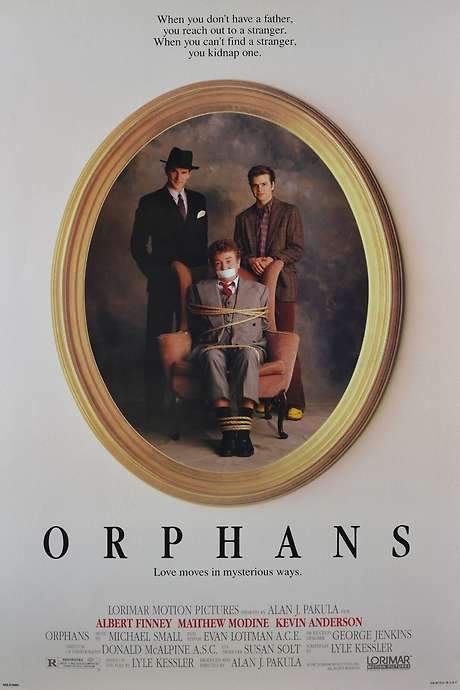
Orphans (1987) movie poster

Timeline

Orphans (1987) Timeline Explained – Every Event in Order

Release, runtime and language
1987 · 115 mins · English
Loading streaming availability…
Directed by
Alan J. Pakula
Starring
Albert Finney, Matthew Modine, Anthony Heald, Novella Nelson, Kevin Anderson, Frank Ferrara Sr.

Love moves in mysterious ways. Brothers Treat and Philip have only had each other since they were kids, when a small-time criminal abruptly upends their routine lives.

On this page (7)
  1. 1 Where to watch
  2. 2 Events in order (12)
  3. 3 Timeline questions answered
  4. 4 The book behind the movie
  5. 5 Movie threads
  6. 6 Movies like Orphans
  7. 7 Every angle
Loading streaming availability…

12 events in order · contains spoilers

Orphans Timeline: Events in Chronological Order

Every key event of Orphans (1987) in order, scene by scene, with when and where it takes place. Use it to untangle flashbacks, time jumps and parallel storylines, to refresh your memory before the sequel or to find the exact scene you are thinking of.

  1. Two brothers in a rundown Newark row house

    Treat and Phillip live in a dilapidated row house in Newark, eking out a precarious existence. Treat, the elder, is a violent pickpocket who drags himself and Phillip through daily danger. Phillip mostly watches from the sidelines, educating himself with magazines and television while the outside world looms.

    When
    1980s
    Where
    Newark, New Jersey
  2. Treat's daily theft for survival

    Treat robs people in the city to feed himself and Phillip, maintaining a brutal rhythm of survival. His violence masks a fragile, strained household and foreshadows the upheaval Harold will bring. The routine is a fragile shield over deeper tensions in their lives.

    When
    Daytime
    Where
    Newark streets
  3. Phillip seeks knowledge at home

    Phillip educates himself using magazines and television, trying to understand the world beyond their door. His quiet curiosity contrasts with Treat's volatile tendencies and hints at a new dynamic that might emerge. The home becomes a small classroom where ideas threaten their routine.

    Where
    Newark row house
  4. Treat abducts a mysterious man from a bar

    Treat abducts a mysterious man from a bar, Harold, clutching a briefcase full of stocks and bonds. Harold immediately asserts himself, turning the tables on his kidnapper. The encounter marks the start of a dangerous shift in the brothers' lives.

    When
    Evening
    Where
    Bar, Newark
  5. Harold infiltrates the household

    Harold begins to assimilate into the brothers' lives, quietly guiding their routine and manners. He subtly shapes Treat into a refined, genteel partner and exposes Phillip to new expectations. The household's power balance tilts as civility replaces raw survival.

    When
    Shortly after kidnapping
    Where
    Newark row house
  6. Treat becomes a gentleman under Harold's influence

    Under Harold's influence, Treat adopts a more polished demeanor and a restrained approach to life. The transformation alarms Phillip, who fears losing the world he understands. The once-chaotic home grows quiet, an uneasy veneer of civility masking deeper tensions.

    When
    Over weeks
    Where
    Inside the house
  7. Harold helps Phillip confront agoraphobia

    Harold pushes Phillip toward the outside world, encouraging him to step beyond the door. Phillip makes tentative progress, spurred by Harold's faith in him. The brothers' relationship reshapes as Phillip gains a fragile sense of agency.

    When
    Over time
    Where
    House entrance
  8. Tensions rise as Harold's disappearance is suspected

    People begin to notice Harold's absence and wonder what happened to the mysterious broker. The home becomes a site of rumor, and the brothers' reliance on Harold's moneymaking cover grows more obvious. External pressure amplifies the fragility of their fragile arrangement.

    When
    Days after disappearance
    Where
    Newark
  9. A late-night argument erupts between the brothers

    One night, a heated argument erupts between Treat and Phillip, built on fear, dependence, and a longing for the world beyond the door. The conflict exposes the rift between the brothers and the cost of Harold's presence. The tension leaves the home taut and unstable.

    When
    Night
    Where
    Newark row house
  10. Harold returns, revealed to be fatally wounded

    That same night, Harold returns, found mortally wounded. He reveals that his stay has limited time and that danger followed him. The shocking moment confirms that the arrangement cannot last and raises the stakes for all of them.

    When
    Night
    Where
    Newark row house
  11. Harold dies on the couch; Phillip by his side

    Harold collapses onto the living room couch and dies, with Phillip kneeling beside him. The death marks the collapse of his influence and the end of the brothers' uneasy plan. Treat breaks down emotionally, while Phillip's steadfast presence offers a last glimmer of support.

    When
    Moment of death (Night)
    Where
    Living room, row house
  12. Treat breaks down; Phillip offers comfort

    Treat finally breaks down in tears, the years of violence catching up with him. Phillip consoles his brother, offering quiet, compassionate support amid the tragedy. With Harold gone, the brothers must face an uncertain future alone.

    When
    After Harold's death
    Where
    Living room

Last updated: February 18, 2026 at 23:44

Was this helpful?

Timeline questions answered

Orphans Timeline Explained: Your Questions Answered

When does it happen, and why in that order? The questions people ask about the chronology of Orphans (1987): time jumps, flashbacks, cause and effect between scenes and the correct order of events, each answered with spoilers.

Q1

Why does Harold stay with the brothers after being kidnapped?

Harold stays because he immediately takes control of the situation when Treat ambushes him. Rather than resisting or fleeing, he insinuates himself into their lives, using his presence to reshape their routine. The briefcase full of stocks and bonds suggests Harold may be running from something or using the brothers as cover, though the exact reason remains ambiguous.

  • harold
  • kidnapping
  • stays
  • motivation
  • control
Q2

Why does Harold help Treat and Phillip?

Harold transforms both brothers, he teaches Treat refined manners and encourages Phillip to confront his agoraphobia. His motivation appears to be genuine, though his influence could also be seen as psychological manipulation. The story presents him ambiguously: he brings positive change but also disrupts the fragile balance of their household, creating tension between the brothers.

  • harold
  • help
  • transformation
  • treatment
  • phillip
  • motivation
Q3

Why does Treat change from violent to gentle?

Under Harold's influence over weeks, Treat transforms from a violent pickpocket into a more refined, courteous person. Harold subtly shapes his behavior and mannerisms, replacing his brutal survival tactics with gentler approaches. This transformation alarms Phillip, who fears losing the familiar world they had built.

Foreshadowing: The violence in Treat's daily theft foreshadows his eventual breakdown when that violent identity is stripped away.

  • treat
  • change
  • violence
  • gentle
  • transformation
  • harold
Q4

Why is Phillip afraid to leave the house?

Phillip suffers from agoraphobia, a fear of leaving the house that Treat has long warned might be deadly. His world is confined to their dilapidated row house where he educates himself through magazines and television. Harold pushes him to confront this fear, and Phillip makes tentative progress toward stepping outside.

  • phillip
  • agoraphobia
  • fear
  • house
  • leaving
Q5

What causes the argument between Treat and Phillip?

A late-night argument erupts between the brothers built on fear, dependence, and Phillip's longing for the world beyond the door. The tension stems from Harold's presence reshaping their dynamics, Phillip fears losing the world he understands while Treat's transformation creates distance between them. The conflict exposes the growing rift caused by Harold's influence.

  • argument
  • treat
  • phillip
  • tension
  • harold
Q6

Why does Harold return wounded?

Harold returns badly wounded on the same night of the brothers' argument. He reveals that his stay has limited time and that danger followed him, suggesting he was being pursued or had enemies. The wound is fatal, Harold collapses and dies on the couch shortly after returning, confirming that his arrangement with the brothers cannot last.

  • harold
  • wounded
  • returns
  • danger
  • dies
Q7

Why does Harold die?

Harold dies from his wounds on the brothers' couch, with Phillip beside him. The nature of his attackers or the danger that followed him is not specified, but he explicitly states that danger caught up with him. His death marks the collapse of his influence and leaves the brothers to face an uncertain future.

  • harold
  • death
  • wounded
  • dies
  • couch
Q8

What happens to the brothers after Harold dies?

After Harold dies, Treat finally breaks down in tears, the years of violence and the sudden loss catch up with him. Phillip consoles his brother, offering quiet, compassionate support amid the tragedy. With Harold gone, the brothers must face an uncertain future alone, their relationship forever changed by Harold's brief but transformative presence.

  • treat
  • phillip
  • harold dies
  • comfort
  • future
Q9

Why does Harold's presence upset the household balance?

Harold's presence unsettles the fragile balance because he fundamentally changes the brothers' routine and power dynamics. While he helps Phillip gain independence and transforms Treat into a gentler person, he also disrupts the codependent world they had built. His influence creates friction between the brothers as Phillip fears losing his familiar life and Treat's identity shifts.

  • harold
  • tension
  • household
  • balance
  • control
Q10

What motivates Treat to kidnap Harold from the bar?

Treat ambushes Harold because he is a pickpocket who sustains the brothers through petty theft. The briefcase full of stocks and bonds represents an opportunity, Treat sees it as a chance to improve their precarious situation through robbery. However, Harold immediately turns the tables, showing he is not a typical victim.

  • treat
  • kidnap
  • robbery
  • motivation
  • stocks
  • bonds

Movie threads

More Movies Like Orphans, by Mood & Story

Curated lists built around what makes Orphans tick: the same mood, the same kind of story or the same emotional payoff. Each list explains why these movies belong together.

Claustrophobic family dramas like Orphans

Emotionally heavy stories of families trapped by their circumstances. If you enjoyed the intense, confined family dynamics in Orphans, you'll appreciate these movies about families trapped together by circumstance. These films feature similar emotional weight and tense domestic situations.

  • claustrophobic
  • tense
  • melancholic
  • gritty
  • emotional
  • domestic tension
  • Tone: tense, melancholic
  • Pacing: steady character-driven
Why these movies?

The story pattern: Stories typically focus on family members forced to confront their relationships while confined in oppressive environments, leading to psychological transformations and emotional breakthroughs.

Why they belong together: They share a focus on dysfunctional family bonds, confined settings, heavy emotional weight, and steady pacing that builds tension through character interactions rather than external action.
Bittersweet transformation stories like Orphans

Characters find growth and hope amidst tragic circumstances. Movies similar to Orphans that follow characters finding hope and growth through painful experiences. If you liked the psychological transformation arc and bittersweet tone, these films capture that same emotional journey.

  • bittersweet
  • transformative
  • melancholic
  • hopeful moments
  • emotional growth
  • tragic
  • Tone: bittersweet, melancholic
  • Pacing: steady, character-focused
Why these movies?

The story pattern: The narratives follow characters trapped in limiting situations who experience transformative relationships or events that offer liberation, but the positive change comes wrapped in tragedy or significant loss.

Why they belong together: They share a bittersweet tone where hopeful character development is balanced by tragic elements, creating emotionally complex stories of growth through pain.

If you liked this

Movies Like Orphans

Similar movies to Orphans: the same genre, themes or kind of story. Each one comes with its own plot summary, timeline and ending explained.

Browse all movie summaries

Every angle

Orphans (1987) Explained: Plot, Timeline & Characters

Everything about Orphans in one place: what happens in the plot summary, the timeline in chronological order, the characters and meaning and a spoiler-free summary. What's After the Movie adds the cast, box office and post-credit scenes.

Coming soon on iOS and Android

The Plot Explained Movie Summary App

Plot summaries, endings explained and timelines on your phone. Catch up on any movie in minutes, save your favorites and never miss a twist again.

Be the first to know when we launch. Your email stays private, always.

Learn more about the app