Year: 1983
Runtime: 109 mins
Language: Italian
Director: Lamberto Bava
Bruno, an up‑and‑coming film composer, is hired to score a horror film. He moves into a secluded villa to work, but art and reality blur when a ruthless killer starts murdering anyone who visits, turning his creative retreat into a deadly nightmare. Each scream seems to echo his music, forcing him to face the terror he was meant to soundtrack.
Warning: spoilers below!
Haven’t seen A Blade in the Dark yet? This summary contains major spoilers. Bookmark the page, watch the movie, and come back for the full breakdown. If you're ready, scroll on and relive the story!
Read the complete plot breakdown of A Blade in the Dark (1983), including all key story events, major twists, and the ending explained in detail. Discover what really happened—and what it all means.
Bruno, a skilled musician, is hired to compose the soundtrack for an upcoming horror film. He moves into the villa where the story unfolds, hoping the eerie atmosphere will spark his creativity. The director, Sandra, is obsessed with capturing the fear of the dark and keeps the film’s ending hidden from the crew. The property owner, Tony Rendina, who is preparing to depart for his father’s rig in Kuwait, is pleased that the composer agrees to use part of the house as a makeshift studio and to record some of the music on a cassette.
Inside the building, Giovanni, the groundskeeper, lurks in the basement, while Bruno’s girlfriend, Giulia, an actress, is away in another city for a stage gig. Bruno learns that before Tony owned the property, a woman named Linda leased the villa, but she vanished after moving out, leaving a hush of rumors that skews the mood of the place.
An unseen figure steals an extendable box cutter from Bruno’s studio, foreshadowing danger to come. Bruno soon meets Katia, a neighbor who enters unannounced and flirts with him before slipping away. Katia leaves behind a diary that hints at Linda’s “secret.” Outside, the killer drags Katia’s body through the yard, while Bruno is left oblivious after a cigarette break, only to find blood on his pants and receive a silent, ominous phone call.
Back inside, Bruno revisits his music tapes and hears a whispered warning from a woman about Linda’s secret: “no one must know.” The tapes are later destroyed, and Katia’s diary pages are burned in the fireplace, as if someone is trying to erase the past. Giulia makes a surprising visit to Bruno, stopping by between rehearsals, while he voices suspicions about Katia’s murder. Giulia, however, doubts him and worries that he might be cheating. When Bruno calls the theater company, the director reveals that Giulia was fired from the play, adding another layer of strain to their fragile bond.
Katia’s roommate Angela arrives, explaining that Linda sometimes let them use her pool. Angela is evasive when asked about Linda, but Bruno presses on. In the pool, Angela discovers the box cutter sunk to the floor, a sign that someone has been tampering with the villa. Linda, wearing a skirt and red nail polish and armed with a knife, returns to the bathroom where she hides her face behind a plastic cover and attacks Angela, slashing her throat in the tub after stabbing her hand into the vanity—an eerie, brutal scene that marks Linda’s dangerous presence in the house.
Bruno’s sense of danger grows when a kitchen knife is found out of place and a hole appears in the vanity. He and Sandra search Linda’s stored belongings in the basement, uncovered among odd items is a suitcase full of tennis balls, and Sandra explains that Linda is the film’s primary inspiration. Linda then returns to the villa and retaliates by shredding the final scene in the studio with scissors, a chilling act of destruction aimed at erasing the truth.
Giovanni later discovers Katia and Angela dead inside a tank, and Linda bludgeons him to death with his own wrench. Sandra arrives, seeking reconciliation, but Linda ambushes her, dragging her by the film reels and garroting her in a brutal demise while laughing maniacally. Giulia arrives to find Sandra’s body and is trapped in the house as Linda manipulates the space: closing the garage door, messing with the lights, and showering the floor with tennis balls to heighten the claustrophobic fear. Giulia hides in a cabinet when she sees Linda, who wedges a knife in the door, threatening her escape.
When Bruno finally arrives, Giulia seizes the chance to run, but Linda pierces her through the heart with the kitchen knife. Bruno confronts the killer and knocks Linda out with a brick, only to discover that the supposed killer has vanished, leaving behind only a wig in place of a body. The terrifying truth finally comes to light: the murderer is the owner himself, a man who used Linda as a clandestine alter-ego to enact violence in a bid to prove his own masculinity. As the confrontation unfolds, Bruno realizes that Tony’s secret misery—an inner childlike fragility—fed a murderous impulse toward the women in Linda’s orbit, a dark cycle of rage and identity.
In a final, uneasy twist, the truth about Tony’s dangerous duality is laid bare: a man who could not reconcile his own insecurities with the image of manhood used a hidden persona to commit acts of violence, leaving Bruno to grapple with the realization that the darkness haunting the villa was not only in the film being made, but in the people sharing that space with him.
I’m not a female child
Last Updated: October 09, 2025 at 14:21
Discover curated groups of movies connected by mood, themes, and story style. Browse collections built around emotion, atmosphere, and narrative focus to easily find films that match what you feel like watching right now.
Stories where creative expression becomes a catalyst for violent psychological unraveling.If you liked the chilling blend of creative work and murderous reality in A Blade in the Dark, explore similar movies where artists become trapped in their own horrifying narratives. These stories feature composers, writers, and painters whose art fuels or mirrors a psychological collapse, perfect for fans of dark, meta-thrillers.
These narratives often feature an artist, isolated to focus on their craft, who discovers that their creative subject matter is bleeding into reality. The central conflict involves a killer or a malevolent force that seems to be acting out the artist's dark themes, forcing them to question their own sanity and confront a violent truth.
They are grouped by the unique thematic fusion of artistic creation and psychological horror. The shared experience is one of meta-commentary, where the act of making art is directly threatened by the very darkness it explores, creating a deeply unsettling and claustrophobic vibe.
Stylish, violent thrillers where a trapped protagonist hunts a hidden killer.For viewers who enjoyed the classic giallo elements in A Blade in the Dark—the secret killer, the isolated villa, and the brutal murders—this collection features similar stylish and suspenseful mystery thrillers. Discover movies that capture the same paranoid, claustrophobic feel and focus on unraveling a killer's hidden past.
Stories in this thread follow a specific pattern: an outsider is confined to a specific, often opulent or unusual location where a killer begins eliminating a cast of characters one by one. The protagonist must act as a detective to uncover the killer's identity, which is typically tied to a repressed trauma or secret, leading to a bleak and violent revelation.
They share the core DNA of the giallo subgenre: high-contrast style, a focus on suspense over pure horror, a whodunit structure with a psychological twist, and a palpable sense of paranoia. The experience is defined by stylish violence and a steady, tension-building pace.
Don't stop at just watching — explore A Blade in the Dark in full detail. From the complete plot summary and scene-by-scene timeline to character breakdowns, thematic analysis, and a deep dive into the ending — every page helps you truly understand what A Blade in the Dark is all about. Plus, discover what's next after the movie.
Track the full timeline of A Blade in the Dark with every major event arranged chronologically. Perfect for decoding non-linear storytelling, flashbacks, or parallel narratives with a clear scene-by-scene breakdown.
Discover the characters, locations, and core themes that shape A Blade in the Dark. Get insights into symbolic elements, setting significance, and deeper narrative meaning — ideal for thematic analysis and movie breakdowns.
Get a quick, spoiler-free overview of A Blade in the Dark that covers the main plot points and key details without revealing any major twists or spoilers. Perfect for those who want to know what to expect before diving in.
Visit What's After the Movie to explore more about A Blade in the Dark: box office results, cast and crew info, production details, post-credit scenes, and external links — all in one place for movie fans and researchers.
Discover movies like A Blade in the Dark that share similar genres, themes, and storytelling elements. Whether you’re drawn to the atmosphere, character arcs, or plot structure, these curated recommendations will help you explore more films you’ll love.
A Blade in the Dark (1983) Scene-by-Scene Movie Timeline
A Blade in the Dark (1983) Movie Characters, Themes & Settings
A Blade in the Dark (1983) Spoiler-Free Summary & Key Flow
Movies Like A Blade in the Dark – Similar Titles You’ll Enjoy
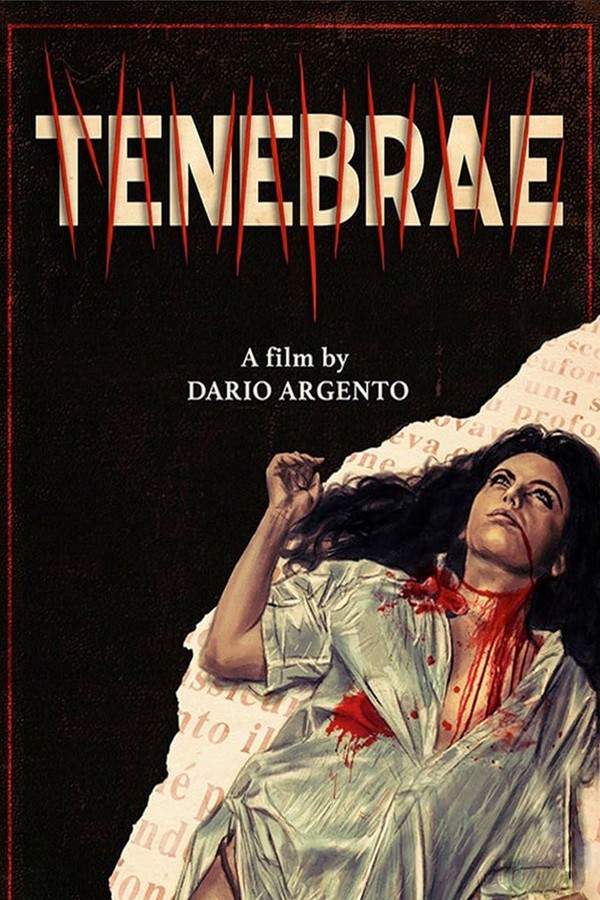
Tenebrae (1984) Spoiler-Packed Plot Recap
Cold & Dark (2005) Story Summary & Characters
Dark Corners (2006) Movie Recap & Themes
Murder Obsession (1981) Movie Recap & Themes
Satan’s Blade (1984) Detailed Story Recap
Knife Under the Throat (1986) Full Summary & Key Details
Bloody Moon (1981) Movie Recap & Themes
Blood and Lace (1971) Detailed Story Recap
A Bay of Blood (1971) Movie Recap & Themes
Beyond the Darkness (1979) Film Overview & Timeline
The Whip and the Body (1963) Full Summary & Key Details
My Dear Killer (1972) Complete Plot Breakdown
Blood and Black Lace (1964) Spoiler-Packed Plot Recap
In the Folds of the Flesh (1970) Film Overview & Timeline
The Black Belly of the Tarantula (1971) Plot Summary & Ending Explained