Plot Explained Spoilers guaranteed!
Plot Explained

Browse by genre

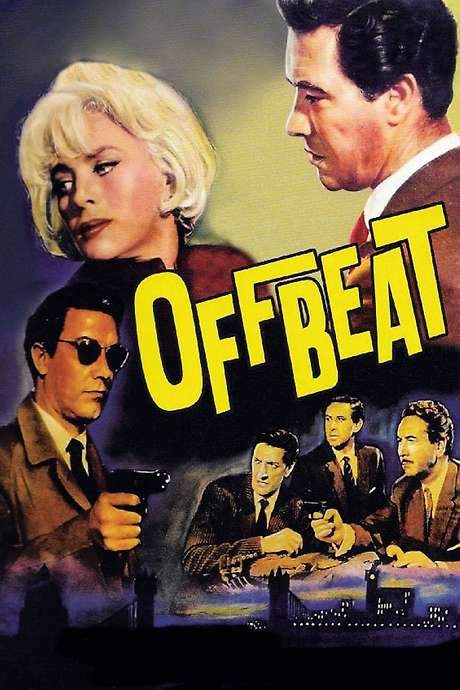
Offbeat (1961) movie poster

Plot Summary

Offbeat (1961) Plot Summary Explained

Release, runtime and language
1961 · 71 mins · English
Directed by
Cliff Owen
Starring
John Meillon, Anthony Dawson, Ronald Adam, John Phillips, Tom Clegg, Mai Zetterling

When Scotland Yard hits a dead end pursuing a ruthless gang of thieves and bank robbers, they enlist Layton, a solitary MI5 operative, to infiltrate the organization. Layton must win the criminals’ confidence, maneuver through the dangerous underworld, and provide the police the intelligence needed to dismantle the syndicate.

On this page (5)
  1. 1 What happens: full plot
  2. 2 Plot questions answered
  3. 3 Movie threads
  4. 4 Categories
  5. 5 Every angle

Full plot summary · contains spoilers

What Happens in Offbeat: Full Plot Summary

The whole story of Offbeat (1961) explained, from the opening scene to the final frame: every key event, every twist and what it all adds up to. Read it as a quick recap before the sequel, to check a scene you missed, or to finally understand what really happened.

Layton, William Sylvester — an MI5 loner who infiltrates a ruthless crime gang by adopting the alias Steve Ross — steps into a world that operates like a tightly run company, with salaries, pensions, and a camaraderie he has never encountered before. He studies the gang’s rhythms, learns their trust-building rituals, and prepares to slip deeper into their ranks, all while maintaining the careful balance his cover requires.

Within this already fragile balance, Layton’s mission begins to feel personal. He becomes romantically involved with Ruth Lombard, Mai Zetterling, a member of the gang. As his cover tightens, Ruth’s suspicions about his true identity begin to surface, but her growing feelings keep her from voicing them, creating a tense undercurrent to their budding relationship.

The gang operates with corporate precision, drilling and tunneling into an underground vault filled with jewels. The heist unfolds with careful planning and a swift, methodical rhythm. After the jewels are secured, they meet with a potential buyer who strikes a hard bargain, testing every member’s nerves and loyalties. The buyer, who had known the real Steve Ross, picks up on hints that Layton is not the man he pretends to be, even as Layton struggles to hold onto his false identity.

Caught between duty and emotion, Layton finally admits his impersonation. Scotland Yard arrives, and the entire gang is arrested, closing the arc of a mission that started with danger and deception and moved into a fragile, if fleeting, closeness among outlaws and undercover officers alike. In the aftermath, Layton grapples with a profound sense of betrayal: the comradeship and love he found among the gang are suddenly withdrawn, leaving him to face the consequences of his double life and the cost of a connection built on a dangerous lie.

Last updated: March 05, 2026 at 18:41

Was this helpful?

Plot questions answered

Offbeat Plot Explained: Your Questions Answered

The questions people ask most about Offbeat (1961): what happens in the confusing scenes, why the characters do what they do, the twists, hidden details and what the ending means. Each answer contains spoilers.

Q1

Why does Layton become romantically involved with Ruth Lombard?

Layton develops feelings for Ruth because living among the gang for an extended period blur the lines between his cover identity and his true self. The gang's unusual camaraderie, with its salaries, pensions, and genuine companionship, creates an environment where Layton experiences authentic human connection he lacks in his solitary MI5 life. As he spends more time with Ruth, his emotional stakes deepen beyond the mission, making it increasingly difficult to maintain his deception.

Foreshadowing: Earlier scenes show Layton observing the gang's social rituals and gradually becoming integrated into their group dynamic, establishing the foundation for his emotional vulnerability.

  • layton
  • ruth lombard
  • romance
  • undercover
  • emotions
  • infiltration
Q2

Why doesn't Ruth reveal her suspicions about Layton's true identity?

Ruth remains silent about her suspicions because she is torn between her growing affection for Layton and her emerging doubts. Though she notices inconsistencies in his behavior and his unusual familiarity with police procedures, she chooses not to voice her concerns because doing so would risk destroying the relationship she has come to value. Her emotional investment overrides her instinct to expose the deception.

Foreshadowing: Ruth's earlier observations of Layton's mannerisms and knowledge that doesn't fit a criminal background plant the seeds of her suspicion.

  • ruth lombard
  • suspicion
  • layton identity
  • silence
  • feelings
Q3

How does the buyer recognize that Layton is impersonating Steve Ross?

The buyer had previously known the real Steve Ross personally, so he could detect subtle differences in Layton's appearance, behavior, or mannerisms that didn't match the man he once knew. This familiarity allows him to pick up on hints that something is off, even though Layton's cover is otherwise convincing enough to fool the gang members who never met the original Steve Ross.

Foreshadowing: The film establishes early on that Steve Ross was a real criminal believed dead at sea, making it plausible someone outside the gang would recognize the impersonation.

  • buyer
  • steve ross impersonation
  • recognition
  • deception
  • real steve ross
Q4

What triggers Layton to admit his true identity to the gang?

Layton confesses his impersonation when the buyer's recognition creates immediate danger of exposure. With the truth potentially about to unravel from an external source, Layton decides to take control of the narrative by admitting he has been impersonating Steve Ross. This moment represents his attempt to manage the fallout before circumstances force the revelation through less controllable means.

Foreshadowing: The buildup of tension during the buyer meeting, where suspicious glances are exchanged, creates the pressure that leads to Layton's decision.

  • layton confession
  • impersonation
  • steve ross
  • exposure
  • admission
Q5

Why does Layton feel betrayed by the gang after their arrest?

Layton experiences profound betrayal because despite knowing his cover was fake, he genuinely came to care about the gang members as friends. The camaraderie, shared risks, and emotional connections he formed during the infiltration felt real to him, even though they were built on deception. When his new community rejects him after the arrest, he confronts the painful reality that his double life produced real feelings on his end while remaining fundamentally dishonest.

Foreshadowing: Earlier scenes depicting Layton enjoying the gang's company and developing genuine bonds foreshadow the emotional cost of their subsequent rejection.

  • layton
  • betrayal
  • emotional fallout
  • rejection
  • double life
  • undercover cost
Q6

How does the gang operate like a legitimate business?

The gang functions with corporate precision, maintaining formal roles, paying salaries, offering pensions, and operating through a clear hierarchy. This structure creates an ironic contrast between criminal enterprise and legitimate business, making the gang's operations feel surprisingly organized and their member loyalty appear genuine rather than purely transactional.

Foreshadowing: Layton's initial observation of the gang's routines and organizational structure establishes early that this is no ordinary collection of criminals.

  • gang structure
  • business operations
  • hierarchy
  • salaries
  • pensions
  • organization
Q7

What happens after the buyer realizes Layton is an impostor?

Once the buyer recognizes that Layton is not the real Steve Ross, the dynamic immediately shifts from a criminal transaction to a tense confrontation about identity. This discovery threatens to expose Layton's entire cover and puts the gang at risk of betrayal from within their own operation. The tension escalates as the group processes this revelation while still engaged in the criminal deal.

Foreshadowing: The buyer meeting was already testing every member's nerves through hard bargaining, and this discovery adds personal deception to the transactional pressure.

  • buyer confrontation
  • impostor exposure
  • gang tension
  • deal jeopardy
Q8

How does Scotland Yard know when to arrest the gang?

Scotland Yard's timing coincides with Layton's infiltration reaching its culmination point. As an MI5 operative, Layton has been providing intelligence throughout his undercover work. The arrest happens shortly after Layton admits his impersonation, suggesting the police were monitoring the situation closely and ready to move in once the heist was complete and the evidence gathered.

Foreshadowing: The setup establishes that Layton maintained communication with his handlers, making the coordinated arrest a logical endpoint to his mission.

  • scotland yard
  • arrest
  • timing
  • police raid
  • mi5
  • intelligence
Q9

Why does Ruth keep her suspicions hidden despite having doubts about Layton?

Ruth suppresses her suspicions because her emotional connection to Layton outweighs her rational doubts. She prefers the uncertainty of not knowing to the potential destruction of their relationship. Her choice to remain silent reflects a common human tendency to avoid truths that would disrupt something precious, even when opportunity for revelation presents itself multiple times throughout the story.

Foreshadowing: The text notes Ruth's growing feelings keep her from voicing suspicions, indicating the emotional stakes override her logical instincts.

  • ruth
  • suspicions hidden
  • doubt
  • emotional conflict
  • silence
Q10

What makes Layton's position particularly difficult throughout the film?

Layton faces an impossible balance between his duty as an MI5 operative and his growing emotional investment in the gang's world. Living as Steve Ross requires him to build genuine relationships while knowing he will ultimately betray everyone involved. The longer he remains undercover, the more his personal connections conflict with his professional obligation to bring down the criminals he has come to genuinely like.

Foreshadowing: The film establishes early that Layton is a loner in MI5, making the unexpected warmth of gang companionship particularly impactful for his psychological state.

  • layton conflict
  • duty vs feelings
  • undercover struggle
  • double life
  • emotional toll

Movie threads

More Movies Like Offbeat, by Mood & Story

Curated lists built around what makes Offbeat tick: the same mood, the same kind of story or the same emotional payoff. Each list explains why these movies belong together.

Movies about undercover agents with divided loyalties like Offbeat

Agents who infiltrate criminal worlds and begin to sympathize with their targets. If you liked the moral ambiguity and undercover tension in Offbeat, explore more movies about agents who infiltrate criminal organizations and grapple with conflicting loyalties. These films often feature bittersweet endings and a tense, steady pace.

  • undercover
  • moral conflict
  • double life
  • betrayal
  • found family
  • tense
  • Tone: tense, morally ambiguous
  • Pacing: steady, methodical
Why these movies?

The story pattern: The narrative follows an operative undercover in a close-knit group, gradually developing camaraderie and respect that complicates their mission. The central conflict becomes an internal moral struggle, with the climax often involving a painful choice between professional duty and personal bonds.

Why they belong together: These movies share a focus on the psychological toll of deception, the theme of found community within an enemy group, and a bittersweet emotional tone where professional success comes with personal loss.
Methodical crime thrillers with emotional stakes like Offbeat

Slow-burn heist and investigation stories driven by character relationships. Fans of Offbeat who enjoyed its steady pacing and the emotional weight behind the criminal investigation will find more movies here. These stories blend meticulous procedural elements with the personal drama of their characters.

  • methodical
  • heist planning
  • tense
  • brotherhood
  • investigation
  • emotional stakes
  • Tone: tense, bittersweet
  • Pacing: steady, deliberate
Why these movies?

The story pattern: The plot unfolds through careful planning and execution, whether it's a heist or a police operation. The emotional core comes from the relationships forged during this process, adding a layer of personal risk and consequence to the otherwise clinical proceedings.

Why they belong together: They are grouped by their shared steady pacing, medium intensity, and a focus on how professional missions are complicated by personal entanglements, creating a unique blend of procedural detail and human drama.

Categories

Movie Lists Featuring Offbeat

Offbeat appears in these hand-built movie categories. Each one groups movies by a specific mood, theme or story type, with their plot summaries and endings explained.

View all movie categories

Every angle

Offbeat (1961) Explained: Plot, Timeline & Characters

Everything about Offbeat in one place: what happens in the plot summary, the timeline in chronological order, the characters and meaning and a spoiler-free summary. What's After the Movie adds the cast, box office and post-credit scenes.

Coming soon on iOS and Android

The Plot Explained Movie Summary App

Plot summaries, endings explained and timelines on your phone. Catch up on any movie in minutes, save your favorites and never miss a twist again.

Be the first to know when we launch. Your email stays private, always.

Learn more about the app