#177 Year: 2026
Runtime: 1 h 30 m
Language: english
Director: Ben Wheatley
Echo Score: 72Budget: $17M
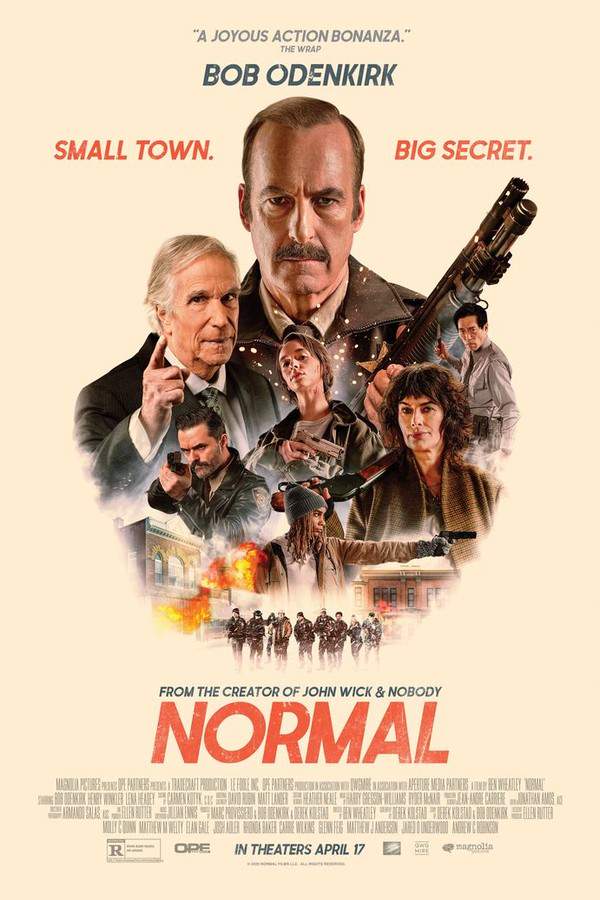
Sheriff Ulysses (Bob Odenkirk) takes a temporary assignment in the sleepy Midwestern town of Normal, hoping the change will ease his marital problems and the guilt from recent duty‑related mistakes. A botched bank robbery shatters the town’s calm, unintentionally revealing a buried secret that forces Ulysses to confront his past while defending the community from the darkness it uncovers.
Find where to stream, rent, or buy Normal (2026) in the US with current JustWatch availability, up-to-date pricing, and platform listings for subscription, rental, and digital purchase options.
Warning: spoilers below!
Haven’t seen Normal yet? This summary contains major spoilers. Bookmark the page, watch the movie, and come back for the full breakdown. If you're ready, scroll on and relive the story!
Still thinking about how Normal (2026) ended? Here’s a full breakdown of the ending, key final moments, major twists, and the deeper meaning behind the film’s conclusion.
The climax of Normal shifts from a desperate survival story into a bloody spectacle of dark comedy and redemption. After discovering that the town is actually a secret hub for the Yakuza, Ulysses finds himself betrayed by the community he was hired to protect. The finale hinges on a chaotic, temporary truce; realizing that Yakuza enforcers are incoming, Ulysses and his enemies among the town’s populace agree to a ceasefire to hide the evidence of their internal warfare. They stage a decoy car crash to fool the arriving criminals, a plan that showcases the film’s unique blend of violence and humor. However, the accidental death of a Yakuza leader shatters the ruse, leading to a final, explosive confrontation that decimates the town’s leadership and their criminal partners.
The emotional resolution centers on Ulysses confronting his past failures. The film reveals that his transient, detached lifestyle is a penance for a tragic incident years prior, where his inaction regarding an abuse allegation led to the death of a young woman. By the end of Normal, Ulysses is able to break this cycle of guilt. He ensures the survival of the innocent bystanders and bank robbers, Lori and Keith, and saves his new deputy, Alex. This successful intervention serves as a direct counterpoint to his past mistake, allowing him to reclaim his identity as a protector rather than a bystander.
Ultimately, the film concludes with a cynical yet satisfying separation of paths. Ulysses and Alex flee the carnage to continue their work as traveling interim sheriffs, a relationship that grants Ulysses a second chance at connection and allows him to finally reach out to his estranged wife. Conversely, the town of Normal itself does not find salvation in the traditional sense. The surviving deputy, Blaine, remains behind to become the permanent sheriff, covering up the massacre to maintain the town’s lucrative arrangement with the Yakuza. The ending posits that while individual redemption is possible, the systemic corruption of the town—born out of economic desperation—is too entrenched to dismantle, leaving the community to quietly prosper from its dark secrets.
Last updated: June 09, 2026 at 06:48
Read frequently asked questions about the ending of Normal (2026), including final-scene interpretation, twist explanations, character outcomes, and the deeper meaning behind the conclusion. This ending explained FAQ is designed for viewers searching for clear spoiler-heavy answers and ending breakdown insights.
Ulysses realizes the Yakuza enforcers are incoming and the town's corrupt population are his only allies against an overwhelming external threat. Both sides agree to a ceasefire to hide the evidence of their internal warfare and present a united front against the incoming criminals. This desperate alliance showcases the film's blend of dark humor and violence, as former enemies stage a decoy car crash together to fool the arriving Yakuza.
Earlier tensions between Ulysses and the townspeople hint at their willingness to put aside differences when external forces threaten their shared interests.
The Yakuza leader's death is accidental, shattering the carefully staged ruse. During the chaotic confrontation following the decoy car crash, the leader is killed in the crossfire or during the explosive final confrontation. This accidental death triggers the bloody climax that decimates the town's leadership and their criminal partners, forcing Ulysses into the final desperate fight.
The fragile nature of the truce is established early, making its breakdown inevitable.
Years before the film, Ulysses failed to act on an abuse allegation, leading to the death of a young woman. This tragic incident is why he lives a transient, detached lifestyle, he sees it as penance for being a bystander when he should have been a protector. His entire arc in Normal represents a chance to break this cycle of guilt and reclaim his identity as someone who acts rather than watches.
Ulysses's initial reluctance to engage and his constant sense of detachment hint at unresolved psychological wounds.
Blaine remains behind to become Normal's permanent sheriff specifically to cover up the massacre and maintain the town's lucrative secret arrangement with the Yakuza. The corruption is too deeply entrenched in the community's economic survival for anyone to dismantle it. Blaine's choice represents the film's theme that systemic corruption rooted in desperation cannot be easily overturned, only hidden deeper.
Blaine's earlier complicity in the town's secrets foreshadows his willingness to protect the arrangement at any cost.
Yes, Ulysses ensures the survival of Lori and Keith, the bank robbers who became unlikely allies during the crisis. This successful intervention directly counters his past failure to protect the vulnerable, allowing him to finally act as a protector rather than a bystander. Their survival represents one of the few clear victories in an otherwise ambiguous ending.
Ulysses's protective instincts toward the bank robbers signal his transformation from detached observer to active defender.
Yes, Ulysses saves his new deputy Alex during the final confrontation. This rescue is crucial to Ulysses's redemption arc because it mirrors and inverts his past failure, where he once failed to save a young woman, now he successfully saves Alex. The act allows Ulysses to reclaim his identity as a protector and proves he has broken free from his cycle of guilt and inaction.
Ulysses and Alex's developing partnership throughout the film builds toward this protective final act.
Ulysses and Alex flee the carnage together to continue their work as traveling interim sheriffs. This partnership grants Ulysses a second chance at genuine connection, allowing him to break free from his isolated, guilt-driven lifestyle. Most importantly, he finally reaches out to his estranged wife, suggesting the possibility of repairing his fractured personal life.
Their evolving working relationship throughout the film builds toward this shared future.
The film argues that Normal's corruption is too deeply entrenched in the community's economic survival to dismantle. The town exists as a Yakuza hub because of financial desperation, and the ending shows that even violent upheaval cannot change this systemic reality. Only the individuals can escape, Ulysses and Alex leave, but the institution itself continues under Blaine's cover-up, quietly prospering from its dark secrets.
The town's initial appearance as a sleepy, normal community masks the desperate economic forces that created its criminal infrastructure.
The ending offers a cynical yet satisfying view of redemption: individual escape is possible, but systemic change is not. Ulysses breaks his personal cycle of guilt and finds connection through Alex, and he reaches out to his wife, real, meaningful progress. However, the town itself remains corrupted beyond repair. The film posits that while people can change, the institutions they build out of desperation are much harder to dismantle.
Ulysses's personal journey is set against the town's collective failure to change throughout the narrative.
Discover curated groups of movies connected by mood, themes, and story style. Browse collections built around emotion, atmosphere, and narrative focus to easily find films that match what you feel like watching right now.
A small community becomes a violent battleground between outsiders and hidden corruption.If you liked the intense siege atmosphere of Normal, you'll enjoy these movies where small towns become violent battlegrounds. Discover similar crime thrillers featuring isolated communities, corrupt secrets, and desperate survival against overwhelming odds.
These narratives typically begin with the peaceful facade of a small community being shattered by a violent incursion. The story unfolds as the protagonists must navigate both the immediate threat and often deeper, hidden corruption within the town itself. Alliances are tested, secrets are exposed, and survival becomes the primary objective in a claustrophobic environment.
These films are grouped by their shared setting as a narrative pressure cooker, high-stakes survival scenarios, and the thematic exploration of community secrets being violently unearthed. They create a tense, paranoid atmosphere where no one can be trusted and violence erupts in confined spaces.
Troubled peacekeepers face external threats that force them to reckon with their own demons.If you liked Bob Odenkirk's portrayal of a guilt-ridden sheriff in Normal, explore these movies about troubled lawmen confronting their past. Discover similar action crime stories featuring morally ambiguous cops, duty-related guilt, and violent paths to redemption.
The narrative follows a law enforcement protagonist attempting to escape or atone for a troubled past, often taking a new assignment in a seemingly quiet location. A violent incident disrupts this peace, forcing them to simultaneously combat an external threat and confront the personal demons they hoped to leave behind. Their journey is one of brutal action and moral reckoning rather than clear-cut heroism.
This thread groups films based on the central character archetype of the flawed peacekeeper and their specific emotional journey. They share a heavy emotional weight driven by themes of duty, guilt, and moral ambiguity, combined with high-intensity action that serves as both conflict and catalyst for personal confrontation.
Don't stop at just watching - explore Normal in full detail. From the complete plot summary and scene-by-scene timeline to character breakdowns, thematic analysis, and a deep dive into the ending - every page helps you truly understand what Normal is all about. Plus, discover what's next after the movie.
Read a complete plot summary of Normal, including all key story points, character arcs, and turning points. This in-depth recap is ideal for understanding the narrative structure or reviewing what happened in the movie.
Track the full timeline of Normal with every major event arranged chronologically. Perfect for decoding non-linear storytelling, flashbacks, or parallel narratives with a clear scene-by-scene breakdown.
Discover the characters, locations, and core themes that shape Normal. Get insights into symbolic elements, setting significance, and deeper narrative meaning - ideal for thematic analysis and movie breakdowns.