






Plot Explained Spoilers guaranteed!
Plot Explained

Browse by genre

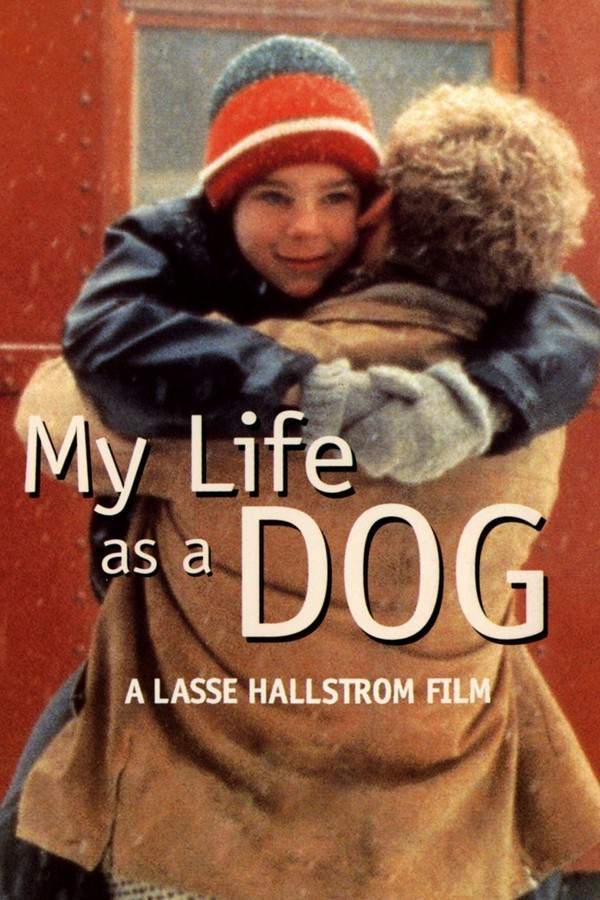
My Life as a Dog (1987) movie poster

Timeline

My Life as a Dog (1987) Timeline Explained – Every Event in Order

Release, runtime and language
1987 · 101 min · Swedish
JustWatch #4,374 27
Directed by
Lasse Hallstrom
Starring
Anki Lidén, Anton Glanzelius, Christina Carlwind, Ing-Marie Carlsson, Kicki Rundgren, Leif Ericson

Set in 1950s Sweden, the film follows a perceptive young boy who observes the struggles of those around him. His life takes an unexpected turn when he’s placed in the care of his aunt and uncle. There, he experiences a blend of humor and sadness as he confronts challenges and seeks his place within a new family dynamic, ultimately exploring themes of identity and belonging.

On this page (5)
  1. 1 Where to watch
  2. 2 Events in order (15)
  3. 3 Timeline questions answered
  4. 4 Movie threads
  5. 5 Every angle

Where to watch

Where to Watch My Life as a Dog (1987)

Where can you watch My Life as a Dog? Stream, rent or buy it in the US, including on HBO Max, Amazon Video and Apple TV Store: current JustWatch availability with up-to-date prices.

Streaming availability powered by JustWatch

15 events in order · contains spoilers

My Life as a Dog Timeline: Events in Chronological Order

Every key event of My Life as a Dog (1987) in order, scene by scene, with when and where it takes place. Use it to untangle flashbacks, time jumps and parallel storylines, to refresh your memory before the sequel or to find the exact scene you are thinking of.

  1. Ingemar's Early Life

    Ingemar is a 12-year-old boy living in Sweden with his older brother Erik and their single mother. The boys often test their mother's patience with their adventures and mischief, all while being blissfully unaware of her declining health.

    When
    1958
    Where
    Sweden
  2. Separation from Mother

    Due to their mother's terminal illness, Ingemar and Erik are sent to live with relatives for her recovery. This decision marks a significant turning point in Ingemar's life, as he is heartbroken to leave behind his beloved dog, which is put in a kennel against his will.

    When
    1958
  3. Life in Småland

    Ingemar arrives in the quaint rural town of Småland to stay with his uncle Gunnar and aunt Ulla. Adjusting to this new environment proves difficult for Ingemar as he has to navigate the complexities of his emotions and the new personalities around him.

    When
    1958
    Where
    Småland
  4. Bonding with Gunnar

    While living with his uncle, Ingemar shares special moments listening to a recording of 'Far, jag kan inte få upp min kokosnöt' by Povel Ramel. This music becomes a source of comfort for Ingemar and helps him connect with his uncle despite the changes in his life.

    When
    1958
    Where
    Gunnar's Home
  5. Meeting Saga

    Ingemar encounters Saga, a bold tomboy who shows her interest in him through friendly sparring in the boxing ring. Their playful interactions mark the beginning of a relationship filled with youthful rivalry and affection.

    Where
    Local Boxing Ring
  6. Mr. Arvidsson's Amusing Reads

    Ingemar befriends Mr. Arvidsson, an elderly neighbor who delights in having him read entertaining segments from a lingerie catalog. This peculiar bond provides Ingemar with a sense of normalcy amidst the chaos of his family situation.

    Where
    Mr. Arvidsson's Home
  7. Return to Mother

    After a period of separation, Ingemar and Erik are reunited with their mother. Unfortunately, their joy is fleeting as her health rapidly deteriorates, leading to her eventual hospitalization and deepening the brothers' sense of loss.

    When
    1959
  8. New Custodians

    With their mother hospitalized, Ingemar and Erik are placed under the care of their uncle Sandberg in the city. Sandberg's wife harbors suspicions about Ingemar's mental well-being, complicating the brothers' already tumultuous emotions.

    When
    1959
    Where
    City
  9. Loss of Their Mother

    The brothers experience the crushing grief of losing their mother. This tragedy forces Ingemar back to Småland, where he must confront his memories and the absence of both his mother and his dog.

    Where
    Småland
  10. Changes in Småland

    Upon his return to Småland, Ingemar finds that Mr. Arvidsson has passed away and his uncle's home is now shared with a large Greek family. The new living situation adds to Ingemar's emotional turmoil and feelings of isolation.

    Where
    Gunnar's Home
  11. Desire for His Dog

    Ingemar constantly pesters Gunnar about the fate of his beloved dog. The hope of being reunited with his dog becomes a poignant reflection of his childhood innocence amidst sorrow.

  12. Conflict with Saga

    As Ingemar navigates his feelings, tensions arise between him and Saga, along with another girl who is vying for his attention. During an emotional confrontation, Ingemar's grief manifests bizarrely as he clings to Saga's leg and barks like a dog.

  13. Shattering Revelation

    Saga callously informs Ingemar that his dog has been euthanized, a revelation that breaks his spirit. This adds yet another layer of grief to Ingemar's already heavy heart following the loss of his mother.

  14. Ingemar's Retreat

    Seeking solace from his overwhelming emotions, Ingemar retreats to Gunnar's summer house. In this isolation, he reflects on his profound sense of loss and contemplates the shifting realities of his life, trying to find comfort in the thought that things could be worse.

    Where
    Gunnar's Summer House
  15. Historic Boxing Match

    The film culminates during the live radio broadcast of the heavyweight boxing match between Ingemar Johansson and Floyd Patterson. The town erupts in celebration as Johansson's victory brings a moment of joy, while Ingemar and Saga find peace together, symbolizing a hopeful future.

Last updated: November 16, 2024 at 16:29

Was this helpful?

Timeline questions answered

My Life as a Dog Timeline Explained: Your Questions Answered

When does it happen, and why in that order? The questions people ask about the chronology of My Life as a Dog (1987): time jumps, flashbacks, cause and effect between scenes and the correct order of events, each answered with spoilers.

Q1

Why are Ingemar and Erik sent to live with their relatives?

The brothers are sent to live with relatives because their single mother is terminally ill and needs rest and recuperation. The boys are unaware of the severity of her condition at first, as their mother hides the gravity of her illness from them while they continue their mischievous adventures.

Foreshadowing: Early scenes show the boys testing their mother's patience without knowing she is battling a terminal illness.

  • mother illness
  • separated from mother
  • relatives
  • custody
Q2

Why is Ingemar so upset about leaving his dog behind?

Ingemar's dog represents stability and unconditional love during a chaotic time in his life. Being forced into an unfamiliar environment without his beloved companion amplifies his sense of loss and abandonment, making his transition to his uncle's home even more traumatic.

Foreshadowing: The opening scenes establish the dog as Ingemar's closest companion and source of comfort.

  • dog
  • kennel
  • abandonment
  • loss
Q3

What does Ingemar's dog-like barking during the confrontation with Saga signify?

Ingemar's bizarre behavior of barking like a dog while clinging to Saga's leg is a manifestation of his overwhelming grief and emotional breakdown. Having lost his mother and believing his dog has also been taken from him, he regresses to the only coping mechanism he knows, identifying with his dog, the one thing that provided him unconditional love and loyalty.

Foreshadowing: Throughout the film, Ingemar repeatedly seeks reassurance about his dog's fate, showing his desperate need for that bond.

  • grief
  • emotional breakdown
  • dog
  • regression
  • Saga
Q4

Why does Saga tell Ingemar that his dog was euthanized?

Saga tells Ingemar the devastating news about his dog during an emotional confrontation where another girl is vying for his attention. While her exact motivation is ambiguous, it appears to be a cruel moment of honesty, possibly intended to shock Ingemar or end the competition for his affection, but it instead crushes him with another layer of loss on top of his mother's death.

Foreshadowing: Ingemar's constant questioning about the dog's fate throughout his time in Småland builds toward this painful revelation.

  • euthanasia
  • dog
  • Saga
  • death
  • grief
Q5

What is the significance of the boxing match ending in the film?

The live radio broadcast of Ingemar Johansson defeating Floyd Patterson serves as a powerful thematic culmination. The entire town's celebration represents a national moment of joy and triumph against an American opponent. For Ingemar, who has experienced so much loss, this collective celebration offers a moment of hope and unity, and his reconciliation with Saga on the couch symbolizes his own personal victory over adversity, finding love and comfort despite his grief.

Foreshadowing: The film foreshadows this moment through Ingemar's name shared with the boxer and the boxing ring where he first meets Saga.

  • boxing match
  • Ingemar Johansson
  • Floyd Patterson
  • celebration
  • Saga
Q6

Why does Ingemar constantly think about things being worse?

"It could have been worse" becomes Ingemar's psychological coping mechanism to process his grief and displacement. By imagining other misfortunes, like the man struck by a javelin or Laika the space dog, he trivializes his own suffering and finds a strange comfort in believing others have suffered more. This mindset helps him endure his painful circumstances while clinging to hope.

Foreshadowing: The Laika reference and javelin man appear as Ingemar reflects in isolation, showing his attempt to rationalize his losses.

  • it could have been worse
  • coping mechanism
  • grief
  • Laika
  • javelin
Q7

Why does Gunnar's wife suspect Ingemar is mentally unwell?

When the boys are briefly in the city with uncle Sandberg, his wife observes Ingemar's unusual behavior, his emotional volatility, his obsession with the dog, and his difficulty adjusting to the new environment. From her perspective, a child displaying such intense grief and behavioral changes appears troubled, though she misinterprets his normal traumatic response as mental instability.

Foreshadowing: Ingemar's unusual attachment to the dog and his grief manifestations are visible throughout the film.

  • mental health
  • misunderstanding
  • uncle Sandberg
  • emotional distress
Q8

What happens to Ingemar's dog in the end?

Ingemar's dog is euthanized while he is living with his uncle Gunnar in Småland. This devastating news is callously revealed to Ingemar by Saga during an emotional confrontation, adding another devastating loss to his grief over his mother's death. Ingemar never gets reunited with his dog.

Foreshadowing: Ingemar repeatedly asks about his dog throughout his time in Småland, and his hopes are built up only to be crushed.

  • dog
  • euthanasia
  • death
  • Småland
Q9

Why does Ingemar go back to live in Småland after his mother dies?

After their mother dies, the brothers are separated again. Erik goes to live with one set of relatives, while Ingemar is sent back to Småland to live with his uncle Gunnar. This return represents both a displacement from his familiar life and eventually a place where he can find some stability, though the home dynamics have changed with a Greek family now living there.

Foreshadowing: The initial separation due to mother's illness establishes the pattern of Ingemar moving between relatives.

  • mother death
  • return to Småland
  • Gunnar
  • displacement
Q10

What does the title "My Life as a Dog" mean?

The title refers to Ingemar's sense of displacement and his identification with his dog, who is also confined to a kennel and separated from him. Throughout the film, Ingemar compares his own situation to that of a dog, loyal, dependent, and at the mercy of others' decisions. His dog-like behavior when distressed (barking and clinging) further reinforces this theme of feeling like a pet whose fate is controlled by adults.

Foreshadowing: The opening establishes the parallel between Ingemar and his dog through their shared adventures and eventual separation.

  • title meaning
  • dog
  • identity
  • belonging
  • metaphor
Q11

Why does Ingemar meet Saga at the boxing ring?

Saga, a bold tomboy in Ingemar's age, deliberately seeks him out at the local boxing ring and challenges him to sparring matches. This is her unconventional way of showing interest in him, through athletic competition and physical challenge rather than traditional feminine approaches. Their sparring becomes the foundation of their relationship, leading to their romantic reconciliation at the film's end.

Foreshadowing: The boxing ring serves as the initial meeting point where their playful rivalry and eventual romance begin.

  • Saga
  • boxing
  • romance
  • first meeting
  • tomboy
Q12

Why does Mr. Arvidsson want Ingemar to read from a lingerie catalog?

Mr. Arvidsson, an elderly neighbor, has Ingemar read amusing passages from a lingerie catalog as a form of playful, slightly eccentric humor typical of the film's quirky town characters. This unusual bonding activity provides Ingemar with a sense of normalcy and an adult friendship amid his turbulent family life, though it also highlights the quirky, comedic elements of the small-town setting.

Foreshadowing: This peculiar friendship is established early in Ingemar's time in Småland as a source of lighthearted moments.

  • Mr. Arvidsson
  • lingerie catalog
  • humor
  • quirky characters
Q13

Why is the Povel Ramel song significant to Ingemar and Gunnar's bond?

The recording of "Far, jag kan inte få upp min kokosnöt" becomes a source of connection between Ingemar and his uncle Gunnar. This shared music provides Ingemar with comfort and a sense of belonging in his new environment, establishing an emotional bridge with his uncle despite the circumstances that brought him there. The song represents a rare moment of joy and shared experience during a difficult period.

Foreshadowing: The song is introduced during Ingemar's initial adjustment period with Gunnar, establishing their bond.

  • Povel Ramel
  • song
  • Gunnar
  • bonding
  • comfort

Movie threads

More Movies Like My Life as a Dog, by Mood & Story

Curated lists built around what makes My Life as a Dog tick: the same mood, the same kind of story or the same emotional payoff. Each list explains why these movies belong together.

Movies About Childhood Resilience Like My Life as a Dog

Young protagonists process heavy realities through innocence and quirky observation. Find more movies like My Life as a Dog that explore coming-of-age themes through a child's resilient eyes. These stories often blend sorrow with tender humor, depicting young protagonists navigating loss or change within quirky, character-driven worlds.

  • nostalgic
  • melancholic
  • quirky
  • tender
  • introspective
  • lonely
  • Tone: bittersweet, tender
  • Pacing: steady, observational
Why these movies?

The story pattern: Stories in this thread typically follow a young protagonist grappling with a profound life change, such as grief, displacement, or family turmoil. The narrative structure is often episodic, reflecting a child's fragmented perception, and conflict arises from the internal struggle to understand and cope with adult-sized problems using a child's limited tools.

Why they belong together: Movies are grouped here for their shared approach to heavy themes through the buffer of childhood innocence. They possess a bittersweet tone, a steady, observational pacing, and a mix of melancholic and quirky moods that prevent the core drama from feeling oppressively dark.

Bittersweet Found Family Movies Similar to My Life as a Dog

Characters find unexpected comfort and belonging in eccentric new communities. If you liked the found family dynamic in My Life as a Dog, explore these films about characters finding solace in unconventional groups. These stories feature a mix of quirky characters, tender moments, and a ultimately bittersweet but hopeful sense of belonging.

  • tender
  • quirky
  • melancholic
  • hopeful
  • lonely
  • reflective
  • Tone: bittersweet, melancholic
  • Pacing: steady, character-driven
Why these movies?

The story pattern: The narrative pattern involves a displaced or lonely character entering a new environment filled with eccentric individuals. Through a series of small, often humorous interactions, tentative bonds are formed. The central conflict is internal, revolving around the protagonist's resistance to or acceptance of this new family, culminating in a quiet affirmation of connection that coexists with underlying sadness.

Why they belong together: These films share a specific emotional blend: a melancholic base from loss or loneliness, punctuated by the warmth and humor of forming new bonds. They have a moderate pace, a bittersweet tone that defines both the journey and the conclusion, and a strong thematic focus on belonging.

Every angle

My Life as a Dog (1987) Explained: Plot, Timeline & Characters

Everything about My Life as a Dog in one place: what happens in the plot summary, the timeline in chronological order, the characters and meaning and a spoiler-free summary. What's After the Movie adds the cast, box office and post-credit scenes.

Coming soon on iOS and Android

The Plot Explained Movie Summary App

Plot summaries, endings explained and timelines on your phone. Catch up on any movie in minutes, save your favorites and never miss a twist again.

Be the first to know when we launch. Your email stays private, always.

Learn more about the app