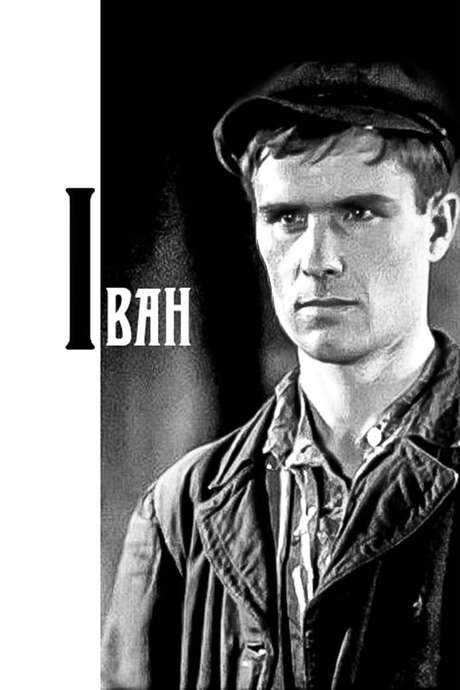
Year: 1985
Runtime: 95 mins
Language: Russian
Director: Aleksei German
Russian provincial town in the middle of the 1930s Stalin’s Great Purge. Ivan Lapshin, the head of the local police, does what he has to do. And he does it well.
Warning: spoilers below!
Haven’t seen My Friend Ivan Lapshin yet? This summary contains major spoilers. Bookmark the page, watch the movie, and come back for the full breakdown. If you're ready, scroll on and relive the story!
Read the complete plot breakdown of My Friend Ivan Lapshin (1985), including all key story events, major twists, and the ending explained in detail. Discover what really happened—and what it all means.
Ivan Lapshin, the head of the city’s Criminal Investigation Department in Unchansk, is portrayed with a clear, unyielding sense of duty as the story unfolds. Set in the 1930s and narrated years later by a boy who was only nine at the time, the film invites us into a world where crime, loyalty, and ordinary life intersect in a provincial setting. The CID is on the trail of Solovyov and his gang, whose brutal murders disrupt the uneasy calm of the city, testing Lapshin’s resolve and the cohesion of his team.
The film introduces Lapshin as a former participant in hostilities, a man who believes in decisive action and the necessity of making hard choices. His motto, spoken as a steady refrain that guides him and his comrades, captures the spirit of their work:
“Let’s clean up the land, plant a garden, and we ourselves will still have time to walk in this garden!”
Beyond the badge and the raids, the narrative paints a vivid portrait of daily life in a tight-knit, overcrowded living arrangement. Lapshin rents a small space in a communal apartment from the elderly Patrikeevna, sharing walls and routines with others who press close into a modest, shared existence. The atmosphere is drawn with warmth and quiet humor as four adults and a child navigate the cramped quarters, echoing the era’s social changes and the rough-edged optimism of the time.
Parallel to the crime investigations, the film threads a subtle but intimate love story into the fabric of the city’s life. A local theater actress, portrayed by Natasha Adasova, becomes entangled in a quiet, unspoken love triangle with Lapshin and the visiting journalist Khanin. Khanin and Lapshin have known each other for years, and while Lapshin’s genuine sympathy for the actress begins to complicate his judgments, she confesses a deeper affection for Khanin. The tension between duty and desire adds a human dimension to the pursuit of justice.
The ensemble around Lapshin also illuminates the provincial theater’s inner life during the post-NEP era. The film glimpses the troupe’s behind-the-scenes struggles as they wrestle with traditional classics on stage and the search for bolder, new subjects in art. A window into the theatre’s ambitions shows the characters balancing artistic exploration with practical demands, all while the communal apartment’s everyday grind continues to press in from the margins.
Central to these interwoven arcs is Okoshkin, a diligent UGRO employee whose single-minded drive to marry and move out of the crowded apartment becomes a running thread of comic relief and pathos. His intermittent flirtations with a future beyond the communal rooms offer a counterpoint to the harsher realities faced by Lapshin and his men, and he eventually returns to the life he knows.
Amid the personal dramas lies a deeper, more perilous strain in Khanin’s own life. After his wife’s death, he finds himself overwhelmed by despair and even attempts to end his pain with Lapshin’s pistol. The scene paves the way for a crisis that double-binds friendship and duty: Khanin’s desire to escape his sorrows, and Lapshin’s responsibility to the squad and to the law. When the moment of action arrives, Khanin’s instinct to run with Lapshin toward the danger of a gang operation clashes with his own limits. It is during the operation that the truth about Solovyov’s movements emerges; Khanin notices a silent departure from the barracks, a detail that proves crucial. Solovyov tries to surrender, but Lapshin’s resolve leads to a brutal outcome, and the pursuit ends with Solovyov being surrounded and, as per the code of the time, Lapshin carrying out the sentence.
After his hospital recovery, Khanin invites Lapshin to accompany him to the Far East and Siberia to “show places” Lapshin has never seen, but the offer is declined. The actress lingers in Unchansk, yet Lapshin’s stance toward their relationship hardens; he resolves to keep a respectful distance, recognizing that the demands of his work and the weight of his responsibilities require a certain emotional coolness.
The film’s storytelling layers together the grit of police work, the texture of communal living, and the fragile shimmer of personal longing. It presents a portrait of a city and a time when crime was a constant backdrop to ordinary life, and it does so through a narrator who remembers both the danger and the small, human moments that define a community. The result is a richly textured, emotionally restrained drama that honors its characters—Lapshin, Khanin, Natasha Adasova’s actress, the old Patrikeevna, and the others—without losing sight of the broader social and historical currents that shape their choices.
Last Updated: October 09, 2025 at 14:47
Discover curated groups of movies connected by mood, themes, and story style. Browse collections built around emotion, atmosphere, and narrative focus to easily find films that match what you feel like watching right now.
Films that frame personal stories within the mood of a specific historical period.Explore movies like My Friend Ivan Lapshin that capture the mood and texture of a specific historical period. These films use a reflective, often melancholic tone to explore personal stories set against the backdrop of a fading era, focusing on the intimate details of daily life.
Stories in this thread are often told through the lens of memory or reflection, framing personal relationships and small-scale dramas within the broader context of a significant historical period. The narrative unfolds slowly, prioritizing atmosphere and the quiet weight of time passing over a fast-paced plot.
These films are grouped together for their shared ability to evoke a powerful sense of a specific time and place. They share a melancholic, reflective tone, a slow, observational pace, and a focus on how large-scale history impacts small, personal lives.
Character studies of individuals crushed by the weight of their obligations.Discover movies like My Friend Ivan Lapshin that focus on characters burdened by their professional duties in difficult circumstances. These stories explore the conflict between obligation and personal desire, often set in bleak environments and culminating in bittersweet or somber endings.
The narrative follows a competent but conflicted individual whose professional role forces them into morally ambiguous situations. The central conflict is internal, pitting a sense of duty or ideology against basic human compassion and desire, often resulting in a personal loss or emotional hardening by the story's end.
This thread connects films through a shared focus on the theme of duty versus humanity. They feature melancholic tones, medium intensity derived from internal conflict, and protagonists whose professional efficiency comes at a great personal cost, leading to emotionally resonant, bittersweet conclusions.
Don't stop at just watching — explore My Friend Ivan Lapshin in full detail. From the complete plot summary and scene-by-scene timeline to character breakdowns, thematic analysis, and a deep dive into the ending — every page helps you truly understand what My Friend Ivan Lapshin is all about. Plus, discover what's next after the movie.
Track the full timeline of My Friend Ivan Lapshin with every major event arranged chronologically. Perfect for decoding non-linear storytelling, flashbacks, or parallel narratives with a clear scene-by-scene breakdown.
Discover the characters, locations, and core themes that shape My Friend Ivan Lapshin. Get insights into symbolic elements, setting significance, and deeper narrative meaning — ideal for thematic analysis and movie breakdowns.
Get a quick, spoiler-free overview of My Friend Ivan Lapshin that covers the main plot points and key details without revealing any major twists or spoilers. Perfect for those who want to know what to expect before diving in.
Visit What's After the Movie to explore more about My Friend Ivan Lapshin: box office results, cast and crew info, production details, post-credit scenes, and external links — all in one place for movie fans and researchers.
Discover movies like My Friend Ivan Lapshin that share similar genres, themes, and storytelling elements. Whether you’re drawn to the atmosphere, character arcs, or plot structure, these curated recommendations will help you explore more films you’ll love.
My Friend Ivan Lapshin (1985) Scene-by-Scene Movie Timeline
My Friend Ivan Lapshin (1985) Movie Characters, Themes & Settings
My Friend Ivan Lapshin (1985) Spoiler-Free Summary & Key Flow
Movies Like My Friend Ivan Lapshin – Similar Titles You’ll Enjoy
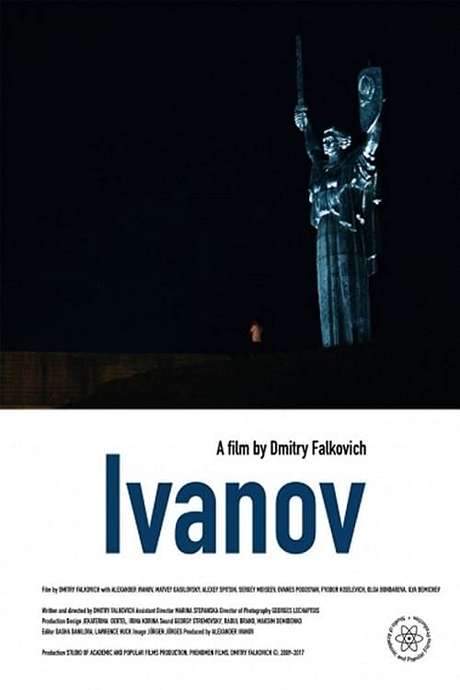
Ivanov (2018) Full Movie Breakdown
The Cold Summer of 1953 (1988) Complete Plot Breakdown
Captain Volkonogov Escaped (2021) Story Summary & Characters
The Life and Extraordinary Adventures of Private Ivan Chonkin (1994) Spoiler-Packed Plot Recap
One Day in the Life of Ivan Denisovich (1970) Film Overview & Timeline
Khrustalyov, My Car! (1998) Spoiler-Packed Plot Recap
The Vow (1946) Full Movie Breakdown
Ivan’s Childhood (1962) Film Overview & Timeline
Ivan the Terrible, Part I (1944) Detailed Story Recap
Ivan & Abraham (1993) Complete Plot Breakdown
Burnt by the Sun (1994) Complete Plot Breakdown
Ivan (1932) Complete Plot Breakdown
Within the Whirlwind (2009) Complete Plot Breakdown
The Eve of Ivan Kupalo (1968) Film Overview & Timeline
Ivan the Terrible, Part II: The Boyars’ Plot (1946) Ending Explained & Film Insights