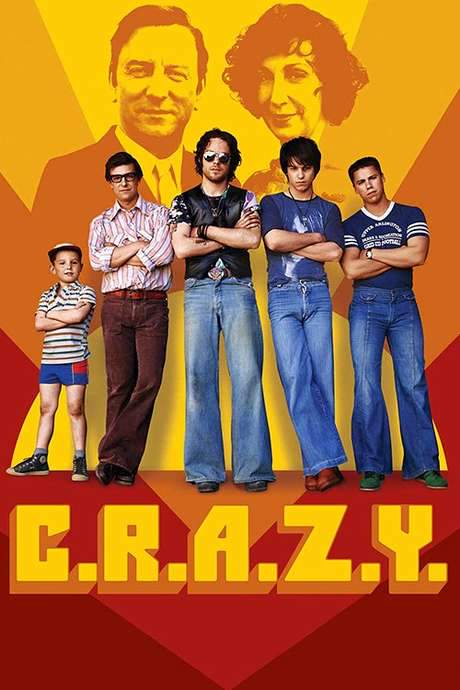
Year: 1973
Runtime: 87 mins
Language: Italian
Director: Steno
Don Salvatore Anastasia, a seminary priest from Tropea, Calabria, travels to New York to meet his long‑absent brother, who emigrated illegally years earlier. Welcomed by the Little Italy community, he stays as assistant pastor at St. Lucia. His surname opens doors, revealing his brother is the notorious mob boss Albert Anastasia.
Warning: spoilers below!
Haven’t seen My Brother Anastasia yet? This summary contains major spoilers. Bookmark the page, watch the movie, and come back for the full breakdown. If you're ready, scroll on and relive the story!
Explore the full timeline and setting of My Brother Anastasia (1973). Follow every major event in chronological order and see how the environment shapes the story, characters, and dramatic tension.
Last updated: February 18, 2026 at 23:36
Meet the key characters of My Brother Anastasia (1973), with detailed profiles, motivations, and roles in the plot. Understand their emotional journeys and what they reveal about the film’s deeper themes.
Last updated: February 18, 2026 at 23:36
Explore the central themes of My Brother Anastasia (1973), from psychological, social, and emotional dimensions to philosophical messages. Understand what the film is really saying beneath the surface.
Last updated: February 18, 2026 at 23:36
Browse frequently asked questions about My Brother Anastasia (1973) focused on characters, relationships, themes, symbols, setting, and story context. This movie info FAQ gives spoiler-aware explanations for character arcs, world details, and thematic interpretation so readers can better understand what the film is really about.
The film begins in Tropea, Calabria, Italy, where Father Salvatore starts his journey. The main setting shifts to New York's Little Italy, centered around Saint Lucia church where Salvatore serves as assistant pastor. Sing Sing Prison also appears as the setting for Albert's legal troubles.
Little Italy serves as the heart of the Italian-American immigrant community in the film. Saint Lucia church anchors this neighborhood, where Salvatore is welcomed and begins his pastoral work. The community's respect for the Anastasia surname initially opens doors for the priest, but also connects him to his brother's criminal world.
While not explicitly dated, the film references the era of Albert Anastasia, who was historically assassinated in 1957. The story appears to be set in the mid-1950s, during the height of the Anastasia crime family's prominence.
The family theme centers on the bond between Salvatore and his brother Albert, separated by years of immigration. Salvatore's loyalty to family collides with the reality of his brother's criminal empire. The discovery of Albert's power as a mob boss tests the priest's faith, duty, and capacity for forgiveness.
The story places faith and law in direct tension as federal investigators target Albert after a horse-racing scandal and tax evasion. This pursuit exposes the line between legitimacy and crime within immigrant communities. The narrative asks whether criminal activity can be reconciled with personal honor, especially when family ties are involved.
The film portrays the Italian-American diaspora and the weight of a well-known surname across continents. Salvatore's move from a Calabrian seminary to a New York parish reflects the dual identities of faith and assimilation. The Anastasia name carries both respect and danger, shaping how the community interacts with the brothers.
Father Salvatore is a seminary priest from Tropea, Calabria, played by Alberto Sordi. He travels to New York to visit his long-lost brother Albert. He serves as assistant pastor at Saint Lucia church in Little Italy, where his faith and gentle moral witness earn him respect. When he discovers his brother's true identity as a mob boss, his ideals are deeply tested.
Albert 'Big Al' Anastasia is a feared mob boss whose power commands respect in the immigrant underworld. His legal troubles stem from tax evasion linked to a clandestine horse-racing scandal, leading to imprisonment in Sing Sing. He is ultimately assassinated in a barber salon, a brutal turning point that devastates both families.
Salvatore represents religious devotion, moral integrity, and compassion, while Albert embodies criminal power and underworld authority. Their contrasting paths, priest versus mob boss, highlight the film's exploration of how the same family name can carry both respectability and danger within the immigrant community.
The Anastasia name serves as a central symbol, representing both honor and infamy. In Little Italy, it opens doors for Salvatore, granting him respect within the community. However, it also connects him to Albert's criminal world, ultimately bringing tragedy when the mob boss is assassinated, forcing the priest to confront the cost of his brother's notoriety.
The film has a bittersweet tone. It begins with a hopeful reunion and cultural celebration in Little Italy, which is gradually overshadowed by the grim reality of the mafia. The story culminates in tragedy with Albert's assassination, leaving Salvatore to navigate grief and conflict between family duty and religious duty.
Discover curated groups of movies connected by mood, themes, and story style. Browse collections built around emotion, atmosphere, and narrative focus to easily find films that match what you feel like watching right now.
A collision of faith and reality in the shadow of family corruption.Find films similar to My Brother Anastasia that explore the theme of moral and spiritual crisis. If you liked the clash between faith and familial crime, these movies about disillusionment and ethical dilemmas will resonate with you.
These narratives follow a character, often an outsider with a pure or principled worldview, who enters a corrupt environment tied to family. The plot charts their gradual disillusionment as they uncover the truth, leading to a crisis of morality and a tragic or sorrowful reckoning.
They are grouped by their shared focus on an internal, spiritual struggle set against a backdrop of organized crime or moral decay. The pacing is steady, allowing the emotional weight of the protagonist's collapse to build, and the tone remains bittersweet or melancholic as hope gives way to sorrow.
Hopeful journeys that uncover painful family secrets and end in sorrow.Discover movies with a similar vibe to My Brother Anastasia. If you enjoyed the story of a hopeful reunion turning tragic, these films about family secrets, immigrant experiences, and heartbreaking discoveries are perfect for you.
The narrative pattern follows a protagonist seeking connection with an estranged family member. The initial celebration and cultural immersion gradually give way to the discovery of a hidden, often criminal, life. The arc is one of lost innocence, moving from nostalgic hope to reflective grief.
These movies share a specific emotional mix: starting with hopeful, nostalgic tones that sour into melancholy. They focus on the immigrant experience or cultural displacement, the theme of brotherhood under strain, and the inevitable sadness of realizing a loved one is not who you thought.
Don't stop at just watching - explore My Brother Anastasia in full detail. From the complete plot summary and scene-by-scene timeline to character breakdowns, thematic analysis, and a deep dive into the ending - every page helps you truly understand what My Brother Anastasia is all about. Plus, discover what's next after the movie.
Read a complete plot summary of My Brother Anastasia, including all key story points, character arcs, and turning points. This in-depth recap is ideal for understanding the narrative structure or reviewing what happened in the movie.
Track the full timeline of My Brother Anastasia with every major event arranged chronologically. Perfect for decoding non-linear storytelling, flashbacks, or parallel narratives with a clear scene-by-scene breakdown.
Discover movies like My Brother Anastasia that share similar genres, themes, and storytelling elements. Whether you’re drawn to the atmosphere, character arcs, or plot structure, these curated recommendations will help you explore more films you’ll love.
My Brother Anastasia (1973) Plot Summary & Movie Recap
My Brother Anastasia (1973) Scene-by-Scene Movie Timeline
My Brother Anastasia (1973) Spoiler-Free Summary & Key Flow
Movies Like My Brother Anastasia – Similar Titles You’ll Enjoy
My Brother-in-Law (2003) Full Movie Breakdown
Three Brothers (1981) Story Summary & Characters
The Sicilian Connection (1985) Plot Summary & Ending Explained
My Cousin (1918) Ending Explained & Film Insights
My Brother and I (2023) Ending Explained & Film Insights
The Mafia (1972) Complete Plot Breakdown
My Soul Brother (1994) Plot Summary & Ending Explained
The Gang That Sold America (1979) Ending Explained & Film Insights
Fratelli coltelli (1997) Plot Summary & Ending Explained
Bonanno: A Godfather’s Story (1999) Movie Recap & Themes
The Big Family (1973) Spoiler-Packed Plot Recap
Brother Orchid (1940) Detailed Story Recap
The Brothers Rico (1957) Full Summary & Key Details
Mafioso (1962) Full Movie Breakdown
My Brother’s Gun (1997) Full Summary & Key Details