Plot Explained Spoilers guaranteed!
Plot Explained

Browse by genre

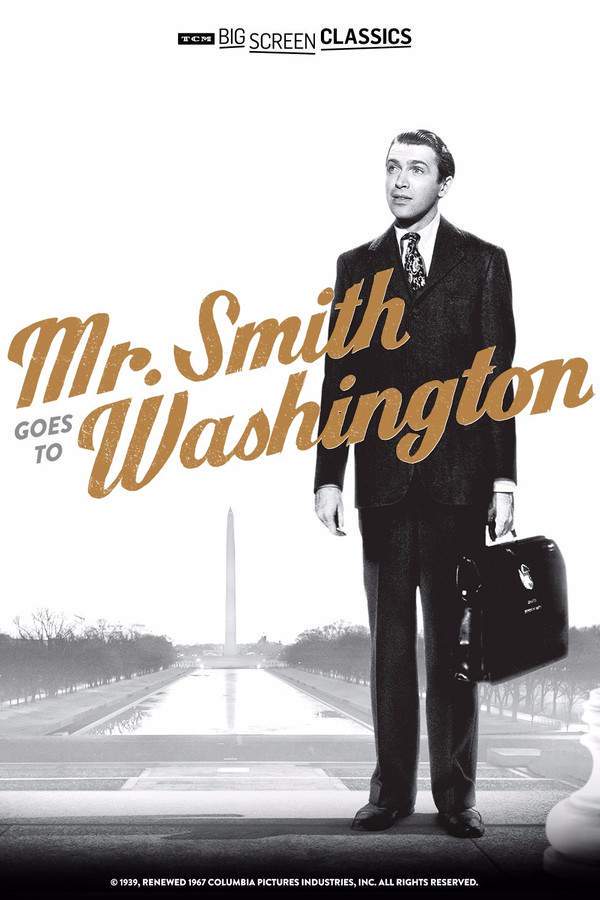
Mr. Smith Goes to Washington (1939) movie poster

Timeline

Mr. Smith Goes to Washington (1939) Timeline Explained – Every Event in Order

Release, runtime and language
1939 · 129 min
Loading streaming availability…
Directed by
Frank Capra
Starring
Thomas Mitchell, James Stewart, Harry Carey, Guy Kibbee, Claude Rains, Jean Arthur
Budget
$1.9M

A sincere and idealistic young man is appointed as a U.S. Senator, unexpectedly finding himself in the midst of political intrigue. He quickly discovers that Washington is rife with corruption and faces challenges to his principles. Despite the pressure and manipulation from powerful figures, he remains committed to fighting for what he believes is right, ultimately striving to reform the system and uphold justice.

On this page (6)
  1. 1 Where to watch
  2. 2 Events in order (14)
  3. 3 Timeline questions answered
  4. 4 Movie threads
  5. 5 Movies like Mr. Smith Goes to Washington
  6. 6 Every angle
Loading streaming availability…

14 events in order · contains spoilers

Mr. Smith Goes to Washington Timeline: Events in Chronological Order

Every key event of Mr. Smith Goes to Washington (1939) in order, scene by scene, with when and where it takes place. Use it to untangle flashbacks, time jumps and parallel storylines, to refresh your memory before the sequel or to find the exact scene you are thinking of.

  1. Governor's Dilemma

    Governor Hubert "Happy" Hopper faces intense pressure to replace the late Senator Sam Foley. His corrupt political boss, Jim Taylor, insists on choosing a candidate, but public demand for a reformer complicates matters.

    Where
    Unnamed Western State
  2. Coin Toss Decision

    In a random decision-making process, Governor Hopper flips a coin to choose a candidate. The coin lands near an article about Jefferson Smith’s achievements, leading Hopper to nominate him, hoping Smith's clean image will sway public opinion.

    Where
    Governor's Office
  3. Mentorship with Senator Paine

    Jefferson Smith is introduced to Senator Joseph Paine, who positions himself as a mentor to the naive newcomer. Despite Paine’s outward appearance of honor, he is deeply enmeshed in the corrupt political framework led by Taylor.

    Where
    Washington D.C.
  4. Smith's Infatuation

    During this time, Jefferson Smith develops feelings for Senator Paine's daughter, Susan. Amidst the burgeoning romance, he remains blissfully unaware of the machinations at play to undermine his efforts.

    Where
    Washington D.C.
  5. Introduction of the Boys' Camp Bill

    In an effort to make himself useful, Smith proposes a bill for a national boys' camp, believing it will be funded by donations from across the country. Initially, the bill garners positive feedback from various quarters.

    Where
    Senate
  6. The Hidden Agenda

    Smith soon discovers that the proposed camp location is entangled in a corrupt public works project linked to Jim Taylor's powerful political machine. Senator Paine's tacit approval only deepens Smith's trust in the wrong people.

    Where
    Washington D.C.
  7. Betrayal and Accusation

    As tensions rise, Smith is falsely accused of trying to profit from the land deal, a betrayal that devastates him. He is forced to flee in despair, feeling the weight of the political corruption piling against him.

    Where
    Washington D.C.
  8. Clarissa's Intervention

    Clarissa Saunders, Smith's dedicated chief of staff, refuses to let him give up. She encourages him to stand up against the accusations by staging a filibuster to prove his innocence before the Senate.

    Where
    Senate
  9. The Filibuster Begins

    Smith takes to the Senate floor, delivering passionate speeches that resonate with some constituents. However, the relentless efforts of Taylor's operatives aim to silence him and undermine his position.

    Where
    Senate
  10. Public Opposition Grows

    Despite Smith’s compelling speeches, the media in his home state ignores his pleas, erasing any public support for his cause. Even the Boy Rangers are met with brutal backlash for trying to help him.

    Where
    Home State
  11. Despair and Glimmer of Hope

    As Smith nears exhaustion, Paine presents a stack of letters demanding Smith's ouster, leaving him in a desperate state. However, a sympathetic glance from the President of the Senate ignites a flicker of hope for Smith.

    Where
    Senate
  12. Collapse from Exhaustion

    Pushed to his physical limits, Smith collapses during his filibuster. This moment becomes pivotal, showcasing his determination and sacrifice in the face of overwhelming opposition.

    Where
    Senate
  13. Paine's Redemption

    Overcome with guilt from his betrayal, Senator Paine attempts to end his own life but fails. He later returns to the Senate chamber to confess the nefarious scheme against Smith, altering the course of events.

    Where
    Senate
  14. Victory for Integrity

    Following Paine's confession, the tide turns in Smith's favor as truth begins to emerge. The story culminates in a celebration of courage, integrity, and the fight against corruption.

    Where
    Senate

Last updated: October 27, 2024 at 21:34

Was this helpful?

Timeline questions answered

Mr. Smith Goes to Washington Timeline Explained: Your Questions Answered

When does it happen, and why in that order? The questions people ask about the chronology of Mr. Smith Goes to Washington (1939): time jumps, flashbacks, cause and effect between scenes and the correct order of events, each answered with spoilers.

Q1

Why was Jefferson Smith chosen to replace Senator Foley?

Governor Hopper selected Smith primarily through a coin toss. While pressured by political boss Jim Taylor to choose his candidate, Hopper also faced public demand for a reformer. When his children suggested Smith, Hopper flipped a coin which landed near a newspaper article about Smith's achievements with the Boy Rangers. Hopper believed Smith's clean reputation would win public approval while his inexperience would make him easily controllable.

Foreshadowing: Earlier, Hopper's children praise Smith's dedication to the Boy Rangers, showing his genuine character before any political motives arise.

  • Jefferson Smith appointment
  • coin toss
  • Governor Hopper
  • Senator replacement
Q2

Why did Senator Paine betray Jefferson Smith?

Paine was deeply entangled in Taylor's corrupt political machine despite his outward appearance of honor. Though he was a close friend of Smith's late father, Paine faced immense pressure from Taylor and ultimately chose loyalty to the political machine over his personal connection to Smith. He went along with the false accusation that Smith was trying to profit from the land deal.

Foreshadowing: Paine's role as mentor to Smith is introduced early, but the narrative hints at his compromised position through his ties to Taylor.

  • Senator Paine betrayal
  • Jeff Smith
  • political corruption
  • Taylor machine
Q3

What was the boys' camp bill and why did it cause controversy?

Smith proposed legislation to secure federal funding for a national boys' camp in his home state, believing it would be funded by donations from youngsters across the nation. However, the proposed camp location was already entangled in a dubious public works project orchestrated by Taylor's political machine. Smith was unknowingly being used as a pawn to push through the corrupt deal.

Foreshadowing: Paine suggests Smith introduce a bill to keep him occupied, hinting at the manipulation from the start.

  • boys camp bill
  • federal funding
  • land deal
  • political machine
Q4

Why did Senator Paine attempt suicide and then confess?

Paine was overcome with guilt over betraying Smith, who reminded him of his deceased friend (Smith's father). The psychological toll led him to attempt suicide. After failing, he returned to the Senate chamber and courageously confessed the entire nefarious plot against Smith, exonerating his innocence and turning the tide of the story.

Foreshadowing: Paine's internal conflict is visible throughout the film as he struggles between his loyalty to Smith and the demands of Taylor.

  • Paine suicide confession
  • guilt
  • redemption
  • Senate confession
Q5

What was the filibuster and why did Smith use it?

Smith staged a filibuster on the Senate floor to prove his innocence before the vote for his expulsion. His chief of staff Clarissa Saunders persuaded him to fight back against the false accusations. Smith delivered impassioned speeches that resonated with constituents, though the media in his home state ignored his pleas. He continued until physical exhaustion caused his collapse.

Foreshadowing: Clarissa's intervention follows Smith's despair after being falsely accused, setting up his decision to fight back.

  • filibuster
  • Senate floor
  • Smith speech
  • expulsion vote
Q6

Why did the media ignore Smith's speeches during the filibuster?

The press in Smith's home state was controlled by Taylor's political machine. Despite Smith's impassioned speeches resonating with some constituents, the media systematically ignored his pleas to prevent any public support from forming. Even the Boy Rangers' efforts to promote his cause were met with brutal backlash from Taylor's operatives.

Foreshadowing: Early on, the Washington press dismisses Smith as a simpleton, establishing the hostile media environment.

  • media blackout
  • press manipulation
  • Taylor machine
  • Boy Rangers
Q7

What role did Clarissa Saunders play in helping Smith?

Clarissa Saunders served as Smith's loyal chief of staff. When Smith was falsely accused and fled in distress, she believed in his integrity and persuaded him to mount the filibuster. She was instrumental in helping him fight back against the accusations and was his primary supporter throughout the crisis.

Foreshadowing: Saunders is introduced as Smith's chief of staff, positioned as a practical counter to his idealistic nature.

  • Clarissa Saunders
  • chief of staff
  • Smith support
  • filibuster
Q8

Why was Smith falsely accused of profiting from the land deal?

Taylor's political machine fabricated the accusation to destroy Smith's credibility and force his expulsion from the Senate. Since the boys' camp location was already tied to their corrupt public works project, they used Smith's proposal as cover to push through their scheme. When Smith threatened to expose the corruption, they turned the narrative against him.

Foreshadowing: The hidden agenda behind the camp location is revealed only after Smith proposes his bill, showing the setup of the betrayal.

  • false accusation
  • land deal
  • corruption
  • Senate expulsion

Movie threads

More Movies Like Mr. Smith Goes to Washington, by Mood & Story

Curated lists built around what makes Mr. Smith Goes to Washington tick: the same mood, the same kind of story or the same emotional payoff. Each list explains why these movies belong together.

Underdog vs Corruption Movies like Mr. Smith Goes to Washington

One principled individual takes on a powerful, corrupt system for justice. This collection features movies like 'Mr. Smith Goes to Washington' where a sincere idealist challenges a corrupt system. If you enjoyed the inspiring fight for justice against political machinery, you'll find similar stories about moral courage and determined underdogs fighting for what's right.

  • idealistic
  • tense
  • inspiring
  • corrupt
  • uphill battle
  • determined
  • Tone: hopeful, tense, inspiring
  • Pacing: steady, building
Why these movies?

The story pattern: The narrative pattern follows an optimistic individual discovering the dark reality behind an institution they admired. They face intense pressure, disillusionment, and manipulation but refuse to compromise their morals. The climax is a final, exhausting stand—often a public or legal battle—that tests their resolve and ultimately leads to a redemption of their ideals.

Why they belong together: Movies in this thread share a core theme of moral integrity versus institutional decay. They blend tense procedural drama with an uplifting, hopeful tone, creating a specific emotional mix of righteous anger and inspirational triumph. The pacing is steady, building methodically towards a decisive, satisfying conclusion.
Political Integrity Dramas Similar to Mr. Smith Goes to Washington

Character-driven stories about moral courage within complex institutions. Find movies with a similar feel to 'Mr. Smith Goes to Washington' that explore themes of honesty and ethics within powerful systems. These character-driven dramas feature steady pacing, medium emotional intensity, and focus on the procedural and personal challenges of standing up for one's beliefs.

  • procedural
  • tense
  • earnest
  • ethical dilemma
  • institutional
  • dialogue-driven
  • Tone: hopeful, tense, earnest
  • Pacing: steady, procedural
Why these movies?

The story pattern: These narratives often follow a linear, straightforward path as a protagonist navigates the rules and unspoken codes of a complex institution. The conflict arises from a clash between personal morality and institutional expediency. The story builds tension through verbal sparring, strategic maneuvering, and moments of high-stakes decision-making, leading to a clear ethical resolution.

Why they belong together: These films are grouped by their shared focus on institutional settings, a steady procedural pace, and a central theme of ethical choice. They deliver a medium-intensity experience that is intellectually engaging and emotionally satisfying, appealing to viewers who enjoy stories about process, rhetoric, and moral fortitude.

If you liked this

Movies Like Mr. Smith Goes to Washington

Similar movies to Mr. Smith Goes to Washington: the same genre, themes or kind of story. Each one comes with its own plot summary, timeline and ending explained.

Browse all movie summaries

Every angle

Mr. Smith Goes to Washington (1939) Explained: Plot, Timeline & Characters

Everything about Mr. Smith Goes to Washington in one place: what happens in the plot summary, the timeline in chronological order, the characters and meaning and a spoiler-free summary. What's After the Movie adds the cast, box office and post-credit scenes.

Coming soon on iOS and Android

The Plot Explained Movie Summary App

Plot summaries, endings explained and timelines on your phone. Catch up on any movie in minutes, save your favorites and never miss a twist again.

Be the first to know when we launch. Your email stays private, always.

Learn more about the app