Plot Explained Spoilers guaranteed!
Plot Explained

Browse by genre

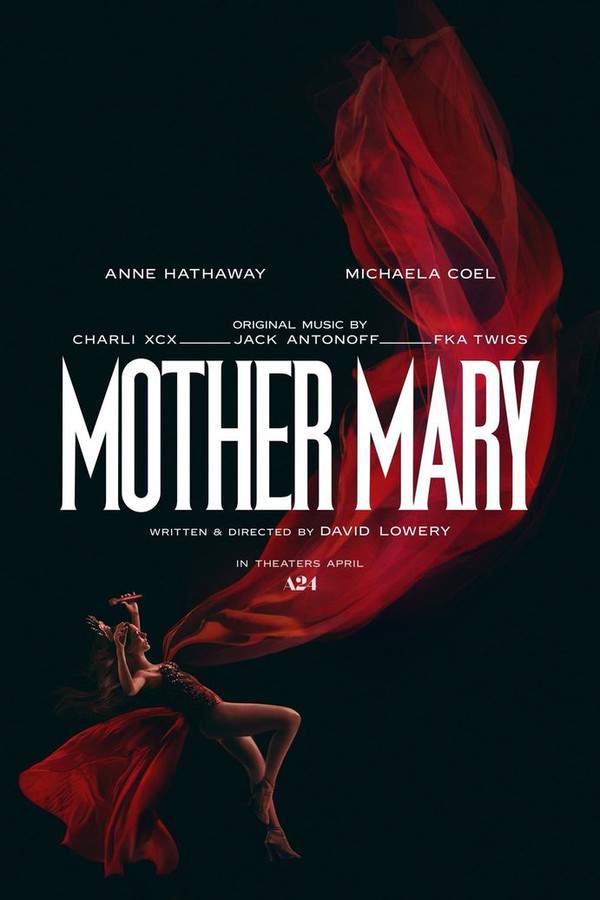
Mother Mary (2026) movie poster

Ending Explained

Mother Mary (2026) Ending Explained – Final Scene & Meaning

Release, runtime and language
2026 · 1 h 52 m · English
Echo score 64
Loading streaming availability…
Directed by
David Lowery
Starring
Michaela Coel, Anne Hathaway, Sian Clifford, Jessica Brown Findlay, Atheena Frizzell, FKA Twigs

Long-buried wounds surface as iconic pop star Mother Mary (Anne Hathaway) reunites with her estranged best friend and former costume designer Sam Anselm (Michaela Coel) on the eve of her comeback performance, forcing both women to confront past betrayals and the fragile hope of redemption.

On this page (6)
  1. 1 Where to watch
  2. 2 What happens at the end
  3. 3 Final events in order
  4. 4 Ending questions answered
  5. 5 Movie threads
  6. 6 Every angle
Loading streaming availability…

Ending explained · contains spoilers

What Happens at the End of Mother Mary?

How Mother Mary (2026) ends, what the final scene means, which earlier moments set it up and how to read the ending if the film leaves it open. The full ending explained, with every spoiler.

The ending of Mother Mary resolves not with a romantic reunion, but with something far more grounded: emotional closure. Anne Hathaway's Mary and Michaela Coel's Sam come together in a workshop to confront the painful history that has haunted them both, represented throughout the film by a mysterious red entity. This crimson spirit serves as a visual metaphor for their shared anguish, born from a relationship that blurred the lines between creative partnership and romantic love. By the film's conclusion, the entity is no longer a source of dread but a tangible expression of heartbreak that both women can finally acknowledge and release.

Central to the film's resolution is Mary's apology to Sam—a moment of genuine vulnerability that cuts through her usual stage-managed persona. Their conversation lays bare the wounds left by their split, with Sam's dismissal from Mary's professional life having functioned as a devastating breakup. The film deliberately leaves their past romantic connection ambiguous, but the emotional stakes are unmistakably those of two people who once loved each other deeply. Rather than rekindling that romance, Mother Mary allows them to find peace separately, suggesting that some relationships are meant to be understood and healed rather than revived.

The film also offers a quiet but powerful answer to the question of Mary's near-death experience. While it remains ambiguous whether her fall at the previous show was a suicide attempt or a tragic accident spurred by the red spirit, her confession to Sam that she still contemplates ending her life lingers heavily. Yet the ending implies a shift. Through her catharsis with Sam, Mary seems to confront the depression and loneliness that have long weighed on her. The final moments suggest she has found a way forward, not by forgetting her pain, but by finally facing it with someone who truly understands it. Mother Mary ultimately reveals itself as a story about the courage to revisit old wounds, and the grace required to let them go.

Last updated: June 09, 2026 at 06:47

Was this helpful?

The last 4 events

How Mother Mary Ends: The Final Events in Order

The last events of Mother Mary (2026) in chronological order, the run-up to the ending explained above. The complete timeline has all 14 events, scene by scene.

Open the full timeline
  1. Ghost disrupts the final concert

    The red ghost manifests during Mary's final concert and causes her to fall, injuring herself onstage. The audience's reaction blends awe with unease as the performance becomes a warning rather than a triumph. Mary faces the haunting as a direct threat to her career and wellbeing.

    When
    During final show
    Where
    Last concert venue
  2. Exorcism ritual to remove the spirit

    Convinced the spirit must be removed, Sam sets up a ceremonial ritual using her sewing tools and a protective circle. Mary is guided to recall their shared history and the dresses Sam once made for her. Mary cuts her chest with scissors and Sam pulls the red-spirited entity out, emerging as a giant red cloth before the stunned team.

    When
    Ritual
    Where
    Sam's studio
  3. Post-ritual recovery and new dress on the way

    After recovering, Mary allows Sam to begin crafting the new dress again, signaling a tentative repair of their bond. Mary is escorted to a vehicle departing from the studio, and she apologizes for having wronged Sam. The tension begins to ease as collaboration returns to the foreground.

    When
    Post-ritual
    Where
    Sam's studio
  4. Halo vision and the final dress

    Hilda shares a vision of Mary wearing the dress, including a halo motif that aligns with Sam’s early ideas. The final look features a red dress made from fabric infused with the red spirit, symbolizing transformation and release. The film closes on this eerie, luminous image.

    When
    After ritual
    Where
    Sam's studio

Ending questions answered

Mother Mary Ending: Your Questions Answered

The questions people ask most about the ending of Mother Mary (2026): what the final scene means, how the twist works, what happens to each character and how to read the ending. Each answer contains spoilers.

Q1

What happens to the red entity at the end of the movie?

The red entity that has haunted both Mary and Sam throughout the film is finally released. Initially appearing as a threatening supernatural presence representing their shared trauma, it transforms by the film's end into a tangible expression of heartbreak that both women can acknowledge and let go of. The entity doesn't disappear through violence or exorcism, it dissipates through the emotional catharsis of Mary's genuine apology and their honest confrontation of past wounds.

Foreshadowing: The entity first appears when Mary is overcome with panic attacks, suggesting it feeds on unprocessed emotional pain.

  • red ghost
  • red entity
  • supernatural spirit
  • catharsis
  • emotional release
Q2

Why does Mary apologize to Sam in the ending?

Mary's apology is the emotional centerpiece of the film because it represents the first time she drops her stage-managed persona and admits genuine vulnerability. Sam's dismissal from Mary's professional life functioned as a devastating breakup, essentially abandoning someone who was both creative partner and lover. The apology acknowledges this betrayal and Mary's awareness of the harm she caused, which opens the door for genuine reconciliation rather than superficial closure.

Foreshadowing: Throughout the film, Mary's public persona contrasts sharply with her private anxiety, building toward a moment when her mask must crack.

  • apology
  • reconciliation
  • vulnerability
  • betrayal
  • friendship
Q3

Were Mary and Sam romantically involved before the events of the movie?

The film deliberately leaves the exact nature of their past relationship ambiguous, but the emotional stakes are unmistakably those of two people who once loved each other deeply. Their connection blurred the lines between creative partnership and romantic love. Sam's dismissal from Mary's life functioned as a devastating breakup, and the pain both women carry throughout the film reads as heartbreak from a dissolved intimate relationship rather than merely a professional falling-out.

Foreshadowing: The red entity that torments them is described as born from a relationship that blurred creative partnership and romantic love.

  • romantic history
  • past relationship
  • love
  • partnership
  • sam anselm
Q4

Was Mary's fall at her previous show a suicide attempt or an accident?

The film intentionally keeps this question ambiguous. The text states it remains unclear whether her fall was a suicide attempt or a tragic accident spurred by the red spirit. What matters more than the answer is Mary's confession to Sam that she still contemplates ending her life, this admission reveals the depth of her depression and psychological torment, making the ambiguity around the fall less important than her current struggle with suicidal ideation.

Foreshadowing: Mary's panic attacks throughout the film establish her fragile mental state, preparing viewers for this revelation.

  • mary fall
  • suicide attempt
  • accident
  • depression
  • mental health
Q5

What does Mary's confession about suicidal thoughts mean for her future?

Mary's admission to Sam that she still contemplates ending her life is devastating, but the ending implies a meaningful shift. Through her catharsis with Sam, finally facing her pain with someone who truly understands, Mary seems to find a way forward. The film suggests she has discovered the courage to confront her depression rather than escape it. The ending is cautiously hopeful: she hasn't been cured, but she's no longer alone with her pain.

Foreshadowing: The constant psychological tension from Mary's panic attacks establishes her ongoing struggle with depression.

  • suicidal thoughts
  • depression
  • recovery
  • healing
  • mental health
Q6

Why don't Mary and Sam get back together at the end?

Rather than rekindling their romance, Mother Mary allows both women to find peace separately. The film suggests that some relationships are meant to be understood and healed rather than revived. Their connection was deeply intertwined with Mary's public persona and Sam's role as costume designer, returning to that dynamic would likely recreate the power imbalance that caused the original betrayal. Closure comes through acknowledgment, not reintegration.

Foreshadowing: The entire film builds tension around whether they can rebuild what was broken, only to subvert that expectation.

  • breakup
  • reconciliation
  • closure
  • separation
  • healing
Q7

What does the red entity actually represent in the story?

The crimson spirit serves as a visual metaphor for the shared anguish born from Mary and Sam's broken relationship. It manifests as a threatening presence because their pain was never processed or acknowledged, the wound was too painful to face. By the film's conclusion, the entity transforms from a source of dread into a tangible expression of heartbreak that both women can finally acknowledge and release, showing that confronting pain directly is what liberates them from it.

Foreshadowing: The entity appears whenever Mary faces emotional triggers, indicating it feeds on unprocessed trauma.

  • red ghost metaphor
  • trauma
  • heartbreak
  • emotional pain
  • supernatural symbolism
Q8

Is Mother Mary's ending hopeful or ambiguous?

The ending balances both hope and ambiguity. It's hopeful in that Mary has taken the first step toward genuine healing by confronting her pain honestly with Sam. It's ambiguous in that the film shows Mary's recovery and Sam's creative vision but leaves the full consequence of the extracted spirit unclear. The supernatural threat is resolved, but Mary's psychological struggle continues, we see her beginning the journey, not arriving at its destination.

Foreshadowing: The meta notes explicitly describe the ending as ambiguous, showing recovery but leaving full consequences unclear.

  • ending interpretation
  • hopeful ending
  • ambiguous ending
  • resolution
  • recovery
Q9

What happens to Mary's comeback performance after the ending?

The film doesn't explicitly show Mary's comeback performance itself, focusing instead on the emotional preparation that precedes it. Through her confrontation with Sam, Mary seems to find the authentic foundation for her return, not as the stage-managed persona we've seen throughout the film, but as someone who has confronted her underlying pain. The implication is that her performance will be built on genuine emotion rather than deflection.

Foreshadowing: The entire narrative builds toward Mary's comeback, with the resolution providing the emotional grounding for whatever comes next.

  • comeback performance
  • music career
  • redemption
  • new beginning
Q10

What is the main message or theme of Mother Mary's ending?

Mother Mary ultimately reveals itself as a story about the courage required to revisit old wounds and the grace needed to let them go. The film argues that healing doesn't come from forgetting pain or suppressing it through fame and performance, it comes from facing it honestly with someone who truly understands. The red entity can only be released when both women stop running from their shared history and finally acknowledge it together.

Foreshadowing: The constant tension between Mary's public persona and private suffering establishes this theme throughout.

  • theme
  • meaning
  • healing
  • courage
  • grace
  • letting go

Movie threads

More Movies Like Mother Mary, by Mood & Story

Curated lists built around what makes Mother Mary tick: the same mood, the same kind of story or the same emotional payoff. Each list explains why these movies belong together.

Psychological trauma horror movies like Mother Mary

Characters confront supernatural manifestations of their deepest psychological wounds. If you liked Mother Mary's blend of psychological trauma and supernatural horror, you'll find more movies where characters confront haunted pasts. These films combine heavy emotional weight with tense, supernatural dread in artistic settings.

  • psychological horror
  • supernatural dread
  • trauma
  • haunting
  • tense
  • cathartic
  • Tone: tense, haunting, melancholic
  • Pacing: steady, deliberate revelation
Why these movies?

The story pattern: These stories typically follow characters revisiting past trauma that manifests physically or supernaturally. The narrative unfolds through a steady revelation of buried secrets, culminating in a confrontation with both literal and metaphorical ghosts from the past.

Why they belong together: They share a mix of heavy emotional themes with supernatural horror elements, creating a tense atmosphere where psychological wounds become tangible threats. The pacing is deliberate, building dread through character revelation rather than jump scares.

Artistic collaboration dramas like Mother Mary

Estranged artistic collaborators reunite under pressure to confront past betrayals. Movies similar to Mother Mary's exploration of fractured creative partnerships. If you liked the tension between Mary and Sam, you'll enjoy these stories about estranged collaborators reuniting under pressure with heavy emotional stakes.

  • tense
  • melancholic
  • cathartic
  • artistic
  • professional pressure
  • betrayal
  • Tone: tense, melancholic, cathartic
  • Pacing: steady, character-driven
Why these movies?

The story pattern: These narratives focus on once-close creative partners who separated due to betrayal or conflict, now forced to work together again. The story unfolds through tense interactions, revelations about the past, and attempts at reconciliation amidst professional pressure.

Why they belong together: They share a focus on complex creative relationships, professional pressure, and the emotional weight of past betrayals. The tension comes from both interpersonal drama and high-stakes artistic circumstances.

Every angle

Mother Mary (2026) Explained: Plot, Ending, Timeline & Characters

Everything about Mother Mary in one place: what happens in the plot summary, the timeline in chronological order, the characters and meaning, the ending explained and a spoiler-free summary. What's After the Movie adds the cast, box office and post-credit scenes.

Coming soon on iOS and Android

The Plot Explained Movie Summary App

Plot summaries, endings explained and timelines on your phone. Catch up on any movie in minutes, save your favorites and never miss a twist again.

Be the first to know when we launch. Your email stays private, always.

Learn more about the app