Plot Explained Spoilers guaranteed!
Plot Explained

Browse by genre

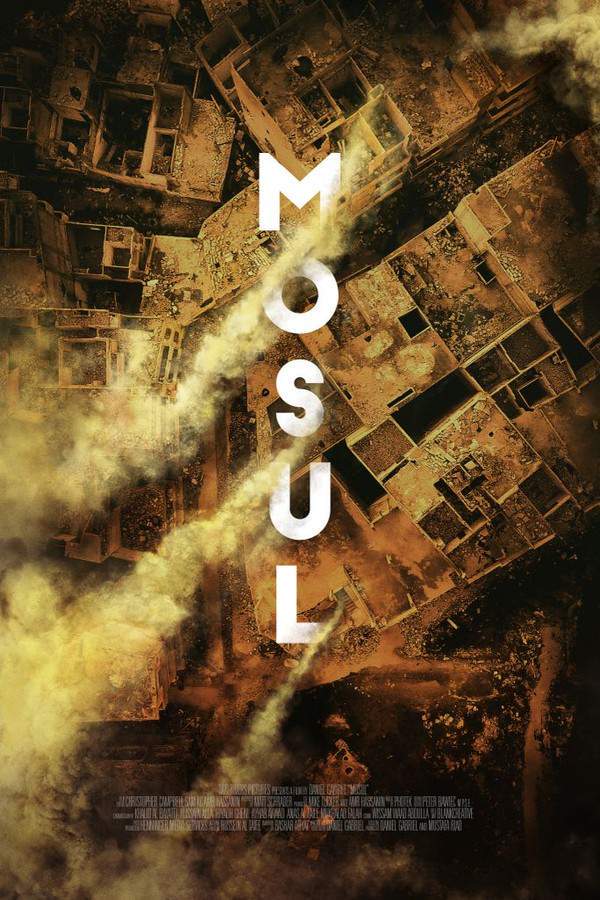
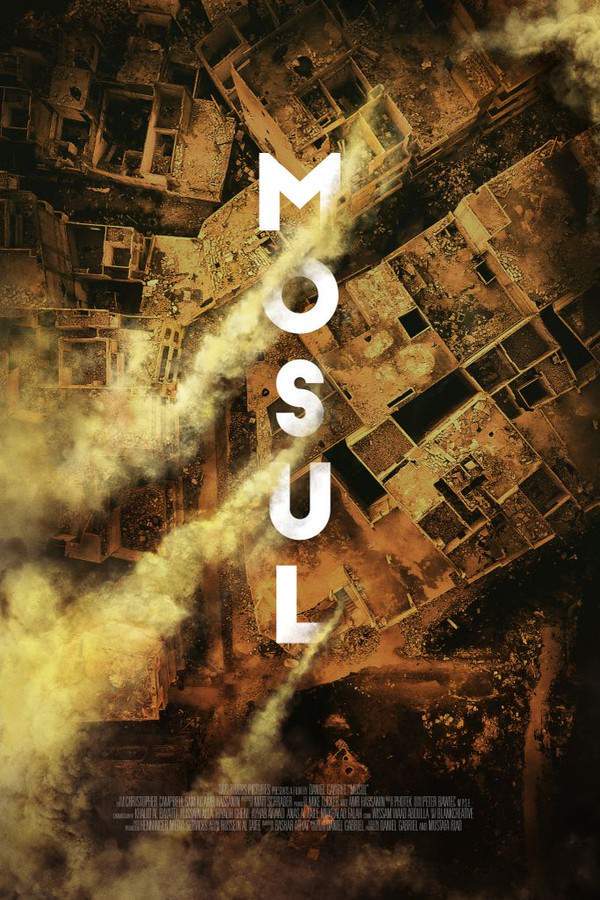
Mosul (2019) movie poster

Plot Summary

Mosul (2019) Plot Summary & Ending Explained

Release, runtime and language
2019 · 86 min · English
Echo score 85
JustWatch #16,373 4
Directed by
Dan Gabriel
Starring
Ali Mula, Anouar H. Smaine, Mahdi Chalkhaoui

In war-torn Mosul, a team of determined policemen confronts a network of ISIS drug traffickers, navigating a dangerous landscape where survival is a daily struggle. Amidst the intense fighting, a young officer experiences a devastating loss when his uncle is killed, forcing him to grapple with the harsh realities of conflict and the unwavering strength of those around him. They risk everything to dismantle the criminal operation and restore order to their city.

On this page (7)
  1. 1 Where to watch
  2. 2 What happens: full plot
  3. 3 Plot questions answered
  4. 4 How it ends
  5. 5 Movie threads
  6. 6 Movies like Mosul
  7. 7 Every angle

Where to watch

Where to Watch Mosul (2019)

Where can you watch Mosul? Stream, rent or buy it in the US, including on Amazon Prime Video, Amazon MX Player and Amazon Prime Video Free: current JustWatch availability with up-to-date prices.

Streaming availability powered by JustWatch

Full plot summary · contains spoilers

What Happens in Mosul: Full Plot Summary

The whole story of Mosul (2019) explained, from the opening scene to the final frame: every key event, every twist and what it all adds up to. Read it as a quick recap before the sequel, to check a scene you missed, or to finally understand what really happened.

In the heat of the Battle of Mosul, three Iraqi policemen corner ISIS drug smugglers, but the convoy of confrontation soon shifts as the smugglers are captured, the officers are outgunned, and the cafe becomes a perilous fortress. One of the officers, Kawa, a 21-year-old Feyli Kurd (played by Anouar H. Smaine), loses his uncle in the initial firefight, a personal blow that threads through the ensuing chaos. The rescue comes not from civilian relief but from the Nineveh SWAT Team, a Mosul-born police division forged by tragedy and led by Commander Major Jasem. They find the stranded policemen, dispatch the remaining danger, and carry out the drug-smugglers’ end with a cold efficiency. After the firefight, they offer Kawa a place among them because his loss makes him eligible for their ranks, a choice he accepts with a cautious resolve; Jameel, his partner, agrees to take his uncle’s body for burial as a final gesture of respect.

The mission deepens and the tension thickens. As the SWAT team presses forward, Kawa’s questions about their true objective meet silence, a wall of discipline and secrecy that weighs on him as they rest inside an abandoned building. The uneasy calm is broken when Jameel returns, signaling to an ISIS car bomber the team’s location, a moment that foreshadows the fragility of trust within their ranks. Tomahawk, a veteran member of the squad, falls to a bomb blast, and Jasem passes Tomahawk’s axe to Kawa, a symbolic burden that marks a shift in responsibility. The body of their fallen comrade is prepared for burial, and the weight of loss gnaws at Kawa, who feels increasingly excluded. Hooka, another team member, accuses him of being a traitor’s ally, further fraying the bonds that hold the team together.

Crossing into the ISIS-held part of Mosul, the danger intensifies. The civilians and soldiers on the ground come under heavy fire from rooftop positions, and Hooka is killed in the exchange. As the SWAT members clear the rooftop and reassess their route, an explosive drone targets their Humvee. The attack draws a new ally into the fray: Colonel Isfahani, an Iranian Special Forces officer commanding the PMF in Mosul, appears and offers ammunition to the SWAT team in exchange for cigarette cartons—a pragmatic, unsettling trade that shows how fractured alliances can be in wartime. During these negotiations, Jasem learns that one of the PMF’s prisoners is Jameel, Kawa’s partner, who explains that ISIS captured him and pressured him to reveal the SWAT team’s location under threat against his grandson in Michigan. The exchange raises tensions between the SWAT and the PMF, but Kawa’s steady, if grim, insistence on loyalty surfaces when he uses the axe he was given to kill Jameel, a drastic act that de-escalates the immediate threat but scars the group’s moral compass.

The mission continues despite rising costs. Waleed negotiates further with the PMF, trading Hooka’s hookah for an RPG rocket, aiming it at an ISIS camp they spotted earlier from the rooftop. As they move, Jasem explains that the mission had been a deviation from orders issued by the police superiors, a confession that underscores the risk of operating with autonomy in a city ripped apart by war. Kawa, though curious, chooses silence: he tells Jasem he doesn’t want to know more and commits to following Jasem’s commands, a turning point that cements his place within the team despite his lingering questions.

Casualties mount and the team is pushed to the brink. The SWAT squad reaches a roadblock and fights outside their vehicles, suffering losses that shake them to their core: Youness is killed by friendly fire, and Kawa himself is wounded by a grenade that disfigures his face enough to require a balaclava. The squad presses forward on foot, losing Razak in close-quarters combat and leaving Sinan wounded. They assault an ISIS camp, but the price continues to rise: another team member falls to enemy fire, and Jasem, known for cleaning up trash wherever he goes, accidentally triggers a booby trap that kills him. With their commander dead, morale plummets, and the remaining six members struggle to stay focused on a mission that seems increasingly personal and perilous.

Hope and resolve reemerge in a struggle for family safety. Despite the devastation, Kawa rallies his teammates, reminding them of why they fight. Waleed leads the survivors into an apartment complex and uses a spare key hidden in his shoe to unlock a door, a small act of ingenuity in a landscape dominated by chaos. Inside, they confront a new nightmare: ISIS has taken Waleed’s wife Hayat and daughter Dunya for forced marriage, and a direct confrontation ensues with the ISIS fighter holding them. Waleed defeats him, a hard-won victory that keeps his family safe for the moment.

In the end, the mission reveals its core purpose. What had begun as a unit fighting to disrupt an ISIS operation gradually uncovers a deeper objective: the SWAT team has been conducting missions to liberate family members captured by ISIS. As Kawa comes to understand this, he learns that Amir’s son is close to their location, and he asks how far they still must go. The story leaves him—and the team—facing a choice between the brutal demands of war and the personal stakes that give their sacrifices shape and meaning, a stark reminder that in Mosul, every battle can be a fight for a family’s future.
Last updated: January 28, 2026 at 12:46

Was this helpful?

Plot questions answered

Mosul Plot Explained: Your Questions Answered

The questions people ask most about Mosul (2019): what happens in the confusing scenes, why the characters do what they do, the twists, hidden details and what the ending means. Each answer contains spoilers.

Q1

Why was Kawa invited to join the Nineveh SWAT Team after his uncle died?

Kawa was invited to join because his uncle's death made him eligible for the SWAT team's ranks. The team only accepts members who have lost family to ISIS, as personal loss drives their motivation to fight. This criteria ensures that every member has a personal stake in the mission.

Foreshadowing: Kawa's earlier loss of his uncle in the initial firefight established his eligibility and personal motivation for joining.

  • kawa
  • nineveh swat team
  • joining
  • eligibility
  • uncle death
Q2

What was the real mission objective of the SWAT team?

The true mission was not just to disrupt ISIS drug operations but to liberate family members captured by ISIS. The team was conducting missions to free relatives of the police and SWAT members who had been taken for forced marriage and other purposes by ISIS.

Foreshadowing: The mission's deviation from official police orders and the focus on personal stakes hinted at a deeper purpose beyond standard counter-terrorism.

  • mission objective
  • liberate families
  • swat team
  • isis captives
Q3

Why did Jameel betray the SWAT team and signal the ISIS car bomber?

Jameel did not voluntarily betray the team. He was captured by ISIS and pressured to reveal the SWAT team's location under threat that his grandson in Michigan would be killed. This forced coercion explains his actions during the mission.

Foreshadowing: Earlier tension around trust and Jameel's departure with the uncle's body foreshadowed his eventual capture.
  • jameel
  • betrayal
  • capture
  • isis threat
  • grandson michigan
Q4

Why did Kawa kill Jameel with the axe?

Kawa used Tomahawk's axe to kill Jameel to de-escalate a dangerous standoff between the SWAT team and the PMF forces. Jameel was being held as a prisoner by the PMF, and his presence was creating tension that threatened to turn violent between the two allied groups.

Foreshadowing: The axe had been given to Kawa after Tomahawk's death, symbolizing the burden of difficult decisions to come.

  • kawa
  • jameel
  • axe
  • killing
  • de-escalation
  • pmf standoff
Q5

How did Commander Jasem die in the documentary?

Commander Jasem was killed when he accidentally triggered a booby trap while clearing debris. Despite his habit of cleaning up trash wherever they went, a hidden explosive device detonated, killing him instantly and dealing a severe blow to the team's morale.

Foreshadowing: Jasem's compulsive debris-cleaning trait was shown multiple times throughout the film, making his death a tragic irony of his own character.

  • jasem
  • death
  • booby trap
  • explosion
  • commander
Q6

Why did the PMF (Popular Mobilization Forces) agree to help the SWAT team?

Colonel Isfahani of the Iranian Special Forces commanded the PMF forces in Mosul. He offered ammunition to the SWAT team in exchange for cigarette cartons, a pragmatic trade that revealed the fractured, transactional nature of alliances in wartime Iraq.

Foreshadowing: The tense negotiation scene highlighted how makeshift cooperation replaced formal military coordination.

  • pmf
  • isfahani
  • ammunition
  • cigarettes
  • trade
  • cooperation
Q7

What happened to Youness and how did he die?

Youness was killed by friendly fire during the roadblock battle outside their vehicles. The SWAT team was caught in crossfire from their own side, a tragic example of the chaos and confusion in urban warfare where distinguishing between friend and foe became extremely difficult.

  • youness
  • friendly fire
  • death
  • roadblock
Q8

Why did Hooka accuse Kawa of being a traitor's ally?

Hooka accused Kawa of being a traitor's ally because Jameel had betrayed the team by signaling the ISIS car bomber. Since Kawa had been closely partnered with Jameel and owed him a debt for helping bury his uncle, Hooka suspected Kawa might share Jameel's loyalty.

Foreshadowing: The accusation stemmed from the tension created when Jameel returned and signaled the bomber, endangering the entire team.

  • hooka
  • kawa
  • accusation
  • traitor
  • jameel
Q9

How did Waleed rescue his wife and daughter from ISIS?

Waleed led the surviving team members into an apartment complex where ISIS was holding his wife Hayat and daughter Dunya for forced marriage. He used a spare key hidden in his shoe to unlock the door, surprising the ISIS fighter holding them and eliminating him to secure their rescue.

Foreshadowing: Earlier scenes establishing Waleed's family context and his determination hinted at this personal stakes mission.

  • waleed
  • rescue
  • wife
  • daughter
  • hayat
  • dunya
  • forced marriage
  • spare key
Q10

What was the significance of Tomahawk's axe being passed to Kawa?

When Tomahawk died in the bomb blast, Commander Jasem gave his axe to Kawa as both a symbolic and practical weapon. The axe represented the burden of leadership and the responsibility to continue fighting after losing teammates. It later became the tool Kawa used to kill Jameel during the PMF standoff.

Foreshadowing: The passing of the axe marked Kawa's transition from new recruit to an active member bearing the team's fight.

  • tomahawk
  • axe
  • passed
  • kawa
  • symbol
  • responsibility

Ending explained

What Happens at the End of Mosul?

How Mosul (2019) ends, in short: the final scene, the last twist and what it means for the characters. The full ending explained, with every spoiler, lives on its own page.

Read the full ending explained

Mosul’s ending leaves a lasting impression by revealing the true purpose behind the intense violence. Throughout the film, Kawa’s journey of understanding the Nineveh Squad’s motives comes to a head when he realizes that their actions—killing militants rather than arresting them—are driven by a need to protect what remains of their families and their city. The squad members, all former police officers, turned to deadly force after militants started killing their loved ones and destroying their city, turning what was originally meant to be a mission of justice into a desperate effort to save their personal and communal futures.

The film’s conclusion underscores the complex reality of war, showing that sometimes, violence cannot simply be justified as good or bad. Jasem’s character embodies hope and resilience; he strives to clean and rebuild Mosul, refusing to let the city succumb entirely to chaos. His acts of kindness, such as comforting orphaned children and rejecting external help like American support, emphasize the local fighters’ insistence on independence and the rejection of foreign intervention.

Continue reading the ending (1 more paragraphs)

In the final moments, the audience sees Kawa trying to grasp the depth of this struggle—understanding that these men fought not out of hatred or cruelty, but from a deep sense of duty to restore their land and protect their loved ones. The ending acknowledges that some conflicts are unavoidable when personal loss and national trauma collide, and it invites viewers to see these soldiers not just as fighters, but as tragic heroes shaped by grief and hope. Ultimately, Mosul leaves us with a powerful message: the fight for peace is complicated, often driven by love and loss rather than simple notions of right and wrong. It’s a poignant reminder of the human side of war, emphasizing that even amidst chaos, humanity and hope can endure.
Mosul ending explained in full

Movie threads

More Movies Like Mosul, by Mood & Story

Curated lists built around what makes Mosul tick: the same mood, the same kind of story or the same emotional payoff. Each list explains why these movies belong together.

Gritty urban warfare movies like Mosul

Stories of small teams fighting for survival in a hostile, war-torn city. If you liked the intense, street-level combat of Mosul, explore other movies about war-torn cities and the desperate, small-unit struggles within them. These films capture the chaos, tactics, and heavy emotional toll of fighting block by block in an urban landscape.

  • gritty
  • urgent
  • desperate
  • oppressive
  • tense
  • chaotic
  • Tone: tense, grim, oppressive
  • Pacing: fast, relentless
Why these movies?

The story pattern: Narratives in this thread often follow a specialized unit or group of survivors navigating a hostile urban environment. The plot is driven by a clear, dangerous objective, punctuated by sudden firefights, ambushes, and the constant threat of betrayal. The journey is as much about the group's cohesion under extreme stress as it is about achieving their mission.

Why they belong together: These movies are grouped together because they share a visceral, gritty depiction of modern urban combat. They create a strong sense of place within a destroyed city, emphasize tactical realism, and explore the heavy themes of sacrifice, loyalty, and survival against overwhelming odds.

Movies with bittersweet sacrifice like Mosul

Journeys where a righteous goal is achieved, but at a devastating personal cost. Fans of Mosul's heavy emotional climax will find similar resonance in these stories of costly missions. These films explore themes of vengeance, brotherhood, and sacrifice, where hard-won victories are tempered by devastating personal losses, leaving a lasting emotional impact.

  • morally complex
  • grief
  • sacrifice
  • vengeance
  • bittersweet
  • heavy
  • Tone: grim, morally complex, bittersweet
  • Pacing: fast, emotionally charged
Why these movies?

The story pattern: The narrative pattern revolves around a group united by a powerful goal, often sparked by a personal loss. As they progress, the cost of their mission escalates, leading to significant casualties among their ranks. The climax delivers on the objective but underscores the emptiness of victory when measured against the lives lost, creating a poignant, bittersweet resolution.

Why they belong together: These films are connected by their shared exploration of the moral and emotional cost of pursuing a just cause. They balance intense action with heavy drama, culminating in endings where success feels hollow due to the sacrifices made, creating a powerful and thought-provoking viewer experience.

If you liked this

Movies Like Mosul

Similar movies to Mosul: the same genre, themes or kind of story. Each one comes with its own plot summary, timeline and ending explained.

Browse all movie summaries

Every angle

Mosul (2019) Explained: Plot, Ending, Timeline & Characters

Everything about Mosul in one place: what happens in the plot summary, the timeline in chronological order, the characters and meaning, the ending explained and a spoiler-free summary. What's After the Movie adds the cast, box office and post-credit scenes.

Coming soon on iOS and Android

The Plot Explained Movie Summary App

Plot summaries, endings explained and timelines on your phone. Catch up on any movie in minutes, save your favorites and never miss a twist again.

Be the first to know when we launch. Your email stays private, always.

Learn more about the app