Year: 2014
Runtime: 90 mins
Language: English
Director: George Simon
In 2009, US Airways flight 1549 encountered a flock of birds shortly after takeoff, causing both engines to fail. With no power and facing a dire situation, Captain Chesley "Sully" Sullenberger made the bold decision to attempt an emergency landing in the Hudson River. The dramatic event unfolded as the aircraft was skillfully brought down on water, successfully saving the lives of all passengers and crew.
Find where to stream, rent, or buy Miracle Landing on the Hudson (2014) in the US with current JustWatch availability, up-to-date pricing, and platform listings for subscription, rental, and digital purchase options.
Warning: spoilers below!
Haven’t seen Miracle Landing on the Hudson yet? This summary contains major spoilers. Bookmark the page, watch the movie, and come back for the full breakdown. If you're ready, scroll on and relive the story!
Read the complete plot breakdown of Miracle Landing on the Hudson (2014), including all key story events, major twists, and the ending explained in detail. Discover what really happened, and what it all means.
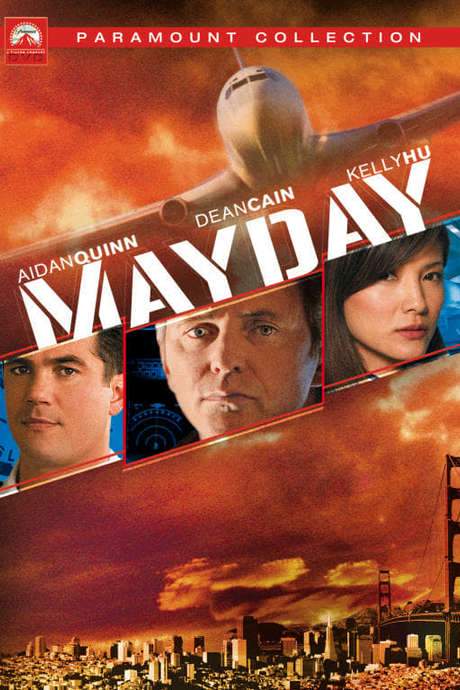
Miracle Landing on the Hudson is a feature-length documentary from the acclaimed factual series Mayday (also known as Air Crash Investigation). It meticulously reconstructs the incredible true story of US Airways Flight 1549 and the events of January 15, 2009.
On a frigid winter afternoon, Flight 1549, an Airbus A320, takes off from New York’s LaGuardia Airport bound for Charlotte, North Carolina. The plane carries 150 passengers and 5 crew members, including Captain Chesley ‘Sully’ Sullenberger John O’Mahony and First Officer Jeffrey Skiles. The mood aboard is ordinary, but it quickly grows tense when, just minutes into the flight, the aircraft encounters a dense flock of Canada geese at an altitude of only 2,818 feet. The bird strike cripples both engines, instantly turning the airliner into a heavy glider gliding through one of the world’s most densely populated cities.
The documentary blends dramatic reenactments with computer-generated imagery and gripping firsthand accounts from the people who lived through the ordeal. It weaves together voices from the cockpit and cabin, along with insights from air traffic controllers, to recreate the chaotic immediacy of the moment. Among the voices guiding viewers through the crisis are Pam Seagle Sara Stewart, a passenger whose perspective grounds the human stakes, and members of the Sosa family—Martin Sosa Matthew Douglas, his daughter Sofia Sosa Skye Lucia Degruttola, and Tess Sosa Kate Steavenson-Payne—whose experiences on board illuminate the emotional spectrum of fear, courage, and solidarity. The film also features Vallie Collins Natasha Staples and Doreen Welsh Miriam Lucia, shaping a broad, human portrait of what happens when a routine flight becomes a life-or-death test.
With no engine thrust and insufficient altitude to return to LaGuardia or reach a nearby New Jersey airport, Sully must rely on his training, quick thinking, and an almost uncanny calm under pressure. The documentary closely follows the tense cockpit dynamics as he and Skiles work in unison to manage the powerless aircraft, balancing technical constraints with the imperative to protect everyone on board. The tension rises in the cabin as crew members brief passengers for an outcome that could be catastrophic, and all eyes fix on the river below while the city holds its breath.
The centerpiece of Miracle Landing on the Hudson is the emergency water landing itself. The film chronicles a move that remains one of aviation’s most remarkable feats: a ditching in the Hudson River that, against the odds, preserves the airliner largely intact. The portrayal emphasizes precision and teamwork, portraying a maneuver that demands near-perfect coordination between pilots and the flight crew as they execute a landing that could have gone disastrously wrong. The moment is depicted not as luck alone but as the culmination of skill, training, and decisive leadership.
After the splashdown, the narrative shifts to the rapid and extraordinary rescue operation. All 155 people aboard survive, thanks to a swift evacuation onto the wings of the sinking aircraft and the immediate, heroic response of New York ferry boat crews and emergency services converging on the scene. The film highlights how quick thinking, careful crowd management, and coordinated assistance turned a potential disaster into one of modern aviation history’s most celebrated survivals. The emphasis remains on calm professionalism, expert piloting, and a collective human effort that bridged fear with hope in real time.
Throughout Miracle Landing on the Hudson, the sense of communal resilience is central. The documentary doesn’t merely recount a sequence of events; it foregrounds the testimonies of those involved—the pilots, the cabin crew, and the passengers—so viewers can understand what each person faced, felt, and contributed in the moment of crisis. By weaving personal accounts with technical analysis and a careful reconstruction of the sequence of events, the film presents a complete, intimate, and unflinching portrait of how a seemingly ordinary flight became an extraordinary testament to human composure and collaboration.
In the end, the film offers a restrained but powerful celebration of a single, extraordinary decision—made under extraordinary pressure—that altered the fate of all aboard. Miracle Landing on the Hudson invites viewers to reflect on the convergence of skill, nerve, and communal effort that can transform a potential catastrophe into a story of survival and shared humanity.
Last updated: January 08, 2026 at 08:32
Explore frequently asked questions about Miracle Landing on the Hudson (2014) with spoiler-rich answers covering the full plot summary, major story beats, character motivations, hidden details, and ending meaning. This movie summary FAQ helps explain confusing scenes, plot twists, and narrative decisions in clear, searchable detail.
The Airbus A320 lost all thrust at just 2,818 feet, far too low to circle back to LaGuardia or reach any nearby airport. With no engine power and rapidly decreasing altitude, Sully calculated that he didn't have enough energy to glide to any runway. The Hudson River was the only viable option because it offered a straight path to water without obstacles, and the aircraft's design allowed for a controlled water landing.
The dual engine failure occurred just minutes after takeoff, leaving the plane with no altitude reserve.
Canada geese are large birds, ingested into the engines, they shattered the fan blades and caused catastrophic damage to both turbofan engines. The engines were designed to withstand certain bird strikes, but the size and number of geese overwhelmed their capacity. Once both engines flamed out, the A320 became a heavy glider with zero thrust.
The plane encountered a dense flock of Canada geese minutes after takeoff.
Survival resulted from multiple factors working together: Sully executed a near-perfect water ditching that kept the fuselage largely intact, the crew evacuated quickly and efficiently onto the wings, and New York ferry boats arrived within minutes to pull people from the freezing water. The aircraft stayed afloat long enough because the forward fuselage design prevented immediate sinking.
The documentary emphasizes the precise coordination between pilots and crew during the descent.
A ditching is a controlled water landing performed intentionally by the crew, whereas a crash is an uncontrolled impact. Sully maintained enough control to angle the aircraft's nose up, align with the river, and flare before contact, reducing the impact force. The Airbus A320's design and the crew's execution turned what could have been a catastrophic breakup into a survivable emergency landing.
The documentary portrays the maneuver as a near-perfect water landing rather than random impact.
New York Waterway ferries were already operating on the Hudson and heard the distress calls. Within minutes, multiple ferries converged on the scene, with some captains directly positioning their vessels alongside the floating aircraft. The ferry crews pulled people from the wings and the water, providing immediate warmth and transport to shore. This rapid civilian response was crucial to preventing hypothermia casualties.
The timeline shows rescue arriving 'shortly after ditching' rather than after extended delay.
The water temperature was near freezing, but several factors prevented casualties: the aircraft stayed afloat long enough for full evacuation, passengers moved quickly onto the wings, ferries arrived within minutes, and crew members actively guided people to safety. The rapid rescue meant most passengers spent only brief time in the water before being pulled aboard warm ferry boats.
The documentary notes the 'frigid water and freezing wind' as a danger during evacuation.
The entire emergency unfolded in approximately six minutes, from the bird strike at 2,818 feet to the water landing in the Hudson. The pilots had no time to waste, making rapid calculations and decisions while gliding over New York City. The quick succession of events is why the documentary's pacing is described as fast and intense.
Meta notes indicate the event unfolds in 'real-time over just a few minutes.'
Sully's heroism stems from his split-second decision to ditch in the river rather than attempt a impossible return to an airport, his precise execution of a never-before-practiced water landing, and his calm leadership that kept the crew focused. While he credits his training and the crew's teamwork, his ability to maintain composure under extreme pressure and make the right call with no room for error defined his actions.
The documentary positions Sully as the story's centerpiece from the beginning.
With no time to prepare passengers for a typical evacuation, the crew quickly briefed everyone on brace positions and exit locations. They kept voices calm to prevent panic while directing passengers to move toward the wings once the aircraft was in the water. Their training kicked in, focusing on crowd management and ensuring people didn't crowd exits that wouldn't open.
Tension 'rises in the cabin as the crew brief passengers for an outcome that could be catastrophic.'
The aircraft remained afloat for about 22 minutes after ditching, giving time for all passengers and crew to evacuate onto the wings. Once evacuated, the A320 gradually sank and was later recovered from the river bottom for investigation. The aircraft was substantially damaged but the fuselage stayed intact during impact, key to everyone's survival.
The timeline notes the aircraft sinking while passengers evacuated to the wings.
The aircraft lost both engines at such a low altitude, just 2,818 feet, that it lacked the energy to glide the distance required to reach any airport in New Jersey. Gliding requires altitude to convert to distance, and with zero thrust, the A320 descended faster than it could travel horizontally. Sully calculated that the Hudson was the only survivable option within reach.
The timeline specifies insufficient altitude to reach 'a nearby New Jersey airport.'
Discover curated groups of movies connected by mood, themes, and story style. Browse collections built around emotion, atmosphere, and narrative focus to easily find films that match what you feel like watching right now.
Documentary recreations of everyday heroes facing extraordinary, high-stakes situations.If you were captivated by the real-life tension and heroic rescue in Miracle Landing on the Hudson, explore other movies based on true events where professionals face sudden disasters. These films capture the urgency, teamwork, and miraculous outcomes of documented emergencies.
Films in this thread follow a linear, fact-based narrative that begins with a sudden catastrophe, builds tension through the immediate response, and culminates in a rescue or survival story. The focus is on procedural accuracy and the critical decisions made under extreme pressure.
These movies are grouped together because they share a focus on reenacting documented emergencies with high realism. They create a specific kind of suspense derived from known, real-world events, emphasizing competence, quick action, and the triumph of human skill over disaster.
Stories where characters must make split-second decisions to avert catastrophe.Fans of the urgent, life-or-death decisions in Miracle Landing on the Hudson will enjoy these movies where characters face imminent disaster. This list features thrilling stories with fast pacing and high tension, focusing on survival against overwhelming odds.
The narrative pattern involves an immediate, overwhelming threat that gives the protagonists only minutes to find a solution. The plot is driven by a series of rapid, critical decisions, with suspense building relentlessly towards a climactic moment of success or failure.
These films are connected by their shared pacing and emotional core. They generate suspense through a constrained timeframe and life-threatening scenarios, placing the audience directly in the nerve-wracking experience of the characters as they fight against time.
Don't stop at just watching - explore Miracle Landing on the Hudson in full detail. From the complete plot summary and scene-by-scene timeline to character breakdowns, thematic analysis, and a deep dive into the ending - every page helps you truly understand what Miracle Landing on the Hudson is all about. Plus, discover what's next after the movie.
Track the full timeline of Miracle Landing on the Hudson with every major event arranged chronologically. Perfect for decoding non-linear storytelling, flashbacks, or parallel narratives with a clear scene-by-scene breakdown.
Discover the characters, locations, and core themes that shape Miracle Landing on the Hudson. Get insights into symbolic elements, setting significance, and deeper narrative meaning - ideal for thematic analysis and movie breakdowns.