Plot Explained Spoilers guaranteed!
Plot Explained

Browse by genre

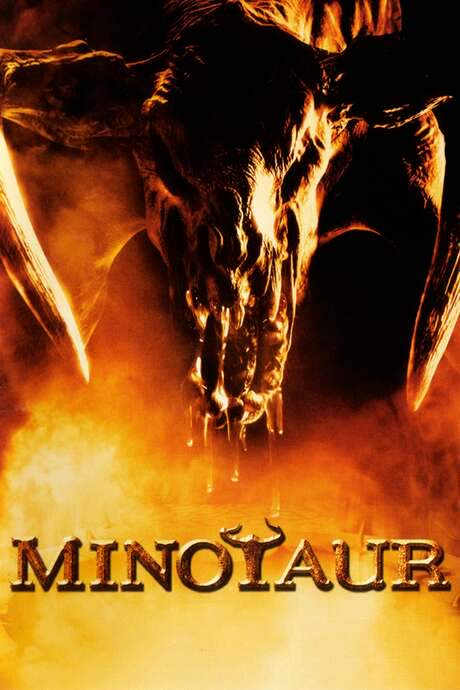
Minotaur (2006) movie poster

Plot Summary

Minotaur (2006) Plot Summary Explained

Release, runtime and language
2006 · 93 mins · English
JustWatch #12,579 11
Directed by
Jonathan English
Starring
Tom Hardy, Rutger Hauer, Jonathan Readwin, Lex Shrapnel, Tony Todd, Ingrid Pitt

In the Iron Age, a remote village is plagued by a Minotaur that dwells beneath a palace and demands each generation’s youth as sacrifice. Theo, still grieving his lover taken in a prior offering, refuses to accept the legend. Convinced she survives as a slave inside the palace, he sets out to rescue her and slay the beast, hoping to become a legend.

On this page (6)
  1. 1 Where to watch
  2. 2 What happens: full plot
  3. 3 Plot questions answered
  4. 4 Movie threads
  5. 5 Movies like Minotaur
  6. 6 Every angle

Where to watch

Where to Watch Minotaur (2006)

Where can you watch Minotaur? Stream, rent or buy it in the US, including on Eternal Family and Amazon Video: current JustWatch availability with up-to-date prices.

Streaming availability powered by JustWatch

Full plot summary · contains spoilers

What Happens in Minotaur: Full Plot Summary

The whole story of Minotaur (2006) explained, from the opening scene to the final frame: every key event, every twist and what it all adds up to. Read it as a quick recap before the sequel, to check a scene you missed, or to finally understand what really happened.

In the Minoan Bronze Age, a looming shadow rests over the village of Thena, where a grim ritual repeats every few years. Under the orders of King Deucalion [Tony Todd], eight youths are seized from the valley and brought to the royal capital. There, they are cast into an immense underground labyrinth, a twisted arena where the Minotaur—a living god of the Minos—hunts and consumes those chosen for sacrifice. This cycle of fear and bloodshed is rooted in a long history of political debt and pained memory, and it casts a pall over the entire realm.

Theo, [Tom Hardy], the son of the village’s chief Cyrnan [Rutger Hauer], bears the weight of a personal tragedy that haunts his every step. His beloved Ffion disappeared in a prior offering, and a leprous prophetess swears that she still survives somewhere within the labyrinth. Against his father’s objections, Theo makes a dangerous, audacious choice: he takes the place of one of the chosen youths, stepping into a fate that could mean death or something worse. He is joined by a band of captives: Danu [Jonathan Readwin], Theo’s closest friend; Morna [Maimie McCoy], who cares for Danu; Tyro [Lex Shrapnel], who carries a prickly resentment toward Theo’s status; Didi [Lucy Brown], Tyro’s love; and others like Vena [Fiona Maclaine], Ziko [James Bradshaw], and Nan [Claire Murphy], each with their own secret hopes and fears.

From the moment the group tumbles into the labyrinth, danger closes in with relentless precision. The Minotaur embarks on a relentless hunt, cutting down Nan almost at once. In the minutes that follow, Raphaella [Michelle Van Der Water], the calculating sister of Deucalion and an unwilling liaison to the throne, appears with a chilling offer: a way out. Some trust her; Vena balks at the option and makes a desperate bid to leave, only to be crushed by the monster. The survivors press on, drawn toward a chamber at the labyrinth’s heart where a heavy wooden door seems to promise escape. The Minotaur, however, lies sleeping beneath the door, surrounded by the remains of its victims, a reminder of the labyrinth’s merciless hunger.

Raphaella’s plan is complicated by the betrayal of a servant once believed loyal. Her handmaiden Ramaya was supposed to slip the door open from the outside, but Deucalion discovers the treachery and executes the girl. The group’s attempt to break through the door stirs the sleeping horror, and the Minotaur awakes with a thunder that echoes through the stone corridors. It kills Ziko, scattering the survivors yet again as fear and confusion take hold.

Theo, Danu, Morna, and a wary Turag [Ciaran Murtagh], a villager who has survived years within the labyrinth, cross paths. Turag has lived with the Minotaur’s presence for so long that his grip on reality begins to slip, yet his labyrinth map offers a glimmer of guidance. Theo follows what he believes to be Ffion’s last-echoed place, hoping to reunite with her. Instead, he discovers a grim truth: Ffion’s fate is sealed by an underground gas deposit that poisoned her, leaving her body where she lay rather than within reach of a rescue.

Meanwhile, Tyro and Didi reach the shaft that first spit them into the darkness. Tyro climbs toward the light, grappling to pull up Didi, but the Minotaur closes in. Didi’s grip falters, and she tumbles onto one of the monster’s horns. The carnage doesn’t stop there; the Minotaur corners Danu and Morna, forcing Danu to make a selfless sacrifice to save Morna from a similar fate. As the labyrinth tightens its grip, Raphaella reappears to tell more of the Minotaur’s terrible origin, exposing a brutal truth about how the creature came to be and who bears responsibility for its endless hunger.

Raphaella’s revelation is savage in its clarity: her mother committed an act of bestiality to birth a living god, a creature that thrived on blood and fear. The Minotaur’s appetite grows with each murder, a cycle that has kept the kingdom alive by appeasing a fearsome predator. The prince’s death is pinned on Theo’s village, compelling the people to continue offering human sacrifices to preserve the empire’s precarious grip on power. Raphaella had sent the leper to recruit a killer, but the lie about Ffion’s survival was meant to push Theo toward a fatal confrontation with the Minotaur.

In a crucial turn of courage, Tyro sacrifices himself to divert the monster’s gaze. Theo lures the Minotaur toward a gas vent, using Ffion’s amulet to spark a flame that ignites the subterranean fumes. The resulting blaze forces Theo and Raphaella to seek safety in a waterside refuge, where they emerge from the glowing depths as the fire dies down. Yet the beast remains; emboldened by rage, it surges forward with a renewed hunger.

A decisive moment arrives when Theo drives a broken horn into the Minotaur’s mouth, forcing the creature into a fatal collision with a rock that drives the horn through its skull. The Minotaur falls, and the labyrinth begins to crumble around them. Theo, Raphaella, Morna, and Turag scramble to the surface as the palace above collapses in the aftermath of the explosion that has shaken the city to its foundations.

What remains on the surface is a shattered world. Deucalion’s fate has been sealed by the collapse: the king lies gravely wounded, and Raphaella, now a power in the new order, ends his life by smothering him. With the Minotaur slain and Deucalion dead, the once-vast Minoan empire dissolves, giving way to a future without the very beast that defined its rule. In time, Theo’s name will be remembered as a legend—the man who killed the Minotaur and altered the course of a civilization that once believed its fate hung in a god’s merciless appetite.

In this tale of courage, betrayal, and grim resilience, the labyrinth tests every bond and every belief, pushing each survivor to the brink and forcing them to choose between survival and the truth that truth itself can carry a terrible price. The world outside the labyrinth may never recover from the catastrophe, but the story of Theo and the fallen heroes endures as a cautionary tale—one that risks everything in the face of a monster and, in the end, narrowly prevails.
Last updated: October 09, 2025 at 15:08

Was this helpful?

Plot questions answered

Minotaur Plot Explained: Your Questions Answered

The questions people ask most about Minotaur (2006): what happens in the confusing scenes, why the characters do what they do, the twists, hidden details and what the ending means. Each answer contains spoilers.

Q1

Why does Theo volunteer to enter the labyrinth?

Theo volunteers because he believes his lover Ffion still survives somewhere inside the labyrinth. A leprous prophetess hinted that Ffion was still alive after being taken in a prior sacrifice. Despite knowing the deadly risk, Theo chooses to take a chosen youth's place and enter the labyrinth to find and rescue her.

Foreshadowing: Earlier, the leprous prophetess tells Theo that Ffion may still be alive, planting the idea that drives his dangerous decision.

  • theo
  • ffion
  • labyrinth
  • sacrifice
  • rescue
  • motivation
Q2

What happened to Ffion in the labyrinth?

Theo discovers that Ffion died long before he arrived. She was poisoned by an underground gas deposit in the labyrinth, and her body remained where she fell. There was never any possibility of rescuing her - she died shortly after being cast into the labyrinth.

Foreshadowing: The leprous prophetess's claim that Ffion survives was actually a manipulation by Raphaella to lure Theo into the labyrinth.

  • ffion
  • death
  • gas
  • poison
  • theo
Q3

How was the Minotaur created?

Raphaella reveals that her mother committed an act of bestiality to birth the Minotaur - a living god created through forbidden magic. The creature was born to thrive on blood and fear, and its appetite grew with each murder. The Minotaur became the foundation of the Minoan empire's power, requiring human sacrifices to keep it appeased.

Foreshadowing: The constant sacrifices and the kingdom's reverence toward the beast hint at an unnatural, forced origin.

  • minotaur
  • origin
  • raphaella
  • mother
  • creation
  • mythology
Q4

Why do the village sacrifices continue every three years?

The sacrifices continue because the prince's death was pinned on Theo's village, compelling them to offer human tribute to preserve the empire's grip on power. King Deucalion used this fabricated blame to extract regular sacrifices, keeping the Minotaur fed and maintaining political control over the region.

Foreshadowing: The political debt between the village and the capital is mentioned early, establishing the cycle of violence.

  • sacrifices
  • deucalion
  • village
  • prince
  • blame
  • political
Q5

How does Theo kill the Minotaur?

Theo lures the Minotaur toward a gas vent and uses Ffion's amulet to create a spark that ignites the underground fumes. While the explosion injures the beast, it doesn't kill it. In the final confrontation, Theo drives one of the Minotaur's broken horns into its mouth, then forces the creature into a collision with a rock that drives the horn through its skull, finally killing it.

Foreshadowing: The presence of the gas vent and Ffion's amulet earlier in the story set up this fatal strategy.

  • minotaur
  • theo
  • kill
  • horn
  • gas
  • amulet
  • explosion
Q6

Why does Raphaella lie about Ffion still being alive?

Raphaella admits she sent the leper to recruit a killer for the Minotaur. The lie about Ffion's survival was designed to push Theo toward a fatal confrontation with the beast. She needed someone with sufficient motivation to enter the labyrinth and face the monster, using Theo's love for Ffion as the driving force.

Foreshadowing: Raphaella's early offer to guide the group out seems suspiciously helpful for someone allied with the king.

  • raphaella
  • ffion
  • lie
  • manipulation
  • theo
  • recruit
Q7

What happens to Tyro and Didi in the labyrinth?

Tyro and Didi reach a ceiling shaft and Tyro climbs up to pull Didi to safety. When the Minotaur approaches, Didi panics and loses her grip, falling onto one of the monster's horns and dying. Later, Tyro sacrifices himself to distract the Minotaur, giving Theo time to execute his final plan.

Foreshadowing: Tyro's resentment toward Theo's privileged status and his love for Didi establish the emotional stakes for their fate.

  • tyro
  • didi
  • death
  • fall
  • sacrifice
  • minotaur
Q8

Why does Raphaella kill King Deucalion?

After the palace collapses from the explosion, Deucalion lies gravely wounded. Raphaella, now positioned to seize power in the new order, smothers him to ensure his death and end his rule. With the Minotaur dead and the old system destroyed, she eliminates the last obstacle to her ascent.

Foreshadowing: Raphaella's complicated relationship with Deucalion - being both his sister and lover - hints at her willingness to betray him.

  • raphaella
  • deucalion
  • death
  • kill
  • smother
  • power
Q9

How does Danu die in the labyrinth?

Danu is cornered by the Minotaur while trying to escape with Morna. He makes a selfless sacrifice to save Morna from the same fate, allowing her to escape while he faces the monster. His death provides the others with precious time to continue their escape.

Foreshadowing: Danu's close bond with Theo and his protective nature toward Morna set up his heroic sacrifice.

  • danu
  • death
  • sacrifice
  • minotaur
  • morna
Q10

What causes the palace and labyrinth to collapse?

The collapse is triggered when Theo ignites the underground gas deposit to injure the Minotaur. The resulting explosion sends flames through part of the labyrinth and causes the palace above to collapse. The structure crumbles as Theo and the survivors make their way to the surface, ending the Minoan empire's seat of power.

Foreshadowing: The gas vent that Theo uses for his plan is located deep beneath the palace, making catastrophic collapse inevitable.

  • collapse
  • palace
  • explosion
  • gas
  • labyrinth
  • fire
Q11

What happens to Turag in the labyrinth?

Turag is a villager who has survived years within the labyrinth, though his grip on reality has loosened from living so long with the Minotaur. He possesses a map of the labyrinth and helps guide Theo and the others. Turag ultimately escapes with Theo, Raphaella, and Morna, surviving to reach the surface.

Foreshadowing: Turag's knowledge of the labyrinth and cryptic warnings hint at his long survival in the darkness.

  • turag
  • survival
  • labyrinth
  • map
  • escape
Q12

Why is the Minotaur considered a living god?

The Minotaur is viewed as a living god because it was created through supernatural means - born from Raphaella's mother through a forbidden act. The Minoan empire built its entire religious and political system around appeasing this creature, treating it as a divine entity whose hunger must be satisfied to maintain the kingdom's prosperity and stability.

Foreshadowing: The villagers refer to the Minotaur with religious reverence, and the sacrifices are framed as offerings to a god.

  • minotaur
  • god
  • minoan
  • religion
  • sacrifice
  • worship

Movie threads

More Movies Like Minotaur, by Mood & Story

Curated lists built around what makes Minotaur tick: the same mood, the same kind of story or the same emotional payoff. Each list explains why these movies belong together.

Claustrophobic mythological hunts like in Minotaur

Characters are hunted through ancient, maze-like structures by a relentless mythological beast. If you liked the relentless pursuit through the palace in Minotaur, you'll find similar tension in these movies. This list features stories of survival against mythological beasts in confined spaces, perfect for fans of high-stakes, claustrophobic horror and adventure films like The Descent or As Above, So Below.

  • claustrophobic
  • tense
  • relentless
  • grim
  • brutal
  • mythological
  • Tone: dark, tense, grim
  • Pacing: fast, relentless
Why these movies?

The story pattern: The narrative follows a straightforward survival quest, often with a goal of slaying the beast or escaping its domain. Characters are picked off one by one, raising the stakes and emphasizing the monster's power. The journey is linear and focused on outsmarting or confronting the creature in its own terrifying territory.

Why they belong together: Movies are grouped here based on their shared oppressive setting, the nature of the mythological antagonist, and the relentless pacing of the hunt. They deliver a specific kind of tension that comes from being trapped and hunted in a place where the monster has the home-field advantage.

Bittersweet victories in dark fantasies like in Minotaur

The hero succeeds in their mission, but the price of victory is devastatingly high. For viewers who appreciated the heavy cost of victory in Minotaur, this list highlights similar dark fantasy movies. These films feature heroes who achieve their goals but are left scarred by the journey, perfect for fans of emotionally complex and tragic epic stories that don't end with simple happiness.

  • tragic
  • somber
  • grim
  • heavy
  • epic
  • bittersweet
  • Tone: dark, somber, tragic
  • Pacing: steady, building to a climax
Why these movies?

The story pattern: The narrative arc follows a protagonist driven by a personal goal, often revenge or rescue, through a brutal and oppressive world. While they ultimately succeed in their tangible objective, the path is littered with the deaths of allies and personal sacrifices, leaving them emotionally broken or the world fundamentally scarred. The focus is on the heavy weight of heroism.

Why they belong together: These movies are united by their shared emotional trajectory: a journey from determined hope to a weary, bittersweet resolution. The key similarity is the balance between narrative success and emotional failure, creating a powerful and melancholic ending that resonates long after the credits roll.

If you liked this

Movies Like Minotaur

Similar movies to Minotaur: the same genre, themes or kind of story. Each one comes with its own plot summary, timeline and ending explained.

Browse all movie summaries

Every angle

Minotaur (2006) Explained: Plot, Timeline & Characters

Everything about Minotaur in one place: what happens in the plot summary, the timeline in chronological order, the characters and meaning and a spoiler-free summary. What's After the Movie adds the cast, box office and post-credit scenes.

Coming soon on iOS and Android

The Plot Explained Movie Summary App

Plot summaries, endings explained and timelines on your phone. Catch up on any movie in minutes, save your favorites and never miss a twist again.

Be the first to know when we launch. Your email stays private, always.

Learn more about the app