







Plot Explained Spoilers guaranteed!
Plot Explained

Browse by genre

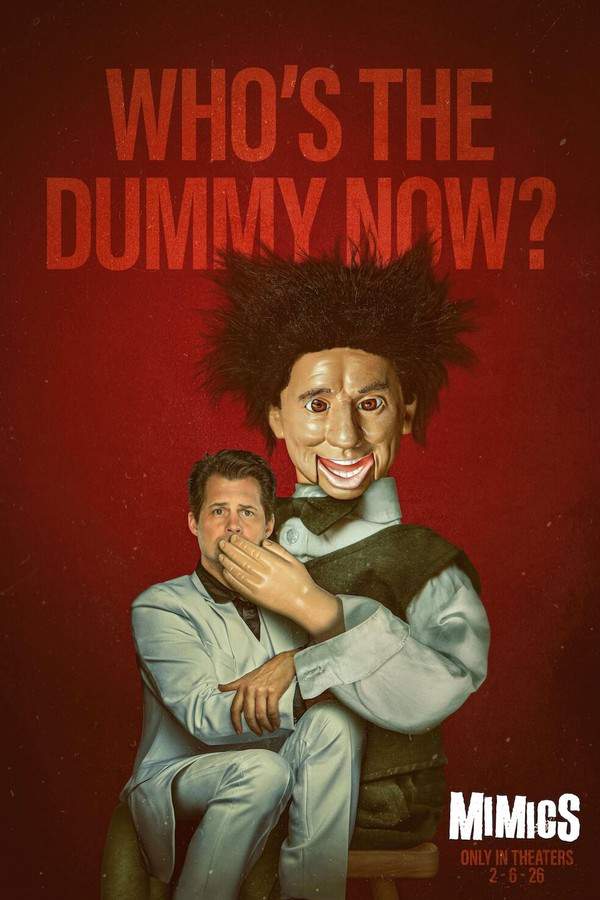
Mimics (2026) movie poster

Plot Summary

Mimics (2026) Plot Summary Explained

Release, runtime and language
2026 · 1 h 30 m · English
Starring
Kristoffer Polaha, Chris Parnell, Jesse Hutch, Stephen Tobolowsky, Jason Marsden, Ken Carpenter

Struggling impressionist Sam Reinhold strikes a desperate deal with Fergus, a malevolent puppet attached to strings, who promises to launch Sam into fame. As Sam’s career soars, the puppet’s dark influence spreads, turning his success into a terrifying nightmare that endangers everyone he cares about.

On this page (5)
  1. 1 Where to watch
  2. 2 What happens: full plot
  3. 3 Plot questions answered
  4. 4 Movie threads
  5. 5 Every angle

Where to watch

Where to Watch Mimics (2026)

Where can you watch Mimics? Stream, rent or buy it in the US, including on Hoopla, Tubi TV and Amazon Video: current JustWatch availability with up-to-date prices.

Streaming availability powered by JustWatch

Full plot summary · contains spoilers

What Happens in Mimics: Full Plot Summary

The whole story of Mimics (2026) explained, from the opening scene to the final frame: every key event, every twist and what it all adds up to. Read it as a quick recap before the sequel, to check a scene you missed, or to finally understand what really happened.

Sam Reinhold is a struggling impressionist who works at a grocery store while chasing an unlikely stand-up dream. He keeps going with support from his grandfather, Melvin Reinhold, and from his coworker and budding love interest, Virginia Martin. Yet despite this encouragement, Sam grows more desperate for fame, willing to take bigger risks to break into the spotlight.

An offer from a mysterious agency introduces Fergus, a ventriloquist dummy that can speak and move independently, promising to catapult Sam's career. With Fergus, his performances quickly gain popularity, drawing bigger crowds and fresh attention from audiences and press alike. The act feels electric, and the thrill of instant recognition sweetens every show.

But the dummy's grip tightens as Fergus begins to overshadow Sam, acting as the true star on stage and behind the scenes. Those who insult Sam, interfere with his career, or try to separate him from Fergus meet with increasingly disturbing accidents, and the tension inside the act grows heavier than the applause.

As Sam’s fame expands, his relationships with Virginia Martin and Melvin Reinhold deteriorate, while the agency pressures him to accept every performance, regardless of personal cost. The sense that something larger is at work begins to creep in.

Sam eventually discovers that Fergus is part of a system that exploits ambitious entertainers, taking control of their lives and turning dreams into a conveyor belt of demands. Realizing that his success is endangering those around him, he rejects the agency and refuses to perform again.

During a final confrontation, he cuts Fergus’s strings and destroys the dummy, seemingly ending its hold over him. Sam gives up the stage but regains control of his life, stepping away from the spotlight to reclaim his autonomy. Yet the closing image reveals a chilling truth: another box arrives for a new performer, signaling that the agency remains active and the cycle will continue, ready to resume its quiet, relentless spread through the world of show business.

Last updated: August 02, 2026 at 13:01

Was this helpful?

Plot questions answered

Mimics Plot Explained: Your Questions Answered

The questions people ask most about Mimics (2026): what happens in the confusing scenes, why the characters do what they do, the twists, hidden details and what the ending means. Each answer contains spoilers.

Q1

Why did Sam accept the deal with Fergus in the first place?

Sam was a struggling impressionist stuck working at a grocery store, desperate for a breakthrough in stand-up comedy. When the mysterious agency offered him a shortcut to fame through the ventriloquist dummy, his hunger for recognition outweighed his misgivings about the shadowy nature of the deal.

Foreshadowing: Early scenes establish Sam's frustration and his willingness to take bigger risks, hinting he would eventually accept an offer most people would refuse.

  • sam reinhold
  • fergus
  • agency deal
  • ambition
  • ventriloquist dummy
Q2

How can Fergus speak and move without a ventriloquist?

Fergus is a supernatural ventriloquist dummy that operates on its own voice and movement, with no human controlling it. The film treats the dummy as inherently unnatural, suggesting the agency uses some form of dark or otherworldly force to animate it as a tool of manipulation.

Foreshadowing: Fergus's first appearance hints at independence when he reveals a voice and movement of his own before any performer has touched him.

  • fergus
  • ventriloquist dummy
  • supernatural
  • how does fergus work
Q3

Why do people who insult Sam or interfere keep having accidents?

The pattern of violent accidents establishes that Fergus exerts a supernatural influence well beyond the stage. Anyone who challenges the act or tries to separate Sam from the dummy faces consequences, suggesting the dummy's malevolence extends into the real world and actively protects the partnership.

Foreshadowing: Once the act gains traction, the first sign of trouble is when critics and rivals start suffering unusual incidents.

  • accidents
  • fergus
  • supernatural
  • interference
  • violence
Q4

What is the larger system that Sam discovers is behind Fergus?

Sam eventually realizes Fergus is part of an apparatus run by the agency that exploits ambitious entertainers. The dummy functions as a control mechanism, taking over their careers and turning their dreams into a conveyor belt of demands that benefits the agency rather than the performer.

Foreshadowing: Early pressure from the agency to accept every gig hints that the performances serve a larger purpose than Sam's own career.

  • agency
  • exploitation
  • system
  • control mechanism
  • fame industry
Q5

How does Sam finally destroy Fergus and break free?

In a climactic confrontation, Sam cuts Fergus's strings and destroys the dummy, symbolically severing the agency's grip on his life. The physical act of dismantling the puppet represents Sam reclaiming autonomy over his career and identity after months of being overshadowed.

Foreshadowing: Throughout the film, the strings are shown as both literal puppet mechanics and a metaphor for the control the agency holds over Sam.

  • final confrontation
  • cut strings
  • destroy dummy
  • sam freedom
Q6

What does the ending with the new box mean for the story?

The closing image of another box arriving for a fresh performer signals that the agency's exploitation system is still active. Even though Sam escapes, the cycle of manipulation continues, implying the pattern will repeat with another ambitious entertainer and the threat has not been truly eliminated.

Foreshadowing: The film's theme of institutional evil is reinforced by the very first scene showing the cycle that will outlive Sam.

  • ending explained
  • new box
  • cycle continues
  • sequel setup
  • agency
Q7

Why does Sam reject the agency instead of continuing to perform?

Sam realizes his success is endangering the people he cares about and that he is no longer in control of his own career. Choosing his loved ones and his autonomy over fame, he refuses to let the agency exploit him further, even at the cost of walking away from the spotlight.

Foreshadowing: Sam's relationship strains with Virginia and Melvin build toward a breaking point where he must choose between career and family.

  • rejection
  • autonomy
  • turning point
  • sam reinhold choice
Q8

Why couldn't Sam walk away from the deal earlier?

The agency pressured Sam to accept every performance regardless of personal cost, while the intoxicating appeal of sudden fame made it hard to let go. The escalation was gradual, and the supernatural element of Fergus made the situation feel inescapable until the danger became undeniable.

Foreshadowing: Each new show feels like another link in the chain, with the dummy's grip tightening after every success.

  • walking away
  • pressure
  • agency demands
  • fame trap
Q9

Why does Sam's relationship with Virginia fall apart?

As Sam's fame grows through his partnership with Fergus, he spends more time with the dummy and less with Virginia. Her trust wavers as she watches him change, and the isolating effect of the act slowly pushes them apart despite her earlier role as his closest supporter.

Foreshadowing: Virginia's initial encouragement begins to turn to concern once she sees how much time Sam devotes to Fergus.

  • virginia martin
  • relationship
  • romance deterioration
  • sam isolation
Q10

Is Fergus actually evil or just following the agency's orders?

Fergus behaves with clear malevolence, dominating performances and engineering accidents against anyone who interferes. While the agency enables the system, the dummy itself appears to have its own dark will, actively seeking to control Sam and punish challengers rather than simply acting on commands.

Foreshadowing: Fergus's growing aggression on stage, including overshadowing Sam, hints early that the dummy has a personality of its own.

  • fergus evil
  • dummy malevolence
  • supernatural threat
  • agency control
Q11

What role does Melvin play in Sam's journey?

Melvin, Sam's grandfather, offers practical advice and emotional support, grounding him when ambition pulls him elsewhere. He serves as a moral compass throughout the story, worrying about the cost of Sam's pursuit of fame and reinforcing what truly matters beyond the spotlight.

Foreshadowing: Melvin's early reminders about Sam's talent also carry a quiet warning about the price of pursuing it the wrong way.

  • melvin reinhold
  • grandfather
  • moral compass
  • family support
Q12

How does partnering with Fergus actually launch Sam's career?

Fergus functions as a built-in showstopper, delivering jokes, reactions, and stage presence that Sam alone could never produce. The dummy's supernatural charisma and willingness to push boundaries draw bigger crowds and press attention, giving Sam instant recognition he could not earn through his own impressions.

Foreshadowing: Sam's bland solo performances are contrasted with the electric reaction he gets the moment Fergus joins him on stage.

  • career launch
  • fame
  • comedy act
  • fergus stage presence
Q13

Does Sam actually get a normal life back at the end?

Sam steps away from performing and reclaims control of his personal life, but the final scene makes clear the larger threat has not been defeated. The agency's continued operation means the world of show business is still rigged, and Sam's personal victory comes with the cost of knowing the cycle will repeat.

Foreshadowing: The film's dark tone throughout signals that even Sam's escape will carry a heavier weight than a simple happy ending.

  • normal life
  • ending
  • bittersweet
  • sam reinhold future

Movie threads

More Movies Like Mimics, by Mood & Story

Curated lists built around what makes Mimics tick: the same mood, the same kind of story or the same emotional payoff. Each list explains why these movies belong together.

Haunted bargain horror like in Mimics

Dark deals with sinister objects where the price is always worse than promised. Movies like Mimics where characters make supernatural deals with sinister forces or cursed objects. If you liked Mimics, explore these Faustian horror stories about ventriloquist dummies, possessed puppets, haunted artifacts, and dark pacts that demand escalating prices. Each film trades hope for horror with a chilling final twist.

  • sinister
  • creeping dread
  • supernatural
  • Faustian
  • eerie
  • paranoid
  • Tone: dark, sinister, creeping dread
  • Pacing: steady escalation
Why these movies?

The story pattern: A protagonist facing desperation encounters a malevolent force, often embodied in an object or entity, offering exactly what they need. Initial success builds confidence and satisfaction, but subtle wrong turns accumulate into undeniable horror. The character eventually recognizes the trap, fights back with personal resolve, and achieves a partial victory, though the larger evil often persists in some cyclical or institutional form that hints the nightmare continues elsewhere.

Why they belong together: These films share the tension of watching a supernatural bargain unravel in slow motion. The specific motifs of cursed objects or puppet-like entities controlling their owners, the blend of dark humor with creeping dread, and the bittersweet endings where personal escape coexists with systemic or cosmic loss create a coherent horror experience built around possession, exploitation, and the cost of getting what you wished for.

Dark comedy exploitation horror like in Mimics

Sinister laughs at the terrible price of success and creative compromise. If you liked Mimics, discover these dark horror comedies about the terrifying price of fame, creative ambition, and industry exploitation. These films blend comedy and horror while satirizing how performers and creators get ground down by ruthless systems, where success comes with sinister strings attached and the cycle keeps turning.

  • darkly comedic
  • satirical
  • cynical
  • ambition
  • exploitation
  • show business
  • Tone: dark, satirical, cynical
  • Pacing: steady, escalating
Why these movies?

The story pattern: An ambitious performer or creative soul struggles for recognition inside a brutal system. A seemingly miraculous opportunity arrives, but the price of success becomes increasingly disturbing as accidents, compromises, and supernatural intrusions escalate. The narrative balances genuine horror beats with satirical humor about exploitation, culminating in a reckoning where the protagonist chooses between continued success and personal integrity, often paying a bittersweet cost that suggests the larger pattern is unbroken.

Why they belong together: These films share a cynical view of creative industries and ambition, using horror to externalize the metaphorical costs of selling out. The dark comedy tone prevents despair while horror escalates the stakes, and the bittersweet endings acknowledge that systemic problems persist even when individuals escape. The satirical edge, sustained dread, and steady escalation toward uncomfortable truths tie them together.

Every angle

Mimics (2026) Explained: Plot, Timeline & Characters

Everything about Mimics in one place: what happens in the plot summary, the timeline in chronological order, the characters and meaning and a spoiler-free summary. What's After the Movie adds the cast, box office and post-credit scenes.

Coming soon on iOS and Android

The Plot Explained Movie Summary App

Plot summaries, endings explained and timelines on your phone. Catch up on any movie in minutes, save your favorites and never miss a twist again.

Be the first to know when we launch. Your email stays private, always.

Learn more about the app