Year: 2020
Runtime: 104 min
Language: Filipino
Director: Michael Winterbottom
Echo Score: 56Budget: $5.5M
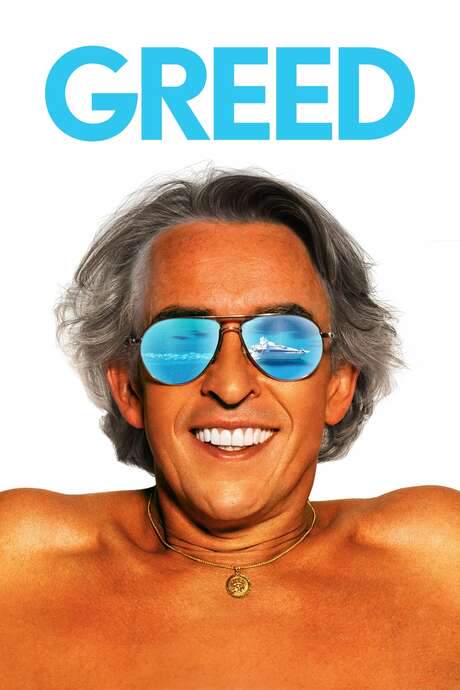
Sir Richard McCreadie, a self-made billionaire, faces a crisis as his retail empire is threatened. To restore his image, he plans an extravagant 60th birthday celebration on the island of Mykonos. However, the lavish party becomes a backdrop for resurfaced rivalries and long-buried secrets. As guests arrive, Richard is forced to examine the sacrifices and consequences of his ambition and wealth.
Find where to stream, rent, or buy Greed (2020) in the US with current JustWatch availability, up-to-date pricing, and platform listings for subscription, rental, and digital purchase options.
Warning: spoilers below!
Haven’t seen Greed yet? This summary contains major spoilers. Bookmark the page, watch the movie, and come back for the full breakdown. If you're ready, scroll on and relive the story!
Read the complete plot breakdown of Greed (2020), including all key story events, major twists, and the ending explained in detail. Discover what really happened, and what it all means.
Sir Richard “Greedy” McCreadie [Steve Coogan] is sketched as a billionaire fashion mogul whose public bravado and celebrity circle mask a murky empire built on forceful business moves and ethical compromises. The film moves in a zigzag of time, opening after a disastrous appearance at a government inquiry into financial and ethical abuses in fashion, then turning back to how this man rose from privilege to power. Hired to ghostwrite his memoirs, the journalist Nick [David Mitchell] begins a meticulous dive into McCreadie’s background, hoping to craft a sparkling self-portrait while questioning what really fuels the man’s wealth. The narration repeatedly slips into the past, pulling us through the late 1970s and 1980s to map a remarkable ascent: a rebellious, outcast student in an unnamed British public school becomes a shrewd operator in the high-street fashion world, a rise that is as much about image management as it is about ruthless calculation.
In the earliest chapters, the film foregrounds McCreadie’s formative years and the people who shape him. A few crucial voices from the cast appear in flashbacks as the smoothed edges of his legend begin to crack. A young Richard McCreadie [Jamie Blackley] surfaces in the memories of his school days, a figure both defiant and restless, hinting at the appetite for control that will later dominate his business. A separate thread follows the rougher beginnings of Eric Weeks, a younger figure who crosses McCreadie’s path and hints at alliances made in those formative years [Enzo Cilenti]. As the present unspools, we learn that the wealth he amasses rests on more than savvy branding: it relies on sweatshops in Southeast Asia, aggressive tax practices, and asset stripping that undersell the lives of many who help keep his empire running.
The present-day centerpiece is McCreadie’s 60th birthday party, a Gladiator-themed spectacle set on the island of Mykonos. The intention is simple and ostentatious: a moment of relaxation for a man who has spent decades orchestrating public spectacle around his personal legend. Yet the party is entangled in problems from the start. The arena set piece is poorly built because it depends on undocumented immigrant labor, and the resident lion—strainfully restrained and tragically passive—becomes a symbol of the broader, darker machinery at work behind the celebration. The guest list—star power colliding with a world-weary public—shows cracks as some celebrities distance themselves from McCreadie, exhausted by the scandal shadowing his name. Nearby, Syrian refugees have established a makeshift camp on the beach, a stark counterpoint to the gilded chaos inside the celebration.
The film also follows McCreadie’s tangled family web. His ex-wife Samantha [Isla Fisher], who once ran the family’s public face as CEO, still carries a complicated pull over him even as he has remarried Naomi, a much younger trophy wife [Sophie Cookson]. Their daughter Lily, who stars in a reality-TV show with her boyfriend Fabian, lives under the same roof, creating a domestic theater of ambition, publicity, and pressure. His son Finn [Asa Butterfield], a restless and conflicted young man, lurches toward a more dangerous path, marked by an Oedipal impulse to usurp his father’s throne and a growing appetite for self-destruction. The film uses these family textures to underscore the way power distorts relationships, exposing fissures that money alone cannot smooth over.
As Nick works on the memoir, he wrestles with a difficult moral assignment: how to present McCreadie’s public persona without erasing the moral cost of his business strategies. A budding friendship forms between Nick and Amanda, one of McCreadie’s assistants who is morally unsettled by her employer’s cruelty and the human cost behind the wealth. [Isla Fisher] appears here as Samantha, the ex-wife whose presence keeps surfacing in Nick’s negotiations with truth, while Naomi’s glamorous veneer complicates his readings of McCreadie’s personal life. The personal and the political collide as Nick learns that McCreadie’s world demands workers wear Roman slave outfits as part of the party’s “theatricality”—a revelation that intensifies Nick’s ethical conflict. The narrative’s weight rests on the burden of portraying a man who has won celebrity friends at the cost of real human lives.
The night deepens with mischief and danger. McCreadie’s plan exploits a cluster of vulnerable workers: he uses a three-card monte trick to coerce local refugees into labor, paralogizing their tool and loyalty with spectacle. In parallel, Finn pilfers cocaine from Naomi and laces the lion’s food, muddling lines between decadence and danger. When Samantha rejects his advances, McCreadie wanders into the arena in a drunken haze, where the lion’s cage becomes a stage for a violent, cataclysmic reckoning. Amanda, moving with a pulse of impulsive courage, releases the beast, and the animal mauls McCreadie to death in a drug-fueled frenzy. Nick witnesses the moment and helps Amanda escape, a quiet act of conscience amid the chaos.
In the aftermath, the mood shifts to reverent propaganda. McCreadie’s death becomes a catalyst for a flood of flattering eulogies as Nick’s project evolves into a sanitized, hagiographic biography designed to preserve the family business. Finn steps into the maelstrom, taking over the reins of the enterprise, and it is suggested—and perhaps feared—that he will continue to wield power with the same duplicitous dexterity as his father. Amanda’s decision to conceal her role in McCreadie’s death is presented as morally ambiguous, echoing the earlier tragedy that claimed her mother’s life in a sweatshop fire: she resumes work in a Leicester sweatshop, tying the present to the past’s relentless cycles of exploitation. The closing credits broaden the lens, offering viewers a stark, factual reflection on exploitation and inequality within the fashion industry.
Throughout, the film maintains a tightly wound, morally complex tone, inviting audiences to weigh glamor against harm while watching a tumultuous life unravel on screen. The non-linear structure, the cutaways to the school days and early ambitions, and the stark contrasts between the Mykonos splendor and the refugees’ hardship combine to deliver a pointed meditation on power, money, and accountability. The result is a provocative, multi-layered portrait that stays faithful to its core events while expanding them into a broader conversation about wealth, ethics, and the human cost of high fashion.
Last updated: January 20, 2026 at 17:12
Explore frequently asked questions about Greed (2020) with spoiler-rich answers covering the full plot summary, major story beats, character motivations, hidden details, and ending meaning. This movie summary FAQ helps explain confusing scenes, plot twists, and narrative decisions in clear, searchable detail.
Amanda releases the lion deliberately because she has a personal grievance against McCreadie. Earlier in the film, she reveals to Nick that her mother worked in a Sri Lankan sweatshop supplying McCreadie's fashion empire and died after being fired when she could no longer work. The lion attack is her act of revenge for her mother's death, though the circumstances are complicated by Finn having drugged the animal beforehand.
Amanda's earlier confession about her mother's death foreshadows her decision to act violently against McCreadie.
McCreadie dies after stumbling into the arena where a live lion is kept. He enters in a drunken state, and the lion, already drugged by Finn who laced its food with cocaine, attacks and mauls him to death. Amanda seizes the moment to release the beast, ensuring McCreadie cannot survive the encounter. Nick witnesses the entire killing but chooses not to intervene or expose Amanda.
Finn's drugging of the lion and the poorly constructed arena set earlier signal the deadly climax to come.
Finn drugs the lion as part of his self-destructive trajectory and implicit rebellion against his father. Having grown up in the shadow of McCreadie's ruthless empire, Finn is conflicted, restless, and using drugs. His actions suggest a desire to disrupt the spectacle and perhaps unleash chaos, though the full motive remains tied to his broader resentment toward his father's legacy and control.
Finn's earlier characterization as a conflicted son with Oedipal impulses and a dangerous path hints at his destructive actions.
After McCreadie is killed by the lion, his son Finn takes over the family fashion empire. The film suggests he will continue using the same duplicitous and ruthless tactics his father employed. Meanwhile, Nick completes the memoir but reshapes it into a hagiography, producing flattering obituaries that sanitize McCreadie's legacy rather than expose his crimes.
The film's closing reveals Finn stepping into his father's shoes, implying the cycle of exploitation will persist.
McCreadie uses a three-card monte con to manipulate refugee workers into staying and laboring at his party. The trick involves deception and gambling, preying on vulnerable people who have few options. This scene illustrates McCreadie's characteristic exploitation of the desperate, using psychological manipulation rather than outright force to get what he wants.
The earlier establishment of McCreadie's ruthless business practices and his willingness to exploit others foreshadows this manipulation.
Nick helps Amanda escape because he has developed a moral crisis over his role in whitewashing McCreadie's image. Working on the memoir has exposed him to the human cost of McCreadie's wealth, particularly through Amanda's story about her mother. Witnessing the violence triggers his conscience, and he chooses to protect Amanda rather than contribute to further injustice.
Nick's ethical wrestling throughout the film, especially his conversations with Amanda, builds toward this moral choice.
After helping kill McCreadie and keeping the secret with Nick, Amanda returns to work in a Leicester sweatshop. This closing image illustrates the cyclical nature of exploitation the film critiques, she has sought personal revenge but remains trapped in the same system that killed her mother. The film presents this as a bitter commentary on how the powerful escape accountability while the vulnerable remain caught in cycles of abuse.
Amanda's backstory about her mother's death in a sweatshop directly connects to her return to the same exploitative environment.
McCreadie's wealth came from unethical and exploitative practices. His empire relied on sweatshops in Southeast Asia, aggressive tax avoidance, and asset stripping that undervalued the labor of workers. The film reveals he cultivated a public image of celebrity and success while building his business on the backs of underpaid, overworked people in dangerous conditions.
The government's inquiry into financial and ethical abuses at the start of the film foreshadows the exposure of these practices.
McCreadie's 60th birthday party on Mykonos is designed as an extravagant Gladiator-themed celebration to reinforce his public persona as a powerful, commanding figure. The ostentatious spectacle serves as both self-celebration and image rehabilitation following the government inquiry into his business practices. The theme reflects his lifelong obsession with image, control, and projecting dominance.
The contrast between the lavish party and the refugee camp underscores the film's critique of wealth and power.
Samantha, McCreadie's ex-wife who once ran the family's public image as CEO, rejects his advances at the party. This rejection highlights the emotional chasm between them and reflects her complicated feelings about a man she once helped prop up but now recognizes as morally bankrupt. Her rejection occurs shortly before McCreadie's fatal encounter in the arena, adding to his emotional unraveling.
Samantha's presence throughout the film as a figure who knows both the public and private McCreadie sets up this moment of rejection.
The film uses a non-linear structure to contrast McCreadie's current public crisis with his rise to power. It opens with the government inquiry exposing his present vulnerabilities, then flashes back to his school days and early business ventures. This structure reveals how his current wealth and image were built on the same ruthless, exploitative practices now under scrutiny, deepening the critique of his character.
The opening scene at the government inquiry establishes the tension that the flashbacks gradually explain.
The closing credits feature factual information about exploitation and inequality in the fashion industry, reinforcing the film's central critique. These facts connect the fictional narrative to real-world issues, emphasizing that McCreadie's story represents systemic problems rather than an isolated case of one corrupt businessman.
The film's consistent juxtaposition of opulence with exploitation throughout prepares viewers for this factual revelation.
Discover curated groups of movies connected by mood, themes, and story style. Browse collections built around emotion, atmosphere, and narrative focus to easily find films that match what you feel like watching right now.
Darkly comic stories exposing the ethical rot beneath immense wealth and power.A collection of movies like Greed that delve into the dark side of ambition and fortune. If you enjoyed the cynical take on corporate greed and the moral compromises of the wealthy, this thread highlights similar stories of ethical corruption and social commentary.
The films in this thread typically follow a central figure whose pursuit of wealth leads to significant moral compromises. The narrative often contrasts their opulent present with the unethical actions of their past, building a critical portrait of corruption that rarely ends well for the character, though the system often continues unchanged.
These films are grouped by their shared darkly satirical tone, critical focus on wealth and exploitation, and the heavy emotional weight of their themes. They create a similar feeling of unease and judgment towards their protagonists and the systems they represent.
Stories where characters face the fallout of their choices, but change is elusive.Find more films like Greed that end on a bittersweet note, where a character's downfall doesn't necessarily break the corrupt cycle they helped create. These stories offer a poignant look at the limits of personal accountability within larger, stubborn systems.
These stories follow a character arc that culminates in a moment of personal crisis or downfall, providing a sense of dramatic closure. However, the ending feel is bittersweet or bleak because the narrative emphasizes that the corrupt system or pattern of behavior continues, often symbolized by another character taking up the same mantle.
They share a bittersweet or bleak ending feel combined with heavy emotional weight. The central similarity is the theme of consequences that are personal and profound, yet ultimately fail to disrupt the cyclical nature of the injustice or dysfunction depicted.
Don't stop at just watching - explore Greed in full detail. From the complete plot summary and scene-by-scene timeline to character breakdowns, thematic analysis, and a deep dive into the ending - every page helps you truly understand what Greed is all about. Plus, discover what's next after the movie.
Track the full timeline of Greed with every major event arranged chronologically. Perfect for decoding non-linear storytelling, flashbacks, or parallel narratives with a clear scene-by-scene breakdown.
Discover the characters, locations, and core themes that shape Greed. Get insights into symbolic elements, setting significance, and deeper narrative meaning - ideal for thematic analysis and movie breakdowns.