

Plot Explained Spoilers guaranteed!
Plot Explained

Browse by genre

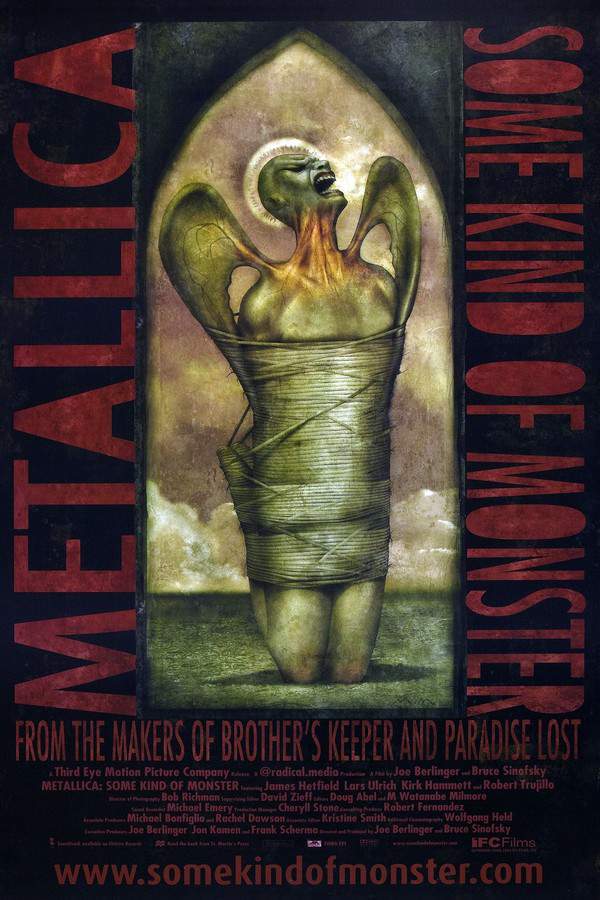
Metallica: Some Kind of Monster (2004) movie poster

Timeline

Metallica: Some Kind of Monster (2004) Timeline Explained – Every Event in Order

Release, runtime and language
2004 · 141 min · English
Directed by
Bruce Sinofsky, Joe Berlinger
Starring
James Hetfield, Lars Ulrich, Kirk Hammett, Robert Trujillo

Following the departure of bassist Jason Newsted, the iconic heavy metal band Metallica documented their efforts to navigate a period of intense turmoil and self-reflection. With the help of a therapist, the remaining members confront years of unresolved tensions and frustrations, revealing a vulnerable side as they attempt to rebuild their creative process and confront the challenges facing the group.

On this page (6)
  1. 1 Where to watch
  2. 2 Events in order (15)
  3. 3 Timeline questions answered
  4. 4 Movie threads
  5. 5 Movies like Metallica: Some Kind of Monster
  6. 6 Every angle

Where to watch

Where to Watch Metallica: Some Kind of Monster (2004)

Where can you watch Metallica: Some Kind of Monster? Stream, rent or buy it in the US, including on Apple TV Store: current JustWatch availability with up-to-date prices.

Streaming availability powered by JustWatch

15 events in order · contains spoilers

Metallica: Some Kind of Monster Timeline: Events in Chronological Order

Every key event of Metallica: Some Kind of Monster (2004) in order, scene by scene, with when and where it takes place. Use it to untangle flashbacks, time jumps and parallel storylines, to refresh your memory before the sequel or to find the exact scene you are thinking of.

  1. Metallica's Tensions Rise

    In the spring of 2001, Metallica finds itself struggling with internal conflicts and public discontent following their lawsuit against Napster. The departure of bassist Jason Newsted exacerbates the situation, creating significant rifts within the band that require urgent attention.

    When
    Spring 2001
  2. Introducing Phil Towle

    To address their growing tensions, Metallica brings in performance coach Phil Towle. However, Newsted remains skeptical of the effort, openly dismissing it as lame and weak, which underscores the band's fraught atmosphere.

  3. Recording New Album

    Despite the internal struggles, the band begins working on a new studio album in an abandoned barracks at the Presidio of San Francisco. Collaborating with producer Bob Rock, who also fills in on bass, they start to create new tracks that highlight a more unified effort.

    Where
    Presidio of San Francisco
  4. James Hetfield's Departure

    As the album begins to take shape, James Hetfield decides to leave the sessions to enter drug rehabilitation. This unexpected move halts the project and introduces further uncertainty regarding the band's future.

  5. Critique from Ulrich's Father

    Lars Ulrich seeks feedback from his father regarding the material they’ve created. He receives harsh criticism, which adds to the already mounting doubts about their work and creates further distress within the band.

  6. Months of Uncertainty

    As months pass without Hetfield's presence, the remaining members struggle with doubts and fears about Metallica’s longevity. Ulrich, Rock, and Hammett continue their therapeutic sessions with Towle, as Hammett seeks solace at his ranch.

    Where
    Northern California
  7. Reconnecting with Dave Mustaine

    In a significant moment, Ulrich meets with former Metallica guitarist Dave Mustaine, who expresses his lingering resentment towards the band. Their confrontation brings unresolved feelings to the surface and highlights the complexities of their history.

  8. Losing the Presidio Lease

    After six months without Hetfield, Metallica decides to let go of their lease at the Presidio. This decision leaves their album and the band's future shrouded in uncertainty, indicating the serious implications of Hetfield’s absence.

    Where
    Presidio of San Francisco
  9. Hetfield Emerges from Rehab

    In April 2002, Hetfield completes his rehab and rejoins the band at their new studio. He introduces a strict four-hour workday and enforces rules preventing discussions about recorded material without his presence, introducing tension with his bandmates.

    When
    April 2002
  10. Tensions Rise Again

    As Hetfield's control over the recording process intensifies, Ulrich expresses his frustrations in a meeting. The strain put on their relationships brings forth the underlying fear and anxiety within the group about their collaboration.

  11. Hammett's Steady Presence

    Amid rising conflicts, Hammett provides a balancing presence within the band. He is taken aback by the decision to omit guitar solos, highlighting the creative tensions that have developed during the recording sessions.

  12. Creating 'Sweet Amber'

    The band grapples with their management’s push for a promotional video for a radio contest. This frustration ultimately fuels the creation of the track 'Sweet Amber,' showcasing the interplay of external pressures and creative output.

  13. Choice of New Bassist

    As they prepare for their performance at the MTV Icon tribute show, Metallica searches for a new bassist. They ultimately choose Robert Trujillo, whose style reminds them of the late Cliff Burton, signaling a new chapter for the band.

  14. Naming the Album 'St. Anger'

    The band decides to name their new album 'St. Anger' and films a music video for its title track at San Quentin State Prison. This marks a significant moment in their career as they prepare for a break from touring.

    Where
    San Quentin State Prison
  15. Success of 'St. Anger'

    The film concludes with an electrifying montage of Metallica performing 'Frantic' during their 2003 summer tours. 'St. Anger' achieves significant commercial success, debuting at number one in 30 countries worldwide.

    When
    Summer 2003

Last updated: November 22, 2024 at 18:15

Was this helpful?

Timeline questions answered

Metallica: Some Kind of Monster Timeline Explained: Your Questions Answered

When does it happen, and why in that order? The questions people ask about the chronology of Metallica: Some Kind of Monster (2004): time jumps, flashbacks, cause and effect between scenes and the correct order of events, each answered with spoilers.

Q1

Why did Jason Newsted leave Metallica?

Jason Newsted left Metallica in 2001 after 17 years as bassist. While the documentary doesn't provide explicit details about his departure, Newsted is shown dismissing the band's efforts to bring in a performance coach as 'really fucking lame and weak,' suggesting underlying frustration with the band's direction and interpersonal dynamics.

Foreshadowing: Earlier tensions within the band following their Napster lawsuit created a fractured atmosphere that contributed to the rift.

  • jason newsted
  • bass player
  • departure
  • metallica exit
Q2

What was Phil Towle's role in Metallica's recovery?

Phil Towle was a performance coach hired by Metallica to help navigate their internal conflicts and rebuild their creative process. He conducted therapy sessions with the remaining members, Lars Ulrich, Kirk Hammett, and producer Bob Rock, while James Hetfield was in rehab. The band eventually felt Towle had integrated too closely into their dynamic and reconsidered his influence.

Foreshadowing: The band's decision to bring in an external therapist underscored the severity of their internal tensions.

  • phil towle
  • performance coach
  • therapy
  • band counseling
Q3

Why did James Hetfield enter drug rehabilitation?

James Hetfield left the recording sessions in 2001 to enter drug rehabilitation to address his addiction. His absence lasted over six months and halted the album project, creating significant uncertainty about Metallica's future. Upon returning in April 2002, he implemented strict boundaries including a four-hour workday and rules about discussing recorded material without him.

Foreshadowing: Earlier scenes establish the intense pressures the band faced following the Napster lawsuit and internal conflicts.

  • james hetfield
  • addiction
  • rehab
  • recovery
  • treatment
Q4

Why did Lars Ulrich's father criticize their new music?

Lars Ulrich played the material they had created for his father, seeking feedback during James Hetfield's absence. His father responded with harsh criticism, calling the songs mediocre. This moment added to the band's mounting doubts about their creative output and heightened the uncertainty surrounding their album.

Foreshadowing: The criticism came during a vulnerable period when the band was already struggling without Hetfield.

  • lars ulrich father
  • criticism
  • mediocre
  • feedback
Q5

Why did Dave Mustaine confront Metallica?

Dave Mustaine, Metallica's original lead guitarist who was dismissed in 1983, met with Lars Ulrich during the documentary. The confrontation revealed Mustaine's deep resentment towards Metallica and the shadow he feels they cast over his own career with Megadeth. Their meeting brought unresolved feelings from decades past to the surface.

Foreshadowing: Ulrich's struggle to maintain the band and his visit to an Echobrain concert set the stage for this reunion.

  • dave mustaine
  • confrontation
  • megadeth
  • resentment
  • firing
Q6

Why did Metallica choose Robert Trujillo as their new bassist?

Metallica chose Robert Trujillo as their new bassist after considering various musicians for the upcoming MTV Icon tribute show. His exceptional skills and finger-style technique reminded the band of their late bassist Cliff Burton, who died tragically in 1986. This connection signaled a new chapter for the band.

Foreshadowing: The search for a new bassist occurred as the band prepared to return to performing after their turbulent recording period.

  • robert trujillo
  • new bassist
  • cliff burton
  • selection
  • megadeth
Q7

Why did Metallica film the St. Anger music video at San Quentin?

Metallica filmed their music video for the title track 'St. Anger' at San Quentin State Prison. The location choice aligned with the album's raw, intense themes and marked a significant visual statement as they prepared for a three-year break from touring.

Foreshadowing: The band had decided on the album name before selecting the video location.

  • st anger
  • music video
  • san quentin
  • prison
  • filming location
Q8

Why did James Hetfield enforce strict rules after returning from rehab?

After emerging from rehab in April 2002, James Hetfield implemented a strict four-hour workday and established rules that his bandmates could not discuss recorded material without his presence. These boundaries created tension, particularly with Lars Ulrich, who felt Hetfield had become excessively controlling. Hetfield's control stemmed from a deeply rooted fear of abandonment tied to his past experiences.

Foreshadowing: The documentary establishes early on that Hetfield struggled with personal demons that affected the band's dynamic.

  • james hetfield
  • control
  • rules
  • rehab boundaries
  • fear of abandonment
Q9

Why did Metallica decide to omit guitar solos on St. Anger?

Kirk Hammett was surprised by the band's choice to omit guitar solos from their work on St. Anger. This decision reflected the band's creative direction during this period, which focused on a more raw and unified sound. The omission highlighted the creative tensions that developed during the recording sessions.

Foreshadowing: Hammett's steady presence throughout the documentary provides perspective on the band's evolving sound.

  • guitar solos
  • kirk hammett
  • st anger
  • creative decision
  • omission
Q10

How did the Napster lawsuit impact Metallica's internal dynamics?

The Napster lawsuit, in which Metallica sued the file-sharing service, created a wave of discontent among fans and added to the band's internal turmoil. This external controversy compounded the existing tensions from bassist Jason Newsted's departure, setting the stage for the difficult period documented in the film.

Foreshadowing: The lawsuit is mentioned early in the documentary as a catalyst for the band's struggles.

  • napster
  • lawsuit
  • controversy
  • fan backlash
  • impact
Q11

What is the significance of Metallica naming their album St. Anger?

Metallica named their album 'St. Anger,' with the title reflecting the raw emotional intensity of their creative process during the difficult recording period. The name captures the anger and frustration the band experienced while navigating addiction, internal conflict, and the threat of dissolution. Lars Ulrich later stated they 'proven that you can make aggressive music without negative energy.'

Foreshadowing: The album title emerged as the band worked through their conflicts and toward resolution.

  • st anger
  • album title
  • anger
  • meaning
  • significance

Movie threads

More Movies Like Metallica: Some Kind of Monster, by Mood & Story

Curated lists built around what makes Metallica: Some Kind of Monster tick: the same mood, the same kind of story or the same emotional payoff. Each list explains why these movies belong together.

Movies about creative crisis like Metallica: Some Kind of Monster

Unflinching looks at artists breaking down while trying to make their masterpiece. If you were captivated by Metallica: Some Kind of Monster, this collection features similar movies about creative struggles. These films explore the intense pressure, personal conflict, and emotional turmoil that artists and bands face while trying to create under duress.

  • raw
  • candid
  • tense
  • introspective
  • anxious
  • confrontational
  • Tone: tense, raw, confrontational
  • Pacing: variable, immersive
Why these movies?

The story pattern: Stories in this thread often follow a linear, vérité-style journey into a specific creative process—writing an album, making a film, preparing for a show—that becomes a catalyst for confronting deep-seated personal issues, addiction, or group dysfunction. The narrative tension stems from whether the art and the relationships can survive the turmoil.

Why they belong together: Movies are grouped here for their shared focus on the raw, vulnerable, and often painful reality of the artistic process. They prioritize emotional authenticity over polished success stories, offering a tense, cathartic look at what it truly takes to create something meaningful.


Movies about group therapy and reconciliation like Metallica: Some Kind of Monster

Stories where confronting past trauma is the only path to a future together. For viewers who liked the therapy sessions and conflict resolution in Metallica: Some Kind of Monster, these movies feature similar journeys. They show groups of people, often friends or colleagues under extreme pressure, using therapy or mediation to heal old wounds and save their relationships.

  • confrontational
  • introspective
  • tense
  • cathartic
  • anxious
  • relieved
  • Tone: tense, introspective, ultimately hopeful
  • Pacing: variable, reflective
Why these movies?

The story pattern: The narrative pattern involves a catalyst that forces a group to seek outside help. The story unfolds through a series of mediated confrontations, where characters break down defensive walls, acknowledge their roles in a shared dysfunction, and slowly, painfully, work towards a bittersweet or hopeful resolution that allows them to move forward, though often changed.

Why they belong together: These films are connected by their specific focus on the dynamics of group therapy as a narrative device. They share a heavy emotional weight, a tense tone that builds towards catharsis, and a profound look at how communication—or the lack thereof—can make or break a family or team.

If you liked this

Movies Like Metallica: Some Kind of Monster

Similar movies to Metallica: Some Kind of Monster: the same genre, themes or kind of story. Each one comes with its own plot summary, timeline and ending explained.

Browse all movie summaries

Every angle

Metallica: Some Kind of Monster (2004) Explained: Plot, Timeline & Characters

Everything about Metallica: Some Kind of Monster in one place: what happens in the plot summary, the timeline in chronological order, the characters and meaning and a spoiler-free summary. What's After the Movie adds the cast, box office and post-credit scenes.

Coming soon on iOS and Android

The Plot Explained Movie Summary App

Plot summaries, endings explained and timelines on your phone. Catch up on any movie in minutes, save your favorites and never miss a twist again.

Be the first to know when we launch. Your email stays private, always.

Learn more about the app