

Plot Explained Spoilers guaranteed!
Plot Explained

Browse by genre

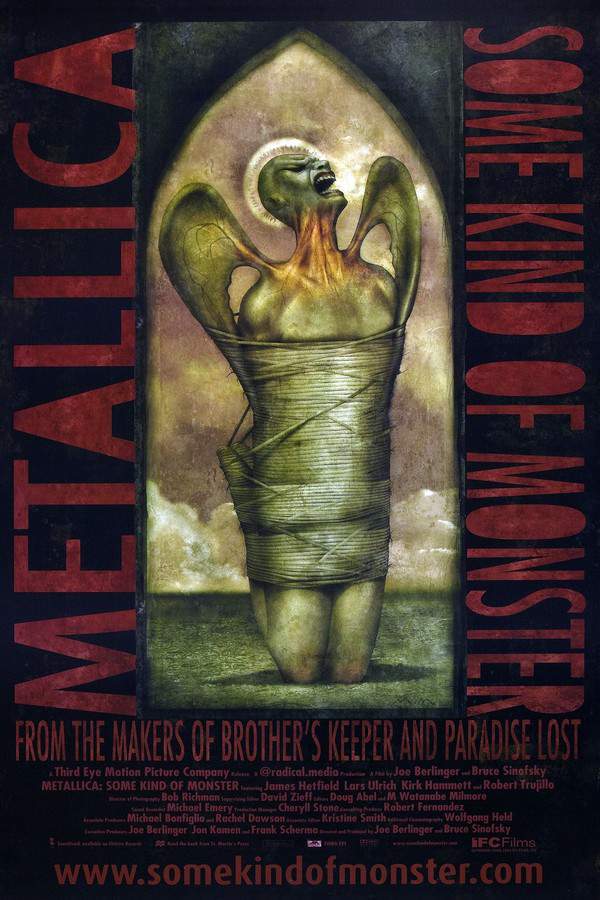
Metallica: Some Kind of Monster (2004) movie poster

Characters & Themes

Metallica: Some Kind of Monster (2004) Characters, Setting & Themes Explained

Release, runtime and language
2004 · 141 min · English
Directed by
Bruce Sinofsky, Joe Berlinger
Starring
James Hetfield, Lars Ulrich, Kirk Hammett, Robert Trujillo

Following the departure of bassist Jason Newsted, the iconic heavy metal band Metallica documented their efforts to navigate a period of intense turmoil and self-reflection. With the help of a therapist, the remaining members confront years of unresolved tensions and frustrations, revealing a vulnerable side as they attempt to rebuild their creative process and confront the challenges facing the group.

On this page (8)
  1. 1 Where to watch
  2. 2 Characters explained (4)
  3. 3 Where & when it takes place
  4. 4 Themes & meaning (2)
  5. 5 Character & meaning questions
  6. 6 Movie threads
  7. 7 Movies like Metallica: Some Kind of Monster
  8. 8 Every angle

Where to watch

Where to Watch Metallica: Some Kind of Monster (2004)

Where can you watch Metallica: Some Kind of Monster? Stream, rent or buy it in the US, including on Apple TV Store: current JustWatch availability with up-to-date prices.

Streaming availability powered by JustWatch

4 main characters · contains spoilers

Metallica: Some Kind of Monster Characters Explained: Who Is Who

The main characters of Metallica: Some Kind of Monster (2004), heroes and villains: what drives them, how they change over the course of the story and what each of them reveals about the film's bigger ideas.

  • James Hetfield

    James Hetfield emerges as a central figure, grappling with his personal demons during the documentary. His journey into rehabilitation and strict work guidelines reflect his struggle for control amidst chaos. His rejoining of the band symbolizes hope, but his strict boundaries create tensions with his bandmates.

    • 🎤 Lead vocalist
    • 🎸 Guitarist
    • 🥤 Recovering addict
  • Lars Ulrich

    As the drummer and a driving force behind Metallica, Lars Ulrich showcases his vulnerability throughout the film. He navigates the challenges of leadership while dealing with frustration regarding the band's dynamics and the external pressures they face. His attempts at maintaining harmony reveal the depth of his commitment to the band’s future.

    • 🥁 Drummer
    • 🎇 Leader
    • 🎭 Frustrated
  • Kirk Hammett

    Kirk Hammett serves as a stabilizing presence amid the band's turbulence, providing insightful perspectives while grappling with his own creativity. Despite feeling stifled by the omission of guitar solos, he remains dedicated to the band's goals, showcasing his adaptability and passion for music. His role is crucial in fostering the band's revival.

    • 🎸 Guitarist
    • 🎶 Creative
    • 🤔 Adaptive
  • Robert Trujillo

    Robert Trujillo joins Metallica during a transitional phase, bringing fresh energy and exceptional talent. His unique finger-style technique connects him to late bassist Cliff Burton, reinforcing the band's legacy. Trujillo's entry symbolizes a renewed chapter for Metallica, characterized by both challenge and opportunity.

    • 🎸 Bassist
    • 🌟 Talented
    • 🎉 New member

Last updated: October 22, 2024 at 22:08

Was this helpful?

Setting

Where and When Does Metallica: Some Kind of Monster Take Place?

The setting of Metallica: Some Kind of Monster (2004): the year and time period, the places and locations, and how they shape the characters, the mood and the tension of the story.

Time period

2001-2003

The documentary unfolds during the early 2000s, a period marked by technological shifts in the music industry and the band's internal challenges. In this time frame, Metallica grapples with the impacts of their lawsuit against Napster and the personal struggles faced by its members, shaping their musical output and interpersonal dynamics.

Location

San Francisco, San Quentin State Prison

San Francisco serves as a vibrant backdrop for Metallica's journey, characterized by its rich musical history and cultural significance. The abandoned barracks at the Presidio transform into a makeshift studio where the band shapes their new album. San Quentin State Prison becomes an iconic venue for their music video, adding a stark contrast to the band’s creative evolution.

  • 🏢 Studio
  • 🎸 Venue

Last updated: October 22, 2024 at 22:08

Was this helpful?

2 major themes

Metallica: Some Kind of Monster Meaning: Themes & Message Explained

What is Metallica: Some Kind of Monster (2004) really about? The emotional, social and philosophical themes the film keeps returning to, its symbolism and the message beneath the surface.

  • Resilience

    The theme of resilience is central to Metallica's journey throughout the film. As they confront personal and professional turmoil, including addiction and conflicts within the band, they strive to maintain their identity and creative vision. This resilience ultimately leads to the emergence of their new album, demonstrating their ability to thrive despite challenges.

  • Connection

    Connection plays a pivotal role in the band’s attempts to navigate interpersonal conflicts and enhance their collaboration. Through therapy sessions and reconnections with past members, such as Dave Mustaine, the film explores the complexities of their relationships. Ultimately, the struggle for genuine connection drives their creative process and influences the development of their music.

Last updated: October 22, 2024 at 22:08

Was this helpful?

Character & theme questions

Metallica: Some Kind of Monster Characters & Meaning: Your Questions Answered

The questions people ask about Metallica: Some Kind of Monster (2004): who the characters really are, their relationships, what the symbols mean, where it takes place and what the movie is really about. Each answer contains spoilers.

Q1

Where was most of the documentary filmed?

The documentary was primarily filmed in San Francisco, where the band set up their recording studio in abandoned barracks at the Presidio. The city serves as a backdrop for their creative process and personal journey. San Quentin State Prison also appears as a contrasting venue for their music video shoot.

  • san francisco
  • presidio
  • studio
  • recording location
Q2

When does the documentary take place?

The documentary covers the years 2001-2003, a turbulent period for Metallica following bassist Jason Newsted's departure. This era was marked by the band's legal battle with Napster and significant internal conflicts that threatened the group's survival.

  • 2001
  • 2002
  • 2003
  • early 2000s
  • napster lawsuit
Q3

What personal struggle was James Hetfield facing?

James Hetfield was battling personal demons and underwent rehabilitation during the documentary. His journey into recovery and his implementation of strict work guidelines reflected his broader struggle to regain control over his life and contribute to the band's creative process.

  • james hetfield
  • rehabilitation
  • addiction
  • recovery
Q4

Why did Metallica hire a therapist?

Metallica brought in a therapist to help the remaining members confront years of unresolved tensions and frustrations after Jason Newsted's departure. The therapy sessions were designed to navigate interpersonal conflicts and help the band rebuild their collaboration and creative process.

  • therapy
  • therapist
  • conflict resolution
  • band dynamics
Q5

Who replaced Jason Newsted in Metallica?

Robert Trujillo joined Metallica as the new bassist during this transitional phase. His unique finger-style playing technique drew connections to late bassist Cliff Burton, and his arrival marked a new chapter for the band, bringing fresh energy during a difficult period.

  • robert trujillo
  • bassist
  • newsted replacement
  • cliff burton
Q6

How did the Napster lawsuit affect the band?

The Napster lawsuit, which Metallica pursued in the early 2000s, created significant external pressure on the band. This legal battle, combined with internal struggles, shaped both their musical output and the interpersonal dynamics captured in the documentary.

  • napster
  • lawsuit
  • piracy
  • music industry
Q7

What are the main themes explored in the documentary?

The documentary centers on two key themes: resilience, as the band members confront personal and professional turmoil including addiction and internal conflicts while maintaining their identity, and connection, as they navigate interpersonal relationships through therapy and attempt to rebuild their collaborative creative process.

  • resilience
  • connection
  • themes
  • recovery
  • band unity
Q8

How is Cliff Burton remembered in the documentary?

The documentary references Cliff Burton, Metallica's original bassist who died in 1986, through Robert Trujillo's playing style, which echoes Burton's technique. This connection Reinforces the band's legacy and the lasting impact of Burton on Metallica's identity.

  • cliff burton
  • legacy
  • original bassist
  • memorial
Q9

What role did Lars Ulrich play during this period?

Lars Ulrich served as the drummer and driving force behind the band, showcasing vulnerability while navigating leadership challenges. His efforts to maintain harmony among the members and address external pressures revealed his deep commitment to Metallica's future.

  • lars ulrich
  • drummer
  • leadership
  • band dynamics
Q10

What was Kirk Hammett's experience during recording?

Kirk Hammett acted as a stabilizing presence throughout the band's turbulence. Despite feeling constrained by the lack of guitar solos in the new material, he remained dedicated to the band's goals and played a crucial role in fostering their revival.

  • kirk hammett
  • guitar solos
  • creativity
  • stability
Q11

Does the documentary cover Dave Mustaine?

The documentary explores the band's reconnection with former member Dave Mustaine, who went on to form Megadeth. This reunion highlights the theme of connection and examines the complex relationships within Metallica's history.

  • dave mustaine
  • former member
  • reunion
  • megadeth
Q12

What is the emotional tone of the documentary?

The documentary carries a tense emotional tone, delving into professional and personal crises that threatened the band's existence. However, it builds toward a hopeful conclusion with the successful release of their new album and the integration of Robert Trujillo.

  • emotional tone
  • tension
  • hope
  • documentary style

Movie threads

More Movies Like Metallica: Some Kind of Monster, by Mood & Story

Curated lists built around what makes Metallica: Some Kind of Monster tick: the same mood, the same kind of story or the same emotional payoff. Each list explains why these movies belong together.

Movies about creative crisis like Metallica: Some Kind of Monster

Unflinching looks at artists breaking down while trying to make their masterpiece. If you were captivated by Metallica: Some Kind of Monster, this collection features similar movies about creative struggles. These films explore the intense pressure, personal conflict, and emotional turmoil that artists and bands face while trying to create under duress.

  • raw
  • candid
  • tense
  • introspective
  • anxious
  • confrontational
  • Tone: tense, raw, confrontational
  • Pacing: variable, immersive
Why these movies?

The story pattern: Stories in this thread often follow a linear, vérité-style journey into a specific creative process—writing an album, making a film, preparing for a show—that becomes a catalyst for confronting deep-seated personal issues, addiction, or group dysfunction. The narrative tension stems from whether the art and the relationships can survive the turmoil.

Why they belong together: Movies are grouped here for their shared focus on the raw, vulnerable, and often painful reality of the artistic process. They prioritize emotional authenticity over polished success stories, offering a tense, cathartic look at what it truly takes to create something meaningful.


Movies about group therapy and reconciliation like Metallica: Some Kind of Monster

Stories where confronting past trauma is the only path to a future together. For viewers who liked the therapy sessions and conflict resolution in Metallica: Some Kind of Monster, these movies feature similar journeys. They show groups of people, often friends or colleagues under extreme pressure, using therapy or mediation to heal old wounds and save their relationships.

  • confrontational
  • introspective
  • tense
  • cathartic
  • anxious
  • relieved
  • Tone: tense, introspective, ultimately hopeful
  • Pacing: variable, reflective
Why these movies?

The story pattern: The narrative pattern involves a catalyst that forces a group to seek outside help. The story unfolds through a series of mediated confrontations, where characters break down defensive walls, acknowledge their roles in a shared dysfunction, and slowly, painfully, work towards a bittersweet or hopeful resolution that allows them to move forward, though often changed.

Why they belong together: These films are connected by their specific focus on the dynamics of group therapy as a narrative device. They share a heavy emotional weight, a tense tone that builds towards catharsis, and a profound look at how communication—or the lack thereof—can make or break a family or team.

If you liked this

Movies Like Metallica: Some Kind of Monster

Similar movies to Metallica: Some Kind of Monster: the same genre, themes or kind of story. Each one comes with its own plot summary, timeline and ending explained.

Browse all movie summaries

Every angle

Metallica: Some Kind of Monster (2004) Explained: Plot, Timeline & Characters

Everything about Metallica: Some Kind of Monster in one place: what happens in the plot summary, the timeline in chronological order, the characters and meaning and a spoiler-free summary. What's After the Movie adds the cast, box office and post-credit scenes.

Coming soon on iOS and Android

The Plot Explained Movie Summary App

Plot summaries, endings explained and timelines on your phone. Catch up on any movie in minutes, save your favorites and never miss a twist again.

Be the first to know when we launch. Your email stays private, always.

Learn more about the app