Matru ki Bijlee ka Mandola

Matru ki Bijlee ka Mandola

Year: 2013

Runtime: 151 min

Language: Hindi

Director: Vishal Bhardwaj

DramaComedy

A wealthy businessman attempts to arrange a marriage between his spirited daughter and the son of a ruthless politician, hoping to gain political favor. However, the independent young woman has other ideas and finds herself entangled in a complicated web of family dynamics, love, and loyalty, where unexpected connections challenge everyone's plans.

Where to Watch Matru ki Bijlee ka Mandola?

Find where to stream, rent, or buy Matru ki Bijlee ka Mandola (2013) in the US with current JustWatch availability, up-to-date pricing, and platform listings for subscription, rental, and digital purchase options.

Warning: spoilers below!

Haven’t seen Matru ki Bijlee ka Mandola yet? This summary contains major spoilers. Bookmark the page, watch the movie, and come back for the full breakdown. If you're ready, scroll on and relive the story!

Matru ki Bijlee ka Mandola (2013) – Full Plot Summary & Ending Explained

Read the complete plot breakdown of Matru ki Bijlee ka Mandola (2013), including all key story events, major twists, and the ending explained in detail. Discover what really happened, and what it all means.

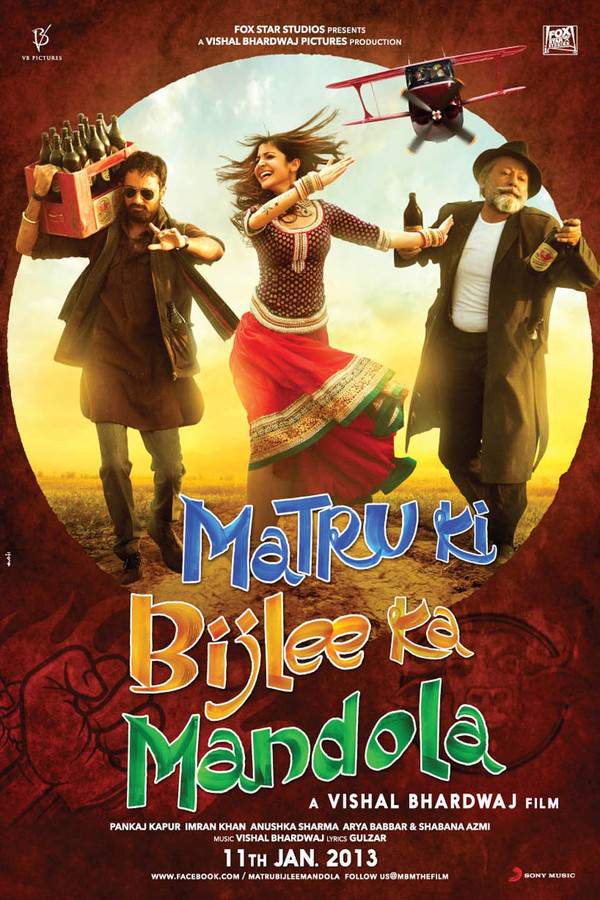
The film revolves around three main characters: Harphool Singh Mandola, known as Harry (Pankaj Kapur), his ambitious daughter Bijlee Mandola (Anushka Sharma), and Hukum Singh Matru (Imran Khan), often referred to simply as Matru.

Harry is a wealthy businessman with grand dreams of transforming Mandola village—named after his family—into a beacon of success and a hub of economic growth. However, his vision comes with a catch: the villagers must consent to sell their land to the government at significantly undervalued prices for it to be developed into a Special Economic Zone, a process that puts their livelihoods at stake.

Amid his sophisticated demeanor, Harry harbors a fondness for alcohol. His drunken escapades reveal a different side of him, one that champions equality and the welfare of the villagers. Yet, upon regaining sobriety, he quickly retreats to his self-serving ways, even resorting to subdue any protests against his policies with the assistance of local authorities. The irony deepens as Harry grapples with hallucinations of a pink buffalo named Gulabo, which symbolizes his struggle with alcohol withdrawal. These hallucinations become crucial to Matru’s schemes, as he uses them to manipulate Harry into drinking more for his own gains.

Bijlee, the sole heir to Harry, grows up in Mandola after the tragic loss of her mother during her childhood. With a refined education from New Delhi and Oxford, she should be at the forefront of enjoying life, but finds herself entangled in a love for Baadal (Arya Babbar), the scheming son of the corrupt politician Chaudhari Devi. Their impending union seems to align with the selfish interests of both Harry and Chaudhari Devi, who aims to secure Harry’s wealth through her son’s marriage to his daughter.

In the narrative, Matru stands out as a revolutionary figure, passionately advocating for the villagers’ rights against the oppressive land acquisition. He works as Harry’s driver, and despite the challenges, he tirelessly supports the villagers’ cause, drawing inspiration from the teachings of Mao Tse Tung. The film opens with a pivotal scene in a liquor shop, where a drunken Harry attempts to negotiate with the shopkeeper, setting the stage for his reckless character.

As the storyline unfolds, Harry’s drunken persona advocates for the return of the villagers’ land, as Matru plots to marry Bijlee and lead a peaceful life. Meanwhile, Chaudhari Devi plays both sides, disguising her corrupt ambitions as a fight for farmers’ rights. When the villagers, under pressure from government loans, face the threat of losing their land, they turn to Matru for leadership.

As Bijlee becomes increasingly aware of Baadal’s corrupt ambitions, her love for him begins to wane. Her evolving sentiments push her to aid the villagers and Matru, eventually leading her to fall in love with him instead. Just when the villagers face a devastating loss to a rainstorm that ruins their harvest, pushing them closer to surrendering their land, Chaudhari Devi’s schemes escalate.

With Chaudhari Devi’s manipulative tactics to bind Bijlee and Baadal’s marriage to the fate of the land, Bijlee and Matru are determined to halt the wedding to save their community. In the film’s climax, a plan involving getting Harry intoxicated is devised to call off the wedding. In an unexpected twist, while Harry appears to be heavily drunk at the wedding, he artfully reveals that he has remained sober throughout and has steadfastly honored his commitment to not drink, leaving everyone in shock as he boldly endorses Bijlee’s union with Matru instead.

Last updated: October 27, 2024 at 16:33

Was this helpful?

Matru ki Bijlee ka Mandola (2013) Plot Questions Answered – Summary FAQ

Explore frequently asked questions about Matru ki Bijlee ka Mandola (2013) with spoiler-rich answers covering the full plot summary, major story beats, character motivations, hidden details, and ending meaning. This movie summary FAQ helps explain confusing scenes, plot twists, and narrative decisions in clear, searchable detail.

Q1

Why does Harry Mandola support the villagers when drunk but oppose them when sober?

A.

Harry's drunken moments reveal his genuine conscience and concern for the villagers' welfare, but these moments of clarity are fleeting. Once sober, he reverts to his self-serving ways because his ambition to develop Mandola village into a Special Economic Zone outweighs his moral compass. His alcoholism creates a duality where the sober Harry prioritizes wealth and power, while the intoxicated Harry speaks the truth about equality and justice.

Early scenes in the liquor shop establish Harry's contradictory behavior when drunk versus sober.

harry mandoladrunk soberalcoholismvillagers support
Q2

What is the significance of the pink buffalo Gulabo in the film?

A.

The pink buffalo Gulabo is a hallucination that Harry experiences during alcohol withdrawal. This surreal element symbolizes Harry's internal struggle with addiction. Matru exploits this hallucination to manipulate Harry into drinking more, using it to further his own schemes against Harry's plans for the village.

The hallucination first appears early in the film, establishing it as a recurring plot device.

gulabopink buffalohallucinationalcohol withdrawal
Q3

Why does Bijlee fall in love with Matru instead of Baadal?

A.

Bijlee initially loves Baadal, but as she witnesses his corrupt ambitions and manipulative nature, her love fades. She gradually develops feelings for Matru after seeing his genuine commitment to fighting for the villagers' rights and his selfless nature. Supporting the same cause creates a deeper connection between them.

Bijlee's realization begins when she witnesses Baadal's true colors during the political scheming.

bijleematrubaadallove triangleshifted allegiance
Q4

How does Matru manipulate Harry throughout the story?

A.

Matru, while appearing to be Harry's loyal driver, secretly works against his land acquisition plans. He exploits Harry's vulnerability to alcohol by using the Gulabo hallucination to encourage his drinking, weakening Harry's resolve and making him easier to control. Matru also secretly plots to marry Bijlee and uses the chaos to advance his revolutionary agenda.

The opening liquor shop scene establishes Matru's deceptive relationship with Harry.

matruharry manipulationdriverconspiracy
Q5

Why does Harry reveal he was sober at the wedding?

A.

Harry's revelation that he remained sober throughout the wedding is the film's major twist. He had actually been pretending to drink while remaining sober, allowing him to observe everyone's true intentions. This dramatic reveal enables him to confidently call off Bijlee's marriage to Baadal and endorse her union with Matru, showing his transformation from a self-serving businessman to a man who prioritizes his daughter's happiness and the villagers' welfare.

Harry's suspiciously coherent speech during his drunken moments hints at his sobriety.

wedding twistharry soberclimax revelation
Q6

What triggers Harry's transformation by the end of the film?

A.

Harry's transformation is triggered by witnessing the devastating rainstorm that destroys the villagers' harvest, pushing them closer to losing their land. This catastrophe, combined with seeing his daughter's shift in allegiances and Matru's genuine dedication to the cause, awakens his conscience. His ability to stay sober at the wedding and make a principled decision marks his complete character arc.

The rainstorm disaster serves as the turning point that softens Harry's stance.

harry transformationcharacter changerainstorm
Q7

Why does Chaudhari Devi want Baadal to marry Bijlee?

A.

Chaudhari Devi, a corrupt politician, orchestrates the marriage between her son Baadal and Bijlee as a strategic move to secure Harry Mandola's wealth. By tying her family's future to Harry's fortune through marriage, she aims to gain financial and political power while maintaining her public image as a champion of farmers' rights.

The political marriage arrangement is established early as a mutually beneficial deal between Harry and Chaudhari Devi.

chaudhari devibaadalmarriage schemecorrupt politician
Q8

How does the rainstorm affect the villagers' situation?

A.

The disastrous rainstorm destroys the villagers' crops, devastating their livelihoods and pushing them closer to surrendering their land to Harry and the government. This catastrophic event intensifies their desperation and strengthens their resolve to follow Matru's leadership in resisting the land acquisition.

The timeline builds toward this disaster as the villagers' lowest point.

rainstormcrop failurevillagers desperationland loss
Q9

What motivates Matru to fight for the villagers?

A.

Matru is driven by revolutionary ideals inspired by Mao Tse Tung's teachings. He genuinely believes in fighting against oppression and exploitation of farmers. Beyond his activist motivations, he also harbors a personal desire to marry Bijlee and build a peaceful life with her while helping the village.

Matru's revolutionary character is established early as he works as Harry's driver.

matrurevolutionaryvillagers rightsmao ideology
Q10

How does Chaudhari Devi tie the marriage to the villagers' land fate?

A.

Chaudhari Devi exploits the villagers' desperate situation by making Bijlee and Baadal's marriage contingent on the land deal. She manipulates the situation so that the wedding becomes tied to whether the villagers surrender their land, using this as leverage to advance her corrupt agenda.

This manipulation becomes evident as Chaudhari Devi plays both sides of the conflict.

marriage land dealchaudhari devi manipulationpolitical leverage
Mobile App Preview

Coming soon on iOS and Android

The Plot Explained Mobile App

From blockbusters to hidden gems - dive into movie stories anytime, anywhere. Save your favorites, discover plots faster, and never miss a twist again.

Sign up to be the first to know when we launch. Your email stays private, always.

Explore Movie Threads

Discover curated groups of movies connected by mood, themes, and story style. Browse collections built around emotion, atmosphere, and narrative focus to easily find films that match what you feel like watching right now.

Rebellious Romances Against Social Injustice like Matru ki Bijlee ka Mandola

Love stories intertwined with political rebellion and class warfare.If you liked the rebellious love story and political satire in Matru ki Bijlee ka Mandola, you'll enjoy these movies. They feature couples fighting for love and justice against a backdrop of corruption and class conflict, blending romance with a hopeful fight for a better world.

rebelliousromantichopefulsatiricalchaoticconflictedpolitical

Narrative Summary

These stories typically begin with a personal conflict, like an unwanted marriage or a class divide, that escalates into a larger battle against systemic injustice. The central couple's relationship strengthens as they unite against a common foe, leading to a climax that challenges the status quo and results in a hopeful, but hard-won, resolution.

Why These Movies?

They are grouped together for their unique blend of heartfelt romance and impactful social commentary. The shared mood is one of hopeful rebellion, where love is an act of defiance, and the tone balances the seriousness of the cause with the warmth and chaos of personal relationships.

Satirical Village Dramedies like Matru ki Bijlee ka Mandola

Whimsical comedies where rural life collides with absurd political schemes.Find movies similar to Matru ki Bijlee ka Mandola that capture the chaotic charm of village life. These stories mix political satire with eccentric characters and a steady pacing, creating a bittersweet yet humorous look at social dynamics and personal conflicts in a rural setting.

satiricalchaoticeccentricdramedyvillage liferebellioushopeful

Narrative Summary

The narrative pattern often revolves around a central conflict, such as a land dispute or a manipulative political plan, that disrupts the village's equilibrium. The story unfolds through the intersecting lives of its quirky inhabitants—from drunken landowners to idealistic activists—leading to a chaotic but ultimately unifying climax that resolves the external threat and internal tensions.

Why These Movies?

These films share a distinct vibe created by their specific setting and tone. They balance the absurdity of village politics and eccentric characters with genuine emotional stakes, resulting in a unique experience that is both funny and thoughtful, chaotic yet grounded.

Unlock the Full Story of Matru ki Bijlee ka Mandola

Don't stop at just watching - explore Matru ki Bijlee ka Mandola in full detail. From the complete plot summary and scene-by-scene timeline to character breakdowns, thematic analysis, and a deep dive into the ending - every page helps you truly understand what Matru ki Bijlee ka Mandola is all about. Plus, discover what's next after the movie.

Matru ki Bijlee ka Mandola Timeline

Track the full timeline of Matru ki Bijlee ka Mandola with every major event arranged chronologically. Perfect for decoding non-linear storytelling, flashbacks, or parallel narratives with a clear scene-by-scene breakdown.

Matru ki Bijlee ka Mandola Timeline

Characters, Settings & Themes in Matru ki Bijlee ka Mandola

Discover the characters, locations, and core themes that shape Matru ki Bijlee ka Mandola. Get insights into symbolic elements, setting significance, and deeper narrative meaning - ideal for thematic analysis and movie breakdowns.

Characters, Settings & Themes in Matru ki Bijlee ka Mandola

Matru ki Bijlee ka Mandola Spoiler-Free Summary

Get a quick, spoiler-free overview of Matru ki Bijlee ka Mandola that covers the main plot points and key details without revealing any major twists or spoilers. Perfect for those who want to know what to expect before diving in.

Matru ki Bijlee ka Mandola Spoiler-Free Summary

More About Matru ki Bijlee ka Mandola

Visit What's After the Movie to explore more about Matru ki Bijlee ka Mandola: box office results, cast and crew info, production details, post-credit scenes, and external links - all in one place for movie fans and researchers.

More About Matru ki Bijlee ka Mandola

Similar Movies to Matru ki Bijlee ka Mandola

Discover movies like Matru ki Bijlee ka Mandola that share similar genres, themes, and storytelling elements. Whether you’re drawn to the atmosphere, character arcs, or plot structure, these curated recommendations will help you explore more films you’ll love.