Plot Explained Spoilers guaranteed!
Plot Explained

Browse by genre

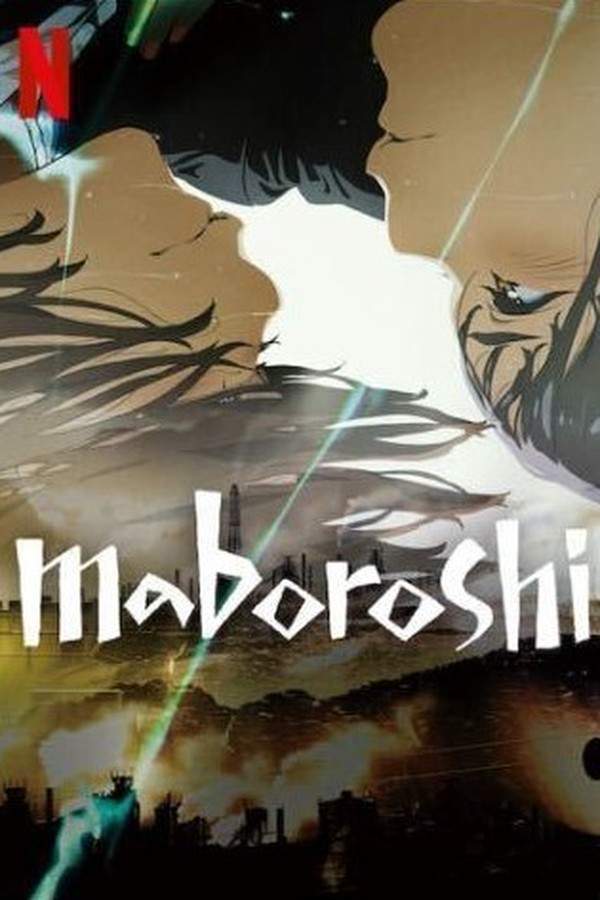
Maboroshi (2024) movie poster

Plot Summary

Maboroshi (2024) Plot Summary & Ending Explained

Release, runtime and language
2024 · 1 h 51 m · Japanese
Echo score 77
Loading streaming availability…
Directed by
Mari Okada
Starring
Robbie Daymond, Tasuku Hatanaka, Brandon Engman, Misaki Kuno, Reina Ueda, Yukiyo Fujii

Following a mysterious industrial accident that leaves a landscape frozen in time, two students find their lives disrupted by the discovery of a mysterious young man living in the wilderness. Drawn to his unconventional nature, they forge a passionate and intense connection that challenges their perceptions and upends their ordinary lives.

On this page (6)
  1. 1 Where to watch
  2. 2 What happens: full plot
  3. 3 Plot questions answered
  4. 4 How it ends
  5. 5 Movie threads
  6. 6 Every angle
Loading streaming availability…

Full plot summary · contains spoilers

What Happens in Maboroshi: Full Plot Summary

The whole story of Maboroshi (2024) explained, from the opening scene to the final frame: every key event, every twist and what it all adds up to. Read it as a quick recap before the sequel, to check a scene you missed, or to finally understand what really happened.

In the picturesque steel mill town of Mifuse, tucked away in the depths of rural Japan, two brothers, Akimune Kikuri and Tokimune Kikuri, strive to make a living amid the rusting remnants of machinery. Their son, Masamune Kikuri, spends his days preparing for an upcoming entrance exam with friends, when suddenly, a catastrophic explosion on January 1st, 1991, rocks the mill, casting the town into an everlasting winter of stark desolation and cold.

As inhabitants grapple with the overwhelming isolation, Mamoru Sagami, a devoted worker and self-proclaimed priest of the Mifushi Shrine, asserts that this tragedy is a form of divine punishment, an act of retribution for their past transgressions against the sacred mountain. Sagami mystically claims that they are now entrapped by the very steel mill they once relied on, which has morphed into a "sacred" entity. He warns that changes to their situation will only worsen their plight until the gods show mercy.

As the townspeople submit periodic biography ID forms to keep the peace during this surreal existence, strange fissures start to crack the night sky, uncannily reflecting the ceaseless smoke billowing from the mill. Masamune and his friends, seemingly unaware of their bizarre entrapment, occupy themselves with bizarre games that challenge the concept of pain.

The next day, Mutsumi Sagami, a classmate whom Masamune has little in common with, invites him to visit the mill's fifth blast furnace. There, they discover a feral girl on the cusp of adolescence, brimming with untamed spirit. As Mutsumi takes it upon herself to care for the girl, now named Itsumi, Masamune begins to sense the futility of trying to escape their circumstances.

Meanwhile, Akimune, Masamune's father, labors through endless shifts at the mill only to disappear without a trace. As the days blend into one another, Masamune and his companions must confront the eerie reality they seem trapped within—a reality where pain has become a distant memory, and the boundary between fantasy and nightmare grows increasingly hazy.

In a poignant moment, Masamune finds himself at the mill, engaging in a ritual of care as he feeds Itsumi while naming her. Their tranquil scene is interrupted by Sagami and Tokimune, both exuding an air of mystery. Sagami claims Itsumi is a divine presence, one who will ultimately be forgiven by the sacred machine. This is met with skepticism from Tokimune, who recalls their father's cautionary words, hinting at deeper truths, while Masamune attunes himself to the whispers of the past.

Masamune's visits to the mill become a routine spurred by Mutsumi's insistence. Here he encounters Yuko Sonobe, a classmate who inadvertently steps into his life with news about school matters. Their lives intertwine again during a revealing moment at Mutsumi's home, where it emerges that she is, in fact, Sagami's adopted daughter.

As seasons shift, the group—Masamune, Mutsumi, Sonobe, and their classmates—find themselves embarking on a treacherous expedition through an abandoned railway tunnel, navigating rugged pitfalls. During this perilous journey, Sonobe's impulsive act of creating graffiti adorned with romantic symbols leaves Masamune in awe. However, her hasty retreat coincides with the ominous sky fissures and the unsettling glow surrounding her, marking a crucial juncture in their shared fate.

Gathering at the community center in search of comfort, the townsfolk absorb Sagami's chilling revelation that the factory smoke embodies a "sacred wolf" capable of breaking hearts and sealing the fissures in the sky. Amid this tension, Masamune finds himself retreating to a contemplative silence in the town square, confronting the implications of Itsumi's origins and the cryptic hints from Tokimune regarding her precarious position in their world.

As Masamune cherishes another moment with Itsumi, her happiness clashes with the stark reality where she longs for freedom. He refuses to let the strangeness of their lives deter him as he ventures forth, yet Tokimune's pleas to maintain stillness echo in the background. Visibly yearning for the outside world, Masamune's courage builds, especially under Itsumi's encouragement, pushing him to reach out towards the fissure—an opening to a world that reveals their home as a tormented ruin.

In a breathless confrontation, a briefing session at the community center ignites fervent debates, as Sagami reiterates the notion of their unreal world sculpted by the sacred machine. While doubts bubble among the residents, Tokimune drops the shocking truth: that the surreal reality continues to exist at the cost of Itsumi's return to the mill—sparking unrest among the townspeople.

Amidst this turmoil, the sacred wolf's malevolent shadow looms as it claims lives, including that of Yasunari Senba during gym class. As Itsumi and Mutsumi take sanctuary in Masamune's home, unsettling occurrences escalate. A mystifying vision of a middle-aged figure resembling his father appears before Masamune, conversing with Mutsumi about their past, while she reveals the truth about Itsumi once being Saki Kikuiri, their daughter struck by fate.

As the narrative unfurls, Masamune's resolve intensifies, ultimately leading to a heartfelt confession in his desperate quest for Mutsumi's affection, which ends in a bittersweet rejection. Nonetheless, their connection deepens in a tender moment, cloaked beneath the umbra of unfolding chaos as Itsumi's tears unleash a cataclysm of fissures permeating the fabric of their reality, coinciding with the mill's halt in production.

As confusion reigns over evacuation activities, Masamune receives his father's forgotten diary, uncovering the profound truth about Itsumi—her transport from the real world and his previous life as Mutsumi's husband. The urgency of Saki’s return gains traction, prompting a counterproposal from Sagami—a refusal that lands Itsumi back in the furnace's grip.

As Masamune rallies his classmates to rescue Itsumi, Tokimune embarks on a reckless mission of reigniting the blast furnace, desperately clutching to hope for their impending doom. In the midst of an enigmatic ritual proposed by Sagami, Masamune and Mutsumi guide a reluctant Itsumi onto a train bound for the outside world, orchestrated by Masamune's grandfather, Souji Kikuiri. Their ascent, however, meets an untimely derailment, a chaotic twist to their fate.

In the melee, a fierce rivalry ensues, each friend vying for Itsumi's affections, culminating in a dramatic escape that sees Masamune piloting through the fissure to converge with the real world’s train station. With Mutsumi's assistance, Itsumi narrowly boards the train and, in a poignant farewell, she makes a solemn vow concerning her heart. As the train departs, Mutsumi wrestles with her sentiments while Itsumi embraces her with a shroud of hope that lingers amidst the chaos, ultimately leading to Masamune catching Mutsumi upon their world’s abrupt collapse.

Years roll on until Saki, now blossomed into a young woman, returns to Mifuse, greeted only by the ruins of a once industrious steel mill. This ghost town now stands abandoned—a husk of memories. As she wanders through the remnants, she is drawn to a glass wall inscribed with heartfelt messages, the essence of the cherished past imprinted in that forsaken world. Climbing to the furnace's viewing platform, Saki reflects on the bittersweet connection between Mutsumi and Itsumi, her thoughts adrift in nostalgia.
Last updated: November 17, 2024 at 17:34

Was this helpful?

Plot questions answered

Maboroshi Plot Explained: Your Questions Answered

The questions people ask most about Maboroshi (2024): what happens in the confusing scenes, why the characters do what they do, the twists, hidden details and what the ending means. Each answer contains spoilers.

Q1

Why is the town of Mifuse trapped in eternal winter?

The catastrophic explosion at the steel mill on January 1st, 1991, created a supernatural freeze that trapped the entire town in an everlasting winter. Sagami claims this is divine punishment for the town's past transgressions against the sacred mountain, and that the mill itself has become a 'sacred' entity that controls their fate.

Foreshadowing: Earlier scenes show the townspeople submitting biography ID forms, hinting at their forced compliance within this trapped reality.

  • eternal winter
  • steel mill explosion
  • divine punishment
  • Mifuse town
  • trapped
Q2

Who is Itsumi and where did she come from?

Itsumi is actually Saki Kikuiri, the lost daughter of the Kikuri family. She was transported from the real world into this trapped reality. Masamune discovers this truth through his father's diary, which reveals that Masamune was previously Mutsumi's husband in the real world before the town became frozen.

Foreshadowing: Sagami claims Itsumi is a divine presence who will be forgiven by the sacred machine, hinting at her special status.

  • Itsumi
  • Saki Kikuiri
  • lost daughter
  • Mutsumi
  • Kikuri family
Q3

Why does Sagami claim the explosion is divine punishment?

Sagami presents himself as a priest of Mifushi Shrine and declares the explosion was retribution for the town's past sins against the sacred mountain. He maintains that the steel mill has transformed into a sacred entity that now controls their existence, and that any attempts to change their situation will only worsen their plight until the gods show mercy.

Foreshadowing: Sagami's warnings about the 'sacred wolf' and the factory smoke being a divine entity set up his authority throughout the story.

  • Mamoru Sagami
  • divine punishment
  • Mifushi Shrine
  • sacred mountain
  • priest
Q4

What do the strange fissures in the sky represent?

The fissures crack the night sky and are connected to the factory smoke. Sagami reveals that the smoke embodies a 'sacred wolf' capable of breaking hearts and sealing these fissures. The fissures appear ominously and intensify as emotional moments occur, particularly when Itsumi's tears unleash cataclysmic fissures that ultimately lead to the world's collapse.

Foreshadowing: The fissures first appear when Sonobe creates graffiti and coincide with ominous glows surrounding her, marking crucial turning points.

  • sky fissures
  • sacred wolf
  • factory smoke
  • breaking hearts
  • reality collapse
Q5

What happened to Masamune's father Akimune?

Akimune disappears without a trace while working endless shifts at the mill. Later, Masamune receives his father's forgotten diary, which contains crucial truths about Itsumi. A vision of a middle-aged figure resembling his father also appears, conversing with Mutsumi about their past, revealing Akimune had a connection to the real world and to Mutsumi.

Foreshadowing: Tokimune's recollections of their father's cautionary words hint at deeper truths about the family's involvement in the town's mystery.

  • Akimune disappearance
  • father
  • diary
  • Kikuri family
  • mill worker
Q6

What is the relationship between Masamune and Mutsumi?

Mutsumi is Sagami's adopted daughter and Masamune's classmate. In the real world, Masamune was actually Mutsumi's husband before the town became frozen in time. Masamune eventually confesses his feelings for Mutsumi, but she rejects him. Despite this, they share a deep connection, and at the end, Masamune catches Mutsumi as their world collapses, suggesting they remain together.

Foreshadowing: Mutsumi invites Masamune to visit the fifth blast furnace, initiating their deeper involvement with Itsumi.

  • Mutsumi Sagami
  • Masamune
  • relationship
  • husband
  • wife
  • confession
Q7

Why is it so important for Itsumi to escape the trapped town?

Itsumi represents the key to breaking the town's entrapment. Sagami reveals that the surreal reality continues to exist at the cost of Itsumi's return to the mill, meaning she must be sacrificed to the furnace to maintain the frozen world. Masamune and his classmates rally to rescue her because letting her return would perpetuate their eternal imprisonment.

Foreshadowing: Sagami claims Itsumi is a divine presence who will ultimately be forgiven by the sacred machine, foreshadowing her sacrificial role.

  • Itsumi escape
  • rescue
  • sacrifice
  • furnace
  • freedom
  • trapped world
Q8

Why does the world collapse at the end of the movie?

When Itsumi and Mutsumi share an emotional farewell, Itsumi's tears unleash cataclysmic fissures that permeate the fabric of their reality, coinciding with the mill's halt in production. The world collapses because the sacred machine that has been maintaining their trapped reality can no longer function without the sacrifice of Itsumi. The frozen world was sustained by keeping her bound to it.

Foreshadowing: The fissures intensify throughout the film, appearing during emotional moments and growing larger as the story progresses.

  • world collapse
  • reality ending
  • fissures
  • tears
  • mill shutdown
  • goodbye
Q9

How does Masamune's grandfather help with the escape attempt?

Masamune's grandfather, Souji Kikuiri, orchestrates the train that is supposed to carry Itsumi to the outside world. He helps arrange for Itsumi to board the train bound for freedom during the ritual led by Sagami. However, their ascent is abruptly derailed, creating a chaotic twist to their escape plan.

Foreshadowing: The expedition through the abandoned railway tunnel earlier establishes the dangers of their terrain and the difficulty of escape.

  • Souji Kikuiri
  • grandfather
  • train
  • escape
  • outside world
  • derailment
Q10

What happens when Saki returns to Mifuse at the end?

Years after the world collapses, Saki (formerly Itsumi) returns to Mifuse as a young woman. She finds only the ruins of the abandoned steel mill, the ghost town now stands empty. She walks through the remnants and discovers a glass wall inscribed with heartfelt messages from the past. Climbing to the furnace's viewing platform, she reflects on her bittersweet connection to Mutsumu and the time they shared.

Foreshadowing: Masamune's final moments catching Mutsumi as the world collapses suggest their bond transcends the physical reality.

  • Saki returns
  • Mifuse ruins
  • ghost town
  • memories
  • glass wall
  • furnace platform
  • epilogue

Ending explained

What Happens at the End of Maboroshi?

How Maboroshi (2024) ends, in short: the final scene, the last twist and what it means for the characters. The full ending explained, with every spoiler, lives on its own page.

Read the full ending explained

The ending of Maboroshi reveals that the town of Mifuse exists in a kind of limbo, a spirit world created by the lingering emotions of its lost residents, corralled in an eternal freeze after a tragic industrial accident. Throughout the film, we learn that these residents are actually spirits, caught forever in a static time, unable to age, die, or move on, because any change—especially emotional change—would threaten their fragile existence. The town and its inhabitants are kept in this ghostly state partly due to Mamoru Sagami’s fanatical worship of the smoke from the factory, which symbolizes a dehumanized, mechanical way of life.

The story focuses heavily on young Masamune, who, like everyone else, is trapped in this unchanging limbo. He and his friends are essentially spirits in childhood, unable to grow or develop in any meaningful way, which contributes to their sense of stagnation and despair. Masamune’s romantic feelings for Mutsumi are also frozen in time, and the revelation that Itsumi, the mysterious girl they care for, actually comes from a different reality deepens the story’s stakes.

Continue reading the ending (2 more paragraphs)

Itsumi’s true identity is that of Masamune’s future daughter, having traveled from her world—where she is aging normally—to this spirit realm after a tragic event. Her arrival and the emotional upheaval she causes threaten to tear the town apart because her feelings, especially her love and sadness, have the power to shake its delicate balance. When Masamune learns he can use the train—an arcane link between worlds—to send Itsumi back to her original reality, he devises a plan to do so, aiming to save both her and the town.

Ultimately, however, Mutsumi chooses love and companionship over survival. She refuses to leave Masamune behind, even though doing so would destroy the town—its ghostly inhabitants and their timeless, unchanging world. In the final moments, as Itsumi departs on the train and is returned to her own reality, the town of Mifuse dissolves into nothingness, signifying that the spirits that once inhabited it have finally been released or erased, ending the unnatural stasis they were trapped in. The closing scenes show Itsumi, years later, visiting the now-abandoned steel factory in her original world, with memories of her time in Mifuse alive in her mind, confirming that the tragic love and loss she experienced remain real and unforgettable, echoing as a lasting reminder of her journey through this illusory, haunted town.

Maboroshi ending explained in full

Movie threads

More Movies Like Maboroshi, by Mood & Story

Curated lists built around what makes Maboroshi tick: the same mood, the same kind of story or the same emotional payoff. Each list explains why these movies belong together.

Dreamlike small town stories like Maboroshi

Stories where isolated, frozen communities grapple with supernatural mysteries. If you enjoyed the melancholic, frozen-town atmosphere of Maboroshi, you'll find similar movies here. These films feature isolated communities affected by supernatural phenomena, blending quiet drama with a dreamlike mood and a focus on emotional resonance over fast-paced action.

  • dreamlike
  • melancholic
  • isolated
  • mysterious
  • nostalgic
  • contemplative
  • Tone: melancholic, dreamlike
  • Pacing: slow, contemplative
Why these movies?

The story pattern: The narrative pattern often involves a community disrupted by an inexplicable event that alters reality or perception. Characters within this 'bubble' grapple with their changed world, uncovering personal and collective truths while navigating the bittersweet consequences of their new existence. The plot unfolds slowly, prioritizing emotional discovery over explosive conflict.

Why they belong together: These films are grouped together because they share a distinct atmospheric blend: a melancholic tone, a slow, contemplative pace, and a setting that feels both familiar and strangely alien. The central theme of a community grappling with a quiet, world-altering mystery creates a cohesive viewing experience focused on mood and introspection.

Movies about intense teen bonds in altered realities like Maboroshi

Intense, formative relationships forged while the fabric of reality unravels. Fans of the passionate adolescent connection in Maboroshi will appreciate these films. They feature teens forming intense relationships against a backdrop of supernatural or fantastical events, resulting in emotionally resonant journeys that often end on a bittersweet note.

  • yearning
  • bittersweet
  • adolescent
  • passionate
  • melancholic
  • formative
  • Tone: bittersweet, yearning
  • Pacing: slow, character-driven
Why these movies?

The story pattern: The narrative follows young characters whose lives are interrupted by a supernatural or fantastical event. Their connection serves as the emotional core, providing stability and meaning in a chaotic or uncertain world. The central conflict often involves a choice between preserving their unique bond or restoring the natural order, leading to a resolution that is both fulfilling and mournful.

Why they belong together: These movies are united by their focus on the intensity of adolescent emotion set against a backdrop of a shifting or unstable world. The combination of a slow-burn romance, a medium emotional weight, and a bittersweet ending creates a specific, poignant feeling of beautiful, temporary connections that cannot last.

Every angle

Maboroshi (2024) Explained: Plot, Ending, Timeline & Characters

Everything about Maboroshi in one place: what happens in the plot summary, the timeline in chronological order, the characters and meaning, the ending explained and a spoiler-free summary. What's After the Movie adds the cast, box office and post-credit scenes.

Coming soon on iOS and Android

The Plot Explained Movie Summary App

Plot summaries, endings explained and timelines on your phone. Catch up on any movie in minutes, save your favorites and never miss a twist again.

Be the first to know when we launch. Your email stays private, always.

Learn more about the app