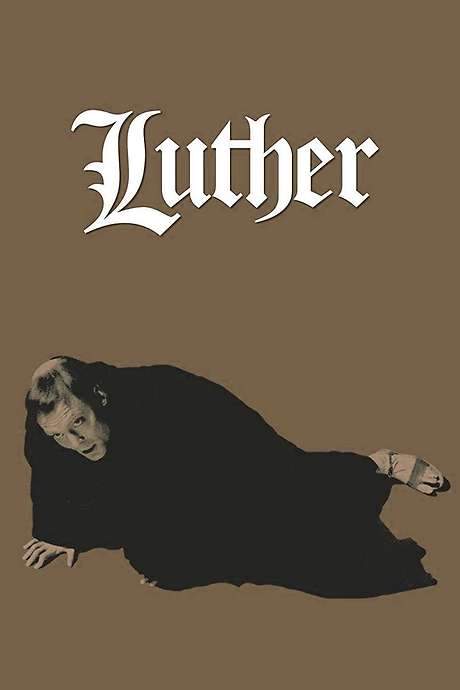
Luther
Year: 1974
Runtime: 110 mins
Language: English
Director: Guy Green
In 1525 the world was rocked by a powerful explosion. His name was Luther. A 16th-century clergyman’s view breaks the Catholic Church apart.
Where to Watch Luther?
Find where to stream, rent, or buy Luther (1974) in the US with current JustWatch availability, up-to-date pricing, and platform listings for subscription, rental, and digital purchase options.








Warning: spoilers below!
Haven’t seen Luther yet? This summary contains major spoilers. Bookmark the page, watch the movie, and come back for the full breakdown. If you're ready, scroll on and relive the story!
Timeline – Luther (1974)
Trace every key event in Luther (1974) with our detailed, chronological timeline. Perfect for unpacking nonlinear stories, spotting hidden connections, and understanding how each scene builds toward the film’s climax. Whether you're revisiting or decoding for the first time, this timeline gives you the full picture.
Last updated: October 09, 2025 at 11:09
Luther (1974) Timeline Questions Answered – Chronology FAQ
Find frequently asked questions about the Luther (1974) timeline, including chronological order, nonlinear jumps, cause-and-effect links, and scene sequence clarifications. This timeline FAQ helps explain when key events happen, how moments connect, and why the story unfolds in that specific order.
Why did Martin Luther become a monk?
Luther became a monk after experiencing a profound spiritual crisis. He had a vision of Jesus as a fearsome judge on a rainbow, which terrified him. His father Hans Luther scolded him for abandoning his duty, and Luther recalled a vision that moved him to promise St. Anne that he would become a monk. He was consumed by fear of sin and felt he could never achieve forgiveness through his own efforts.
Earlier scenes show Luther collapsing at the edge of the monastic stalls, overwhelmed by his sense of sin and inability to find peace.
What sparked Luther's reform movement?
Luther's reform was sparked by his inner discovery about justification by faith. While on the latrine, he experienced a revelation that forgiveness comes through faith rather than works. In 1517, he preached about this doctrine and posted the Ninety-Five Theses for scholarly debate, challenging the Catholic Church's teaching on indulgences and penance.
Earlier scenes show Luther wrestling with his inability to find forgiveness through strict monastic discipline and ritual.
What happened at the Diet of Worms?
At the Diet of Worms in 1521, Luther was summoned before Emperor Charles V and Inquisitor Eck. When warned that recantation could incite revolt, Luther delivered his famous 'Here I Stand' speech, declaring his conscience was captive to God rather than to men. He refused to recant, and the emperor and princes departed, leaving him condemned but alive.
Why did Luther burn the papal bull?
Luther burned the pope's bull Exsurge Domine in 1520 as a bold act of defiance against Rome. The bull condemned his teachings as heretical. During the burning, he confronted doubt, asking if God was dead, but affirmed that God cannot die, only seem hidden. This act intensified his conflict with the Catholic Church and solidified his reformist stance.
What was Luther's stance on the Peasants' Revolt?
After the Peasants' Revolt of 1525, Luther wandered through a devastated marketplace filled with slaughter. He declared that 'God is the butcher' and that humanity must answer to him. While he conceded the peasants had cause for grievance, he insisted that mobs remained irreligious and that violent revolt was not the answer to institutional corruption.
Earlier scenes establish Luther's belief that reform must come through conscience and faith, not violence.
Who was Katie and when did Luther marry?
Katie was Luther's wife, appears in 1525, and represents his personal life amid the chaos of reform. During a visit with Staupitz, Luther is shown with Katie, indicating their marriage had occurred by this time. The film uses their relationship to show how personal faith merged with family life.
What was Staupitz's role in Luther's journey?
Johann von Staupitz was Luther's mentor who challenged his reliance on rigid rules and accused him of turning devotion into mere performance. He urged Luther to critique the church in Latin rather than German to avoid stoking revolt. Later, after the Diet of Worms, Staupitz visited Luther and expressed relief that Luther had been unsettled at Worms, believing that uncertainty could temper zeal.
What did Luther mean by 'Here I Stand'?
When Luther declared 'Here I Stand' at the Diet of Worms, he was affirming that his conscience was captive to God's word, not to human authority. He refused to recant his teachings despite the threat of execution, declaring he could do no otherwise. This moment became a defining statement of religious conscience over political power.
How did Luther's doubt evolve throughout his life?
Luther's doubt was a central theme throughout his life. In 1525, he prayed 'Help my unbelief,' acknowledging lingering uncertainty. He believed true change required more than ritual, it needed transformation of heart. His doubt was not weakness but a source of resolve that tempered his zeal, as noted by Staupitz after the Diet of Worms.
Why was justification by faith so significant?
Justification by faith was significant because it challenged the Catholic Church's teaching that salvation required works, penance, and purchased indulgences. Luther's discovery that forgiveness comes through faith alone rather than through ritual or monetary payment directly threatened the Church's financial and spiritual authority, sparking the Protestant Reformation.
What was Luther's vision of judgment?
Luther experienced a terrifying vision of Jesus as a fearsome judge perched on a rainbow with a sword in hand. This vision of divine judgment intensified his fear of sin and contributed to his vow to St. Anne to become a monk. It reflected his profound terror of divine condemnation and his desperate search for assurance of salvation.
What did Luther mean when he said the dark isn't quite as thick?
In 1525, Luther took Katie's baby into the pulpit and reassured him that 'the dark isn't quite as thick as all that,' offering hope in Christ's promises. He cited John 16:16 about the coming reunion and future revelation of Christ. This moment fused his personal faith with family life, sealing his resolve to persevere despite ongoing opposition.

Explore Movie Threads
Discover curated groups of movies connected by mood, themes, and story style. Browse collections built around emotion, atmosphere, and narrative focus to easily find films that match what you feel like watching right now.
Life-changing convictions: movies like Luther
Personal conviction sparks sweeping societal change in grounded biographical dramas.Explore more films like Luther, featuring historical figures whose personal beliefs ignite major change. If you enjoyed the serious, steady pacing and intellectual weight of Luther, this thread highlights similar biographical dramas about faith, doubt, and challenging authority.

Reagan
2024
Luther
1974
Deeper
2010
Kinsey
2004

2016: Obama's America
2012

The Scarlett O’Hara War
1980

The American Ruling Class
2005

Wells Fargo
1937
A Decade Under the Influence
2003
Bert Stern: Original Madman
2013

Altina
2014

Finding Atlantis
2011

Better Angels
2018
The Grass Is Greener
1960

Chance of a Lifetime
1950
Narrative Summary
The narrative typically follows a single, principled individual who questions a powerful establishment. Their internal conflict between faith, doubt, or conscience escalates into an external, public confrontation, leading to irreversible historical consequences. The journey is often intellectual and spiritual, driven by dialogue and conviction rather than physical action.
Why These Movies?
These movies are grouped by their shared focus on a grounded, character-driven exploration of a key historical moment. They prioritize serious, contemplative pacing and medium emotional weight, creating a thoughtful experience centered on ideas and personal sacrifice that reshape the world.
Intellectual upheaval dramas similar to Luther
Intellectual and spiritual revolutions unfold with steady, serious pacing.Find movies similar to Luther that explore the power of ideas to fracture societies. If you liked the film's focus on religious reformation and challenging authority, this collection features other serious, steady-paced dramas about faith, doubt, and societal transformation.
Deeper
2010

The Milky Way
1969
Luther
1974
Better Angels
2018

Hacking at Leaves
2024
The American Ruling Class
2005

Gobeklitepe: The World’s First Temple
2010

Cold Weather
2011
Finding Atlantis
2011

Ayn Rand & the Prophecy of Atlas Shrugged
2011

Night on Earth
1991
Chance of a Lifetime
1950

The Occupation of the American Mind
2016

Defamation
2009
2016: Obama's America
2012
Narrative Summary
Stories in this thread revolve around a paradigm-shifting idea or belief system that challenges the status quo. The central conflict is ideological, pitting an individual or small group against a powerful institution. The plot unfolds through debates, internal turmoil, and the gradual, often painful, spread of a new way of thinking.
Why These Movies?
These films share a specific vibe: a serious, neutral tone combined with steady pacing to explore weighty intellectual or spiritual themes. They are characterized by their focus on societal upheaval born from conviction, rather than physical violence or fast-paced plots, creating a consistently thoughtful and challenging mood.
Unlock the Full Story of Luther
Don't stop at just watching - explore Luther in full detail. From the complete plot summary and scene-by-scene timeline to character breakdowns, thematic analysis, and a deep dive into the ending - every page helps you truly understand what Luther is all about. Plus, discover what's next after the movie.
Luther Summary
Read a complete plot summary of Luther, including all key story points, character arcs, and turning points. This in-depth recap is ideal for understanding the narrative structure or reviewing what happened in the movie.


