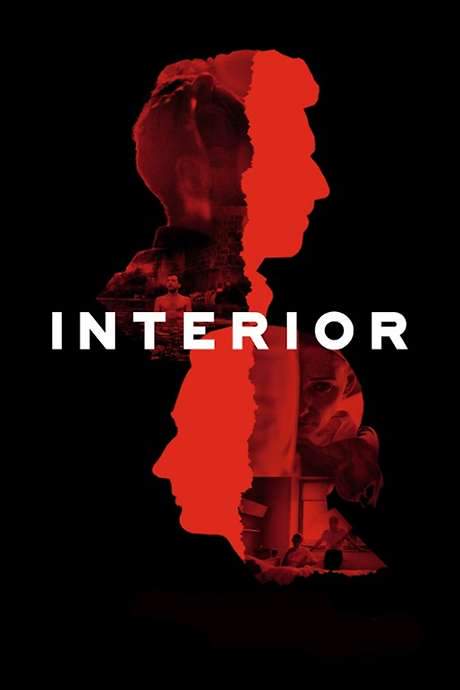
Luca Tovino Thomas is a talented scrap artist with a very small circle of friends, living in a city pulsing with art and energy. He has a fierce temper, and his anger flares when something irritates him. The story unfolds against the vibrant backdrop of the Kochi Biennale, where a sharp remark about his installation sparks a tangle of tensions with a newcomer named Niharika Ahaana Krishna. She later seeks his forgiveness and, in a surprising turn, moves into his home as a paying guest. What begins as friction gradually evolves into a deep, all-encompassing love.
Luca’s life is shadowed by personal wounds. He wrestles with an intense fear of death—a condition known as necrophobia—and his art becomes a distraction that helps him cope with the memories of his mother’s passing. Niharika becomes a calming influence, a steadying force who stands beside him through his panic attacks and the storms those fears ignite. At the same time, Niharika carries her own heavy past; she was abused in childhood, a scar that complicates her ability to trust and love.
Their dreamlike world begins to fracture when Luca is diagnosed with stage four cancer. The news amplifies his fear of dying and strains their relationship, as he grapples with the fragility of life and the thought of leaving her behind. In response, Niharika convinces him to move to Bangalore, her hometown, in the weeks leading up to what promises to be a final chapter.
As an investigation unfolds, it emerges that Niharika’s life has taken a tragic turn. She appears to have killed herself, and a diary she left behind becomes the central thread of the case. A week before Luca’s death, she sends him that diary—an item she had prepared with care—before she passes away through an intentional ingestion of poison. Officer Akbar reads the diary, and the story of Luca and Niharika begins to reveal itself, pulling him into a meditation on love, loss, and the choices that bind them.
Akbar is not only solving a mystery; he is wrestling with his own broken heart from a prior relationship and an impending divorce from his wife, Fathima. Through conversations and the diary’s revelations, he confronts difficult questions about whether Luca’s death should be seen as mercy or tragedy. Fathima’s perspective shifts the investigation’s moral compass: she argues that Niharika wanted Luca’s death to be free of pain and suffering, a detail that unsettles Akbar and reframes the diary’s meaning.
The reveal is intricate and heartbreaking: Niharika, a chemistry student, uses her knowledge to craft a poison that would reach Luca through the diary itself—an object he had longed to read. The diary is couriered to him, and Luca reads it in the way she had imagined, dying peacefully and without pain, thereby protecting him from the world’s cruelties in an extreme, but loving, act.
In the film’s climax, the emotional weight lingers. A final moment shows Fathima tearing apart a photo of Akbar’s ex-lover, signaling that he is ready to move forward and let go of the past. Meanwhile, Luca’s friends return to his home with the key he had entrusted to them long ago, closing the circle on a life defined by art, love, and a love’s final, irreversible choice. The diary remains the quiet storyteller, guiding Akbar through the truth while forcing him to confront what mercy really means in the end.