











Plot Explained Spoilers guaranteed!
Plot Explained

Browse by genre

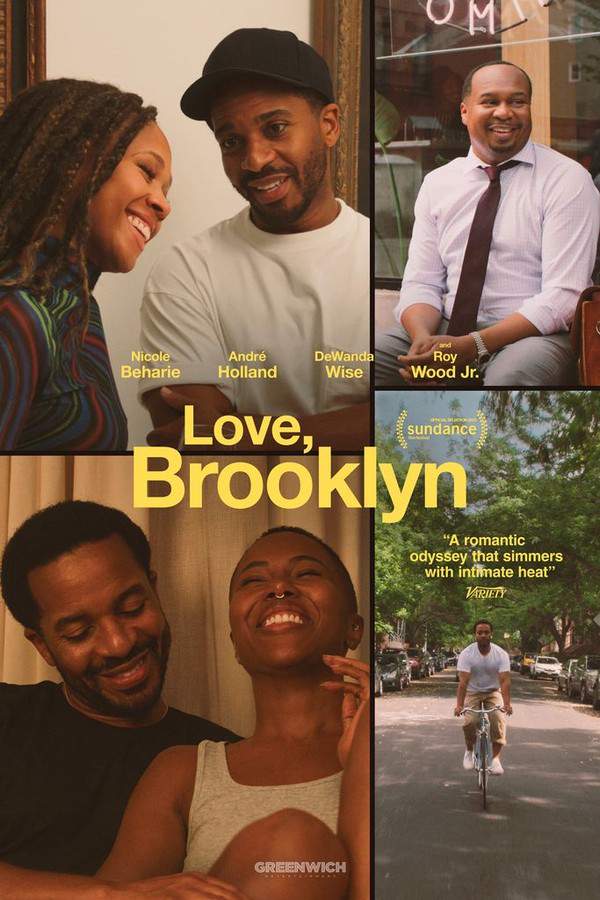
Love, Brooklyn (2025) movie poster

Timeline

Love, Brooklyn (2025) Timeline Explained – Every Event in Order

Release, runtime and language
2025 · 1 h 37 m · English
Echo score 70
Directed by
Rachael Abigail Holder, Rachael Holder
Starring
Cassandra Freeman, Nicole Beharie, DeWanda Wise, Joshua Boone, Lisa Lucas, Roy Wood Jr.

A writer, played by André Holland, juggles a fraught past with his former art‑gallery owner girlfriend (Nicole Beharie) while beginning a tentative romance with a newly‑single mother (DeWanda Wise). He leans on his loyal best friend (Roy Wood Jr.) for guidance. Set amid Brooklyn’s rapidly evolving scene, the film blends contemporary romance with the city’s cultural shift and debuted at Sundance.

On this page (6)
  1. 1 Where to watch
  2. 2 Events in order (12)
  3. 3 Timeline questions answered
  4. 4 Movie threads
  5. 5 Movies like Love, Brooklyn
  6. 6 Every angle

Where to watch

Where to Watch Love, Brooklyn (2025)

Where can you watch Love, Brooklyn? Stream, rent or buy it in the US, including on Philo, Starz and Amazon Video: current JustWatch availability with up-to-date prices.

Streaming availability powered by JustWatch

12 events in order · contains spoilers

Love, Brooklyn Timeline: Events in Chronological Order

Every key event of Love, Brooklyn (2025) in order, scene by scene, with when and where it takes place. Use it to untangle flashbacks, time jumps and parallel storylines, to refresh your memory before the sequel or to find the exact scene you are thinking of.

  1. Roger grapples with a Brooklyn assignment

    Roger is tasked with writing an optimistic portrait of Brooklyn's evolution, yet he feels alienated by gentrification. He faces creative stagnation and a growing indecision about where he belongs. The assignment exposes the gap between the city's proclaimed progress and the lived reality on the ground.

    When
    Beginning of the assignment
    Where
    Brooklyn, New York
  2. Nicole enters Roger's life as a cautious anchor

    Nicole is a widowed mother navigating grief while rebuilding her life. Roger and Nicole connect through honesty, but their bond remains undefined and fragile. Ally, Nicole's young daughter, becomes a mirror for Roger's discomfort with commitment.

    When
    Early in their relationship
    Where
    Nicole's apartment
  3. Casey remains a haunting, intellectual tie

    Casey, Roger's ex, is an art gallery owner fighting to preserve her space amid redevelopment pressures. Their conversations carry intellectual intimacy, and the connection complicates Roger's choices. The gallery's struggle mirrors Brooklyn's broader transformation.

    When
    Ongoing
    Where
    Casey's gallery
  4. Alan and Beth anchor the social circle

    Alan offers blunt, grounding observations about relationships and commitment. Beth keeps the social fabric intact by coordinating gatherings that bring Roger, Nicole, and Casey into overlapping spaces. These interactions heighten the film's underlying tensions.

    When
    Throughout the story
    Where
    Various Brooklyn social spaces
  5. A day with Ally tests Roger's readiness for responsibility

    Roger takes Ally out for a daytime excursion and is confronted by the weight of parental responsibility. The outing exposes his reluctance to commit to a permanent role in Ally's life. Nicole and Ally's presence becomes a test of what he can really offer.

    When
    Daytime
    Where
    A Brooklyn park and city streets
  6. Tension spills over after a night with Casey

    That night, unresolved tension with Casey leaks into Roger's behavior, leaving him drifting between longing and avoidance. He ends up at Nicole's door, disoriented and unmoored, revealing a version of himself he doesn't want to admit. The stumble exposes the consequences of his indecision.

    When
    Night
    Where
    Casey's space and Nicole's apartment
  7. Nicole rejects the self-centered version of Roger

    Nicole, still grieving her husband and seeking stability, rejects the drunken version of Roger. Her choice forces him to confront the consequences of his avoidance and the pain he spreads. The rejection marks a turning point in how he views responsibility.

    When
    Night
    Where
    Nicole's apartment
  8. Casey faces mounting pressure and a breakup moment

    Casey endures pressure to sell her gallery, symbolizing the loss of cultural spaces amid redevelopment. The strain triggers an emotional break with Roger, underscoring that their connection can't endure without clarity and intention. The gallery's fate mirrors Brooklyn's evolving landscape.

    When
    Evening
    Where
    Casey's gallery
  9. Roger makes a professional pivot toward honesty

    Rather than delivering the shallow narrative his editor expects, Roger writes a more honest reflection on the city’s losses and transformations. He begins to accept that the Brooklyn he once knew has changed irrevocably, yet still holds beauty. The work marks a shift from evasion to truth-telling.

    When
    Later
    Where
    Roger's writing space
  10. Brooklyn’s change is acknowledged; beauty persists

    Roger recognizes that Brooklyn's transformation is real and permanent. He learns to see beauty in the city’s new form, even as parts of the old community fade away. The realization reframes his relationship to both the city and to his past.

    When
    After turning point
    Where
    Brooklyn streets
  11. Lorna's support underscores Casey's resilience

    Lorna, a patron who supports Casey's gallery, embodies the resilience of the cultural ecosystem amid redevelopment. Her presence highlights how communities sustain art spaces even as the neighborhood shifts. This backing helps Casey weather the pressures without surrendering her vision.

    When
    Mid-to-late
    Where
    Casey's gallery
  12. A quiet park moment seals a hopeful forward motion

    In the closing moment, Roger reconnects with Nicole and Ally in a park, sharing ice cream and a simple sense of belonging. There is no grand resolution, but the scene marks movement toward letting go of the past and embracing a love that evolves with the city. The promise is gradual, not spectacular.

    When
    Ending
    Where
    Park

Last updated: August 26, 2026 at 18:50

Was this helpful?

Timeline questions answered

Love, Brooklyn Timeline Explained: Your Questions Answered

When does it happen, and why in that order? The questions people ask about the chronology of Love, Brooklyn (2025): time jumps, flashbacks, cause and effect between scenes and the correct order of events, each answered with spoilers.

Q1

Why is Roger stuck between Casey and Nicole?

Roger is torn between two women because each represents different emotional needs. Nicole offers grounded honesty and a chance at building something real, but also requires him to step into a parental role he's afraid of. Casey represents his past and intellectual intimacy, but their relationship remains emotionally volatile and undefined. His inability to commit stems from fearing responsibility and permanence, which both relationships ultimately demand.

Foreshadowing: Early scenes show Roger's discomfort with Ally hinting at his deeper fear of commitment.

  • roger
  • casey
  • nicole
  • love triangle
  • commitment
Q2

Why does Nicole reject Roger after he shows up drunk?

Nicole rejects the drunken version of Roger because it represents everything she fears in a partner, instability and selfishness. Still grieving her late husband, she's seeking reliability and emotional security for herself and her daughter Ally. Roger's drunk, disoriented visit exposes his inability to show up consistently, which directly conflicts with the stability she needs. This rejection forces Roger to confront the consequences of his emotional avoidance.

Foreshadowing: Nicole's caution throughout the film stems from her grief and desire for stability.

  • nicole
  • rejection
  • drunk
  • grief
  • stability
Q3

Why does Roger struggle with his Brooklyn assignment?

Roger struggles with the assignment because he's expected to write an optimistic portrait of Brooklyn's evolution, but he feels alienated by gentrification and the erasure of his community. The gap between what his editor wants, a shallow positive narrative, and his lived experience creates creative stagnation. His inability to reconcile truth with expectation mirrors the contradictions in his personal life, where he also avoids facing difficult realities.

Foreshadowing: Roger's alienation from Brooklyn sets up his parallel emotional disconnection.

  • roger
  • writing
  • assignment
  • gentrification
  • brooklyn
Q5

Why does taking Ally for the day matter so much to Roger?

Taking Ally for the day matters because it forces Roger to confront, perhaps for the first time, the emotional weight of stepping into a parental role. Ally serves as an unexpected emotional mirror, exposing his discomfort with responsibility and permanence. The outing tests what he can really offer Nicole and Ally, revealing his deep-seated reluctance to commit to a permanent family role.

Foreshadowing: Ally's presence throughout the film consistently triggers Roger's avoidance of commitment.

  • ally
  • nicole
  • roger
  • responsibility
  • parenting
Q6

Why can't Roger and Casey make their relationship work?

Roger and Casey cannot make their relationship work because, despite sharing intellectual intimacy and lingering affection, they lack clarity and intention. Their connection remains emotionally volatile and undefined. Casey's eventual break with Roger underscores that their relationship cannot survive without both partners committing fully. Roger's drift between past and present prevents him from offering what Casey needs.

Foreshadowing: The unresolved tension between them threads through multiple scenes.

  • roger
  • casey
  • relationship
  • breakup
  • intimacy
Q7

Why does Roger decide to change his article about Brooklyn?

Roger decides to write an honest reflection about Brooklyn's losses and transformations instead of the shallow positive narrative his editor expects because he reaches a turning point in accepting truth over evasion. He realizes the Brooklyn he once knew has changed irrevocably, yet still holds beauty in a different form. This professional pivot mirrors his personal growth, learning to embrace what is rather than clinging to what was.

Foreshadowing: His creative block earlier reflects his broader inability to face difficult truths.

  • roger
  • writing
  • brooklyn
  • honesty
  • growth
Q8

How does gentrification connect to Roger's love story?

Gentrification connects to Roger's love story through parallel themes of loss, change, and the struggle to hold onto what matters. As Brooklyn transforms, Roger must also navigate his own transformation, letting go of the past (Casey) to embrace an uncertain future (Nicole and Ally). The city's erasure of community mirrors Roger's avoidance of commitment. Both require accepting irreversible change while still finding beauty in what remains.

Foreshadowing: Roger's alienation from Brooklyn mirrors his emotional disconnection from commitment.

  • gentrification
  • brooklyn
  • change
  • loss
  • growth
Q9

What does the ending mean for Roger and Nicole?

The ending means Roger and Nicole are moving toward reconciliation, though not through a grand resolution. In the quiet park moment sharing ice cream, Roger demonstrates he's begun to let go of the past without denying it. The scene marks hopeful forward motion, he's learning to embrace a love that evolves, just like the city itself. It's bittersweet because growth is present, but spectacular resolution is deliberately absent.

Foreshadowing: Earlier moments of connection between Roger, Nicole, and Ally foreshadow this grounded ending.

  • ending
  • roger
  • nicole
  • alley
  • hope

Movie threads

More Movies Like Love, Brooklyn, by Mood & Story

Curated lists built around what makes Love, Brooklyn tick: the same mood, the same kind of story or the same emotional payoff. Each list explains why these movies belong together.

Urban Bittersweet Romance Movies like Love, Brooklyn

Romantic dramas where the city is a character and love is complicated. Find more movies like Love, Brooklyn that explore complex romantic relationships set against the changing landscape of a city. These films share a bittersweet tone, medium emotional weight, and a focus on how personal and urban growth intertwine.

  • urban
  • bittersweet
  • nostalgic
  • reflective
  • intimate
  • melancholic
  • Tone: bittersweet, reflective, nostalgic
  • Pacing: slow, contemplative
Why these movies?

The story pattern: The narrative follows characters navigating personal relationships—often love triangles or rekindled romances—while simultaneously confronting the transformation of their urban environment. The city's change mirrors their internal conflicts, leading to a resolution that is hopeful yet acknowledges loss and irreversible progress.

Why they belong together: These films are grouped by their shared setting as a central thematic element, a bittersweet tone, and a focus on how external, urban change catalyzes internal, personal growth and romantic reevaluation.

Movies About Emotional Indecision Like Love, Brooklyn

Character studies about people stuck between love, loss, and growth. If you liked the thoughtful pacing and emotional dilemmas in Love, Brooklyn, explore these other films about personal growth, love triangles, and navigating grief. These stories feature relatable characters making difficult choices about their hearts and lives.

  • reflective
  • uncertain
  • introspective
  • melancholic
  • hopeful
  • intimate
  • Tone: bittersweet, melancholic, hopeful
  • Pacing: slow, introspective
Why these movies?

The story pattern: The narrative centers on a protagonist paralyzed by a significant life choice, often between two romantic partners or two versions of their future. Through conversations with a confidant and moments of introspection, they slowly work through their grief, fear, and creative blocks to reach a new understanding of themselves, even if the outcome is not perfectly happy.

Why they belong together: These movies are grouped by their shared focus on a central character's internal conflict, a slow and reflective pacing that emphasizes emotional depth, and a bittersweet tone that acknowledges the complexity of real-life decisions and growth.

If you liked this

Movies Like Love, Brooklyn

Similar movies to Love, Brooklyn: the same genre, themes or kind of story. Each one comes with its own plot summary, timeline and ending explained.

Browse all movie summaries

Every angle

Love, Brooklyn (2025) Explained: Plot, Timeline & Characters

Everything about Love, Brooklyn in one place: what happens in the plot summary, the timeline in chronological order, the characters and meaning and a spoiler-free summary. What's After the Movie adds the cast, box office and post-credit scenes.

Coming soon on iOS and Android

The Plot Explained Movie Summary App

Plot summaries, endings explained and timelines on your phone. Catch up on any movie in minutes, save your favorites and never miss a twist again.

Be the first to know when we launch. Your email stays private, always.

Learn more about the app