Plot Explained Spoilers guaranteed!
Plot Explained

Browse by genre

Lost Girl (2019) movie poster

Ending Explained

Lost Girl (2019) Ending Explained – Final Scene & Meaning

Release, runtime and language
2019 · 106 mins · Spanish
Loading streaming availability…
Directed by
Jorge Michel Grau
Starring
Claudette Maillé, Cristina Rodlo, Sonia Franco, Luis Fernando Peña, José María de Tavira, Juan Carlos Colombo

Following a sudden and devastating breakup, an aspiring orchestra conductor finds himself deeply troubled by his girlfriend's baffling disappearance. He struggles to understand the circumstances surrounding her vanishing and desperately searches for answers, grappling with the pain of loss and the mystery of what happened to her.

On this page (7)
  1. 1 Where to watch
  2. 2 What happens at the end
  3. 3 Final events in order
  4. 4 Ending questions answered
  5. 5 Movie threads
  6. 6 Movies like Lost Girl
  7. 7 Every angle
Loading streaming availability…

Ending explained · contains spoilers

What Happens at the End of Lost Girl?

How Lost Girl (2019) ends, what the final scene means, which earlier moments set it up and how to read the ending if the film leaves it open. The full ending explained, with every spoiler.

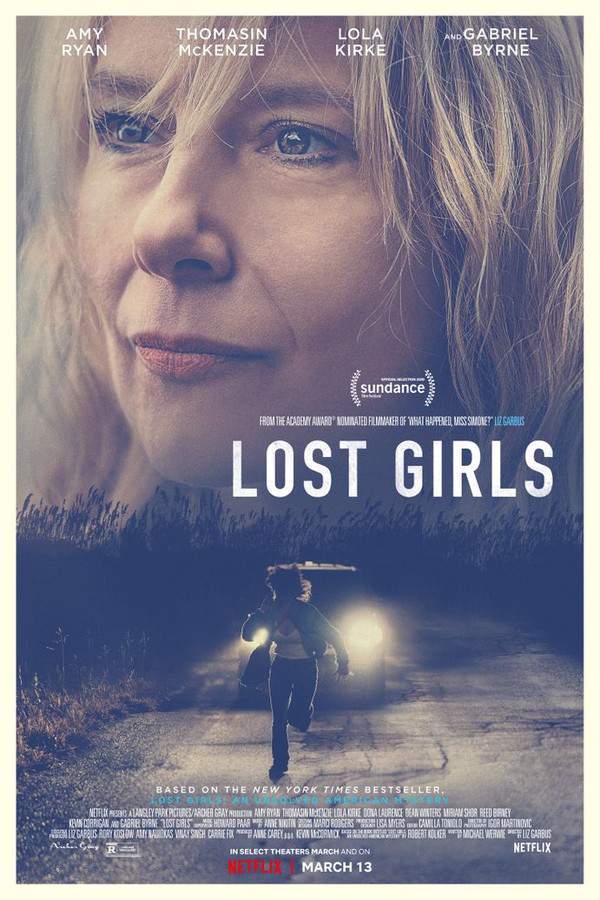
Lost Girls concludes with a somber, unresolved note that mirrors the tragic reality of the case it adapts. The film ends with the discovery of Shannan Gilbert's body in a swamp behind the residence of Dr. Peter Hackett, a suspect who remains officially uncharged. While the discovery provides a degree of closure for Mari Gilbert, allowing her to bring her daughter home, the broader mystery remains unsolved. The story suggests that Hackett is the most likely culprit, presenting evidence that he used his medical background to "help" vulnerable sex workers before making them disappear, but the film carefully avoids confirming him as the sole killer. Instead, it points to a darker, systemic failure.

Throughout the narrative, the film builds a case not just against a single man, but against an entire community and justice system that looked the other way. The police's reluctance to investigate Hackett stems from his status as a respected local doctor with ties to law enforcement, but more importantly, from a pervasive bias that deemed the victims "disposable" due to their line of work. The ending reinforces this theme: Shannan's 911 call went unheeded for too long, and critical evidence was lost, all because the missing women were judged for their lives rather than protected by the law. The Oak Beach community is depicted as an insular group that prioritized reputation over truth, creating an environment where a predator could operate without fear of consequence.

Ultimately, the film's final moments transcend the specifics of the whodunit to deliver a message about societal accountability. In a powerful closing monologue, Mari Gilbert stands before the press and the public to declare that these women deserve to be remembered as daughters, sisters, and mothers—not defined solely by their profession. The tragedy of Lost Girls is that justice was denied not because of a lack of clues, but because the victims were not seen as people worthy of protection. The film serves as a testament to Mari's relentless pursuit of the truth and a critique of a society that too often allows its most vulnerable members to fall through the cracks, leaving their stories as unsolved American mysteries.

Last updated: March 30, 2026 at 17:48

Was this helpful?

The last 4 events

How Lost Girl Ends: The Final Events in Order

The last events of Lost Girl (2019) in chronological order, the run-up to the ending explained above. The complete timeline has all 15 events, scene by scene.

Open the full timeline
  1. Forgotten and Reawakened

    While Kenzi, Hale, and Dyson were living their lives, Bo was nowhere to be found, and it was eventually realized that they had simply forgotten her because someone was forcing them to. All the while, Massimo had been giving Kenzi temporary powers so she could appear Fae. Bo finally awakened to find herself on a train and later jumped off. Upon arriving home, it was discovered that although Bo never consciously chose a side, her blood had chosen Dark — and a new group of Fae called the Una Mens was introduced.

  2. Tamsin Reborn and Massimo's Downfall

    Tamsin was found reborn as a little girl and grew up with Kenzi as her pseudo-mom. Massimo stole from Bo and Kenzi in an attempt to convince Kenzi to pay him, and Bo figured out that he was not Fae but human. He kidnapped Tamsin to acquire her Valkyrie hair, but after being defeated by Bo, he chased the hair into a pit of lava, where he was presumed dead.

  3. Trick's Secrets and Rainer's Return

    Many of Trick's secrets and past actions were revealed, including a tie to a past life of Tamsin's and the fact that he once used his blood to 'erase' someone from existence. Tamsin discovered that by failing to take the soul of a man named Rainer to Valhalla, she was part of the reason 'The Wanderer' was created. Bo managed to get back on the train, where she finally met Rainer, and she brought him back to the Dal.

    Where
    The Dal
  4. Hale's Death and the Heart's Price

    Hale and Kenzi admitted their feelings for each other, and as Kenzi's mother was introduced, Hale attempted to propose. Meanwhile, Lauren, who had been working with the Dark, somehow turned The Morrigan human. When Massimo returned, Hale was killed protecting Kenzi, and Kenzi's attempt at revenge was stopped by Vex, who revealed himself as Massimo's guardian and Evony as Massimo's mother. Bo then learned that her father was coming, and that to close the portal she would need to give her heart — which was revealed to be Kenzi.

Ending questions answered

Lost Girl Ending: Your Questions Answered

The questions people ask most about the ending of Lost Girl (2019): what the final scene means, how the twist works, what happens to each character and how to read the ending. Each answer contains spoilers.

Q1

What happens when Shannan's body is finally discovered?

The film ends with Shannan Gilbert's body being recovered from a swamp on the property of Dr. Peter Hackett, a suspect who had been quietly investigated but never charged. This discovery gives Mari Gilbert the chance to bring her daughter home for a proper burial, ending years of agonizing uncertainty. However, the finding does not lead to a criminal conviction, leaving the broader case officially open and unresolved.

Foreshadowing: Earlier scenes of police canvassing Oak Beach and Hackett's suspicious medical records hinted at his proximity to the victims.

  • shannan gilbert body found
  • swamp discovery
  • oak beach
  • burial
Q2

Is Dr. Peter Hackett confirmed as the killer?

Hackett is never officially confirmed as the killer in Lost Girls, and the film deliberately avoids closing the case against him. While evidence strongly suggests he used his medical role to prey on vulnerable sex workers and dispose of them, the narrative insists that his guilt was never tested in court. His uncharged status reflects the real-world outcome of the Gilgo Beach investigation and preserves the ambiguity the film is built on.

Foreshadowing: Hackett's nervous behavior during earlier interviews and his quiet connections to police foreshadowed his evasive role in the final act.

  • peter hackett killer
  • suspect charged
  • uncharged
  • gilgo beach
Q3

Why does the ending avoid naming a single killer?

Lost Girls deliberately avoids pinning the murders on one person in order to redirect attention toward a larger failure of institutions and community. By leaving Hackett officially uncharged, the film underscores that the real culprit may be the system that protected a predator for decades. This refusal to deliver a tidy resolution mirrors the reality of the case and forces viewers to confront an uncomfortable truth about accountability.

Foreshadowing: The film's opening dedication to long-running unsolved cases hinted that no single arrest would tie the narrative together.

  • unsolved case
  • no single killer
  • systemic failure
  • accountability
Q4

What does Mari Gilbert's closing monologue mean?

Mari Gilbert's final speech reframes the victims from disposable statistics into people with families, identities, and stories worth remembering. By publicly declaring that these women were daughters, sisters, and mothers, she rejects the moral framing used by police and media to deprioritize the investigation. The monologue turns a procedural mystery into a declaration of personhood and demands that society treat its most vulnerable as equal under the law.

Foreshadowing: Earlier moments when Mari corrected reporters who reduced Shannan to her profession set up her refusal to let society define her daughter.

  • mari gilbert speech
  • press conference
  • victims humanity
  • daughters
Q5

Why did the police fail to investigate Hackett for so long?

Officers were reluctant to pursue Hackett because he was a respected local physician with direct ties to law enforcement, giving him social and institutional protection. More importantly, investigators dismissed the missing women because of their work as sex workers, judging them as unworthy of a full effort. This bias, combined with political pressure to protect Oak Beach's reputation, allowed a suspect to remain untouched while critical evidence deteriorated.

Foreshadowing: Early scenes of officers dismissing tips from sex worker advocates foreshadowed the institutional hesitation seen in the final act.

  • police bias
  • hackett investigation
  • institutional failure
  • law enforcement ties
Q6

What does the Oak Beach community's silence represent in the ending?

The Oak Beach residents' refusal to cooperate symbolizes how insular, reputation-driven communities can quietly shield predators. By prioritizing their public image over the safety of outsiders, the neighborhood became an environment where disappearances could occur without witnesses stepping forward. The film uses this collective silence as evidence that the danger was cultural and systemic, not just individual.

Foreshadowing: Residents' early dismissals of the missing women's families foreshadowed how their silence would enable the pattern of disappearances.

  • oak beach community
  • silence
  • complicity
  • reputation
Q7

Why is Shannan's 911 call so important to the ending?

Shannan's 911 call, placed during her final desperate moments, is treated as one of the most critical pieces of evidence that should have triggered an immediate response. Police delayed following up on the call, treating it as a routine disturbance rather than a life-threatening emergency. The ending highlights that this hesitation, driven by assumptions about who Shannan was, cost her any realistic chance of rescue.

Foreshadowing: Earlier in the film, dispatchers downplayed the urgency of her call, hinting that bias would continue to shape the response.

  • shannan 911 call
  • delayed response
  • emergency
  • dispatcher
Q8

Does the ending give Mari Gilbert any closure?

Mari Gilbert receives only partial closure: she finally knows where her daughter is and can bring her body home, ending years of painful uncertainty about Shannan's fate. However, the justice she sought remains out of reach, since no one is charged and no full explanation is ever offered. The bittersweet ending honors her persistence while making clear that her fight exposed a truth the system refused to fully confront.

Foreshadowing: Mari's earlier promise to never stop searching foreshadowed the incomplete resolution the ending would deliver.

  • mari gilbert closure
  • daughter home
  • bittersweet ending
Q9

What is the underlying message about systemic failure?

The film argues that the victims were failed not by the absence of evidence but by institutions and individuals who decided they did not matter. Police, neighbors, and officials all contributed to the neglect by treating the missing women as disposable rather than people deserving protection. The ending positions this collective failure as the true tragedy, suggesting that a society is judged by how it treats its most vulnerable members.

Foreshadowing: Repetitive scenes of officials deferring responsibility hinted that no single actor, but an entire system, would be the story's real villain.

  • systemic failure
  • societal accountability
  • vulnerable
  • negligence
Q10

Why does the film leave the case unresolved instead of providing answers?

By ending without a conviction, Lost Girls preserves the integrity of the real Gilgo Beach case and refuses to invent justice where none has been served. The unresolved ending is a deliberate narrative choice that mirrors the ongoing reality for the victims' families. This choice forces viewers to sit with the discomfort of an open case and recognize that some American mysteries remain unsolved because no one was motivated enough to solve them.

Foreshadowing: The film's recurring dedication to unsolved mysteries foreshadowed the refusal to tie the story to a single arrest.

  • unresolved case
  • real events
  • unsolved american mysteries
Q11

Why does the ending insist on redefining the victims as people?

The film's insistence on calling them daughters, sisters, and mothers directly challenges the stigma that allowed the investigation to stall. By stripping away labels like 'sex worker' or 'addict,' the ending insists on the basic humanity of each victim that law enforcement had refused to see. This redefinition is the moral backbone of the film, arguing that society's refusal to see them as worthy of protection was itself the true crime.

Foreshadowing: Mari's earlier argument with a reporter about respecting Shannan's identity foreshadowed the film's ethical stance at the close.

  • victims humanity
  • redefining
  • respect
  • dignity

Movie threads

More Movies Like Lost Girl, by Mood & Story

Curated lists built around what makes Lost Girl tick: the same mood, the same kind of story or the same emotional payoff. Each list explains why these movies belong together.

Dark urban fantasy movies like Lost Girl

Modern cities hiding ancient supernatural wars, hidden bloodlines, and impossible loyalties. Looking for movies like Lost Girl? These dark urban fantasy films hide ancient supernatural wars inside modern cities, weaving fae mythology, hidden bloodlines, and mythological stakes into brooding, atmospheric stories. Expect layered worldbuilding, dangerous creatures, and characters caught between light and dark supernatural factions fighting for power and survival.

  • supernatural
  • mythological
  • urban fantasy
  • fae politics
  • brooding
  • dangerous
  • Tone: dark, brooding, mystical
  • Pacing: variable, mythology-building with bursts of action
Why these movies?

The story pattern: Protagonists often begin unaware of their supernatural heritage, only to be thrust into a hidden war between ancient factions like Light and Dark courts, rival fae houses, or competing mythological orders. They must navigate complex political hierarchies, unlock dangerous inherited powers, and face devastating choices about loyalty and identity. As the mythology deepens, prophecies, blood-based abilities, and escalating conflicts threaten both the human and supernatural worlds, with climactic confrontations that demand personal sacrifice.

Why they belong together: They are grouped for their shared atmosphere of modern settings steeped in ancient mythology, secret supernatural societies, and the tension between human and otherworldly realms. Each offers brooding tones, complex faction politics, and stories where mythological stakes feel personal, intimate, and immediate rather than distant or epic.
Tragic supernatural romance movies like Lost Girl

Love triangles and found families where ancient evil and sacrifice threaten every heartbeat. If you loved the romantic entanglements and devastating emotional stakes of Lost Girl, these movies deliver dark supernatural romance with tangled love triangles, found-family warmth, and heartbreaking sacrifice. Expect heavy emotional weight, complicated loyalties, and romance that never fully escapes the shadow of ancient evil and mythological danger.

  • romantically entangled
  • tragic
  • sacrifice
  • found family
  • identity struggle
  • brooding
  • Tone: dark, tragic, romantically entangled
  • Pacing: variable, romance-driven with escalating action
Why these movies?

The story pattern: Protagonists are drawn into multiple romantic entanglements while navigating supernatural threats, often caught between different suitors with their own allegiances and secrets. Love is intertwined with sacrifice, memory manipulation, and shifting identity, creating bittersweet arcs where bonds form and break under the weight of ancient obligations. The found-family thread provides emotional grounding even as romantic relationships are threatened or lost to violence, betrayal, or cosmic necessity, leaving endings that feel heavy and unresolved.

Why they belong together: They share a blend of high-stakes romance with supernatural warfare, where love stories unfold against backdrops of fae politics, ancient evil, and mythological conflict. The emotional core centers on identity, sacrifice, and chosen family, with endings that carry real emotional weight rather than tidy resolutions, mirroring the tragic romantic DNA of the source material.

If you liked this

Movies Like Lost Girl

Similar movies to Lost Girl: the same genre, themes or kind of story. Each one comes with its own plot summary, timeline and ending explained.

Browse all movie summaries

Every angle

Lost Girl (2019) Explained: Plot, Ending, Timeline & Characters

Everything about Lost Girl in one place: what happens in the plot summary, the timeline in chronological order, the characters and meaning, the ending explained and a spoiler-free summary. What's After the Movie adds the cast, box office and post-credit scenes.

Coming soon on iOS and Android

The Plot Explained Movie Summary App

Plot summaries, endings explained and timelines on your phone. Catch up on any movie in minutes, save your favorites and never miss a twist again.

Be the first to know when we launch. Your email stays private, always.

Learn more about the app