Plot Explained Spoilers guaranteed!
Plot Explained

Browse by genre

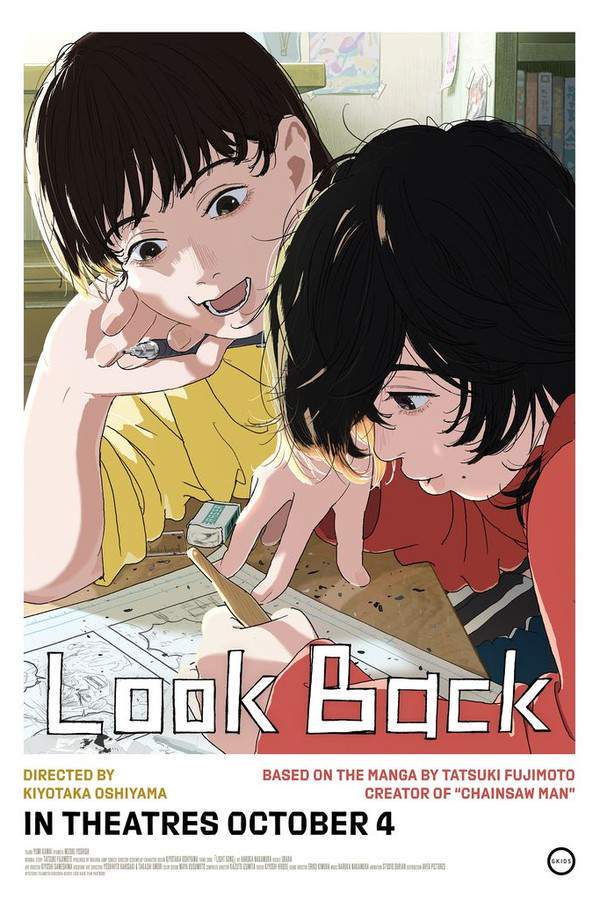
Look Back (2024) movie poster

Characters & Themes

Look Back (2024) Characters, Setting & Themes Explained

Release, runtime and language
2024 · 58 m · Japanese
Echo score 87
Loading streaming availability…
Directed by
Kiyotaka Oshiyama
Starring
Yumi Kawai, Mizuki Yoshida

A popular artist known for her humorous comics finds herself challenged when her teacher assigns her to work with Kyomoto, a gifted but reserved classmate. Initially rivals, they develop a deeper connection as they explore the unifying power of their shared artistic passion.

On this page (9)
  1. 1 Where to watch
  2. 2 Characters explained (2)
  3. 3 Character relationship map
  4. 4 Where & when it takes place
  5. 5 Themes & meaning (3)
  6. 6 Character & meaning questions
  7. 7 The book behind the movie
  8. 8 Movie threads
  9. 9 Every angle
Loading streaming availability…

2 main characters · contains spoilers

Look Back Characters Explained: Who Is Who

The main characters of Look Back (2024), heroes and villains: what drives them, how they change over the course of the story and what each of them reveals about the film's bigger ideas.

  • Ayumu Fujino

    played by Yumi Kawai

    Ayumu Fujino is an ambitious elementary schooler passionate about drawing manga. Initially confident in her abilities, her envy of Kyomoto's talent drives her to improve at the cost of her social relationships. Throughout the film, she evolves from a competitive artist to someone who values friendship and creative expression.

    • 🎨 Artist
    • 👩‍🎓 Student
  • Kyomoto

    played by Mizuki Yoshida

    Kyomoto is a shy, talented illustrator who struggles with severe social anxiety. Despite being a reclusive shut-in, her skills in creating scenic artwork greatly impress Fujino. As the story unfolds, her character highlights themes of inspiration and the impact of mentorship in the artistic community.

    • 🏠 Shut-in
    • 🎨 Illustrator

Last updated: October 21, 2026 at 12:41

Was this helpful?

2 characters · 8 connections · contains spoilers

Look Back Character Relationship Map

Who is connected to whom in Look Back: family, love, friendships, rivalries and hidden ties, colour-coded. Pick a character to see their side of the story, or a connection to see what brings two characters together.

How much of the story to show
AFAyumu FujinoYumi KawaiKKyomotoMizuki Yoshida

Last updated: October 21, 2026 at 12:41

Was this helpful?

Setting

Where and When Does Look Back Take Place?

The setting of Look Back (2024): the year and time period, the places and locations, and how they shape the characters, the mood and the tension of the story.

Time period

2010s

The movie takes place in the 2010s, a decade marked by rapid advancements in technology and a growing interest in digital art and manga. This period saw a cultural shift where young artists began exploring various forms of expression, enhancing their skills while grappling with societal pressures and personal challenges.

Location

Tohoku University of Art and Design

Tohoku University of Art and Design is a prestigious institution known for fostering artistic talent and creativity. It offers various programs that help aspiring artists refine their skills and gain a deeper understanding of artistic expression. This university plays a pivotal role in the story, serving as the dream destination for Kyomoto.

  • 🏫 University
  • 🎨 Art School

Last updated: October 21, 2026 at 12:41

Was this helpful?

3 major themes

Look Back Meaning: Themes & Message Explained

What is Look Back (2024) really about? The emotional, social and philosophical themes the film keeps returning to, its symbolism and the message beneath the surface.

  • Friendship

    The theme of friendship is central to the story, highlighting the bond that develops between Fujino and Kyomoto. Despite their competitive nature, they find strength in their relationship, motivating each other to pursue their artistic dreams. Their journey illustrates how friendship can inspire growth and acceptance.

  • Artistic Pursuit

    Artistic pursuit is a significant theme, showcasing the dedication and challenges that come with the desire to create. Fujino's obsession with surpassing Kyomoto emphasizes the pressures artists face, while the eventual acceptance of one's artistic journey reflects the importance of passion and self-discovery in art.

  • Loss

    The theme of loss resonates deeply, particularly with the tragic fate of Kyomoto. Fujino's journey through grief illustrates how losing someone can impact one's creative spirit and life choices. The narrative explores the idea of carrying memories and the emotional weight that comes with loss.

Last updated: October 21, 2026 at 12:41

Was this helpful?

Character & theme questions

Look Back Characters & Meaning: Your Questions Answered

The questions people ask about Look Back (2024): who the characters really are, their relationships, what the symbols mean, where it takes place and what the movie is really about. Each answer contains spoilers.

Q1

What role does the art school play in the story?

Tohoku University of Art and Design serves as a powerful symbol of artistic aspiration in Look Back, representing the kind of prestigious institution that inspires the characters to pursue their craft. For Kyomoto in particular, the school functions as a dream destination that validates her reclusive dedication to art. The art school setting anchors the story in a world where creative talent is nurtured, judged, and celebrated.

  • tohoku university
  • art school
  • setting
  • aspiration
  • dream institution
Q2

When does the story take place?

Look Back is set during the 2010s, a decade shaped by the rise of digital platforms and an expanding manga culture. This era is significant because it represents a transitional moment when young artists could share their work online and discover new influences. The 2010s context frames the characters' creative ambitions within a rapidly evolving artistic landscape.

  • 2010s
  • time period
  • digital art
  • manga era
  • decade
Q3

Who are the two main characters?

The story centers on Ayumu Fujino, an outgoing and ambitious young manga artist, and Kyomoto, a quiet but exceptionally gifted illustrator. Fujino begins as a confident creator who is jolted by Kyomoto's talent, while Kyomoto is a reclusive artist whose skills emerge from solitary dedication. Together, they form a creative partnership that becomes the emotional core of Look Back.

  • fujino
  • kyomoto
  • main characters
  • manga artist
  • illustrator
Q4

What kind of person is Fujino?

Ayumu Fujino is a passionate, competitive young artist in Look Back whose humorous manga initially makes her the star of her school newspaper. She is driven, sociable, and eager to improve, but her confidence is shaken when she discovers that Kyomoto's skill surpasses her own. Over time, Fujino's competitive edge softens into a deeper appreciation for friendship and creative collaboration.

  • fujino
  • ayumu
  • character
  • manga artist
  • personality
  • school newspaper
Q5

What kind of person is Kyomoto?

Kyomoto is a reserved, deeply talented illustrator in Look Back who struggles with severe social anxiety and lives as a shut-in. Despite her quiet exterior, her scenic artwork reveals an extraordinary level of skill and emotional depth. Her character represents the solitary, fragile side of artistic genius, where exceptional creativity coexists with isolation.

  • kyomoto
  • shut-in
  • illustrator
  • social anxiety
  • isolation
  • character
Q6

What is the central theme of the movie?

At its heart, Look Back explores the intersection of friendship, artistic pursuit, and loss. The story examines how creative relationships can inspire growth, how rivalry can evolve into deep connection, and how grief can reshape a person's relationship with their art. These themes intertwine to create a meditation on what it means to create alongside someone you care about.

  • themes
  • friendship
  • loss
  • artistic pursuit
  • meaning
  • grief
Q7

How does the friendship between Fujino and Kyomoto develop?

Fujino and Kyomoto begin as rivals in Look Back after their teacher assigns them to collaborate on the school newspaper, with each secretly pushing the other to improve. Their mutual respect for one another's talent gradually deepens into a genuine bond built on shared passion. The friendship becomes a source of motivation and creative purpose for both, illustrating how artistic admiration can evolve into lasting connection.

  • friendship
  • rivalry
  • fujino
  • kyomoto
  • collaboration
  • school newspaper
Q8

What does the movie say about artistic pursuit?

Look Back portrays artistic pursuit as a deeply personal journey shaped by obsession, comparison, and self-discovery. Fujino's drive to surpass Kyomoto captures the competitive pressure artists often feel, while the story ultimately suggests that creating art is most meaningful when it is shared. The movie frames artistic dedication as both a source of fulfillment and a potential burden.

  • artistic pursuit
  • creativity
  • obsession
  • motivation
  • self-discovery
Q9

How does the story handle the theme of loss?

Loss is treated as a defining emotional force in Look Back, with Kyomoto's fate casting a long shadow over Fujino's life and creative spirit. The narrative explores how grief can paralyze a person's relationship with their art and reshape their sense of purpose. Ultimately, the story suggests that carrying someone's memory can coexist with continued creation, even when the wound never fully heals.

  • loss
  • grief
  • tragedy
  • kyomoto
  • emotional weight
  • memory
Q10

What drives Fujino as an artist?

Fujino's artistic drive in Look Back is fueled initially by confidence and a desire to be the best, then transformed by her awareness of Kyomoto's superior talent. After their friendship forms, her motivation shifts toward honoring her bond with Kyomoto through her work. This evolution from self-centered ambition to shared purpose defines Fujino's journey throughout the film.

  • fujino
  • motivation
  • ambition
  • artistic drive
  • growth
  • friendship
Q11

How does the 2010s setting influence the story?

Setting Look Back in the 2010s places the characters at a time when digital tools and online platforms were reshaping how young artists created and shared manga. This context allows the story to reflect both traditional print ambitions, like school newspapers, and the emerging culture of digital art. The era gives the characters' creative dreams a contemporary, relatable grounding.

  • 2010s
  • digital art
  • manga culture
  • modern era
  • technology
Q12

What kind of art do Fujino and Kyomoto create?

Fujino specializes in humorous four-panel manga in Look Back, which reflects her lively, extroverted personality and her instinct to entertain. Kyomoto, by contrast, creates detailed scenic illustrations that reveal a more introspective, solitary imagination. Their contrasting artistic styles mirror the broader theme of how different creative voices can complement one another.

  • fujino
  • kyomoto
  • manga
  • illustration
  • four-panel
  • scenic art

Movie threads

More Movies Like Look Back, by Mood & Story

Curated lists built around what makes Look Back tick: the same mood, the same kind of story or the same emotional payoff. Each list explains why these movies belong together.

Movies like Look Back where art becomes a way to grieve

Stories where creating becomes a way to keep the people we have lost alive. These are films for viewers who loved how Look Back treats manga making as an act of mourning. Stories where a creator pours grief into their work and keeps a lost loved one alive through every page, with creativity and sorrow braided together. Great for fans searching for movies like Look Back that blend artistic passion with devastating loss.

  • grief
  • creative passion
  • bittersweet
  • intimate
  • melancholic
  • haunting
  • Tone: bittersweet, melancholic
  • Pacing: variable, character driven
Why these movies?

The story pattern: Films in this thread follow a creator who has lost someone precious to them, often a friend, partner, or mentor whose presence shaped their art. The narrative traces how that absence warps the creative process, sometimes paralyzing the artist, sometimes driving them to pour everything into a single defining work. The journey moves from shared creative joy through grief that stops the art in its tracks, and finally toward a fragile return to making things, with the lost person still echoing through every choice. By the end, the art and the mourner have become inseparable.

Why they belong together: These films share a tone of bittersweet reverence, where creative passion is intertwined with permanent loss. They tend to be quietly devastating, with long stretches of tender intimacy interrupted by sudden tragedy, and where the art form on screen is treated with serious craft. Pacing is variable, emotional weight is heavy, and the ending usually offers a kind of healing that does not erase what was lost.

Movies like Look Back with fractured timelines and survivor's guilt

Stories where grief bends time itself, and the past keeps pulling the present back. If you loved how Look Back uses a time slip to crack open the protagonist's grief and survivor's guilt, these films are for you. They pair heavy emotional weight with complex storytelling, where past and present collide and the narrative mirrors how trauma reshapes memory. Great for fans searching for movies like Look Back with non-linear time.

  • survivor's guilt
  • time slip
  • non-linear
  • haunting
  • grief
  • parallel timelines
  • Tone: melancholic, bittersweet
  • Pacing: variable, non-linear
Why these movies?

The story pattern: Films in this thread follow someone who survived a tragedy that claimed a person they loved, and whose mind keeps reaching back through time, often in literal ways. The narrative braids parallel timelines or slips between past and present, dramatizing the question of whether things could have been different. The protagonist's guilt manifests as obsession, paralysis, or a desperate attempt to rewrite what happened, and the resolution usually arrives not by changing the past, but by finally carrying it forward with clear eyes.

Why they belong together: These films share a heavy emotional register, complex non-linear structures, and a focus on guilt rather than simple grief. The pacing is variable, with quiet stretches interrupted by sudden jumps in time, and the tone is bittersweet or melancholic with weight. They reward patient viewers who appreciate when form and content work together to express trauma, and they tend to offer resolutions that heal without erasing the loss.

Every angle

Look Back (2024) Explained: Plot, Ending, Timeline & Characters

Everything about Look Back in one place: what happens in the plot summary, the timeline in chronological order, the characters and meaning, the ending explained and a spoiler-free summary. What's After the Movie adds the cast, box office and post-credit scenes.

Coming soon on iOS and Android

The Plot Explained Movie Summary App

Plot summaries, endings explained and timelines on your phone. Catch up on any movie in minutes, save your favorites and never miss a twist again.

Be the first to know when we launch. Your email stays private, always.

Learn more about the app