Plot Explained Spoilers guaranteed!
Plot Explained

Browse by genre

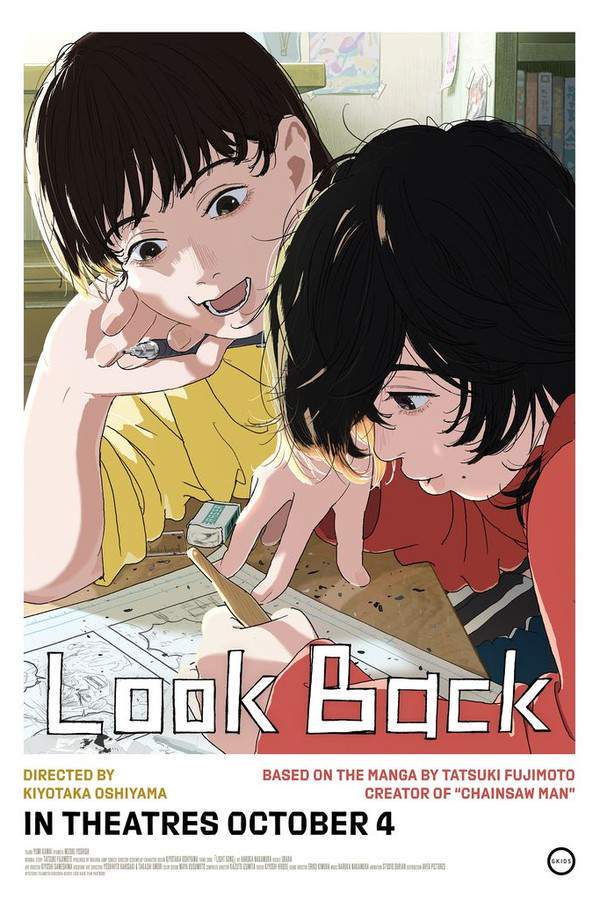
Look Back (2024) movie poster

Ending Explained

Look Back (2024) Ending Explained – Final Scene & Meaning

Release, runtime and language
2024 · 58 m · Japanese
Echo score 87
Loading streaming availability…
Directed by
Kiyotaka Oshiyama
Starring
Yumi Kawai, Mizuki Yoshida

A popular artist known for her humorous comics finds herself challenged when her teacher assigns her to work with Kyomoto, a gifted but reserved classmate. Initially rivals, they develop a deeper connection as they explore the unifying power of their shared artistic passion.

On this page (7)
  1. 1 Where to watch
  2. 2 What happens at the end
  3. 3 Final events in order
  4. 4 Ending questions answered
  5. 5 The book behind the movie
  6. 6 Movie threads
  7. 7 Every angle
Loading streaming availability…

Ending explained · contains spoilers

What Happens at the End of Look Back?

How Look Back (2024) ends, what the final scene means, which earlier moments set it up and how to read the ending if the film leaves it open. The full ending explained, with every spoiler.

Look Back concludes with Fujino gradually coming to terms with Kyomoto’s death and learning how to move forward in life. After losing her close friend to a tragic act of violence, Fujino is overwhelmed by grief and despair. In a moment of deep sadness, she visits Kyomoto’s home and finds a comic strip she had drawn when they first became friends. Filled with guilt and sorrow, she tears it up, blaming herself for what happened. As she does, a single panel slips under Kyomoto’s door and somehow travels back in time to when Kyomoto was about to go out and meet Fujino. In the altered timeline, Kyomoto still goes to art school and faces the same dangers, but this time, Fujino arrives just in time to save her from a crazed attacker. Despite her rescue, the two friends are faced with the harsh reality that Kyomoto’s life is still fragile and threatened by the same dangers. However, in this new version of events, Fujino promises to support Kyomoto and even hopes to work with her in the future. Later, Kyomoto draws a comic about Fujino saving her, and this scene is reflected in the original timeline—showing how Fujino’s hope and efforts to change the past helped shape her feelings and memories. In her grief-stricken state, Fujino finds herself in Kyomoto’s room again, realizing that her imagined rescue was a manifestation of her pain. Amidst the chaos, she is reminded of what their friendship truly meant to her—her reason for continuing to create manga. Recognizing that Kyomoto wouldn’t want her to be consumed by sorrow, Fujino decides to return to her work, embracing the hope that she can carry on her friend's legacy. The story ends on a poignant note, with Fujino back at her drawing table, symbolizing her coming to accept the loss and find the strength to move forward. The ending emphasizes that while grief is a powerful force, it shouldn’t define or destroy a life. Instead, through acceptance and remembering loved ones, one can find the courage to go on, even after profound tragedy. This blend of realism and hope gives the story a bittersweet but ultimately uplifting conclusion.

Last updated: June 25, 2025 at 09:03

Was this helpful?

The last 4 events

How Look Back Ends: The Final Events in Order

The last events of Look Back (2024) in chronological order, the run-up to the ending explained above. The complete timeline has all 15 events, scene by scene.

Open the full timeline
  1. Grief and Guilt

    Fujino puts Shark Kick on hiatus and returns home to attend Kyomoto's funeral, eventually entering Kyomoto's house alone. Convinced that she indirectly led Kyomoto to her death by inspiring her to pursue an art career, she deems her own art to have no value. In despair, she tears up the mocking yonkoma she drew all those years ago.

    Where
    Kyomoto's house
  2. An Alternate Timeline

    A scrap of the torn yonkoma slips under Kyomoto's door, and time seemingly travels back to the day the two first met. In this altered reality, Kyomoto is too alarmed by the scrap to exit her room, so the two never meet, though she still develops an interest in art and attends Tohoku. When the killer arrives, this reality's Fujino, who pursued athletics instead, physically incapacitates him before he can hurt Kyomoto.

    When
    The day the two first met (alternate timeline)
    Where
    Kyomoto's house
  3. 'Look Back'

    In the alternate timeline, Kyomoto draws a yonkoma titled 'Look Back' depicting Fujino saving her, rendered in Fujino's childhood style. A gust of wind blows the strip out of the room and into the view of Fujino back in the original timeline. Shocked by the drawing, Fujino enters Kyomoto's room and finds multiple tankōbon and merchandise of Shark Kick, along with survey support, proving Kyomoto never stopped looking up to her.

    Where
    Kyomoto's room
  4. 'Then, Why Do You Draw, Fujino?'

    Still despairing over her life choices, Fujino complains that she hates drawing, only for Kyomoto's voice to ask, 'Then, why do you draw, Fujino?' She remembers all the times her manga made Kyomoto happy and finally comes to terms with her death. Renewed with purpose, Fujino decides to return and continue drawing manga, taping Kyomoto's 'Look Back' yonkoma above her workstation.

    Where
    Kyomoto's house

Ending questions answered

Look Back Ending: Your Questions Answered

The questions people ask most about the ending of Look Back (2024): what the final scene means, how the twist works, what happens to each character and how to read the ending. Each answer contains spoilers.

Q1

Does Fujino actually save Kyomoto in the ending?

No, Fujino does not truly save Kyomoto in Look Back. Kyomoto is killed in a violent attack, and the version of events where Fujino arrives in time to rescue her is a product of Fujino's imagination, triggered by grief. The alternate timeline functions as a hopeful vision that helps Fujino process her loss, not as a literal change in reality.

  • fujino saves kyomoto
  • does kyomoto survive
  • alternate timeline rescue
  • ending explained
Q2

Was the rescue of Kyomoto real or imagined?

The rescue of Kyomoto is imagined. After tearing up the comic strip, Fujino experiences a vision of an alternate timeline in which she saves Kyomoto from the attacker. When the vision ends and she finds herself still in Kyomoto's room, Look Back makes clear that this scene was a manifestation of her grief and her desperate wish to undo the tragedy.

  • kyomoto rescue real or imagined
  • imagined rescue
  • fujino vision
  • grief manifestation
Q3

What does the ending of Look Back symbolize?

The ending of Look Back symbolizes the slow process of accepting permanent loss. Fujino's return to her drawing table represents her decision to keep creating, not because the pain has disappeared, but because she recognizes that Kyomoto would not want her grief to end her art or her life. The bittersweet conclusion affirms that love and memory can coexist with loss.

  • ending meaning
  • ending symbolism
  • what does the ending mean
  • fujino kyomoto
Q4

How does the comic strip travel back in time?

When Fujino tears up the comic strip Kyomoto drew when they first became friends, a single torn panel slips under Kyomoto's door and somehow crosses into the past. The exact mechanism is left ambiguous in Look Back, but the sequence allows Fujino's grief-driven wish to alter history, creating a brief alternate reality where she reaches Kyomoto in time.

  • comic strip time travel
  • time slip
  • torn panel time travel
  • alternate reality
Q5

Why does Fujino go back to creating manga at the end?

Fujino returns to creating manga because she finally understands that continuing to draw is the most meaningful way to honor Kyomoto. Their shared love of manga was the foundation of their friendship, and by going back to her drawing table in Look Back, Fujino reclaims the part of herself that grief had temporarily frozen and accepts that her art can carry Kyomoto's memory forward.

  • fujino returns to manga
  • drawing again
  • creative motivation
  • fujino healing
Q6

Why does Fujino tear up the old comic strip?

Fujino tears up the comic strip out of guilt and heartbreak after finding it at Kyomoto's home. Consumed by grief in the wake of what happens in Look Back, she blames herself for Kyomoto's death and lashes out at the artifact of their friendship. The act of destroying the strip is what releases the torn panel that slips into the past and triggers the time-altered sequence.

  • fujino tears comic strip
  • fujino destroys comic
  • survivor guilt
  • why she tears it up
Q7

Why does Fujino blame herself for Kyomoto's death?

Fujino is consumed by survivor's guilt because she was not present when the attack happened and feels she could have changed things. In Look Back, her deep bond with Kyomoto, combined with the fact that their friendship was the center of her creative life, makes the loss feel like something she should have been able to prevent, even though she could not.

  • fujino survivor guilt
  • fujino blames herself
  • grief over kyomoto
  • why fujino feels responsible
Q8

What is the message about grief in the ending?

The ending of Look Back argues that grief is powerful but should not be allowed to define or destroy a life. Through Fujino's journey, the film suggests that remembering a loved one and honoring their legacy can become a source of strength, allowing a person to keep moving forward even after a profound, irreversible tragedy.

  • grief message
  • coping with loss
  • fujino healing
  • theme of acceptance
Q9

What does Kyomoto's comic about the rescue represent?

Kyomoto's comic about being saved by Fujino reflects the alternate timeline Fujino imagined, and it appears in the real timeline as a reminder of what their friendship meant. In Look Back, it represents the way hope and love can outlast tragedy, and it mirrors the larger theme that the stories we tell about the people we've lost can become a way of keeping them close.

  • kyomoto final comic
  • rescue comic meaning
  • comic about being saved
  • timeline connection
Q10

What is the significance of Fujino sitting back at her drawing table?

The final image of Fujino at her drawing table is the visual climax of her recovery. After weeks of guilt and paralysis, sitting down to draw again signals that she has chosen to live with her grief rather than be ruled by it. In Look Back, it also reinforces the idea that her bond with Kyomoto lives on through the work they once shared.

  • fujino drawing table
  • final scene
  • ending image
  • fujino returns to art

Movie threads

More Movies Like Look Back, by Mood & Story

Curated lists built around what makes Look Back tick: the same mood, the same kind of story or the same emotional payoff. Each list explains why these movies belong together.

Movies like Look Back where art becomes a way to grieve

Stories where creating becomes a way to keep the people we have lost alive. These are films for viewers who loved how Look Back treats manga making as an act of mourning. Stories where a creator pours grief into their work and keeps a lost loved one alive through every page, with creativity and sorrow braided together. Great for fans searching for movies like Look Back that blend artistic passion with devastating loss.

  • grief
  • creative passion
  • bittersweet
  • intimate
  • melancholic
  • haunting
  • Tone: bittersweet, melancholic
  • Pacing: variable, character driven
Why these movies?

The story pattern: Films in this thread follow a creator who has lost someone precious to them, often a friend, partner, or mentor whose presence shaped their art. The narrative traces how that absence warps the creative process, sometimes paralyzing the artist, sometimes driving them to pour everything into a single defining work. The journey moves from shared creative joy through grief that stops the art in its tracks, and finally toward a fragile return to making things, with the lost person still echoing through every choice. By the end, the art and the mourner have become inseparable.

Why they belong together: These films share a tone of bittersweet reverence, where creative passion is intertwined with permanent loss. They tend to be quietly devastating, with long stretches of tender intimacy interrupted by sudden tragedy, and where the art form on screen is treated with serious craft. Pacing is variable, emotional weight is heavy, and the ending usually offers a kind of healing that does not erase what was lost.

Movies like Look Back with fractured timelines and survivor's guilt

Stories where grief bends time itself, and the past keeps pulling the present back. If you loved how Look Back uses a time slip to crack open the protagonist's grief and survivor's guilt, these films are for you. They pair heavy emotional weight with complex storytelling, where past and present collide and the narrative mirrors how trauma reshapes memory. Great for fans searching for movies like Look Back with non-linear time.

  • survivor's guilt
  • time slip
  • non-linear
  • haunting
  • grief
  • parallel timelines
  • Tone: melancholic, bittersweet
  • Pacing: variable, non-linear
Why these movies?

The story pattern: Films in this thread follow someone who survived a tragedy that claimed a person they loved, and whose mind keeps reaching back through time, often in literal ways. The narrative braids parallel timelines or slips between past and present, dramatizing the question of whether things could have been different. The protagonist's guilt manifests as obsession, paralysis, or a desperate attempt to rewrite what happened, and the resolution usually arrives not by changing the past, but by finally carrying it forward with clear eyes.

Why they belong together: These films share a heavy emotional register, complex non-linear structures, and a focus on guilt rather than simple grief. The pacing is variable, with quiet stretches interrupted by sudden jumps in time, and the tone is bittersweet or melancholic with weight. They reward patient viewers who appreciate when form and content work together to express trauma, and they tend to offer resolutions that heal without erasing the loss.

Every angle

Look Back (2024) Explained: Plot, Ending, Timeline & Characters

Everything about Look Back in one place: what happens in the plot summary, the timeline in chronological order, the characters and meaning, the ending explained and a spoiler-free summary. What's After the Movie adds the cast, box office and post-credit scenes.

Coming soon on iOS and Android

The Plot Explained Movie Summary App

Plot summaries, endings explained and timelines on your phone. Catch up on any movie in minutes, save your favorites and never miss a twist again.

Be the first to know when we launch. Your email stays private, always.

Learn more about the app