Plot Explained Spoilers guaranteed!
Plot Explained

Browse by genre

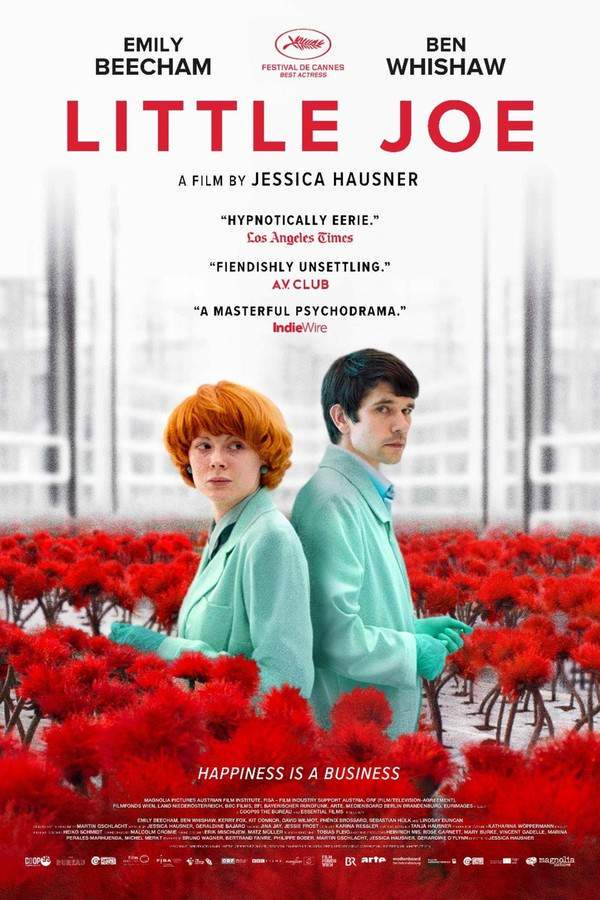
Little Joe (2019) movie poster

Plot Summary

Little Joe (2019) Plot Summary Explained

Release, runtime and language
2019 · 105 min · English
Echo score 65
Loading streaming availability…
Directed by
Jessica Hausner
Starring
Ben Whishaw, David Wilmot, Sebastian Hülk, Emily Beecham, Kit Connor, Lindsay Duncan

A dedicated mother and botanist cultivates a unique crimson flower, designed to promote happiness. As she cares for "Little Joe," she begins to suspect the plant’s influence extends beyond simple contentment, and a growing unease takes root. She must confront the possibility that her creation has developed a life and will of its own, leading her to question the true nature of its power and its effect on those around her.

On this page (6)
  1. 1 Where to watch
  2. 2 What happens: full plot
  3. 3 Plot questions answered
  4. 4 Movie threads
  5. 5 Movies like Little Joe
  6. 6 Every angle
Loading streaming availability…

Full plot summary · contains spoilers

What Happens in Little Joe: Full Plot Summary

The whole story of Little Joe (2019) explained, from the opening scene to the final frame: every key event, every twist and what it all adds up to. Read it as a quick recap before the sequel, to check a scene you missed, or to finally understand what really happened.

Emily Beecham stars as Alice Woodard, a careful and ambitious plant breeder working in a lab devoted to growing new flower strains. Her colleague, Kerry Fox Bella, is frustrated by a stubborn project: a hardy plant that can survive neglect, yet Alice and her team somehow unlock a variety that demands more care but delivers unexpected joy to those who nurture it. The mood in the lab shifts as the discovery promises a breakthrough that could redefine their work, and Alice pushes forward with a stubborn optimism, hoping to balance science with a touch of wonder.

Alice decides to name the experimental plants Little Joe in honor of her son, and she smuggles out a specimen for him to meet. Kit Connor plays Joe, a curious kid drawn to the promise of a flowering marvel that feels almost magical in its charm. The bond between mother and child grows quickly as the Little Joes begin to spread their presence, and Alice notes that these flowers seem to pollinate with unusual vigor, something she suspects might be tied to an unintended genetic quirk—perhaps a sterility in the plants that drives the rapid, aggressive pollination she observes.

The situation quickly spirals as the Little Joes unleash their unusual behavior in the lab. On the same day, Bella’s dog Bello vanishes, prompting Ben Whishaw to step in as Chris, a colleague who heads out to search for the missing pet. Chris’s encounter with the pollen becomes a turning point: he inhales the mysterious dust and later tries to kiss Alice, despite her evident reluctance, marking the first hints of a complicated tension between professional curiosity and personal boundaries. The pollen’s effect seems to echo through the people connected to the project, foreshadowing a broader threat to the team.

The next day brings a troubling discovery: Bella finds Bello, but the animal attacks her, and she insists that the dog has changed. Chris later confides in Alice that Bella’s mental health has been strained for years, including a past suicide attempt, and that she had Bello put down—changes that, he says, the plant could be amplifying. Alice grapples with the possibility that Bella’s fears might be grounded in reality, while Bella herself becomes a focal point of suspicion and concern within the group. In the tense atmosphere, a Lindsay Duncan as Psychotherapist is consulted to help untangle the growing paranoia and to examine the physiological oddities the pollen seems to trigger in living beings.

As the pollen continues to spread, Alice’s own son is accidentally pollinated and begins to exhibit strange, unsettling behavior. He starts sneaking his classmate Selma, played by Jessie Mae Alonzo as Selma, into the lab and even steals a Little Joe. He confesses that he is considering moving in with his father, Ivan, a figure connected to the community’s tense dynamics and played by Sebastian Hülk as Ivan. The film then tightens its focus on the fear of where the pollen could lead if left unchecked, with Alice’s mounting concerns about the plant’s potential to carry a harmful effect intensifying as she reviews test footage of subjects who have been exposed to its pollen. In every family that appears in the footage, relatives report that something about their behavior shifted after exposure, amplifying Alice’s sense of dread and responsibility.

But just as she begins to believe Bella’s earlier suspicions, Bella herself is exposed to the pollen and dismisses her earlier fears as paranoia rooted in her mental health struggles. The tension reaches a new height when Joe and Selma reveal that they stole the plant to pollinate Ivan, seemingly confirming Alice’s fears about a hidden virus-like effect carried by the Little Joe. Yet this turns out to be a misunderstanding, as Chris later reveals that the claim came from a miscommunication between him and Joe. The moment is a reminder of how easily fear can be weaponized in a small, high-stakes lab environment.

Following a confrontation with Chris, Bella claims she never inhaled the pollen and had simply been playing along to blend in with the others. The revelation is brutal and chaotic, culminating in a tragic accident where Bella falls down a staircase during a heated exchange with Chris. The incident becomes a turning point for Alice, who, despite growing evidence of danger, finds her crisis moment interrupted by the reality of a corporate decision to commercialize the Little Joe.

With the lab’s temperature being lowered in a last-ditch effort to suppress the plant’s effects, Alice contemplates drastic actions to destroy the Little Joes before they can be sold worldwide. Chris intervenes, trying to stop her by knocking her to the floor in a bid to shield her from the pollen, inadvertently exposing himself to the pollen in the process. The repercussions of this moment ripple through the lab and the company’s plans, underscoring the film’s tension between scientific ambition and ethical responsibility.

In the aftermath, the news reveals that the Little Joe has been nominated for an award, signaling that the plant will soon reach markets around the world. Chris offers a quiet, sincere apology for his earlier confrontation, and the moment gives Alice a reason to rethink her suspicions. She shares a quiet kiss with him, a small but meaningful gesture that hints at a new, uncertain happiness. In the film’s final act, she chooses to permit Joe to move in with his father while she embarks on a new life with her own Little Joe—an ending that suggests both renewal and the persistent lure of the plant’s beauty, even as its unsettling origins remain shrouded in questions.
Last updated: January 20, 2026 at 17:12

Was this helpful?

Plot questions answered

Little Joe Plot Explained: Your Questions Answered

The questions people ask most about Little Joe (2019): what happens in the confusing scenes, why the characters do what they do, the twists, hidden details and what the ending means. Each answer contains spoilers.

Q1

How does Little Joe pollen affect people?

The pollen appears to alter people's behavior, making them feel happier and more content, but it also seems to cause personality changes. Those affected become more affectionate, obedient, and prone to doing things they wouldn't normally do, like Chris trying to kiss Alice despite her clear reluctance, or Joe stealing plants and wanting to move away from his mother. The changes vary by person but consistently involve a shift toward compliance and unusual happiness.

Foreshadowing: Alice notices the plants pollinate with unusual aggression from the start, suggesting they have an urgent biological drive.

  • pollen effects
  • plant influence
  • behavior change
  • happiness
Q2

Why does Bella's dog Bello change?

After Bello goes missing and returns, he becomes aggressive toward Bella, attacking her. While Chris suggests Bella's mental health history is to blame, Alice begins to suspect the plant is affecting animals as well. The dog's sudden behavioral shift coincides with the Little Joe plants' aggressive pollination period, suggesting the pollen may have altered Bello's instincts.

Foreshadowing: The plants' unusual rapid pollination is noted on Day 1, hinting at their biological reach beyond flowers.

  • dog behavior
  • Bello
  • plant effects on animals
Q3

Is Bella actually affected by the plant or just pretending?

Bella initially believes the plant is dangerous and that her dog has changed because of it. However, after she herself is exposed to the pollen, she suddenly dismisses her earlier fears as paranoia. Later, Bella reveals she never actually inhaled the pollen, she was pretending to be happy to fit in. This contradiction suggests either the plant affected her judgment about her own state, or she was consciously deceiving the group while mentally unstable.

Foreshadowing: Bella's rapid reversal from fear to dismissal mirrors Chris's own changes after pollen exposure.

  • Bella
  • pollen exposure
  • mental health
  • pretending
Q4

Why does Joe act strangely after being pollinated?

After accidentally coming into contact with Little Joe pollen, Alice's son Joe begins exhibiting unusual behavior: he sneaks his classmate Selma into the lab, steals a Little Joe plant, and tells his mother he's considering moving in with his father Ivan. These actions represent a dramatic shift from his earlier bond with his mother, suggesting the pollen is influencing his emotions and decision-making, possibly making him feel content with ideas that would normally upset him.

Foreshadowing: Alice notes the plants seem to spread with unusual vigor, foreshadowing the reach of their influence.

  • Joe
  • son
  • pollen effects
  • behavior change
  • Selma
Q5

What is the Ivan subplot about?

Joe tells Alice he's considering moving in with his father Ivan, which alarms Alice given the timing of his behavioral changes. Later, Joe and Selma claim they stole the plant to pollinate Ivan, seemingly confirming Alice's fears that the plant carries a virus-like effect. However, this turns out to be a misunderstanding, a joke that stemmed from a conversation Chris had with Joe about Alice's concerns. The incident illustrates how paranoia spreads in the lab environment.

Foreshadowing: Chris's conversation with Joe about Alice's fears plants the idea that becomes the joke.

  • Ivan
  • Joe
  • father
  • subplot
  • misunderstanding
Q6

Why does Chris try to kiss Alice?

After searching for Bello and inhaling pollen in the lab, Chris acts unusually forward with Alice, attempting to kiss her twice despite her clear reluctance. This represents a shift from their normal professional relationship. The pollen seems to affect people's emotions and impulses, making them more affectionate and less inhibited, though Alice resists, suggesting not everyone responds the same way to the exposure.

Foreshadowing: Chris's pollen exposure happens during the search for Bello, linking his changed behavior to the plant.

  • Chris
  • kiss
  • pollen
  • relationship
  • behavior
Q7

What causes Bella to fall down the stairs?

Bella falls down a staircase during a confrontation with Chris. Before this, Bella reveals she never inhaled the pollen and was only pretending to be happy to blend in with others, which creates tension with Chris. The exact circumstances of the fall are ambiguous: Alice witnesses the aftermath but the confrontation's intensity suggests either an accident or a push. The incident marks a turning point where Bella's presence in the story ends.

Foreshadowing: Bella's revelation about pretending creates immediate tension with Chris.

  • Bella
  • staircase
  • fall
  • accident
  • confrontation
Q8

Why does Alice allow Joe to move in with his father at the end?

In the ending, Alice permits Joe to move in with his father Ivan despite her earlier protective instincts. This decision seems to reflect her changed perspective after the plant's influence, she appears genuinely content rather than distressed. Combined with her new romantic relationship with Chris and her decision to keep her own Little Joe, the ending suggests Alice has accepted the plant's effects, though it's unclear whether this is genuine happiness or the pollen's influence on her judgment.

Foreshadowing: Alice's earlier suspicion and paranoia gradually give way to acceptance throughout the film.

  • Alice
  • Joe
  • father
  • ending
  • acceptance
  • moving away
Q9

Is the ending actually happy or is everyone still affected by the plant?

The ending is deliberately ambiguous. Alice reconciles with Chris, allows Joe to leave, and keeps her own Little Joe, all while appearing content. However, given the film's exploration of how the plant alters emotions and judgments, her apparent happiness may itself be a product of the pollen's influence. The film suggests her contentment could be genuine, or it could be a profound loss of self disguised as fulfillment. The fact that Little Joe wins an award and will be sold worldwide adds to the unease.

Foreshadowing: Alice's gradual shift from suspicion to acceptance mirrors other characters' changes after exposure.

  • ending
  • happiness
  • plant effects
  • ambiguity
  • contentment
Q10

Why does Chris stop Alice from destroying the Little Joes?

When Alice lowers the lab temperature to kill the Little Joes before they can be commercialized, Chris physically stops her by knocking her to the floor. His intervention appears protective, he may be trying to prevent her from ruining her career or harming the plants he now values. However, in the process, Chris exposes Alice to the pollen, potentially affecting her judgment. This moment represents the climax of the conflict between stopping the plant's spread and allowing it to continue.

Foreshadowing: Chris's earlier behavioral changes after pollen exposure may explain his aggressive intervention.

  • Chris
  • Alice
  • destroy plants
  • confrontation
  • pollen exposure
Q11

What does Little Joe actually want or do to humans?

Little Joe appears to have an urgent biological drive to pollinate aggressively, which seems to extend to affecting nearby humans and animals. Those exposed experience altered emotions, feeling happier and more content, but also more compliant and willing to make unusual choices. The plant essentially seems to create a dependency or change in those around it, though the film leaves ambiguous whether this is intentional or a natural biological response. The effect varies: some become affectionate, others aggressive, and some simply more compliant.

Foreshadowing: Alice notes the plants' unusual pollination urgency from the beginning, suggesting a drives beyond normal plant behavior.

  • plant purpose
  • desire
  • pollination drive
  • control

Movie threads

More Movies Like Little Joe, by Mood & Story

Curated lists built around what makes Little Joe tick: the same mood, the same kind of story or the same emotional payoff. Each list explains why these movies belong together.

Scientific Creations With Unintended Consequences like in Little Joe

When well-intentioned experiments begin to rewrite human nature. Find more movies like Little Joe where scientific experiments create unexpected psychological threats. These films explore genetic engineering, identity manipulation, and the ethical boundaries of using science to control or replace genuine human emotion.

  • unsettling
  • clinical
  • paranoid
  • psychological
  • ethical dilemma
  • creeping dread
  • Tone: tense, clinical, unsettling
  • Pacing: steady, deliberate
Why these movies?

The story pattern: These stories typically follow scientists or creators who develop something meant to be beneficial, only to discover their creation has developed autonomous properties that threaten human identity or free will. The narrative tension comes from monitoring subtle changes in behavior and confronting the ethical implications.

Why they belong together: Movies in this thread share a focus on scientific ethics, psychological manipulation, and the slow realization that a creation has surpassed its intended purpose. They blend cerebral sci-fi with creeping paranoia about losing control over what was meant to improve lives.

Subtle Psychological Horror and Identity Erosion like in Little Joe

When the people you know slowly become unsettling strangers. Discover more movies like Little Joe that use psychological horror and identity erosion to create tension. These films focus on paranoid scenarios where characters question reality and face the unsettling transformation of familiar people.

  • paranoid
  • claustrophobic
  • anxious
  • psychological
  • creeping dread
  • unsettling
  • Tone: tense, paranoid, anxious
  • Pacing: slow burn, steady build
Why these movies?

The story pattern: These narratives build tension through observing small behavioral changes that accumulate into profound personality shifts. Protagonists become isolated as they try to convince others of the invisible threat while questioning their own perceptions of reality.

Why they belong together: This thread groups films that prioritize psychological unease over physical horror, focusing on the fear of losing one's identity or watching others transform into unsettling versions of themselves. They share a slow-building tension driven by paranoia and character-based horror.

If you liked this

Movies Like Little Joe

Similar movies to Little Joe: the same genre, themes or kind of story. Each one comes with its own plot summary, timeline and ending explained.

Browse all movie summaries

Every angle

Little Joe (2019) Explained: Plot, Timeline & Characters

Everything about Little Joe in one place: what happens in the plot summary, the timeline in chronological order, the characters and meaning and a spoiler-free summary. What's After the Movie adds the cast, box office and post-credit scenes.

Coming soon on iOS and Android

The Plot Explained Movie Summary App

Plot summaries, endings explained and timelines on your phone. Catch up on any movie in minutes, save your favorites and never miss a twist again.

Be the first to know when we launch. Your email stays private, always.

Learn more about the app