

Plot Explained Spoilers guaranteed!
Plot Explained

Browse by genre

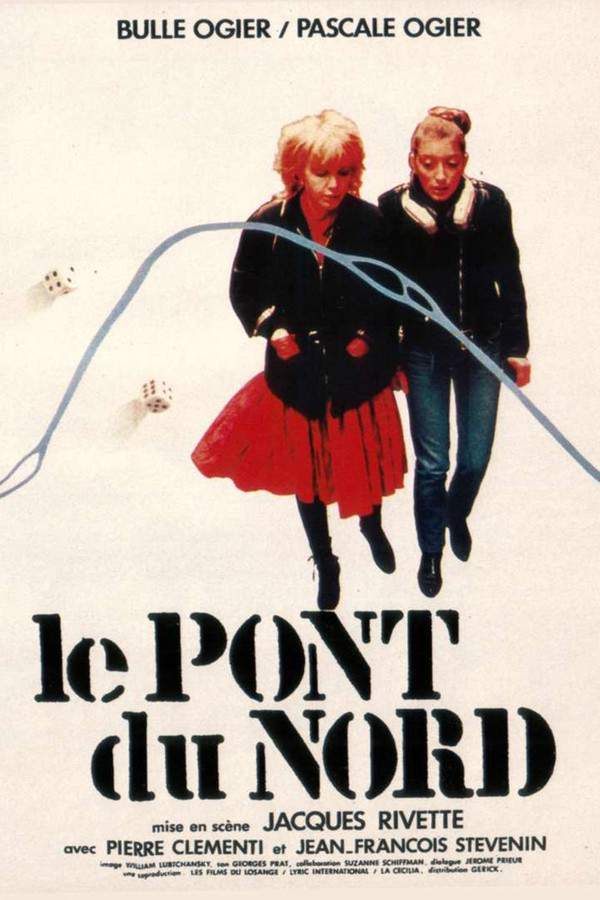
Le Pont du Nord (2013) movie poster

Timeline

Le Pont du Nord (2013) Timeline Explained – Every Event in Order

Release, runtime and language
2013 · 129 min · French
Directed by
Jacques Rivette

After his release from prison, a man’s life takes an unexpected turn when he meets a resourceful young boy living on the streets. An unusual friendship develops as they explore the captivating and sometimes enigmatic streets of Paris, experiencing a series of whimsical encounters and shared adventures.

On this page (6)
  1. 1 Where to watch
  2. 2 Events in order (10)
  3. 3 Timeline questions answered
  4. 4 Movie threads
  5. 5 Movies like Le Pont du Nord
  6. 6 Every angle

Where to watch

Where to Watch Le Pont du Nord (2013)

Where can you watch Le Pont du Nord? Stream, rent or buy it in the US: current JustWatch availability with up-to-date prices.

Streaming availability powered by JustWatch

10 events in order · contains spoilers

Le Pont du Nord Timeline: Events in Chronological Order

Every key event of Le Pont du Nord (2013) in order, scene by scene, with when and where it takes place. Use it to untangle flashbacks, time jumps and parallel storylines, to refresh your memory before the sequel or to find the exact scene you are thinking of.

  1. Marie’s Release

    Marie is released from prison after serving time for bank robbery. At around forty years old, she struggles to adapt to life outside, especially in confined spaces that trigger her anxiety regarding her past life choices.

  2. Baptiste's Challenge

    Baptiste, a spirited young woman in her twenties, seeks out challenges in Paris. She encounters bizarre adversaries, including lion statues and captivating advertising posters, which symbolize her fight against societal expectations.

    Where
    Paris
  3. The Meeting of Fates

    Marie and Baptiste’s paths cross multiple times, leading to a shared understanding of their life struggles. During their third encounter, Baptiste proclaims that three meetings signify destiny, prompting her to decide to stay with Marie.

  4. Reconnecting with Julien

    Marie reaches out to her former lover, Julien, seeking comfort and companionship. While he confesses his lingering feelings, his vague responses about his current life leave Marie feeling anxious and concerned for her safety.

  5. Discovery of Julien's Briefcase

    Baptiste discovers Julien's briefcase, which contains old newspaper articles about murders and political intrigue. Among the items is a perplexing map of Paris, which later reminds Marie of her childhood game of ‘Goose’.

  6. Max's Threat

    Marie learns that a mysterious figure known as 'Max' seems to be following Julien. This revelation heightens Marie’s concerns for her own safety, as she grapples with the implications of these threats.

  7. Baptiste’s Fatal Error

    In a tragic turn of events, Baptiste mistakenly identifies a young man as 'Max' and kills him. This incident marks a significant turning point for her, showcasing the dangerous consequences of their intertwined fates.

  8. Confrontation with Julien

    Marie confronts Julien about his actions and the dangers surrounding them. The tension escalates as Julien unexpectedly turns a gun on her, revealing the perilous nature of their relationship and the violence of their past.

  9. The First Max's Warning

    The first 'Max', who had previously warned Marie about potential dangers, attempts to connect with Baptiste. Despite his offer of protection and mentorship, Baptiste initially rebuffs him, driven by her own fears.

  10. Accepted Guidance

    Eventually, Baptiste allows the first 'Max' to approach her, accepting his guidance on improving her martial arts skills. This moment foreshadows a potential mentorship and a future partnership as their lives continue to intertwine.

    Where
    Paris

Last updated: November 04, 2024 at 01:44

Was this helpful?

Timeline questions answered

Le Pont du Nord Timeline Explained: Your Questions Answered

When does it happen, and why in that order? The questions people ask about the chronology of Le Pont du Nord (2013): time jumps, flashbacks, cause and effect between scenes and the correct order of events, each answered with spoilers.

Q1

Why does Baptiste decide to stay with Marie after their third meeting?

Baptiste believes in fate and sees their three encounters as a sign from the universe. After their third meeting, she tells Marie that 'twice may be coincidence, but three times, that's destiny,' which convinces her to stay. This decision reflects Baptiste's worldview that life presents signs people must act upon.

Foreshadowing: Earlier scenes show Baptiste challenging lion statues and fighting against advertising poster eyes, establishing her belief in battling fate and confronting symbolic adversaries.

  • baptiste
  • marie
  • destiny
  • fate
  • third meeting
  • staying together
Q2

What is in Julien's briefcase and why does it matter?

The briefcase contains old newspaper articles about murders and political intrigue, along with a perplexing map of Paris. Marie notes the map reminds her of the board game 'Goose.' These items suggest Julien is involved in dangerous underground activities, raising tensions about his true identity and intentions.

Foreshadowing: Julien is evasive when Marie asks about his current life, hinting he is hiding something significant.

  • julien
  • briefcase
  • newspaper articles
  • murders
  • political intrigue
  • map of paris
Q3

Who is Max in the movie and why is he significant?

Max appears to be a mysterious figure following Julien, though it's unclear whether there are multiple people using this name. Baptiste labels the figure following Julien as 'Max,' and this person later attempts to connect with Baptiste, offering to help improve her martial arts skills. The 'first Max' had previously warned Marie about danger.

Foreshadowing: Marie learns someone named Max seems to be following Julien, raising immediate concerns about safety.

  • max
  • julien
  • following
  • warning
  • danger
Q4

Why does Baptiste kill the young man she thinks is Max?

Baptiste mistakenly identifies a young man as the 'Max' who has been following Julien. Believing she is eliminating a threat, she kills him, only to realize later she murdered an innocent person. This tragic error stems from her intense loyalty to Marie and her willingness to act on incomplete information.

Foreshadowing: Earlier, Baptiste's challenges against lion statues and poster eyes show her tendency to confront perceived enemies aggressively.

  • baptiste
  • kills
  • young man
  • max
  • mistaken identity
  • murder
Q5

What happens between Marie and Julien at the end of the movie?

Marie confronts Julien about his actions and the dangers surrounding them. In a climactic moment, Julien turns the gun on her violent and treacherous nature of their relationship, revealing the. This confrontation exposes how far Julien has fallen from his earlier professions of love for Marie.

Foreshadowing: Julien's vague responses about his activities and the briefcase contents foreshadow his true dangerous nature.

  • julien
  • marie
  • gun
  • confrontation
  • betrayal
Q6

Why does Marie struggle with being in closed spaces after prison?

Marie has spent years in prison for bank robbery, and upon release, she struggles to adjust to life outside, particularly in confined spaces. These environments trigger anxiety related to her past life choices as a former terrorist and criminal, making it difficult for her to reintegrate into normal society.

Foreshadowing: The opening scene establishes Marie's release from prison and her discomfort in everyday situations.

  • marie
  • prison
  • anxiety
  • closed spaces
  • adjustment
  • past
Q7

What is the significance of the map of Paris in the briefcase?

The map of Paris found in Julien's briefcase is described as perplexing and later reminds Marie of the board game 'Goose.' This suggests the map may contain hidden meanings, possible meeting points, or clues to Julien's mysterious activities. The reference to 'Goose' implies it could be a game-like puzzle with strategic locations.

Foreshadowing: Julien's evasiveness about his activities hints the map contains information he desperately wants hidden.

  • map of paris
  • goose game
  • julien
  • briefcase
  • puzzle
Q8

What do the lion statues and advertising posters represent for Baptiste?

Baptiste encounters bizarre adversaries throughout Paris, including lion statues and the captivating eyes from advertising posters. These symbolize her fight against societal expectations and the pressures of modern life. Her karate skills and belief in fate drive her to confront these symbolic threats head-on.

Foreshadowing: These encounters establish Baptiste's unique worldview where everyday urban elements become opponents to overcome.

  • baptiste
  • lion statues
  • advertising posters
  • paris
  • challenges
  • symbolism
Q9

What happens between Baptiste and the first Max at the end?

Initially, Baptiste rejects the first Max who attempts to connect with her, possibly viewing him as another threat. However, she eventually allows him to approach her and accepts his guidance on improving her martial arts technique. This suggests an unexpected mentorship forms, providing Baptiste with continued growth in her fighting skills.

Foreshadowing: The first Max had previously warned Marie about danger, showing he is not purely threatening.

  • baptiste
  • max
  • mentorship
  • martial arts
  • accepted guidance
  • ending
Q10

What is Julien's relationship with Marie and why does he turn on her?

Julien is Marie's former lover who confesses he still loves her upon her release from prison. However, his involvement with the mysterious briefcase, the 'Max' figure, and the criminal activities suggested by the newspaper articles create a dangerous double life. When he turns the gun on Marie during their confrontation, it reveals his loyalties have shifted away from her toward whatever sinister operation he now serves.

Foreshadowing: Julien is vague and elusive about his current activities, leaving Marie with a sense of unease despite his professions of love.

  • julien
  • marie
  • love
  • betrayal
  • turning on her
  • criminal activities

Movie threads

More Movies Like Le Pont du Nord, by Mood & Story

Curated lists built around what makes Le Pont du Nord tick: the same mood, the same kind of story or the same emotional payoff. Each list explains why these movies belong together.

Movies with urban paranoia like Le Pont du Nord

Character-driven mysteries where the city itself feels like a conspiratorial maze. If you liked the tense, enigmatic journey through Paris in Le Pont du Nord, explore these other movies where characters unravel conspiracies and face psychological threats within an uncanny cityscape. These films share a similar mood of anxiety and a steady, investigative pacing.

  • anxious
  • paranoid
  • unsettling
  • dreamlike
  • fatalistic
  • melancholic
  • Tone: tense, unsettling, melancholic
  • Pacing: steady, investigative
Why these movies?

The story pattern: Stories in this thread typically follow a character or duo who becomes entangled in a web of urban intrigue, often starting with a seemingly random discovery. The narrative unfolds through exploration, decoding clues, and encounters with eccentric or menacing figures, building a sense of claustrophobia within the vastness of the city.

Why they belong together: These movies are grouped together because they create a specific atmosphere of urban paranoia, blending mystery with a dreamlike or fatalistic tone. They share a focus on how place influences psychology, often featuring a methodical pace and a mix of melancholic and anxious moods.

Movies about unlikely friendships like Le Pont du Nord

Stories where two contrasting individuals form a fragile bond against a bleak backdrop. Fans of the odd-couple dynamic between Marie and Baptiste in Le Pont du Nord will enjoy these films about contrasting characters forming bonds in dangerous situations. These stories explore pragmatic alliances, shared adversity, and bittersweet endings.

  • melancholic
  • fatalistic
  • unsettling
  • quirky
  • anxious
  • bittersweet
  • Tone: tense, melancholic, bittersweet
  • Pacing: steady, character-driven
Why these movies?

The story pattern: The narrative pattern involves two characters from different worlds being forced to rely on each other. Their initial relationship is often transactional or distrustful, but shared experiences and facing external threats forge a unique, profound connection. The journey is character-driven, focusing on their evolving dynamic rather than a straightforward plot, and often concludes with a sense of loss or unresolved future.

Why they belong together: These films are connected by their focus on the complex, evolving relationship between two mismatched protagonists. They share a moderate emotional weight, a tense or melancholic tone, and explore themes of survival, trust, and the impact of fleeting but significant human connections.

If you liked this

Movies Like Le Pont du Nord

Similar movies to Le Pont du Nord: the same genre, themes or kind of story. Each one comes with its own plot summary, timeline and ending explained.

Browse all movie summaries

Every angle

Le Pont du Nord (2013) Explained: Plot, Timeline & Characters

Everything about Le Pont du Nord in one place: what happens in the plot summary, the timeline in chronological order, the characters and meaning and a spoiler-free summary. What's After the Movie adds the cast, box office and post-credit scenes.

Coming soon on iOS and Android

The Plot Explained Movie Summary App

Plot summaries, endings explained and timelines on your phone. Catch up on any movie in minutes, save your favorites and never miss a twist again.

Be the first to know when we launch. Your email stays private, always.

Learn more about the app