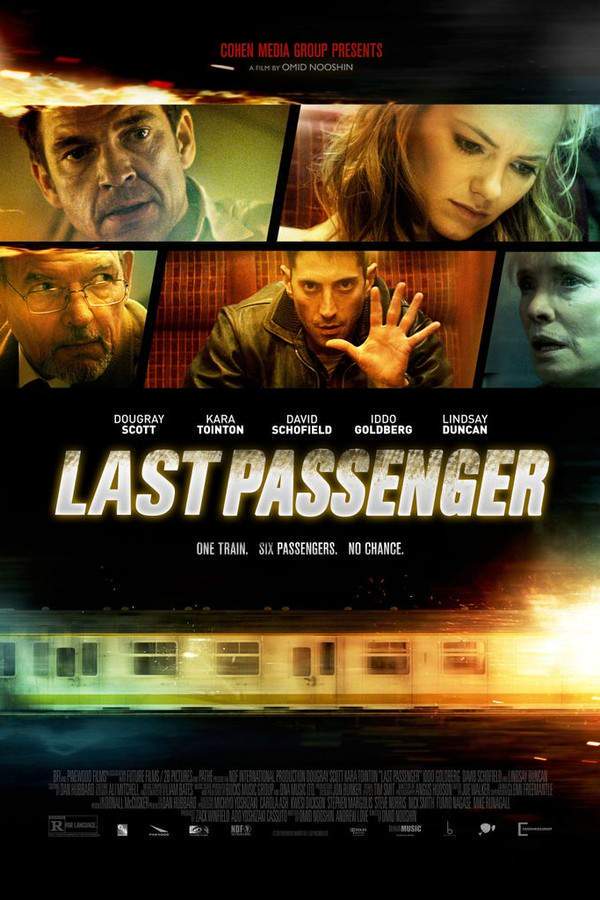
During a family vacation, Dr. Lewis Shaler finds himself in a terrifying situation when the train he's traveling on derails, stranding him and other passengers. As the situation spirals into chaos, Shaler must fight to protect his son while uncovering the reason behind the train's sudden and dangerous course change. Survival depends on unraveling the mystery and confronting the escalating threat before it's too late.
Find where to stream, rent, or buy Last Passenger (2014) in the US with current JustWatch availability, up-to-date pricing, and platform listings for subscription, rental, and digital purchase options.
Warning: spoilers below!
Haven’t seen Last Passenger yet? This summary contains major spoilers. Bookmark the page, watch the movie, and come back for the full breakdown. If you're ready, scroll on and relive the story!
Read the complete plot breakdown of Last Passenger (2014), including all key story events, major twists, and the ending explained in detail. Discover what really happened, and what it all means.
As the clock struck midnight in late 2004, Dr. Lewis Shaler gazed out at the shadowy London skyline while traveling on a train with his young son Max. Their quiet evening took an unexpected turn when Max’s innocent antics caused a coffee spill on Sarah Barwell, igniting a potential romance between them amidst the chaos.
However, as the train journey continued, an unsettling atmosphere emerged. An unknown figure in high-visibility gear appeared to be tampering with the brakes. Just as Lewis’s concern grew, he noticed another person darting across the tracks, raising alarm bells in his mind when he realized the guard had mysteriously vanished.
The situation intensified when Sarah leaned in, kissed Lewis, and asked for his phone number, just as the train missed its scheduled stop. When Lewis tried to reach the driver over the intercom, he received only a cold query, “How many passengers left?” before the line abruptly cut off, leaving him in a state of panic.
With time running out, Lewis and fellow passenger Peter Carmichael fought to pull the emergency brakes, but their attempts were futile. It soon became horrifyingly clear that the driver intended to escalate the calamity he was creating. Enlisting the help of a seemingly inebriated Jan Klimowski, they devised a plan to halt the train using the rear handbrake. Initially, they found some success, only to be thwarted as the driver unexpectedly accelerated.
As the train sped past Tunbridge Wells, it collided with a stationary vehicle at a level crossing, resulting in the tragic loss of its occupants. The shock was overwhelming for Elaine Middleton, another passenger, leading her to suffer a heart attack. Despite Lewis’s desperate efforts to revive her, she tragically succumbed.
In a frantic endeavor to confront the driver, Lewis and Klimowski broke into the cab only to reveal the horrifying sight of the guard’s body, brutally strangled. in a desperate act, Klimowski attempted to uncouple the carriages, but his efforts were thwarted as the train approached a perilous single-track tunnel.
With quick thinking, Lewis saved Klimowski from being trapped, only to face a police blockade that offered little resistance as the train barreled forward. As they approached Hastings station, Lewis’s desperation reached new heights. He fashioned an explosive device from a fire extinguisher in a final attempt to avert disaster. The explosion allowed him and his fellow passengers to escape the doomed carriage, but not without tragedy; Carmichael fell victim to fate, his life claimed by the chaos.
As the burning carriages separated, they stormed through the station, leaving behind terrified onlookers. Alone in the front carriage, Lewis found himself surrounded by flames when he took a leap into the unknown just as the carriage erupted into flames. The blast inadvertently activated the backup brakes, finally bringing the out-of-control train to a stop just before disaster struck.
Once the chaos settled, Lewis emerged, shaken but alive. He was met by Sarah Barwell, Max, and Jan Klimowski, all visibly concerned as they surveyed the wreckage. Above them, a helicopter circled, a stark reminder of the harrowing events. With the motives of the driver still cloaked in mystery, one lingering question remained: would Lewis and Sarah slip into the night together, or had fate led them down separate paths?
Last updated: November 22, 2024 at 16:24
Explore frequently asked questions about Last Passenger (2014) with spoiler-rich answers covering the full plot summary, major story beats, character motivations, hidden details, and ending meaning. This movie summary FAQ helps explain confusing scenes, plot twists, and narrative decisions in clear, searchable detail.
The driver's exact motive remains a mystery throughout the film. When Lewis contacts the driver via intercom, the driver only asks 'How many passengers left?' before cutting the line, suggesting he intentionally wants to cause maximum casualties. The film never reveals whether it's a personal vendetta, mental illness, or terrorism, leaving this central question unresolved.
The guard was found strangled in the driver's cab. When Lewis and Klimowski break into the cab, they discover the guard's lifeless body, confirming he was killed before the train went out of control. This reveals the driver orchestrated the entire crisis by eliminating the guard first.
Lewis noticed the guard mysteriously vanishing earlier in the journey.
The train misses its stop because the driver deliberately skips it, refusing to slow down or stop at any station. This is one of the first clear signs that something is seriously wrong, the driver is actively choosing to continue the train's dangerous trajectory rather than follow normal protocol.
Lewis and Peter Carmichael first attempt to pull the emergency brakes, but they fail to work. They then enlist Jan Klimowski to help use the rear handbrake, which initially slows the train. However, the driver counteracts this by accelerating, demonstrating complete control over the train's systems.
The train crashes into a stationary vehicle at a level crossing near Tunbridge Wells. The impact kills the occupants of the vehicle, adding to the growing death toll. This collision is a major escalation in the disaster and shocks all the passengers aboard.
The driver accelerates specifically to override the passengers' attempt to use the rear handbrake. This proves the driver has full control over the train's throttle and braking systems from the cab, and is actively fighting against any efforts to stop the disaster.
Near Hastings station, Lewis fashion an explosive device from a fire extinguisher to blow open the carriage doors. The explosion creates an exit for several passengers to escape before the train advances further. This desperate measure proves crucial in saving lives.
The train stops when Lewis jumps from the front carriage as it erupts into flames. The explosion that saves Lewis inadvertently activates the backup brakes, bringing the out-of-control train to a halt just before certain disaster. It's a chaotic sequence that finally ends the nightmare.
Peter Carmichael dies during the chaotic escape attempt. He becomes one of the tragic victims of the train disaster, his life claimed by the chaos as the passengers struggle to flee the out-of-control vehicle.
Sarah kisses Lewis after the coffee spill incident creates an unexpected connection between them. The kiss happens amid the growing tension of the crisis, and she asks for his phone number, suggesting a genuine romantic interest develops between them despite, or perhaps because of, the dangerous circumstances.
The coffee spill that Max causes earlier initiates their interaction.
Elaine Middleton suffers a heart attack from the shock of the train collision at Tunbridge Wells. Despite Lewis's desperate attempts to revive her using CPR, she tragically succumbs to her medical emergency, becoming another victim of the disaster.
The film ends with Lewis, Max, Sarah, and Klimowski reunited after the disaster, but their future remains ambiguous. As they stand together surveying the wreckage with a helicopter overhead, the final question poses whether they will slip away together or go their separate paths, the resolution is intentionally left open.
Discover curated groups of movies connected by mood, themes, and story style. Browse collections built around emotion, atmosphere, and narrative focus to easily find films that match what you feel like watching right now.
Characters fight for survival in a confined space against an escalating, hidden threat.If you liked the desperate struggle onboard the train in Last Passenger, explore these movies about trapped survivors facing a hidden adversary. These films share a tense, high-stakes vibe where characters must solve a mystery and fight for their lives in a confined, dangerous space.
The narrative typically begins with an ordinary situation that rapidly devolves into chaos, trapping a group of people. The main conflict involves an unseen or initially unknown force manipulating the environment, forcing the protagonists to piece together clues under extreme duress. The journey is linear and focused on immediate problem-solving, with each escalation raising the stakes and casualties.
They are grouped by their shared setting (a confined space), the core mystery of an unseen antagonist, and the relentless pacing of a survival thriller. The mood is consistently frantic, claustrophobic, and desperate, creating a highly intense viewing experience centered on pure physical and psychological endurance.
A father's love is tested in a catastrophic event where protecting their child is the ultimate goal.If you were moved by Dr. Shaler's desperate fight for his son in Last Passenger, you'll find similar themes in these high-stakes survival films. This thread features stories where a father's love is the driving force against overwhelming odds and catastrophic events.
The plot is triggered by a large-scale disaster or a contained, life-threatening scenario. The protagonist's character arc is simplified to a single, powerful objective: ensure their child's survival. This often involves strategic thinking, physical confrontations, and heartbreaking sacrifices, with the child's safety serving as the emotional core that heightens every danger.
These films share the powerful theme of paternal protection as the central emotional engine. They combine high-intensity action or thriller sequences with the heavy emotional weight of a parent's love and fear. The tone is grim and tense, and the endings are often bittersweet, acknowledging the trauma and cost of survival.
Don't stop at just watching - explore Last Passenger in full detail. From the complete plot summary and scene-by-scene timeline to character breakdowns, thematic analysis, and a deep dive into the ending - every page helps you truly understand what Last Passenger is all about. Plus, discover what's next after the movie.
Track the full timeline of Last Passenger with every major event arranged chronologically. Perfect for decoding non-linear storytelling, flashbacks, or parallel narratives with a clear scene-by-scene breakdown.
Discover the characters, locations, and core themes that shape Last Passenger. Get insights into symbolic elements, setting significance, and deeper narrative meaning - ideal for thematic analysis and movie breakdowns.