Plot Explained Spoilers guaranteed!
Plot Explained

Browse by genre

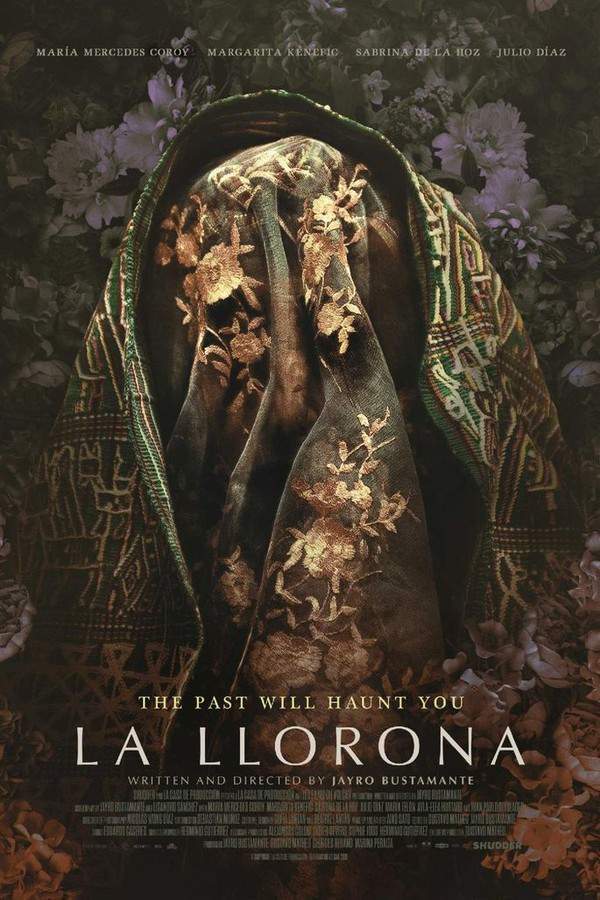
La Llorona (2019) movie poster

Plot Summary

La Llorona (2019) Plot Summary Explained

Release, runtime and language
2019 · 97 mins · Spanish
Echo score 72
Directed by
Jayro Bustamante
Starring
Juan Pablo Olyslager, María Mercedes Coroy, María Telón, Pedro Javier Silva Lira, Sabrina De La Hoz, Enrique Argüello

Retired General Enrique finds himself isolated in his mansion, facing intense protests accusing him of genocide against the Mayan people. Abandoned by his staff, he and his family are forced to confront the painful truth of his past actions. As the protests escalate, a sense of dread descends upon the house, suggesting a vengeful supernatural force is seeking retribution for his crimes.

On this page (5)
  1. 1 What happens: full plot
  2. 2 Plot questions answered
  3. 3 Movie threads
  4. 4 Movies like La Llorona
  5. 5 Every angle

Full plot summary · contains spoilers

What Happens in La Llorona: Full Plot Summary

The whole story of La Llorona (2019) explained, from the opening scene to the final frame: every key event, every twist and what it all adds up to. Read it as a quick recap before the sequel, to check a scene you missed, or to finally understand what really happened.

Former Guatemalan dictator Monteverde (based on Efraín Ríos Montt) is convicted for orchestrating the genocide of the native Mayans in 1982–83. Now elderly, he lives with his wife Carmen, his daughter Natalia, granddaughter [Sara](/ actor/ayla-elea-hurtado) and their security guard Letona. During the trial, [Natalia] is troubled by indigenous women’s accounts of brutal acts by Monteverde’s army, while [Carmen] dismisses them as lies. The high court overturns the verdict, ruling the crime cannot be conclusively proven, sparking relentless protests outside Monteverde’s home that keep the family confined inside.

The tension thickens when the house is unsettled by a sequence of supernatural disruptions. The housekeeper, Valeriana, brings in a young woman named Alma to work as a maid, and water-related phenomena begin to intensify. One night, Monteverde glimpses Alma wading through the pool and entering the house. The family discovers him watching Alma wash her dress, his reaction revealing a long-held attraction to indigenous women. Carmen confides in [Natalia] that Monteverde’s impulses have always leaned toward native women, deepening the sense of a hidden history within the household. Alma has a painful past—she has a son and a daughter who died—and she later teaches [Sara] to hold her breath underwater, binding the girl’s fate to the water-world that haunts the home.

Outside, the protests persist and grow louder, effectively trapping the family. Inside, Carmen experiences nightmare visions of being a Kaqchikel woman abducted with two children by soldiers, and the walls fill with flyers about disappeared people from decades earlier. [Valeriana] hints that Alma’s origins may be shrouded in mystery, and Alma herself carries an unspoken trauma that binds her to the house. The atmosphere thickens as the living and the dead intersect: the protestors include a man who appears on the flyers, a stark reminder of the long memory of the violence.

Valeriana tries to purify the house with a Mayan cleansing, while Alma teaches [Sara] to breathe with the water’s rhythm. In a climactic moment, the family witnesses the spirit-world erode the boundaries of the home. [Letona] encounters the spirits of two Kaqchikel children, who calmly lead him away, as if drawing him into the same unseen wave of history that saturates the house. A ritual by Valeriana unfolds, accompanied by the wail of a woman, and Carmen slips into a trance that reveals Alma’s last moments: watching her children drown as soldiers close in, and herself being executed by Monteverde.

The revelation crashes into the present as Carmen, overwhelmed by the remembered horror, strangles Monteverde in both the trance and the waking world. The funerary sequence that follows hints at the continuation of the violence beyond the man’s death: at Monteverde’s funeral, an old general slips away to the bathroom, where a woman’s wail grows into the sound of water flooding the room, suggesting that the past’s wounds still surge beneath the surface.

Last updated: February 25, 2026 at 08:15

Was this helpful?

Plot questions answered

La Llorona Plot Explained: Your Questions Answered

The questions people ask most about La Llorona (2019): what happens in the confusing scenes, why the characters do what they do, the twists, hidden details and what the ending means. Each answer contains spoilers.

Q1

Why does Carmen kill Monteverde at the end?

Carmen kills Monteverde after entering a trance that reveals Alma's final moments, she watched her children drown and was then executed by Monteverde's soldiers. The vision overwhelms Carmen with the full weight of the atrocities her husband committed, and in both the trance and waking world, she strangles him. This act represents the wives of genocide perpetrators finally confronting and punishing the crimes their husbands evaded through legal technicalities.

Foreshadowing: Earlier, Carmen experiences nightmare visions of being a Kaqchikel woman abducted by soldiers, foreshadowing her eventual alignment with the victims' perspective.

  • carmen
  • monteverde
  • death
  • murder
  • trance
  • justice
Q2

Who is Alma and what is her connection to Monteverde?

Alma is revealed to be one of Monteverde's victims, a Mayan woman whose children were drowned by his soldiers before she was executed by him directly. Her ghost returns to the household to seek vengeance for her family. The housekeeper Valeriana hired her specifically to infiltrate the home of the man who destroyed her life, using supernatural means to exact the justice the courts denied.

Foreshadowing: Alma teaches Sara to hold her breath underwater, binding the girl's fate to the water-world that haunts the home, hinting at Alma's watery death.

  • alma
  • ghost
  • monteverde
  • victim
  • revenge
  • mayan
Q3

What is the meaning of the weeping sound throughout the house?

The weeping is the wail of La Llorona, the legendary Latin American spirit of a mother who drowned her children and now wanders searching for them. In this film, Alma embodies this legend, she is the grieving mother whose children were murdered by Monteverde's regime. The sound intensifies as the supernatural events escalate, serving as both a warning and a promise of retribution.

Foreshadowing: Early in the film, Monteverde hears a woman weeping at night and nearly shoots his wife in his fear, establishing the supernatural presence from the start.

  • weeping
  • cry
  • la llorona
  • spirit
  • sound
  • mother
Q4

Why do the spirits of the two children lead Letona away?

Letona encounters the spirits of two Kaqchikel children who calmly lead him away from the house, essentially drawing him into death with them. These children are likely among the victims of Monteverde's genocide, and they claim Letona as one of their own, he served the regime that murdered them. His fate demonstrates that those who served the dictator cannot escape the reckoning, even years later.

Foreshadowing: The protests include a man who appears on the flyers about disappeared people, showing the victims' spirits are actively present among the living.

  • letona
  • children
  • spirits
  • disappeared
  • death
  • kaqchikel
Q5

What does Carmen see in her trance about Alma?

In her trance, Carmen witnesses Alma's last moments: soldiers closing in as Alma's children drown in the water, and then Monteverde himself executing her. This recreates the exact trauma that turned Alma into a vengeful spirit. The vision connects Carmen directly to her husband's crimes in a way she can no longer deny or dismiss, breaking through her earlier dismissal of the victims' testimonies as lies.

Foreshadowing: Carmen previously dismissed Natalia's concerns about the indigenous women's testimonies as lies, setting up her eventual confrontation with the truth.

  • carmen
  • trance
  • vision
  • alma
  • murder
  • children
  • drowning
Q6

Why does Monteverde shoot Alma in the pool?

Monteverde shoots Alma during a confrontation at the pool when Sara is underwater using his oxygen cylinder. Seeing Alma moving through the water, where his victims died, triggers Monteverde's panic and guilt. He fires at what he perceives as a threat, accidentally wounding Sara's arm in the process. The shooting demonstrates how his past crimes continue to drive violent, irrational behavior even in mundane situations.

Foreshadowing: Monteverde's earlier reaction to seeing Alma wash her dress revealed his long-held attraction to indigenous women and the hidden histories of exploitation in his household.

  • monteverde
  • shoot
  • gun
  • pool
  • alma
  • accident
Q7

What does the flooding bathroom at Monteverde's funeral mean?

At Monteverde's funeral, an old general excuses himself to the bathroom where water begins flooding the room and the wail of a woman grows louder. This signifies that the spirits of the victims will continue to seek justice and retribution beyond the death of any single perpetrator. The flooding represents the inescapable nature of historical trauma, the past keeps returning to drown those complicit in the violence.

Foreshadowing: Water-based phenomena have been escalating throughout the film, with Alma teaching Sara to breathe underwater, symbolizing the victims' persistent presence.

  • funeral
  • flooding
  • bathroom
  • ending
  • water
  • spirits
  • general
Q8

What is the connection between the protests and the supernatural events?

The protests outside Monteverde's home represent the living's demand for justice, while the supernatural events inside represent the dead's demand for the same. The two forces merge when the protestors include a man who appears on flyers about disappeared people, a ghost among the living. The house becomes a vessel where historical memory and supernatural vengeance combine, making Monteverde's home inescapable for both the living protesters and the dead victims.

Foreshadowing: The facade is covered with flyers about the disappeared throughout the film, and one of these faces appears in the crowd, linking past atrocities directly to present protest.

  • protests
  • spirits
  • supernatural
  • disappeared
  • justice
  • mayan
Q9

Why does Alma teach Sara to hold her breath underwater?

Alma teaches Sara to hold her breath underwater as a way of connecting the girl to the water-world where Alma and her children died. This act binds Sara's fate to the supernatural realm of the victims, foreshadowing Sara's eventual descent into this world. It also represents Alma's attempt to pass on survival knowledge to the next generation of the family that destroyed her own.

Foreshadowing: The water phenomena intensify after Alma arrives, and the pool becomes a central location for supernatural occurrences.

  • sara
  • alma
  • underwater
  • breath
  • water
  • teaching
Q10

What is Valeriana's cleansing ritual supposed to do?

Valeriana attempts a Mayan cleansing ritual to purge the house of the dark supernatural force haunting it. However, the ritual proves ineffective, the spirits are too powerful and too justified in their vengeance to be expelled. The ceremony highlights the cultural divide between the Mayan spiritual practices of the victims and the European-descended family they are haunting, suggesting that no ritual can cleanse crimes as severe as genocide.

Foreshadowing: Valeriana hints that Alma's origins may be shrouded in mystery, showing she suspects the maid's supernatural nature before the ritual.

  • valeriana
  • cleansing
  • ritual
  • mayan
  • purify
  • spiritual
Q11

Why does the high court overturn Monteverde's conviction?

The high court overturns Monteverde's genocide conviction, ruling that the crime cannot be conclusively proven despite the testimony and evidence presented. This legal technicality allows Monteverde to avoid punishment and triggers the protests that trap the family in their home. The ruling represents the failure of institutional justice to hold powerful perpetrators accountable, driving the narrative toward supernatural justice.

Foreshadowing: The trial conviction in the opening establishes the historical context and sets up the legal failure that propels the entire story.

  • court
  • trial
  • conviction
  • overturned
  • genocide
  • justice
Q12

What does Carmen's nightmare about being a Kaqchikel woman mean?

Carmen experiences nightmare visions of being a Kaqchikel woman abducted with two children by soldiers, real memories from Monteverde's genocide. These nightmares represent the psychological weight of complicity and the trauma that bleeds through from victims to perpetrators' families. The visions eventually allow Carmen to fully empathize with Alma's suffering, leading to her act of vengeance against her own husband.

Foreshadowing: Carmen initially dismisses these accounts as lies, showing her resistance to confronting her husband's crimes before the supernatural forces break through her denial.

  • carmen
  • nightmare
  • dream
  • kaqchikel
  • abducted
  • soldiers

Movie threads

More Movies Like La Llorona, by Mood & Story

Curated lists built around what makes La Llorona tick: the same mood, the same kind of story or the same emotional payoff. Each list explains why these movies belong together.

Films about supernatural justice and haunted legacies like La Llorona

When the ghosts of the past return to confront corrupt power. If you appreciated how La Llorona uses supernatural horror to confront historical trauma, you'll find similar powerful stories here. This list features movies where ghostly forces serve as agents of justice, targeting characters burdened by a dark past.

  • supernatural retribution
  • historical guilt
  • claustrophobic
  • dread-filled
  • political thriller
  • melancholic
  • Tone: dark, bleak, morally complex
  • Pacing: slow, deliberate
Why these movies?

The story pattern: Stories in this thread often center on a powerful figure or family whose wealth and safety are built on a foundation of violence. A supernatural presence, directly linked to their past misdeeds, infiltrates their home, turning it from a sanctuary into a courtroom and a prison. The narrative follows their psychological unraveling as they are confronted with undeniable proof of their crimes.

Why they belong together: Movies are grouped here because they share a core theme: using the supernatural genre to explore profound political and historical guilt. They prioritize a slow-building, atmospheric dread over visceral horror, creating a coherent experience for viewers interested in morally complex and socially conscious ghost stories.

Slow-burn psychological thrillers with a heavy atmosphere like La Llorona

Tension that builds relentlessly in confined spaces. For fans of the oppressive, dread-filled pacing of La Llorona, this collection highlights films that master the art of the slow burn. These movies use a gradual build-up of psychological tension and a claustrophobic setting to create an unforgettable sense of impending doom.

  • slow burn
  • psychological thriller
  • atmospheric
  • claustrophobic
  • uneasy
  • paranoid
  • Tone: oppressive, tense, paranoid
  • Pacing: slow, atmospheric
Why these movies?

The story pattern: The narrative pattern involves characters trapped, either physically or psychologically, in a situation of escalating dread. There are few moments of release; instead, the tension compounds scene by scene. The focus is on the characters' internal psychological states as they react to an unseen or slowly revealed threat, leading to a climax that feels both terrifying and inevitable.

Why they belong together: These films are grouped by their shared approach to pacing and mood. They prioritize atmosphere over action, and psychological horror over graphic violence. Viewers who enjoy the feeling of being slowly consumed by dread will find a consistent and satisfying experience across this thread.

If you liked this

Movies Like La Llorona

Similar movies to La Llorona: the same genre, themes or kind of story. Each one comes with its own plot summary, timeline and ending explained.

Browse all movie summaries

Every angle

La Llorona (2019) Explained: Plot, Timeline & Characters

Everything about La Llorona in one place: what happens in the plot summary, the timeline in chronological order, the characters and meaning and a spoiler-free summary. What's After the Movie adds the cast, box office and post-credit scenes.

Coming soon on iOS and Android

The Plot Explained Movie Summary App

Plot summaries, endings explained and timelines on your phone. Catch up on any movie in minutes, save your favorites and never miss a twist again.

Be the first to know when we launch. Your email stays private, always.

Learn more about the app