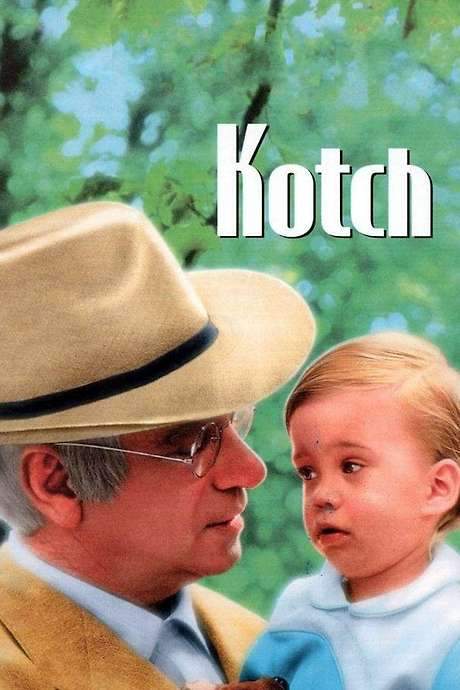
In Los Angeles, a young mother named Wilma Kotcher, Felicia Farr, hires Erica “Ricky” Herzenstiel, Deborah Winters, to babysit her infant son Duncan Kotcher, Donald Kowalski. The arrangement is already tense when Wilma’s father-in-law, a curmudgeonly troublemaker nicknamed “Kotch,” crashes into the scene with a confusing, unrelated anecdote about another Herzenstiel. Undeterred, Erica takes Duncan to the park, and for the moment the routine seems simple enough. But when Erica’s boyfriend arrives, she leaves Kotch behind and heads out, leaving the old man to stand awkwardly with the sleeping infant in the sunlit outdoors.
At the park, Kotch’s attempt to connect backfires in a painful way: he helps a frightened girl who is near drowning, and in a gesture meant to be friendly, he gives her a pat on the back. The moment backfires as the girl’s mother and a Parks Department representative take offense, and Kotch’s own son, Gerald, is unhappy with the scene. What begins as a minor social misstep blooms into a running thread of misinterpretations and mounting frustration on Kotch’s part, setting the tone for a man who believes he is being kept at arm’s length from a grandchild he cares about.
As the day-to-day tensions build, Gerald and Wilma go out, and Kotch discovers Erica and her boyfriend engaged in a private moment in the living room. He leaves quietly, but the discovery gnaws at him, prompting a long, private reckoning about trust, belonging, and the place a grandfather might carve out in a family that keeps him at a distance. He confides some of his concerns to Gerald, questioning why he and Wilma seem reluctant to entrust him with Duncan, and why his role in the child’s life feels increasingly contingent.
The conflict festers when Kotch complains about Wilma taking tranquilizers, and Wilma responds by insisting that Gerald remove Kotch from their home. Gerald, trying to resolve the standoff, takes Kotch to what he hopes will be a stable, orderly retirement community, but the tests and the atmosphere of the place only remind Kotch that he does not fit neatly into the world that others want him to inhabit. The encounter with the retirement community becomes a pivot point: Kotch’s stubborn pride collides with a new sense that his life may be shifting in unexpected directions.
Kotch’s search for answers intensifies as he tracks down Erica. He eventually finds her at her high school, where she is upset about an unplanned pregnancy and the difficult decision she faces about leaving school to pursue a job in San Bernardino. Erica initially resists help, but Kotch offers a token payment with a promise of repayment, and she agrees to consider his proposal. He then begins a cross-country journey, riding buses, staying in modest motels, and sending postcards to Duncan as if to reaffirm his enduring connection to the boy, even as he wanders far from home.
When Kotch returns unannounced to the Kotcher household, he learns from a Halloween party letter that Erica’s financial situation is more complicated than he expected, and that repayment may be impossible under the current circumstances. Acting as a private investigator of sorts, Kotch uncovers a troubling professional setback for Erica: she was dismissed from her job as a hair stylist for lacking a license and is now trying to find new work in Palm Springs. With a wary resolve, Kotch locates Erica, takes her on a tram ride, and offers her a job as his housekeeper, signaling that his life may include someone else in a caretaker role as he contemplates a future with less direct supervision from family.
Autumn passes with Kotch spending time alone, working through his feelings, while Erica returns on Christmas Eve, ready to accept his offer. The two begin to navigate a tentative living arrangement in Palm Springs. Erica decorates and knits, and Kotch purchases an old car, seeking a sense of purpose and movement. Yet the relationship remains complicated, as Erica’s life continues to unfold in unexpected ways. She leaves a note claiming she is at a hospital, but Kotch learns she is attending a class on midwifery, a sign that her path is changing yet again.
When Erica decides to place her baby for adoption, Kotch steps in with practical support, hiring a nurse and trying to locate a suitable family. The situation takes a dramatic turn as contractions begin, and the baby’s arrival forces a sudden hospital transfer. In a tense, improvised moment, Kotch ends up delivering the baby at a gas station, a stark symbol of his unorthodox, hands-on involvement in the family’s most intimate moment. Ultimately, Erica chooses to keep her child and return to Los Angeles, where she and Kotch must renegotiate what their relationship means in a world that is becoming more real and less simple.
Back in Los Angeles, Gerald and Wilma offer Kotch a place in their home, but he declines, choosing instead to pursue his own path. He contemplates purchasing the Palm Springs house and finding steady work at a local hardware store, a practical plan that stands in contrast to the romantic, uncertain future he had imagined. While tidying up, he discovers a note hinting that, under different circumstances, he might have become a great-grandfather—a quiet, poignant reminder of the life paths altered by time and choice. With a sense of new purpose, he sets off with Pablo, Paul Fierro, ready for further adventures and the open road ahead.