






Plot Explained Spoilers guaranteed!
Plot Explained

Browse by genre

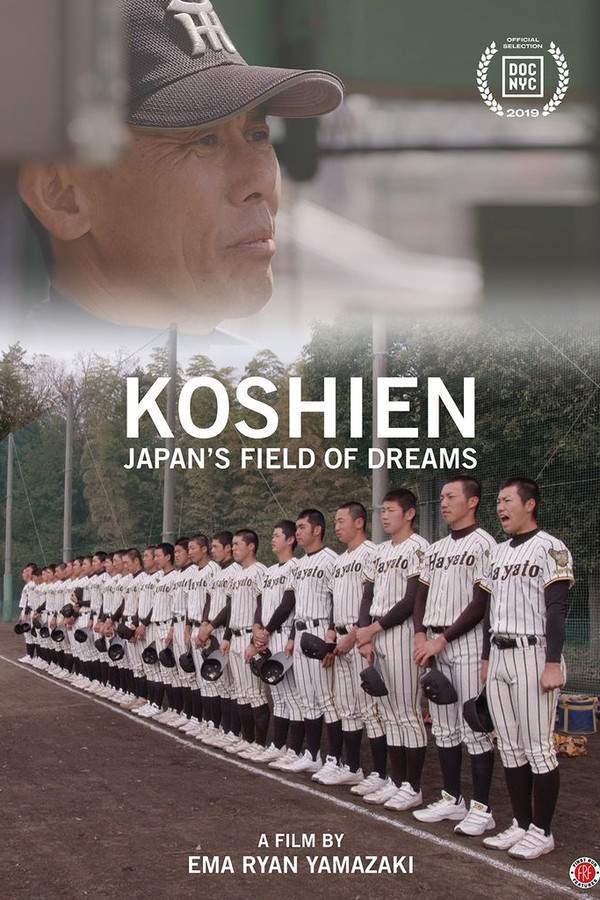
Koshien: Japan's Field of Dreams (2019) movie poster

Characters & Themes

Koshien: Japan's Field of Dreams (2019) Characters, Setting & Themes Explained

Release, runtime and language
2019 · 94 min · Japanese
JustWatch #11,028 21
Directed by
Ema Ryan Yamazaki
Starring
Hiroshi Sasaki, Ito Kouno, Kaoru Kashiwagi, Keishu Mukai, Kosho Mizutani, Kyoko Mizutani

The story follows a high school baseball team participating in the prestigious Koshien tournament, a century-old tradition in Japan. Led by coach Mizutani, the team embodies values of respect, discipline, and community as they compete for victory. The narrative explores the significance of these timeless principles and the team's journey toward achieving their goals amidst the tournament's rich history and national importance. Their dedication will be tested as they strive to uphold the tradition and honor the spirit of the game.

On this page (8)
  1. 1 Where to watch
  2. 2 Characters explained (5)
  3. 3 Where & when it takes place
  4. 4 Themes & meaning (3)
  5. 5 Character & meaning questions
  6. 6 Movie threads
  7. 7 Movies like Koshien: Japan's Field of Dreams
  8. 8 Every angle

Where to watch

Where to Watch Koshien: Japan's Field of Dreams (2019)

Where can you watch Koshien: Japan's Field of Dreams? Stream, rent or buy it in the US, including on Netflix, Netflix Standard and OVID: current JustWatch availability with up-to-date prices.

Streaming availability powered by JustWatch

5 main characters · contains spoilers

Koshien: Japan's Field of Dreams Characters Explained: Who Is Who

The main characters of Koshien: Japan's Field of Dreams (2019), heroes and villains: what drives them, how they change over the course of the story and what each of them reveals about the film's bigger ideas.

  • Tetsuya Mizutani

    Mizutani is a dedicated, old-fashioned baseball manager who also serves as vice-principal. He leads with a stern, lecture-driven style, enforcing demanding training, weight requirements, and top-down discipline. Beneath the rigor lies a concern for his players and a desire to see them grow, even as he occasionally laments his harsh methods and yearns for a closer connection with his team. His home life includes a wife and a son, Kosho, who represents his personal investment in the next generation.

    • ⚖️ Strict
    • 🧭 Mentor
    • 🏫 School life
  • Hiroshi Sasaki

    Sasaki is the former Hayato coach now leading Hanamaki, using a gardener’s metaphor to frame coaching as cultivation. He balances support and boundaries, embracing modern tools like smartphones to analyze batting form while resisting the urge to micromanage. He reflects on past influence while maturing into a more flexible, player-centered approach. His leadership aims to unlock talent while preserving the discipline that defined the program.

    • 🧭 Mentor
    • 🌿 Gardening philosophy
    • 📱 Tech-enabled coaching
  • Kosho Mizutani

    Kosho is Mizutani's son, about to enter high school. He carries the weight of his father's baseball world but aims to carve his own path, choosing Higashi Hanamaki High School over following in his father's footsteps. The tension between family expectations and personal ambition adds a personal layer to the broader high school baseball narrative.

    • 🎯 Ambition
    • 🏫 Teen life
    • 👨‍👦 Family
  • Shohei Ohtani

    played by Shôhei Ohtani

    Shohei Ohtani is introduced through archival clips and the memory of a high school star who later became a major league sensation. His presence illustrates the tournament's prestige and the lasting impact Koshien has on players who go on to professional careers.

    • ⚾ Prodigy
    • 🏆 Fame
  • Yusei Kikuchi

    Yusei Kikuchi appears in montage form, representing another high-profile example of a player who passed through Koshien. His inclusion underscores the tournament’s role as a launchpad for future professional stars and reinforces the documentary's focus on talent development.

    • ⚾ Prodigy
    • 🌟 Legacy

Last updated: May 08, 2026 at 12:19

Was this helpful?

Setting

Where and When Does Koshien: Japan's Field of Dreams Take Place?

The setting of Koshien: Japan's Field of Dreams (2019): the year and time period, the places and locations, and how they shape the characters, the mood and the tension of the story.

Time period

Contemporary high school baseball is the film's focus, framed by archival footage that reveals how coaching, equipment, and tradition have evolved over time. It documents modern coaching tools, like video analysis and smartphones, alongside a timeless emphasis on discipline and team loyalty. The result is a layered portrait of a sport deeply rooted in local communities and national identity.

Location

Kanagawa Prefecture, Iwate Prefecture, Tokushima Prefecture, Japan

Set across Kanagawa and Iwate prefectures, the documentary captures the intense culture of Japan's high school baseball circuit and the ritualized preparation that leads to Koshien. It also references Tokushima as Mizutani's home prefecture, rooting the film in regional pride. The scenes blend urban trains, school routines, and the quiet discipline of the sport, illustrating how local communities rally around young players.

  • ⚾ Baseball culture
  • 🗺️ Japan
  • 🏫 High school sports

Last updated: May 08, 2026 at 12:19

Was this helpful?

3 major themes

Koshien: Japan's Field of Dreams Meaning: Themes & Message Explained

What is Koshien: Japan's Field of Dreams (2019) really about? The emotional, social and philosophical themes the film keeps returning to, its symbolism and the message beneath the surface.

  • Tradition & Discipline

    The film centers on a manager who preaches hard work, hierarchy, and top-down control. His approach is described as old-fashioned, but unwavering in its resolve. Players endure weight requirements, rigorous training, and meticulous routines, illustrating how discipline shapes performance and character. The film also hints at the tension between honoring tradition and listening to evolving needs of players.

  • Mentorship & Growth

    Coaches are portrayed as gardeners of talent, guiding rather than simply directing. Sasaki emphasizes boundaries that let young players grow stronger, while acknowledging he cannot take credit for others' later success. The narrative highlights how mentorship can alter life trajectories, fanning the flames of ambition while testing personal autonomy. The players' dreams of reaching Koshien anchor this growth in a national tournament context.

  • Koshien & National Stage

    Koshien is depicted as more than a tournament—it is a national stage where communities rally around teenagers. The film intercuts with visuals of the stadium, crowds, and archival clips that frame the 100th year of the event. The managers' rivalry, rival teams, and the climactic games underscore the mythos of Japanese baseball and its enduring rituals. Even as teams lose, the tournament pulses with tradition and possibility.

Last updated: May 08, 2026 at 12:19

Was this helpful?

Character & theme questions

Koshien: Japan's Field of Dreams Characters & Meaning: Your Questions Answered

The questions people ask about Koshien: Japan's Field of Dreams (2019): who the characters really are, their relationships, what the symbols mean, where it takes place and what the movie is really about. Each answer contains spoilers.

Q1

What is the Koshien tournament and why is it so important in Japanese baseball?

The Koshien tournament is Japan's most prestigious high school baseball competition, dating back over 100 years. It serves as a national stage where teams from across Japan compete for glory, with the games broadcast nationwide. The documentary portrays it as more than a sports event, it's a cultural institution that unites communities and launches future professional stars like Shohei Ohtani.

Foreshadowing: The film opens with archival footage celebrating the tournament's centennial, establishing its legendary status.

  • koshien tournament
  • japanese baseball
  • high school baseball
  • national stage
Q2

What locations are featured in the documentary?

The documentary is filmed across multiple Japanese prefectures, primarily Kanagawa and Iwate, with additional scenes in Tokushima (coach Mizutani's home prefecture). The settings blend urban environments like train stations, school routines, and the iconic Koshien stadium, showing how local communities rally around their young players.

Foreshadowing: Early scenes establishing the regional pride of each team hint at the broader community focus.

  • kanagawa
  • iwate
  • tokushima
  • japan locations
  • filming locations
Q3

Who is Tetsuya Mizutani and what is his coaching style?

Tetsuya Mizutani is a high school baseball manager who also serves as vice-principal at his school. He leads with an old-fashioned, stern approach that emphasizes hierarchy, discipline, and top-down control. He enforces demanding training routines and weight requirements, but beneath the rigor lies genuine concern for his players' growth. He sometimes reflects on his harsh methods and desires a closer connection with his team.

Foreshadowing: Early scenes showing Mizutani's lecture-driven style establish his strict persona before later moments reveal his softer side.

  • tetsuya mizutani
  • coach
  • baseball manager
  • discipline
Q4

What are the main themes explored in the documentary?

The documentary explores three core themes: Tradition & Discipline (the rigorous training and hierarchical structure of Japanese baseball), Mentorship & Growth (how coaches guide players toward success while fostering independence), and Koshien & National Stage (the tournament's cultural significance as a rallying point for communities). These themes intersect as the film examines the tension between honoring tradition and adapting to modern needs.

Foreshadowing: The opening sequences establish discipline and tradition before introducing the more nuanced mentorship theme.

  • themes
  • tradition
  • discipline
  • mentorship
  • growth
  • koshien
Q5

How do the coaching philosophies of Mizutani and Sasaki compare?

Mizutani represents traditional, top-down leadership, demanding discipline, weight requirements, and strict routines. Sasaki, in contrast, uses a gardener metaphor, guiding players rather than directing them. He embraces modern tools like smartphone video analysis while maintaining boundaries that encourage player growth. Their contrasting approaches illustrate the documentary's exploration of tradition versus evolving coaching methods.

Foreshadowing: Interviews early in the film immediately establish their different philosophies, creating a thematic tension that runs throughout.

  • mizutani
  • sasaki
  • coaching styles
  • tradition vs modern
Q6

Who is Shohei Ohtani and what is his connection to the documentary?

Shohei Ohtani appears through archival footage as a former high school baseball star who competed in the Koshien tournament before becoming a Major League Baseball sensation. His inclusion illustrates the tournament's prestige and its role as a launchpad for future professional careers. The documentary uses his story to demonstrate the lasting impact Koshien has on players who go on to achieve baseball success.

Foreshadowing: Mentions of professional stars like Ohtani early establish the stakes and aspirational nature of the tournament.

  • shohei ohtani
  • major league
  • professional baseball
  • koshien alumni
Q7

When does the documentary take place?

The documentary focuses on contemporary high school baseball but is framed by archival footage showing how coaching, equipment, and traditions have evolved over time. It blends modern elements like video analysis and smartphones with timeless values of discipline and team loyalty, creating a layered portrait of a sport deeply rooted in local communities and national identity.

Foreshadowing: The archival clips interspersed throughout highlight the evolution while reinforcing continuity.

  • contemporary
  • time period
  • modern baseball
  • evolution
Q8

Who is Kosho Mizutani and what is his storyline?

Kosho Mizutani is the son of manager Tetsuya Mizutani, who is about to enter high school. He carries the weight of his father's baseball legacy but aims to forge his own path by choosing Higashi Hanamaki High School rather than following directly in his father's footsteps. This tension between family expectations and personal ambition adds a personal, intergenerational layer to the documentary's broader exploration of tradition and growth.

Foreshadowing: Early family scenes establish Kosho's internal conflict before his choice becomes a focal point.

  • kosho mizutani
  • son
  • family
  • personal ambition
Q9

How does the documentary portray the tension between tradition and modernity in Japanese baseball?

The documentary presents tradition and modernity as complementary forces rather than opposing ones. While coaches like Mizutani uphold strict traditional discipline, others like Sasaki incorporate modern tools like smartphones for analysis. The film suggests that honoring traditions, discipline, hierarchy, community support, can coexist with evolving approaches to player development, creating a balanced portrait of Japanese baseball culture.

Foreshadowing: Scenes showing both traditional training and modern analysis tools appear side by side throughout.

  • tradition
  • modernity
  • evolution
  • japanese baseball culture
Q10

How does the documentary depict community involvement in high school baseball?

The documentary emphasizes how entire communities rally around their high school baseball teams, with local residents, schools, and families contributing to the players' journey toward Koshien. The film shows how regional pride fuels dedication, with prefectures like Kanagawa, Iwate, and Tokushima serving as passionate backdrops. This community focus underscores that Koshien is not just about individual teams but about collective hope and shared identity.

Foreshadowing: Early scenes of local gatherings and school support establish the community-centric theme.

  • community
  • regional pride
  • local support
  • japan culture

Movie threads

More Movies Like Koshien: Japan's Field of Dreams, by Mood & Story

Curated lists built around what makes Koshien: Japan's Field of Dreams tick: the same mood, the same kind of story or the same emotional payoff. Each list explains why these movies belong together.

Inspiring Sports Documentaries like Koshien: Japan's Field of Dreams

Documentaries exploring the culture and pressure of youth athletic traditions. Movies like Koshien: Japan's Field of Dreams that explore the culture, discipline, and personal journeys within high school sports traditions. If you liked this documentary's look at mentorship and sacrifice, you'll find similar stories here.

  • inspiring
  • disciplined
  • respectful
  • nostalgic
  • solemn
  • hopeful
  • Tone: hopeful, reflective, respectful
  • Pacing: steady, observational
Why these movies?

The story pattern: These stories follow a team or individual through a competitive season, using the structure of the sport to explore broader themes of tradition, personal growth, and the heavy expectations placed on youth. The narrative often contrasts different coaching philosophies and highlights the emotional weight of competition balanced with hopeful outcomes.

Why they belong together: They are grouped by their observational, respectful look at the subculture of high school sports, a steady pacing that mirrors a season's progression, and a medium emotional weight that acknowledges sacrifice without being bleak. The tone is consistently hopeful and reflective.

Reflective Films on Tradition like Koshien: Japan's Field of Dreams

Thoughtful films examining how communities uphold values across generations. Movies similar to Koshien: Japan's Field of Dreams that explore cultural traditions, generational change, and community values. If you liked its thoughtful examination of respect and discipline, you'll enjoy these contemplative stories.

  • reflective
  • contemplative
  • nostalgic
  • respectful
  • solemn
  • inspiring
  • Tone: reflective, hopeful, respectful
  • Pacing: steady, observational
Why these movies?

The story pattern: The narrative is less about a dramatic plot and more about an observational journey into a specific world. It explores why certain traditions endure, the cost of that endurance, and the subtle ways they evolve. Character arcs focus on understanding and acceptance rather than radical transformation, often ending on a note of hopeful continuity.

Why they belong together: They share a steady, contemplative pace, a medium complexity in exploring cultural contrasts, and a hopeful yet respectful tone. The viewing experience is characterized by its reflective mood and medium emotional weight, focusing on thematic depth over high drama.

If you liked this

Movies Like Koshien: Japan's Field of Dreams

Similar movies to Koshien: Japan's Field of Dreams: the same genre, themes or kind of story. Each one comes with its own plot summary, timeline and ending explained.

Browse all movie summaries

Every angle

Koshien: Japan's Field of Dreams (2019) Explained: Plot, Timeline & Characters

Everything about Koshien: Japan's Field of Dreams in one place: what happens in the plot summary, the timeline in chronological order, the characters and meaning and a spoiler-free summary. What's After the Movie adds the cast, box office and post-credit scenes.

Coming soon on iOS and Android

The Plot Explained Movie Summary App

Plot summaries, endings explained and timelines on your phone. Catch up on any movie in minutes, save your favorites and never miss a twist again.

Be the first to know when we launch. Your email stays private, always.

Learn more about the app