Plot Explained Spoilers guaranteed!
Plot Explained

Browse by genre

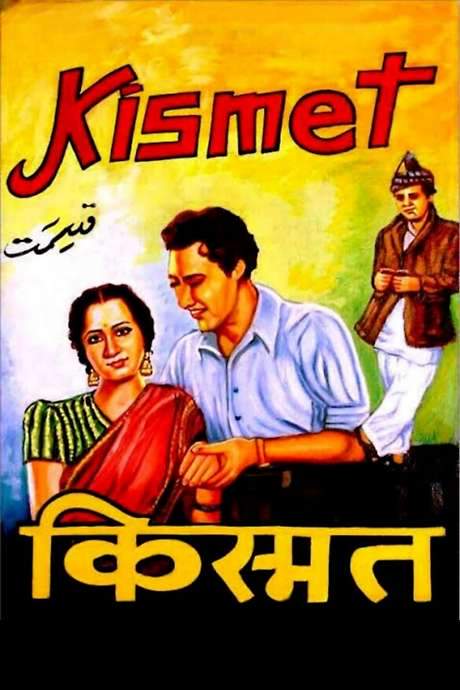
Kismet (1943) movie poster

Plot Summary

Kismet (1943) Plot Summary Explained

Release, runtime and language
1943 · 143 mins · Hindi
Loading streaming availability…
Directed by
Gyan Mukherjee
Starring
Ashok Kumar, David Abraham Cheulkar, Mehmood, Haroon, Mumtaz Shanti, Shah Nawaz

An impoverished former theater owner and his disabled daughter survive in destitution until they meet a clever young pickpocket. The thief falls for the daughter, while the father sees an opportunity to confront the unscrupulous new theater proprietor who drove him out years earlier, setting the stage for romance and revenge.

On this page (6)
  1. 1 Where to watch
  2. 2 What happens: full plot
  3. 3 Plot questions answered
  4. 4 Movie threads
  5. 5 Movies like Kismet
  6. 6 Every angle
Loading streaming availability…

Full plot summary · contains spoilers

What Happens in Kismet: Full Plot Summary

The whole story of Kismet (1943) explained, from the opening scene to the final frame: every key event, every twist and what it all adds up to. Read it as a quick recap before the sequel, to check a scene you missed, or to finally understand what really happened.

In a Baghdad bathed in a glow of old-world magic and myth, the tale unfolds with a double life at its center. Hafiz is a middle-aged beggar and street magician who moves through the city as the self-styled King of Beggars by day and the elusive Prince of Hassir by night. His performances charm some and irritate others, but one encounter changes everything: he meets Lady Jamilla, the striking queen of the Grand Vizier’s harem. She recognizes his act as a clever illusion, yet she is drawn to him by the spark of danger and mystery that trails his every gesture.

Meanwhile, the young Caliph, who shrouds himself in disguise as the “son of the Royal Gardener,” wanders the streets to learn the truth about his subjects. His curiosity is frowned upon by his trusted adviser, Agha, but the Caliph’s journey leads him to Marsinah, Hafiz’s daughter, a meeting that kindles a quiet, earnest love. The Caliph’s path then crosses with the man who calls himself the Prince of Hassir, and he watches Hafiz’s tricks with a mix of amusement and awe, especially the moment when a knife appears from a handkerchief in Hafiz’s deft hands.

To protect Marsinah and to shape a future steeped in fairy-tale grandeur, Hafiz builds high walls around his home. He hopes to shelter his daughter from the harshness of real politics by raising her on stories of royalty and destiny. Marsinah’s nurse, Karsha, sees through Hafiz’s grandiose promises and often growls a sharp “Bah!” when she reads the risk of his dreams. Yet Marsinah confides in her suitor about a prophecy she’s heard—that a prince will someday tear down those very walls and make a life worth living. The Caliph, hearing of this, returns to his palace with plans to ask Marsinah for her hand, setting the stage for a collision between dream and duty.

The plot thickens when Hafiz witnesses a failed assassination attempt on the Caliph, set in motion by an agent of the Grand Vizier. The Vizier destroys the would-be killer, and the Caliph grows suspicious that the Vizier may be behind the plot against him. Despite the Caliph’s awareness that he is still unmarried, Hafiz sees a strategic opportunity: the Vizier could be a suitable match for his daughter, and perhaps a path to real power. Disguising himself with borrowed finery, Hafiz infiltrates the Vizier’s world as the Prince of Hassir and offers Marsinah’s hand in marriage. Jamilla, caught in a private moment with Hafiz, agrees to the arrangement only after recognizing the ruse as a step toward a larger plan. Marsinah, meanwhile, faces the bitter truth that her dreams of love might become a political alliance in disguise.

A turn of fate brings Hafiz into trouble when he is arrested for the theft of those borrowed clothes. Facing a harsh sentence of having his hands cut off, Hafiz negotiates with the Vizier, leveraging the possibility of Marsinah’s ascent to the Grand Vizier’s wife to gain mercy. The bargain hinges on a dangerous performance: Hafiz promises to demonstrate a magic trick—drawing a knife from a handkerchief—that could be used to strike down the Caliph. The plan unfolds in a public audience where the Caliph, already intent on justice, senses the web of deception closing in around Hafiz. The knife trick is executed with precision, but the Caliph sidesteps the blade, exposing Hafiz’s plan and turning the Vizier’s position into a precarious stake in a larger power play.

In the ensuing chaos, the Vizier escapes and orders Marsinah’s death. Hafiz races to rescue his daughter as palace guards converge, and in a climactic confrontation within the harem, Hafiz faces the Vizier in a duel that ends with the Vizier’s death and the swift arrival of order to the palace. Hafiz is seized, and his fate seems sealed by the very tricks he once used to charm and protect.

The Caliph, acting with a sense of dramatic mercy, decides a different kind of fate for Hafiz: he designates Hafiz as the new Prince of Hassir—a symbolic exile that sends him away from Baghdad at sunset. Yet this new status carries a poignant request: the Caliph, who has learned Hafiz’s truth and Marsinah’s heart, agrees to tear down the walls Hafiz built so long ago, allowing the lovers to imagine a future free from barriers. In a final reversal of roles, Marsinah learns that the gardener’s son she loved is the Caliph himself, and the two pledge themselves to one another as Jamilla stands by Hafiz’s side. Together, they leave Baghdad for Hassir, while Hafiz watches, with a mix of sorrow and hope, the realization of his daughter’s happiness.

The story closes on a note of bittersweet kinship between dream and reality. Hafiz, now truly the Prince of Hassir in exile, finds a kind of peace in knowing that Marsinah’s future with the Caliph will be a life built on truth rather than walls. The city’s glittering spectacle fades into the distance as Jamilla accompanies Hafiz and Marsinah toward a new horizon, where love, power, and myth intertwine, and where the old city’s magic can still illuminate a genuine destiny for those brave enough to chase it.

Last updated: October 09, 2025 at 12:36

Was this helpful?

Plot questions answered

Kismet Plot Explained: Your Questions Answered

The questions people ask most about Kismet (1943): what happens in the confusing scenes, why the characters do what they do, the twists, hidden details and what the ending means. Each answer contains spoilers.

Q1

Why does Hafiz live a double life as both a beggar and a prince?

Hafiz maintains his double identity to provide his daughter Marsinah with the fairy-tale future he promised her. By day, he is the King of Beggars, but by night he becomes the Prince of Hassir, keeping alive the dream that his daughter will one day marry royalty and escape their poverty.

Foreshadowing: Early scenes show Hafiz performing his magical illusions in the streets, establishing his talent for deception and fantasy.

  • hafiz
  • double life
  • prince of hassir
  • king of beggars
  • marsinah
Q2

Why does Hafiz build high walls around his home?

Hafiz builds walls to shield Marsinah from the harsh realities of Baghdad's political world. He wants to protect her and raise her on stories of royalty and destiny, creating a sheltered fairy-tale existence while he pursues his schemes.

Foreshadowing: The nurse Karsha repeatedly scoffs at Hafiz's dreams, calling out the impracticality of his protective walls.

  • hafiz
  • walls
  • marsinah
  • protection
  • dreams
Q3

Why does Hafiz attempt to assassinate the Caliph?

Hafiz plans to kill the Caliph as part of a bargain with the Grand Vizier. After witnessing the Vizier orchestrate an assassination attempt, Hafiz sees an opportunity: if he kills the Caliph and helps the Vizier take power, his daughter Marsinah will become the Vizier's wife and secure a powerful future.

Foreshadowing: The assassination attempt on the Caliph earlier in the film establishes the political danger and creates the opportunity for Hafiz's scheme.

  • hafiz
  • assassination
  • caliph
  • grand vizier
  • murder plot
Q4

Why does the Caliph exile Hafiz instead of executing him?

The Caliph chooses a symbolic exile rather than execution because he has learned the truth about Hafiz's character and his genuine love for Marsinah. By making Hafiz the actual Prince of Hassir, the Caliph grants him a title he already claimed, but removes him from Baghdad as punishment for the assassination attempt.

Foreshadowing: The Caliph watches Hafiz's performances with fascination earlier, hinting at his willingness to see beyond the obvious deception.

  • caliph
  • hafiz
  • exile
  • prince of hassir
  • punishment
Q5

Why does the Caliph tear down the walls around Marsinah's home?

The Caliph tears down the walls as a promise to Hafiz before his exile. When Hafiz pleads that the walls be removed if the Caliph ever truly wants Marsinah, the Caliph honors this request, symbolizing that Marsinah's future will be built on truth rather than illusion and separation.

Foreshadowing: Marsinah tells the Caliph (disguised as the gardener's son) about the prophecy that a prince would tear down the walls and give her a real life.

  • caliph
  • marsinah
  • walls
  • prophecy
  • union
Q6

Why does Lady Jamilla help Hafiz with his plan?

Lady Jamilla, the queen of the Vizier's harem, is drawn to Hafiz's daring and mysterious nature throughout the film. She helps him infiltrate the Vizier's palace and supports his scheme because she wants to escape the Vizier's grasp and be with Hafiz, choosing love over her comfortable but trapped position.

Foreshadowing: Jamilla recognizes Hafiz's illusions from the start but is captivated by his charm and the danger surrounding him.

  • jamilla
  • hafiz
  • vizier
  • love
  • escape
Q7

How does the Grand Vizier die?

The Grand Vizier is killed by Hafiz during a confrontation in the harem. After the assassination plot fails and the Vizier orders Marsinah's death, Hafiz fights him in the harem and defeats him. The Vizier's death ends his reign of political manipulation and removes the main antagonist.

Foreshadowing: The Vizier kills his own assassin to prevent questioning, establishing his ruthless nature.

  • grand vizier
  • hafiz
  • death
  • harem
  • confrontation
Q8

Why does the Caliph want to marry Marsinah despite knowing her father tried to kill him?

The Caliph genuinely fell in love with Marsinah when he met her disguised as the gardener's son. Despite learning of Hafiz's assassination plot, the Caliph recognizes that Marsinah is innocent of her father's schemes. His love is sincere, and he chooses to unite with her rather than punish her for her father's crimes.

Foreshadowing: The Caliph meets Marsinah early in the film and immediately forms a genuine connection with her.

  • caliph
  • marsinah
  • love
  • marriage
  • forgiveness
Q9

What is the significance of the knife trick Hafiz performs?

The knife trick, producing a knife from a handkerchief, is Hafiz's signature illusion that demonstrates his skill with deception. He uses this same trick in his assassination attempt on the Caliph, attempting to kill him during a public audience. The trick represents how his magical abilities can be turned into deadly weapons.

Foreshadowing: The Caliph watches Hafiz perform this exact trick earlier, which helps him recognize and dodge the assassination attempt.

  • hafiz
  • knife trick
  • illusion
  • assassination
  • performance
Q10

Why does Hafiz offer his daughter Marsinah to marry the Grand Vizier?

Hafiz offers Marsinah to the Vizier as part of a calculated scheme to gain power and secure her future. Believing the Vizier might become ruler after the Caliph's death, Hafiz figures his daughter would become queen. This shows how his ambition blinds him to the reality of the Vizier's evil nature.

Foreshadowing: Hafiz sees an opportunity after witnessing the Vizier's involvement in the assassination attempt against the Caliph.

  • hafiz
  • marsinah
  • grand vizier
  • marriage
  • scheme

Movie threads

More Movies Like Kismet, by Mood & Story

Curated lists built around what makes Kismet tick: the same mood, the same kind of story or the same emotional payoff. Each list explains why these movies belong together.

Whimsical bittersweet dramas like Kismet

Charming stories where romantic fantasy meets poignant, meaningful loss. Discover movies like Kismet, where romantic and whimsical tales are tempered by a bittersweet tone. These films often feature stylized worlds, clever deceptions, and a blend of hope and sorrow, creating a uniquely resonant viewing experience for fans of emotional, character-driven stories.

  • whimsical
  • romantic
  • melancholic
  • hopeful
  • dramatic
  • magical
  • Tone: bittersweet, whimsical
  • Pacing: steady, deliberate
Why these movies?

The story pattern: These narratives often follow characters navigating a world of magic or high romance, where their clever schemes lead to both personal victories and significant personal costs. The journey is emotionally engaging but not overwhelmingly heavy, culminating in a resolution that acknowledges the price of happiness.

Why they belong together: These films are grouped together because they share a specific emotional alchemy: the charm and sweep of a romantic fantasy, blended with the thoughtful weight of real-world consequences. The pacing is steady, allowing the story and character relationships to develop meaningfully towards a conclusion that is satisfying yet laced with loss.

Movies with intricate revenge plots and romance like Kismet

Where a clever plan for vengeance gets complicated by love. If you liked the clever deceptions and romantic subplot in Kismet, explore these films featuring elaborate schemes of revenge. These stories weave together personal vengeance with forbidden love and dramatic confrontations, perfect for viewers who enjoy complex character motivations and climactic resolutions.

  • dramatic
  • romantic
  • clever
  • revenge
  • forbidden love
  • deception
  • Tone: dramatic, bittersweet
  • Pacing: steady, building
Why these movies?

The story pattern: The narrative pattern involves a protagonist wronged in the past, who devises an intricate, often deceptive plan to confront their adversary. This central plot is complicated by the introduction of a new romantic interest, creating a compelling conflict between the mission of revenge and the possibility of a new future.

Why they belong together: These movies share a focus on the duality of a character's journey: the cold calculation of revenge versus the warm, complicating force of love. They typically feature moderate complexity due to dual plots, a steady pace that builds to a confrontation, and a dramatic but not overly violent intensity.

If you liked this

Movies Like Kismet

Similar movies to Kismet: the same genre, themes or kind of story. Each one comes with its own plot summary, timeline and ending explained.

Browse all movie summaries

Every angle

Kismet (1943) Explained: Plot, Timeline & Characters

Everything about Kismet in one place: what happens in the plot summary, the timeline in chronological order, the characters and meaning and a spoiler-free summary. What's After the Movie adds the cast, box office and post-credit scenes.

Coming soon on iOS and Android

The Plot Explained Movie Summary App

Plot summaries, endings explained and timelines on your phone. Catch up on any movie in minutes, save your favorites and never miss a twist again.

Be the first to know when we launch. Your email stays private, always.

Learn more about the app