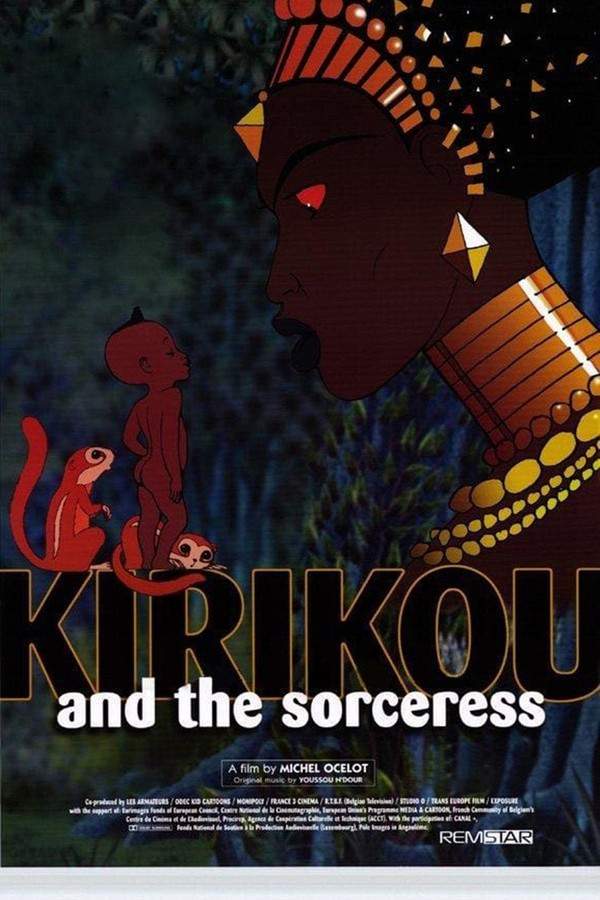
Inspired by West African folklore, the film follows newborn Kirikou, a tiny yet determined boy who embarks on a daring quest to lift the curse cast by the fearsome sorceress Karaba. Using wit, courage, and compassion, he confronts the witch, uncovers the source of her darkness, and ultimately frees his village from drought and fear.
Find where to stream, rent, or buy Kirikou and the Sorceress (1998) in the US with current JustWatch availability, up-to-date pricing, and platform listings for subscription, rental, and digital purchase options.
Warning: spoilers below!
Haven’t seen Kirikou and the Sorceress yet? This summary contains major spoilers. Bookmark the page, watch the movie, and come back for the full breakdown. If you're ready, scroll on and relive the story!
Read the complete plot breakdown of Kirikou and the Sorceress (1998), including all key story events, major twists, and the ending explained in detail. Discover what really happened, and what it all means.
In a small West African village, the remarkable Doudou Gueye Thiaw as Kirikou is born, a precocious boy who seems to speak before birth and walk almost as soon as he opens his eyes. His mother, Maimouna N'Diaye, explains that an evil sorceress named Karaba has dried up the village spring and eaten all the men except for one, a revelation that plants the seed of a dangerous quest in Kirikou’s curious heart.
Determined to protect his people, Kirikou joins forces with the village’s last great warrior, his uncle Thilombo Lubambu. Together they set out to confront the sorceress, crossing paths with danger and cunning along the way. The young hero uses wit over force, managing to outsmart Karaba by hiding inside his uncle’s hat and posing as if magic were at work. This bold ruse buys them time and stirs a glimmer of trust in a village that was quick to doubt.
Kirikou’s bravery continues to rescue the vulnerable, as he saves the village’s children from capture by Karaba’s boat and the tree, and he even confronts the monstrous hunger that has drained the spring. His cleverness earns him the respect of villagers who once dismissed him, and he draws strength from a chorus of companions, including his devoted mother and a host of animals, as he navigates a world filled with shadows and whispers.
Guided by the love of family, Kirikou and his allies press on to a forbidden mountain, seeking the wisdom of his grandfather, the village sage Robert Liensol. The elder drops a painful truth: Karaba’s malevolence stems from a poisoned thorn lodged in her back—pain that fuels both her suffering and her power. With this knowledge, Kirikou hatches a plan to confront the sorceress not just with courage, but with a moral purpose: to heal rather than merely to destroy.
To free Karaba from her torment, Kirikou turns the sorceress’s own riches against her, drawing her out of her lair and into a vulnerable moment where he can remove the thorn. In a transformative act, Karaba is cured of her misery, and she responds with a kiss that marks Kirikou as an adult who has changed the fate of his people.
When Kirikou and Karaba return to the village, disbelief runs rampant among the crowd—until a drumming procession arrives, led by the grandfatherly sage and the once-misjudged figures who had vanished from sight. The drums reveal the truth: those men Karaba seemed to have eaten are restored to their rightful forms, and the community sees Karaba not as a conqueror but as someone capable of mercy and healing.
In the end, Kirikou’s journey blends wonder with resolve, teaching that courage paired with compassion can heal a community and transform fear into forgiveness. The tale leaves a lasting sense of hope, as a village learns to look beyond appearances and recognize the quiet strength that can emerge from a child who dares to believe in the possibility of good.
Last updated: February 17, 2026 at 19:57
Explore frequently asked questions about Kirikou and the Sorceress (1998) with spoiler-rich answers covering the full plot summary, major story beats, character motivations, hidden details, and ending meaning. This movie summary FAQ helps explain confusing scenes, plot twists, and narrative decisions in clear, searchable detail.
Karaba is not inherently evil but is tormented by a poisoned thorn lodged in her back. This thorn causes her constant pain and fuels her malevolent power. The suffering from the thorn drives her to cast curses on the village, including drying up the spring. Once Kirikou removes the thorn, she is cured and her destructive behavior stops.
Early in the film, the village suffers under Karaba's curse without explanation, hinting at a deeper source of her malice.
The men are not dead. Karaba transformed them into her watchmen, drummer guards who serve her. In the village square finale, they are revealed when the drumming procession arrives, and they return to their human forms, proving Karaba never actually consumed them.
The men's disappearance is mysterious from the start, with the narrative keeping their fate ambiguous until the revelation.
In the context of the film's fairy-tale logic, Karaba's kiss marks Kirikou's transition to adulthood because he has accomplished a heroic act, curing her of her suffering. The kiss represents acknowledgment of his bravery and wisdom beyond his years, formally recognizing him as an adult in the community.
The narrative builds toward this transformation as the ultimate reward for Kirikou's compassion and courage.
Kirikou hides inside his uncle's hat while approaching Karaba's dwelling. When Karaba investigates, Kirikou makes it appear as if the hat possesses magic, convincing her that supernatural forces are at work. This ruse deceives Karaba and allows Kirikou and his uncle to proceed with their plan without immediate confrontation.
This clever deception establishes early on that Kirikou will rely on wit rather than brute force.
Karaba drains the spring as part of her curse over the village, likely driven by the pain and bitterness caused by the poisoned thorn in her back. The drought serves as a tool of control and punishment, creating the conflict that drives Kirikou's quest.
The drought is introduced immediately as the village's primary suffering, establishing Karaba as the source of their hardship.
Kirikou succeeds not through physical strength but through intelligence, compassion, and courage. He uses clever tricks (the hat ruse), solves the mystery of Karaba's suffering, and approaches her with the intent to heal rather than destroy. His childlike innocence allows him to see past her fearsome exterior to the wounded person beneath.
Kirikou's unusual birth gifts, speaking before birth and walking immediately, mark him as exceptional from the start.
The grandfather, the village sage living on the forbidden mountain, reveals that Karaba's evil stems from a poisoned thorn lodged in her back. This thorn causes her constant pain and simultaneously fuels her magical power. He tells Kirikou that understanding this source of her suffering is the key to defeating her, not through violence, but through healing.
The journey to the forbidden mountain is framed as essential to understanding the true nature of Karaba's threat.
The villagers dismiss Kirikou because he is just a newborn, and they have already lost all their men to Karaba. Their skepticism reflects their fear and desperation after repeated failures against the sorceress. They only begin to trust him after he proves himself by saving the children and defeating the water-drinking monster.
The opening scenes establish the villagers' fear and hopelessness, setting up Kirikou's eventual redemption of their trust.
Armed with knowledge that Karaba's power comes from the thorn, Kirikou deliberately steals her gold hoard. This greed-based trap draws her out of her lair where he can confront her. The theft exploits Karaba's attachment to her riches, creating the opportunity to remove the thorn while she is distracted and vulnerable.
The plan to use her own wealth against her shows Kirikou's strategic thinking beyond mere bravery.
The monster is a creature that has been draining the village's water source, compounding the drought caused by Karaba. Kirikou confronts and defeats this monster as one of his early quests, helping restore safety to the village springs. The exact nature of the creature is not detailed, but defeating it demonstrates Kirikou's courage against physical threats.
The water shortage is established early as a dual problem, Karaba's curse and this monster's predation.
Discover curated groups of movies connected by mood, themes, and story style. Browse collections built around emotion, atmosphere, and narrative focus to easily find films that match what you feel like watching right now.
Small heroes use brains over brawn to overcome large challenges.Find more movies like Kirikou and the Sorceress where cleverness triumphs over raw power. This thread features adventurous stories about small heroes on big quests, using their wits to save the day in animated and fantasy films.
This thread follows narratives centered on a resourceful protagonist, often physically small or young, who faces a series of obstacles. The plot is driven by their clever solutions, strategic thinking, and ability to outsmart more powerful foes, leading to a triumphant resolution.
These films are grouped by their core theme of intellectual heroism. They share a hopeful, adventurous spirit and a focus on problem-solving, making them perfect for viewers who enjoy seeing cunning and compassion win the day against overwhelming odds.
Stories where empathy and understanding resolve conflict and heal wounds.Discover movies similar to Kirikou and the Sorceress that focus on empathy and healing. If you liked how Kirikou solved the mystery of the sorceress's anger, you'll enjoy these stories about resolving conflict through compassion.
The narrative pattern involves a journey of discovery, where the protagonist investigates the cause of an antagonist's malice or a community's suffering. The climax is a moment of empathy and revelation, transforming the source of conflict into a force for good and healing old wounds.
These movies are united by their profound message that understanding and compassion are the true keys to resolving deep-seated conflict. They share a light emotional weight with a ultimately hopeful and happy conclusion, focusing on healing rather than punishment.
Don't stop at just watching - explore Kirikou and the Sorceress in full detail. From the complete plot summary and scene-by-scene timeline to character breakdowns, thematic analysis, and a deep dive into the ending - every page helps you truly understand what Kirikou and the Sorceress is all about. Plus, discover what's next after the movie.
Track the full timeline of Kirikou and the Sorceress with every major event arranged chronologically. Perfect for decoding non-linear storytelling, flashbacks, or parallel narratives with a clear scene-by-scene breakdown.
Discover the characters, locations, and core themes that shape Kirikou and the Sorceress. Get insights into symbolic elements, setting significance, and deeper narrative meaning - ideal for thematic analysis and movie breakdowns.
Discover movies like Kirikou and the Sorceress that share similar genres, themes, and storytelling elements. Whether you’re drawn to the atmosphere, character arcs, or plot structure, these curated recommendations will help you explore more films you’ll love.
Kirikou and the Sorceress (1998) Scene-by-Scene Movie Timeline
Kirikou and the Sorceress (1998) Movie Characters, Themes & Settings
Kirikou and the Sorceress (1998) Spoiler-Free Summary & Key Flow
Movies Like Kirikou and the Sorceress – Similar Titles You’ll Enjoy
Kiki's Delivery Service (1989) Story Summary & Characters
Kirikou and the Sorceress (2000) Plot Summary & Ending Explained
Kubo and the Two Strings (2016) Film Overview & Timeline
Zarafa (2015) Complete Plot Breakdown
Kikumana (2001) Detailed Story Recap
Azur & Asmar: The Princes’ Quest (2006) Movie Recap & Themes
The Princess and the Goblin (1991) Complete Plot Breakdown
Babar: The Movie (1989) Ending Explained & Film Insights
Kenya Boy (1984) Full Movie Breakdown
The Black Pharaoh, the Savage and the Princess (2022) Spoiler-Packed Plot Recap
The Little Prince and the Eight-Headed Dragon (1963) Film Overview & Timeline
The Lion Child (1993) Spoiler-Packed Plot Recap
The African Tale (1963) Spoiler-Packed Plot Recap
Kikos (1979) Ending Explained & Film Insights
The Witch and the Beast (1000) Ending Explained & Film Insights