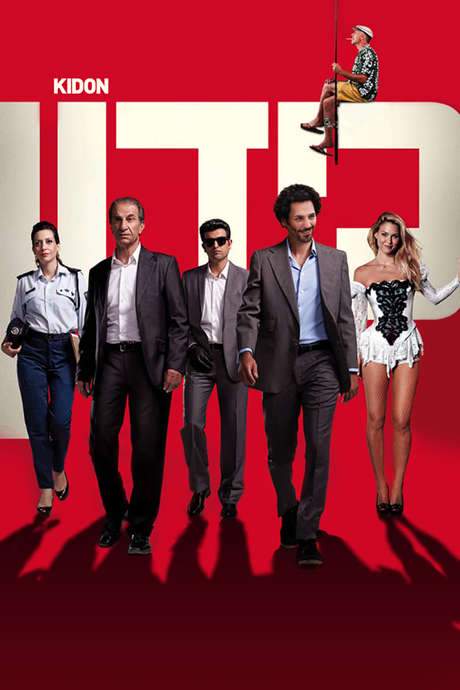
Kidon opens on the morning of February 18, 2010, in Tel Aviv, when the front pages flood the city with photos of Mossad agents connected to the Dubai hit that killed Mahmoud al Mabhouh a month earlier. The world watches in disbelief as ordinary hotel security footage captures the agents, and the surprise is amplified by the fact that those caught on camera are Israelis. Yet the most astonished are the Mossad leaders, who alone know that the four faces splashed across every newsroom have nothing to do with their organization. From there, a tense, high-stakes race against time begins as investigators scramble to understand why everything points at them.
As protocol dictates, the Mossad chief and his core team—ranging from a police liaison to a representative of the prime minister—launch a thorough inquiry. It doesn’t take long to identify the so‑called Dubai Four, but that identification only deepens the mystery because these four are described as simple little French goons from Tel Aviv: Daniel, Tomer Sisley, a small-time crook with a flair for the art world; Eric, Lionel Abelanski, the stylish “Miss” of Tel Aviv; Facebook, Kev Adams, the sharp hacker; and Einav, Bar Refaeli, the pretty student. How they ended up in Dubai, and how they managed to mount such a delicate operation, becomes the central puzzle the investigation must solve.
The more the probe advances, the more the investigators realize that the Dubai Four are not mere pawns but players in a much larger game. Their seemingly accidental connection to a web of French, Russian, and Iranian diplomats hints at a well-hidden agenda that stretches beyond a single mission. As the Mossad team closes in, it becomes clear that the group’s act of being caught is only part of a bigger, risk-filled plan whose real purpose remains shrouded in secrecy. The inquiry uncovers a high-stakes double-game, where loyalties blur and appearances mask strategic motives that reach far beyond Tel Aviv or Dubai.
Throughout the pursuit, the narrative peels back layers of complexity, showing how the line between agent and civilian can blur in a world where deception is the currency of power. The investigation moves with relentless momentum, forcing the powerful to confront the possibility that even the most meticulously crafted operations can falter when faced with unexpected human moves. As revelations accumulate, the story builds toward a sobering realization: in a universe where everything is built on illusion, the masters of control can themselves be outsmarted.
In the end, the film casts a reflective light on how truth is teased out under immense pressure, and how a single operation can ripple outward, unsettling diplomatic circles and challenging the assumptions of those who think they command the narrative. The result is a gripping meditation on risk, identity, and the fragile boundary between intelligence work and the unpredictable nature of real-world consequences.