Plot Explained Spoilers guaranteed!
Plot Explained

Browse by genre

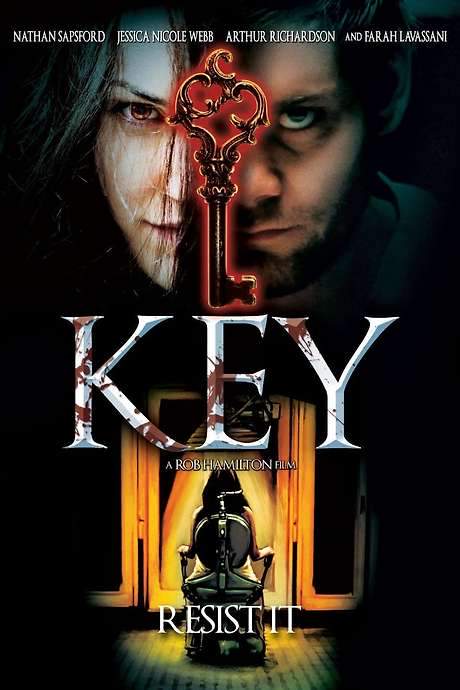
Key (2011) movie poster

Timeline

Key (2011) Timeline Explained – Every Event in Order

Release, runtime and language
2011 · 87 mins · English
Loading streaming availability…
Directed by
Rob Hamilton
Starring
Steve Brian, Farah Lavassani, Noah James Butler, Sam Forrest

During a routine autopsy, forensic pathologist Martin Revell discovers a key lodged in the stomach of a man who apparently committed suicide. Intrigued, he pursues the key’s origin, and his obsession spirals into paranoia, madness and murders. The investigation forces him to confront his fragile sanity as he becomes entangled in a conspiracy.

On this page (6)
  1. 1 Where to watch
  2. 2 Events in order (13)
  3. 3 Timeline questions answered
  4. 4 Movie threads
  5. 5 Categories
  6. 6 Every angle
Loading streaming availability…

13 events in order · contains spoilers

Key Timeline: Events in Chronological Order

Every key event of Key (2011) in order, scene by scene, with when and where it takes place. Use it to untangle flashbacks, time jumps and parallel storylines, to refresh your memory before the sequel or to find the exact scene you are thinking of.

  1. The locked-room exam begins

    The Invigilator locks the room and the nine candidates are informed they are competing for a prestigious post, with a 90-minute timer and four conditions that disqualify any attempt to cross the bridge. The rules forbid talking to the Invigilator or Security, leaving the room, or spoiling the paper, setting a tense framework for the challenge.

    When
    start of test
    Where
    Locked examination room
  2. Blank paper and first disqualification

    The contenders discover the paper is blank, lacking any question. One candidate is instantly disqualified for writing God's name, and the group realizes they must solve the puzzle collectively instead of relying on a direct prompt.

    When
    shortly after start
    Where
    Locked examination room
  3. Forming a diverse team

    They introduce themselves by profession—Criminal Lawyer, Professor, Psychologist, Optic Engineer, Scientist, MBA Graduate, Business Consultant, and Journalist—aiming to put aside caste and biases. They commit to leveraging each other’s expertise to uncover the unknown question and to manage crises.

    When
    early stage
    Where
    Locked examination room
  4. Using science and observation to infer the question

    The group begins testing the room and clues, using methods like lights, bodily fluids, fire sprinklers, and glass fragments to decipher potential hints. They organize a collaborative approach rather than hoarding information.

    When
    early phase
    Where
    Locked examination room
  5. Optic Engineer eliminated

    The Optic Engineer tears the paper, violating the rules and sealing his fate. The others conclude he is no longer a viable candidate and remove him from the group’s dynamic.

    When
    early-mid
    Where
    Locked examination room
  6. Betrayal within the ranks

    The Criminal Lawyer betrays the MBA Graduate and the Business Consultant, attempting to steer the survivor toward his own victory. The move disrupts the balance and heightens tension among the remaining contestants.

    When
    mid
    Where
    Locked examination room
  7. Tensions erupt as the Journalist intervenes

    In response to the betrayal, the Journalist strikes the Lawyer, triggering a tense confrontation as rivals vie for control. The room grows more volatile while the true question remains unsolved.

    When
    mid
    Where
    Locked examination room
  8. Medicinal crisis and the Journalist's action

    The Lawyer's need for hourly medication intensifies the crisis, but the Journalist disposes of the medication, worsening the Lawyer's condition and escalating the stakes for everyone involved.

    When
    mid-late
    Where
    Locked examination room
  9. Psychologist's coercion and intervention

    The Lawyer targets the Psychologist to extract the answer, torturing her for information. The Psychologist later speaks with the Invigilator to halt the aggression and protect the team, introducing a glimmer of hope.

    When
    late
    Where
    Locked examination room
  10. Professor's steadfast leadership

    The Professor remains firm through every crisis, recovers the medicine, and uses wit to stabilize the group, effectively protecting the Lawyer at key moments and guiding others toward a potential solution.

    When
    late
    Where
    Locked examination room
  11. The revolver twist and the dummy bullet

    The Lawyer steals the guard's revolver and issues a final warning to vacate. He fires at the Journalist as the Scientist exits, but the Professor pretends the shot struck home, and the room discovers the round is a dummy bullet with no real harm.

    When
    final moment
    Where
    Locked examination room
  12. Invigilator's arrival and verdict

    The Invigilator arrives and congratulates the Professor, declaring that no questions were asked. The success comes from the candidates' traits, teamwork, and crisis management rather than a direct test prompt.

    When
    end
    Where
    Locked examination room
  13. Appointment of the Professor

    In the closing moment, the Invigilator, joined by the CEO, appoints the Professor as the winner and the preferred candidate for the post, sealing the outcome of the selection process.

    When
    end
    Where
    CEO's office

Last updated: November 22, 2025 at 15:59

Was this helpful?

Timeline questions answered

Key Timeline Explained: Your Questions Answered

When does it happen, and why in that order? The questions people ask about the chronology of Key (2011): time jumps, flashbacks, cause and effect between scenes and the correct order of events, each answered with spoilers.

Q1

Why was the paper blank during the locked-room exam?

The paper was intentionally left blank. There was no hidden question to solve, the test was designed to evaluate how candidates would respond to complete uncertainty and ambiguity. The real challenge was not about finding a correct answer, but demonstrating leadership, teamwork, and composure when faced with an undefined problem.

Foreshadowing: Early in the test, the Invigilator's vague instructions about not spoiling the paper hint that the paper itself is the central mystery.

  • blank paper
  • locked room test
  • ambiguous question
  • leadership test
Q2

Why was a candidate instantly disqualified for writing God's name?

Writing anything on the paper violated the strict rule against spoiling it, intentionally or accidentally. Even writing something as seemingly benign as God's name broke the condition of preserving the paper's integrity, which was part of the psychological pressure of the test.

  • disqualification
  • God name
  • paper rules
  • security breach
Q3

Why did the Criminal Lawyer betray the MBA Graduate and Business Consultant?

The Lawyer attempted to manipulate the field by targeting the MBA Graduate and Business Consultant, believing he could steer the outcome toward his own victory. This betrayal disrupted group harmony and revealed his willingness to undermine teammates for personal gain.

Foreshadowing: The Lawyer's early focus on competitive strategy rather than collaboration hinted at his willingness to prioritize personal success over team success.

  • criminal lawyer
  • betrayal
  • mba graduate
  • business consultant
  • elimination
Q4

Why did the Journalist dispose of the Lawyer's medication?

During the escalating conflict, the Journalist deliberately disposed of the medicine the Lawyer needed hourly, worsening his condition and raising the stakes for everyone in the room. This act intensified the chaos and heightened the psychological pressure on all candidates.

Foreshadowing: The Journalist's earlier violent intervention against the Lawyer signaled a willingness to use extreme tactics to control the situation.

  • journalist
  • medication
  • poison
  • lawsuit
  • escalation
Q5

Was the shooting real? What was the dummy bullet?

No, the shooting was not real. The Lawyer seized a guard's revolver and fired at the Journalist, but the bullet was a dummy, part of the test's elaborate psychological manipulation. The room discovered the round was harmless, revealing how easily appearances can deceive under pressure.

Foreshadowing: The Professor's quick thinking to pretend the Journalist was struck suggested the situation was being carefully controlled from outside.

  • revolver
  • dummy bullet
  • shooting
  • psychological manipulation
  • prank
Q6

What was the real purpose of the locked-room exam?

The test was not about solving a puzzle or finding a correct answer. It was a comprehensive evaluation of each candidate's leadership traits, how they handle crisis, maintain composure under pressure, work as a team, and make decisions when confronted with the unknown. The goal was to identify who would best guide the company forward.

Foreshadowing: The Invigilator's statement that he 'does not ask any more questions' foreshadows that the test was always about observing innate capabilities, not testing knowledge.

  • purpose
  • leadership test
  • crisis management
  • evaluation
  • company values
Q7

Why was the Professor chosen as the winner?

The Professor was selected because she demonstrated the exact traits the company valued: steady leadership, composure under extreme pressure, crisis management skills, and a principled approach. She remained calm throughout chaos, recovered the medicine for the Lawyer, guided others toward solutions, and maintained ethical behavior despite the escalating violence and deception.

Foreshadowing: The Professor's consistent problem-solving and her role in managing crises throughout the test positioned her as the natural leader from the mid-point onward.

  • professor
  • winner
  • leadership
  • selection
  • ceo appointment
Q8

Why was the Psychologist targeted and coerced for answers?

The Lawyer tortured the Psychologist to extract information about the 'question,' believing she had inside knowledge due to her familiarity with the firm's culture. Her coercion represented the breakdown of trust and the descent into desperation as time ran out.

Foreshadowing: The Psychologist's supposed inside knowledge of the firm made her a target, as other candidates assumed there was a correct answer she could reveal.

  • psychologist
  • coercion
  • torture
  • firm culture
  • information extraction
Q9

How did the group attempt to figure out what the question was asking?

The candidates used their diverse expertise to test the room through scientific methods, manipulating light, analyzing bodily fluids, coordinating with fire sprinklers, and using glass fragments. They worked collaboratively, drawing on fields like optics, science, and business strategy to decipher hidden hints in the room's setup.

Foreshadowing: The initial agreement to pool their professional knowledge and 'strip away bias' established the collaborative approach that defined their investigation.

  • collaboration
  • deduction
  • scientific methods
  • clues
  • problem solving
Q10

Why were the security measures so extreme in the exam room?

The sealed room, locked door, prohibition on speaking to the Invigilator or security, and strict rules against leaving or spoiling the paper created a high-pressure environment designed to strip away social niceties and force candidates to reveal their true personalities under psychological stress.

Foreshadowing: The Invigilator's calm demeanor despite the escalating chaos inside the room suggested the security was theatrical, a deliberate component of the test's design.

  • security
  • sealed room
  • psychological pressure
  • isolation
  • controlled environment
Q11

What happened to the Optic Engineer during the test?

The Optic Engineer was eliminated early after tearing the paper while attempting to analyze it, violating the rule against spoiling the paper. This instant disqualification demonstrated the test's zero-tolerance policy for breaking the conditions.

  • optic engineer
  • elimination
  • tearing paper
  • disqualification
Q12

Why were all candidates evaluated together rather than individually?

The test was specifically designed to evaluate teamwork and collaborative problem-solving. By placing professionals from different backgrounds together and requiring them to work within strict rules, the company could observe how candidates leverage diversity, build trust, and handle group dynamics under pressure, key qualities for leadership.

Foreshadowing: The initial introduction phase, where candidates revealed their professions to 'strip away bias,' established that their collective success mattered more than individual glory.

  • teamwork
  • collaboration
  • group evaluation
  • diversity
  • leadership qualities

Movie threads

More Movies Like Key, by Mood & Story

Curated lists built around what makes Key tick: the same mood, the same kind of story or the same emotional payoff. Each list explains why these movies belong together.

High-Stakes Psychological Movies like Key

Stories where characters are pushed to their mental limits under immense pressure. If you enjoyed the intense psychological testing in Key, you'll find more movies like it here. These films feature characters thrown into high-pressure crucibles, where their problem-solving skills and mental fortitude are pushed to the absolute limit in a tense, competitive atmosphere.

  • competitive
  • cerebral
  • anxious
  • high stakes
  • methodical
  • claustrophobic
  • Tone: tense, cerebral
  • Pacing: fast, relentless
Why these movies?

The story pattern: The narrative pattern involves a group or individual being subjected to a controlled but extreme psychological test or competition. The story unfolds as alliances form and break, secrets are revealed, and the true nature of the challenge becomes clear, often leading to a climactic reveal about the purpose of the ordeal.

Why they belong together: Movies are grouped here because they share a core premise of intellectual and psychological endurance under pressure. They create a similar vibe of claustrophobic anxiety, cerebral problem-solving, and the tension that comes from high-stakes competition where trust is a liability.

Movies with Obsessive Investigations like Key

Protagonists whose single-minded pursuit of a clue leads them into danger. Fans of Key's story about a forensic pathologist unraveling a conspiracy from a single clue will love these similar movies. They feature protagonists who become dangerously obsessed with solving a mystery, leading them down a rabbit hole of paranoia and rising tension.

  • methodical
  • paranoid
  • tense
  • cerebral
  • anxious
  • investigative
  • Tone: tense, paranoid
  • Pacing: fast, escalating
Why these movies?

The story pattern: The narrative follows a methodical, often isolated professional who uncovers an anomaly that challenges an official story. Their investigation becomes a personal obsession, forcing them to question their own sanity and trust in the system as they uncover layers of a hidden conspiracy, culminating in a race to expose the truth.

Why they belong together: These films are united by the compelling character arc of an obsessive investigator. They share a mood of growing paranoia and methodical tension, a fast-paced escalation from a simple clue to a life-threatening conspiracy, and a focus on a cerebral protagonist facing a crisis of trust.

Categories

Movie Lists Featuring Key

Key appears in these hand-built movie categories. Each one groups movies by a specific mood, theme or story type, with their plot summaries and endings explained.

View all movie categories

Every angle

Key (2011) Explained: Plot, Timeline & Characters

Everything about Key in one place: what happens in the plot summary, the timeline in chronological order, the characters and meaning and a spoiler-free summary. What's After the Movie adds the cast, box office and post-credit scenes.

Coming soon on iOS and Android

The Plot Explained Movie Summary App

Plot summaries, endings explained and timelines on your phone. Catch up on any movie in minutes, save your favorites and never miss a twist again.

Be the first to know when we launch. Your email stays private, always.

Learn more about the app