Plot Explained Spoilers guaranteed!
Plot Explained

Browse by genre

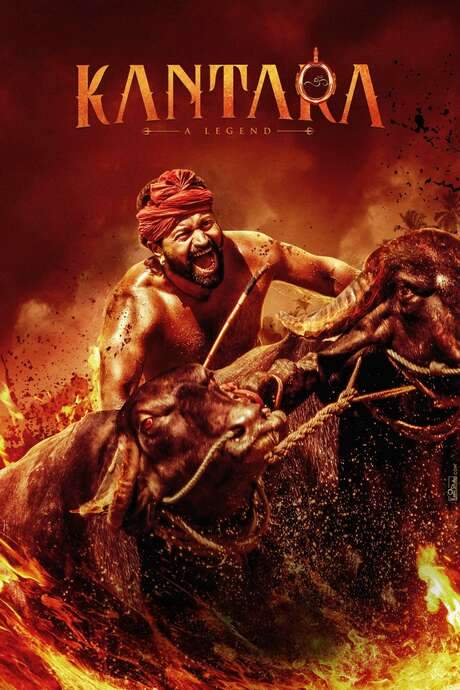
Kantara (2022) movie poster

Plot Summary

Kantara (2022) Plot Summary & Ending Explained

Release, runtime and language
2022 · 147 mins · Kannada
Echo score 88
JustWatch #15,459 1
Starring
Achyuth Kumar, Kishore, Sukanya, Rishab Shetty, Pramod Shetty, Prabhakar Kunder
Budget
$2M

Shiva, a tribal drifter living with his mother in a remote hamlet, shuns the ancestral Daivaradhane and Bhoota Kola rites after a traumatic childhood incident. He idles with friends and takes odd jobs for his landlord. When forest officer Murali arrives, the simple man‑vs‑nature clash deepens, forcing Shiva to decide whether he can save the forest or if Murali is merely a pawn in a larger scheme.

On this page (6)
  1. 1 Where to watch
  2. 2 What happens: full plot
  3. 3 Plot questions answered
  4. 4 How it ends
  5. 5 Movie threads
  6. 6 Every angle

Where to watch

Where to Watch Kantara (2022)

Where can you watch Kantara? Stream, rent or buy it in the US, including on Amazon Prime Video, Netflix and Netflix Standard: current JustWatch availability with up-to-date prices.

Streaming availability powered by JustWatch

Full plot summary · contains spoilers

What Happens in Kantara: Full Plot Summary

The whole story of Kantara (2022) explained, from the opening scene to the final frame: every key event, every twist and what it all adds up to. Read it as a quick recap before the sequel, to check a scene you missed, or to finally understand what really happened.

In 1847, a The King lives along the coast of Karnataka with his devoted wife Ammakka, [Sukanya], and their children, yet true peace remains elusive. He embarks on a spiritual quest that leads him to a sacred forest stone guarded by the demigod Panjurli. In a gesture meant to bless the land and its people, the king donates a vast portion of his own land to the villagers in exchange for keeping the holy stone with him. Panjurli communicates a stern warning through a human-medium: the king’s family and their descendants must honor their vow and not reclaim the land; if they break this agreement, Guliga, the fearsome demigod who accompanies Panjurli, will unleash his wrath. The tale then shifts to the consequences of that ancient pact, shaping fortunes across generations.

Fast forward to 1970, and the story expands beyond one village. Murali is a forest officer charged with turning the villagers’ land into a forest reserve. He faces stiff resistance from Shiva, a bold Kambala athlete and the missing son of the Kaadubettu performer who once spoke in Panjurli’s voice. Shiva is supported by his patron, Devendra Suttooru, the king’s descendant and the village’s powerful landlord, who backs his ally in the face of government intervention. The young man’s trauma—rooted in his father’s disappearance after refusing to perform Bhoota Kola—casts a long shadow over his choices, while his cousin Guruva takes up the mantle in his stead. On Murali’s side, Leela, Leela and Murali’s childhood friend, is swept into a conflict that pits loyalty against duty as she is appointed as forest guard with the hope of protecting the land. This appointment comes with its own tensions, as Shiva’s influence and Devendra’s schemes threaten to upend the villagers’ way of life.

As tensions rise, the police and forest guards—Leela among them—crack down on the villagers who resist the fencing of the forest reserve. A deepening rift forms between Leela and Shiva, even as she follows orders and tries to stand up for the people in her own way. Murali moves to arrest Shiva and his companions, and the two sides collide when Murali’s jeep is crushed under a fallen tree trunk during a dangerous chase. Shiva and his group flee into the forest, only to surface again months later to reconcile with their families and pledge to surrender. Yet the law closes in the next morning, and Guruva pleads with Devendra to bail Shiva out. A chilling turn occurs when Devendra attempts to coerce Guruva into posing as Panjurli’s emissary to force the villagers to surrender the land, exposing Devendra’s real motive of seizing the land for himself. Guruva refuses, and Devendra murders him, intensifying the conflict and drawing Shiva and Murali into a direct confrontation.

With Guruva gone, Shiva learns from a trusted blacksmith friend that Devendra was the killer. Enraged, he confronts Devendra, while Murali reveals the broader conspiracy to the villagers. The two leaders join forces to rally the community, revealing Devendra’s true plan to loot the land. A brutal battle erupts, in which many villagers lose their lives. In a moment of near-death intensity, Shiva strikes his head against Panjurli’s sacred stone, and Guliga possesses him, granting supernatural power to defeat Devendra and his henchmen. The tide of the fight shifts as the villagers unite behind the duo and defend their home.

Months after the climactic clash, Shiva and Leela marry and begin to raise a family, embodying hope for the future they fought to protect. The Bhoota Kola ritual returns, this time with Shiva possessed by Panjurli, signaling a renewed connection between the living world and the forest’s ancient protectors. Together with Murali and the community, they perform a symbolic gesture of solidarity, reclaiming a sense of harmony. In a quiet mid-credits moment, a glimpse of the future emerges: Shiva and Leela’s son asks Sundara about his father’s mysterious disappearance, leaving a lingering question that echoes the enduring mystery of Panjurli’s influence. Sundara stands as a small but poignant bridge to the past, reminding viewers that the forest’s legends continue to live on in the hearts of those who remain.

The tale is a sweeping saga of faith, land, and resilience, where a sacred pact binds generations, a community fights for its home, and a fearless bond between a forest officer, a vexed hero, and the people they vow to defend helps heal old wounds. The film threads myth and reality into a vivid tapestry, asking whether belief alone can safeguard a community or if action is the only language that will truly protect what is owed to those who came before.
Last updated: October 27, 2025 at 16:47

Was this helpful?

Plot questions answered

Kantara Plot Explained: Your Questions Answered

The questions people ask most about Kantara (2022): what happens in the confusing scenes, why the characters do what they do, the twists, hidden details and what the ending means. Each answer contains spoilers.

Q1

Why does Shiva refuse to perform Bhoota Kola?

Shiva refuses to perform Bhoota Kola because his father, the Kaadubettu performer who once spoke in Panjurli's voice, disappeared after refusing to perform the ritual. This traumatic childhood incident made Shiva resent the ancestral tradition and reject the ritual despite being the rightful performer.

  • shiva
  • bhoota kola
  • father disappearance
  • trauma
  • tradition
Q2

What is Devendra's real plan for the village land?

Devendra pretends to support Shiva and the villagers against the forest reserve, but his true motive is to seize the land for himself. He attempts to bribe Guruva into impersonating Panjurli's emissary to force villagers to surrender their land, and when Guruva refuses, Devendra murders him to keep his scheme hidden.

  • devendra
  • land grab
  • conspiracy
  • villagers
  • greedy landlord
Q3

How does Shiva gain supernatural power to defeat Devendra?

During the final battle, Shiva strikes his head against Panjurli's sacred stone. This act summons Guliga, the fearsome demigod who possesses Shiva and grants him supernatural strength to defeat Devendra and his henchmen.

Foreshadowing: The warning about Guliga's wrath was established in the 1847 pact when Panjurli warned that breaking the vow would unleash the demigod.

  • guliga
  • possession
  • supernatural power
  • panchurli stone
  • battle climax
Q4

Why does Murali help the villagers against Devendra?

Murali originally came to convert the land into a forest reserve, but he discovers Devendra's conspiracy to seize the villagers' land for personal gain. Realizing the villagers are fighting a just cause against both government pressure and a corrupt landlord, Murali aligns with Shiva to defend the community.

  • murali
  • forest officer
  • villagers
  • alliance
  • devendra betrayal
Q5

What happens if the king's family reclaims the donated land?

In 1847, Panjurli communicated through a medium that the king's family and their descendants must honor their vow to never reclaim the land. If they break this agreement, Guliga, Panjurli's ferocious companion demigod, will unleash wrath upon them. This warning haunts the family lineage throughout the story.

  • king pact
  • guliga wrath
  • panchurli warning
  • land vow
  • descendants
Q6

What happens to Shiva at the end of the movie?

After marrying Leela and having a son, Shiva performs the Bhoota Kola ritual and is possessed by Panjurli. He then disappears into the forest, leaving his family. The mid-credits scene shows his son asking about his father's mysterious disappearance, echoing the earlier pattern of men vanishing after being connected to the demigods.

  • shiva disappears
  • bhoota kola possession
  • forest
  • ending mystery
  • son
Q7

Why does Devendra kill Guruva?

Devendra kills Guruva to silence him after asking him to impersonate Panjurli's emissary. Guruva refuses to participate in Devendra's scheme to force villagers to surrender their land through fake divine intervention. Devendra murders him to prevent exposure of his conspiracy.

  • guruva death
  • devendra murder
  • impersonation
  • land scheme
  • conspiracy
Q8

Why does Leela become a forest guard and how does it affect her relationship with Shiva?

Leela is appointed as a forest guard with Devendra's backing, hoping she would support their cause. However, this creates a rift between her and Shiva as she must follow orders to enforce the forest reserve fencing while also trying to help the villagers in her own way. The conflict strains their relationship until they reconcile.

  • leela
  • forest guard
  • shiva relationship
  • duty versus loyalty
  • village conflict
Q9

Why is Shiva opposed to Murali's forest reserve plan?

Shiva opposes Murali's plan to convert village land into a forest reserve because it threatens the villagers' ancestral land and livelihood. Additionally, Shiva's personal trauma from his father's disappearance during the Bhoota Kola resistance adds to his distrust of authority figures like Murali.

  • shiva murali conflict
  • forest reserve
  • villagers land
  • opposition
  • kambala athlete
Q10

What happens to the king's descendant who tries to reclaim the land?

Shortly after the 1847 pact, one of the king's descendants travels to the courthouse to argue for reclaiming the land. He dies mysteriously on the courthouse steps before the case is heard, reinforcing the ominous warning about breaking the vow to Panjurli.

Foreshadowing: This death foreshadows the consequences of violating the sacred pact and establishes the supernatural consequences that will later culminate in Guliga's wrath.

  • king descendant death
  • court steps
  • mysterious death
  • land claim
  • pact violation
Q11

Who is Shiva and why is he important to the village?

Shiva is a Kambala athlete and the missing son of the Kaadubettu performer who once spoke in Panjurli's voice. His lineage connects him directly to the sacred Bhoota Kola tradition. He becomes the village's unlikely hero when he leads the resistance against both the forest officer and the corrupt landlord Devendra.

  • shiva identity
  • kaadubettu performer
  • lineage
  • panchurli
  • kambala athlete
Q12

How does the land conflict between villagers and the government end?

The conflict ends when Shiva and Murali unite to expose Devendra's conspiracy to loot the village land. After the brutal battle where Guliga-possessed Shiva defeats Devendra and his men, the villagers successfully defend their home. The story ends with peace restored and the Bhoota Kola ritual resuming, though many villagers lost their lives including Guruva.

  • land conflict outcome
  • villagers victory
  • devendra defeated
  • peace restored
  • community

Ending explained

What Happens at the End of Kantara?

How Kantara (2022) ends, in short: the final scene, the last twist and what it means for the characters. The full ending explained, with every spoiler, lives on its own page.

Read the full ending explained

In the final confrontation, Shiva learns that the village head Dora has been manipulating the people and planning to seize their land. When the villagers finally turn against Dora, a brutal clash erupts. Though Shiva fights valiantly, Dora manages to wound him mortally, and the hope of the community seems to crumble.

At that moment the ancient forest spirit Panjurli — the god who once protected the tribe—answers Shiva’s lingering nightmares and his earlier visions of a boar. The deity merges with Shiva, granting him supernatural strength. Possessed by the god, Shiva rises, slays Dora and his henchmen, and drives the invaders away, thereby fulfilling the age‑old pact that the forest will guard those who honor it.

Continue reading the ending (2 more paragraphs)

Months later the village gathers for the Bhoota Kola festival. Shiva, still bearing the god’s presence, performs the ritual, extending his hand to both the villagers and the forest officials, urging them to safeguard the woods together. As the drums echo, a distant, familiar shriek pierces the night—the call of the forest deity that has always been his father’s spirit. Shiva rushes toward it, reuniting with the god in a circle of fire where both dissolve, their purpose completed.

The film closes with Shiva’s son asking about his father’s disappearance. An enigmatic smile answers him, hinting that the cycle of guardianship may one day call the boy to the same destiny.

Kantara ending explained in full

Movie threads

More Movies Like Kantara, by Mood & Story

Curated lists built around what makes Kantara tick: the same mood, the same kind of story or the same emotional payoff. Each list explains why these movies belong together.

Movies about spiritual land conflicts like Kantara

Mythical battles for land and heritage, where ancient gods clash with modern greed. If you liked Kantara's intense battle for ancestral land and cultural heritage, you'll find similar stories here. These movies explore themes of community resistance, environmental protection, and the powerful intersection of mythology with real-world struggles, often featuring high emotional weight and tense, climactic resolutions.

  • mythical
  • tribal
  • ritualistic
  • tense
  • fateful
  • climactic
  • Tone: tense, mythic, fateful
  • Pacing: variable, building to a climax
Why these movies?

The story pattern: The narrative pattern typically involves a community's way of life being threatened by external forces like corporations or government officials. A reluctant hero, often initially disconnected from their heritage, is forced to embrace ancient traditions and spiritual power to lead the fight, culminating in a mythically charged confrontation.

Why they belong together: Movies are grouped here because they share a core focus on the defense of cultural identity and land, amplified by supernatural or spiritual elements. They create a tense, high-stakes atmosphere where the outcome feels deeply tied to the fate of an entire community and its beliefs.

Mythical thrillers with bittersweet endings like Kantara

Intense, spiritual journeys where victory comes at a profound personal cost. For viewers seeking the specific vibe of Kantara: intense, spiritually charged thrillers that deliver a climactic payoff but leave a bittersweet feeling. These movies blend action, mythology, and heavy emotional themes, resulting in stories where the hero's journey is triumphant yet scarred by loss.

  • intense
  • spiritual
  • climactic
  • bittersweet
  • fateful
  • anxious
  • Tone: tense, heavy, bittersweet
  • Pacing: variable, climactic
Why these movies?

The story pattern: The emotional journey follows a protagonist confronting a threat that is both human and supernatural. The buildup is tense, leading to a fast-paced, explosive climax where the immediate danger is overcome. However, the resolution is not purely happy; it acknowledges the lives lost and scars earned, creating a poignant, hopeful-but-sad conclusion.

Why they belong together: These films are connected by a powerful mix of high-intensity thrills, deep mythological underpinnings, and an emotional payoff that is satisfying yet somber. They provide a complete, cathartic experience that resonates because the victory feels earned and meaningful, not easy.

Every angle

Kantara (2022) Explained: Plot, Ending, Timeline & Characters

Everything about Kantara in one place: what happens in the plot summary, the timeline in chronological order, the characters and meaning, the ending explained and a spoiler-free summary. What's After the Movie adds the cast, box office and post-credit scenes.

Coming soon on iOS and Android

The Plot Explained Movie Summary App

Plot summaries, endings explained and timelines on your phone. Catch up on any movie in minutes, save your favorites and never miss a twist again.

Be the first to know when we launch. Your email stays private, always.

Learn more about the app