Plot Explained Spoilers guaranteed!
Plot Explained

Browse by genre

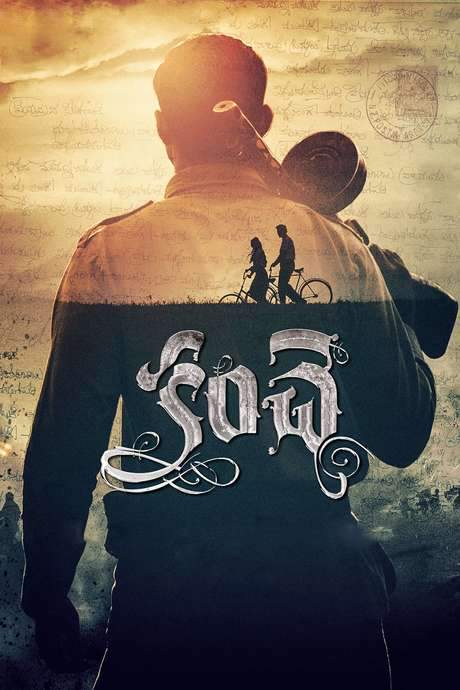
Kanche (2015) movie poster

Characters & Themes

Kanche (2015) Characters, Setting & Themes Explained

Release, runtime and language
2015 · 119 mins · Telugu
Directed by
Radha Krishna Jagarlamudi
Starring
Nikitin Dheer, Srinivas Avasarala, Satyam Rajesh, Gollapudi Maruti Rao, Ravi Prakash, Posani Krishna Murali

A love story played out against the backdrop of World War II.

On this page (6)
  1. 1 Characters explained (8)
  2. 2 Where & when it takes place
  3. 3 Themes & meaning (4)
  4. 4 Character & meaning questions
  5. 5 Movie threads
  6. 6 Every angle

8 main characters · contains spoilers

Kanche Characters Explained: Who Is Who

The main characters of Kanche (2015), heroes and villains: what drives them, how they change over the course of the story and what each of them reveals about the film's bigger ideas.

  • Haribabu (Varun Tej)

    From Devarakonda, Haribabu is the grandson of a local barber, representing a lower-caste perspective within a feudal landscape. His love for Sitadevi drives him to act with boldness and leadership, including a daring wartime plan to rescue trapped soldiers. He sacrifices himself in the attempt, dying with a hopeful smile that memory and love can outlive division.

    • 💪 Determination
    • ❤️ Romantic
    • 🎖️ Soldier
  • Sitadevi (Pragya Jaiswal)

    Sitadevi is the princess of the Rachakonda estate, balancing royal duty with personal longing. Her bond with Haribabu fuels conflict with family and tradition, leading to a complex path that includes an arranged marriage and a tragic end. Her death marks a turning point that catalyzes reconciliation and reflection on caste, power, and love.

    • 👑 Princess
    • 💔 Love vs Duty
    • 🌺 Resilience
  • Eeswar (Nikitin Dheer)

    Eeswar is Haribabu’s rival and a product of entrenched communal tensions, pressuring Sitadevi into marriage through force of tradition. His resentment fuels violence, though the war years cause him to confront the consequences of enmity. In the end, he honors Haribabu’s memory and supports the dream of living beyond caste lines.

    • 🔥 Pride
    • ⚔️ Rivalry
    • 🌱 Transformation
  • Daasu (Srinivas Avasarala)

    Daasu is Haribabu’s comrade and ally, providing loyalty and practical bravery. He helps navigate the treacherous wartime landscape and participates in the rescue mission, underscoring friendship as a force that transcends social barriers.

    • 🤝 Brotherhood
    • 🗺️ Loyal Ally
    • 💡 Resourceful
  • Pedababu (Gollapudi Maruti Rao)

    Pedababu is the elder patriarch whose actions ignite and sustain the feud between communities. He later orders the fence’s removal, embodying a shift from rigid tradition to communal healing. His role anchors the narrative’s arc from conflict to reconciliation.

    • 🧓 Patriarchy
    • 🪵 Tradition
    • 🤝 Reconciliation
  • Mahalakshmamma (Sowcar Janaki)

    Mahalakshmamma is Sitadevi’s grandmother, a matriarchal figure whose presence frames the intergenerational dynamics of duty and affection. Her support and memory influence the family’s choices during moments of crisis and loss.

    • 👵 Matriarch
    • 💖 Support
    • 🕊️ Wisdom
  • Elamandha (Posani Krishna Murali)

    Elamandha is a political or community figure who embodies the tensions and machinations around power. His presence adds layers to the social landscape, illustrating how leadership and manipulation intersect with cultural divides.

    • 🏛️ Power
    • 🗡️ Scheming
    • 🧩 Complex Ally
  • Seeta Devi's Grandfather (Anoop Puri)

    Anoop Puri’s character emphasizes familial lineages and generational memory, contributing to the pressure on Sitadevi and her choices. His presence anchors the social expectations surrounding marriage, loyalty, and tradition.

    • 🧓 Elder Counsel
    • 🗺️ Family Legacy
    • 💬 Mentor

Last updated: October 03, 2025 at 06:09

Was this helpful?

Setting

Where and When Does Kanche Take Place?

The setting of Kanche (2015): the year and time period, the places and locations, and how they shape the characters, the mood and the tension of the story.

Time period

1936-1945

The timeline begins in 1936 with the meeting of Haribabu and Sitadevi, set against a backdrop of colonial India. The narrative extends into the World War II era, reaching a climax around 1944-1945 as Indian troops participate in global conflict. The interwoven periods emphasize rising nationalism, caste tensions, and eventual calls for reconciliation.

Location

Madras, Devarakonda, Rachakonda estate, Madras Presidency

The story unfolds in the Madras Presidency, with key scenes at the Madras Cultural Club in the city and the rural town of Devarakonda. Sitadevi hails from the princely Rachakonda estate, highlighting a stark contrast between royal lineage and Haribabu’s humble, caste-based origins. The Kanche fence becomes a tangible symbol of the social and regional boundaries that the characters navigate throughout the narrative.

  • 🏛 Historical setting
  • 🗺️ British Raj era
  • 🏰 Royal estates and old town

Last updated: October 03, 2025 at 06:09

Was this helpful?

4 major themes

Kanche Meaning: Themes & Message Explained

What is Kanche (2015) really about? The emotional, social and philosophical themes the film keeps returning to, its symbolism and the message beneath the surface.

  • Caste Divide

    The film centers on a deep social fissure between Haribabu’s lower-caste background and Sitadevi’s royal lineage. The physical and symbolic barrier, epitomized by the fence called Kanche, literalizes how caste and community loyalties segregate people. Key events—an arranged marriage, family pressure, and violent clashes—show how rigid hierarchies fuel tragedy unless challenged by empathy and choice.

  • Love Across Boundaries

    Haribabu and Sitadevi’s bond challenges inherited social norms, illustrating how love can bridge class and caste divides. Their relationship drives the plot’s emotional core and motivates later acts of courage and sacrifice. The romance is tempered by duty and family expectations, culminating in a poignant, irreversible turn that underscores the costs of prejudice.

  • War and Morality

    Set against World War II, the story tests characters under extreme circumstances. The mission to rescue captured soldiers and evade Nazi forces frames a moral contrast between survival and vengeance. The war environment exposes humanity’s capacity for cooperation beyond old antagonisms, highlighting choices that resist racism and hatred.

  • Reconciliation and Peace

    The narrative culminates in forgiveness and the removal of the fence, symbolizing healing after collective trauma. Eeswar’s eventual recognition of Haribabu’s humanity—and his act of saluting his friend—embodies reconciliation. The communities choose coexistence, carrying forward memories of love and sacrifice to prevent a return to division.

Last updated: October 03, 2025 at 06:09

Was this helpful?

Character & theme questions

Kanche Characters & Meaning: Your Questions Answered

The questions people ask about Kanche (2015): who the characters really are, their relationships, what the symbols mean, where it takes place and what the movie is really about. Each answer contains spoilers.

Q1

What are the main locations where the story takes place?

The film is set in the Madras Presidency of British India, with key scenes at the Madras Cultural Club in the city and the rural town of Devarakonda. Sitadevi hails from the princely Rachakonda estate, highlighting a stark contrast between royal lineage and Haribabu's humble origins. The setting emphasizes the divide between urban colonial society and traditional rural communities.

  • madras presidency
  • devarakonda
  • rachakonda estate
  • british raj
  • locations
Q2

When does the movie's timeline take place?

The story begins in 1936 with the meeting of Haribabu and Sitadevi, set against colonial India. The narrative extends into the World War II era, with the climax around 1944-1945 as Indian troops participate in the global conflict. The interwoven periods highlight rising nationalism, caste tensions, and eventual calls for reconciliation.

  • 1936
  • 1945
  • world war 2
  • british india
  • colonial era
  • timeline
Q3

What does the Kanche fence represent in the film?

The Kanche fence serves as both a literal and symbolic barrier that separates communities and represents the rigid social and caste divisions in the story. It literalizes how caste and community loyalties segregate people, physically embodying the social fissure between Haribabu's lower-caste background and Sitadevi's royal lineage. The fence's eventual removal symbolizes healing and reconciliation after collective trauma.

  • kanche
  • fence
  • caste barrier
  • social divide
  • symbolism
Q4

How does the film address caste divisions?

The film centers on the deep social fissure between Haribabu's lower-caste background and Sitadevi's royal lineage. Key events including an arranged marriage, family pressure, and violent clashes show how rigid hierarchies fuel tragedy. The narrative demonstrates that these divisions can only be overcome through empathy, choice, and personal sacrifice.

  • caste divide
  • social hierarchy
  • discrimination
  • lower caste
  • royal lineage
Q5

Who is Haribabu and what is his background?

Haribabu is a young man from Devarakonda who represents the lower-caste perspective within the feudal landscape. He is the grandson of a local barber, which places him at the opposite end of the social spectrum from Sitadevi's royal family. His love for Sitadevi drives him to act with boldness and leadership, including a daring wartime rescue mission.

  • haribabu
  • varun tej
  • lower caste
  • devarakonda
  • protagonist
Q6

Who is Sitadevi and what is her position in the story?

Sitadevi is the princess of the Rachakonda estate, balancing royal duty with her personal longing for Haribabu. Her relationship with him creates intense conflict with family and tradition. Her complex path includes an arranged marriage and ultimately a tragic end that catalyzes reconciliation between the communities.

  • sitadevi
  • pragya jaiswal
  • princess
  • rachakonda
  • love interest
Q7

Who is Eeswar and what is his relationship to the main characters?

Eeswar is Haribabu's rival and represents the product of entrenched communal tensions. He pressures Sitadevi into marriage through force of tradition and social expectation. His resentment fuels violence, though the war years cause him to confront the consequences of enmity. In the end, he honors Haribabu's memory and supports living beyond caste lines.

  • eeswar
  • nikitin dheer
  • rival
  • antagonist
  • communal tension
Q8

How does World War II factor into the narrative?

Set against World War II, the story tests characters under extreme circumstances. The war creates a mission to rescue captured soldiers and evade Nazi forces, providing a moral contrast between survival and vengeance. The war environment exposes humanity's capacity for cooperation beyond old antagonisms, highlighting choices that resist racism and hatred.

  • world war 2
  • ww2
  • soldiers
  • rescue mission
  • wartime
  • nato
Q9

What makes the love story in Kanche significant?

Haribabu and Sitadevi's bond challenges inherited social norms, illustrating how love can bridge class and caste divides. Their romance is tempered by duty and family expectations, culminating in a poignant, irreversible turn that underscores the costs of prejudice. The relationship drives the plot's emotional core and motivates acts of courage and sacrifice.

  • forbidden love
  • romance
  • cross caste
  • love story
  • sacrifice
Q10

How does the film approach reconciliation and peace?

The narrative culminates in forgiveness and the removal of the Kanche fence, symbolizing healing after collective trauma. Eeswar's eventual recognition of Haribabu's humanity, and his act of saluting his friend, embodies reconciliation. The communities choose coexistence, carrying forward memories of love and sacrifice to prevent a return to division.

  • reconciliation
  • forgiveness
  • peace
  • healing
  • resolution
  • closure

Movie threads

More Movies Like Kanche, by Mood & Story

Curated lists built around what makes Kanche tick: the same mood, the same kind of story or the same emotional payoff. Each list explains why these movies belong together.

Epic forbidden romance movies like Kanche

Passionate romances that defy societal rules amidst major historical events. If you loved the passionate, high-stakes romance in Kanche, this list features movies with similar stories of love defying society and history. Discover other dramatic tales where personal relationships are tested against the backdrop of war, social change, and overwhelming adversity.

  • romantic
  • tragic
  • hopeful
  • tense
  • epic
  • grieving
  • Tone: romantic, tragic, hopeful
  • Pacing: steady, epic
Why these movies?

The story pattern: These narratives typically follow a couple whose love is forbidden by social norms—be it caste, class, or wartime allegiances. Their personal journey intertwines with a major historical event, which amplifies the stakes and external conflicts. The plot often involves sacrifice, separation, and a struggle to hold onto love in the face of overwhelming opposition.

Why they belong together: Movies are grouped here for their shared focus on an intense, socially forbidden romance set within a grand historical context. They share a heavy emotional weight, high intensity from both personal and historical conflict, and a tone that balances romantic passion with the grim realities of their setting.

Movies about healing after tragedy like Kanche

Stories where profound personal loss eventually leads to hard-worn societal or personal healing. Fans of Kanche's poignant ending will appreciate these films that explore similar themes of reconciliation and hope emerging from devastation. Find movies that, like Kanche, deal with heavy themes of loss and grief but ultimately offer a bittersweet sense of healing and societal progress.

  • grieving
  • reflective
  • melancholic
  • hopeful
  • redemptive
  • somber
  • Tone: bittersweet, reflective, melancholic
  • Pacing: steady, reflective
Why these movies?

The story pattern: The narrative pattern involves characters enduring severe trauma, violence, or loss, often on both a personal and community level. The central journey is one of grieving and confrontation with the past. The culmination is not a purely happy ending, but a somber, earned sense of reconciliation, where characters or communities find a way to heal and move forward, carrying the scars but not being defined solely by them.

Why they belong together: These films are connected by their core emotional arc: moving from deep sadness and conflict toward a complex, bittersweet resolution. They share a heavy emotional weight, a steady pacing that allows for reflection, and a tone that honestly portrays grief while leaving room for a guarded, realistic hope.

Every angle

Kanche (2015) Explained: Plot, Timeline & Characters

Everything about Kanche in one place: what happens in the plot summary, the timeline in chronological order, the characters and meaning and a spoiler-free summary. What's After the Movie adds the cast, box office and post-credit scenes.

Coming soon on iOS and Android

The Plot Explained Movie Summary App

Plot summaries, endings explained and timelines on your phone. Catch up on any movie in minutes, save your favorites and never miss a twist again.

Be the first to know when we launch. Your email stays private, always.

Learn more about the app