Plot Explained Spoilers guaranteed!
Plot Explained

Browse by genre

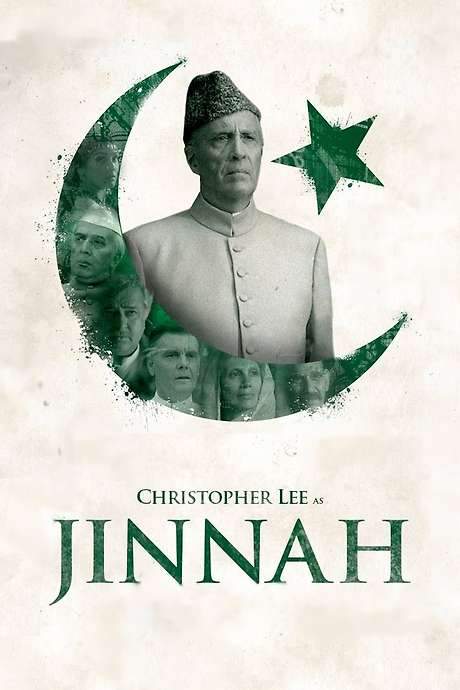
Jinnah (1998) movie poster

Plot Summary

Jinnah (1998) Plot Summary Explained

Release, runtime and language
1998 · 110 mins · English
Directed by
Jamil Dehlavi
Starring
Christopher Lee, Indira Varma, James Fox, Shashi Kapoor, Ian Gelder, Vernon Dobtcheff

Through flashbacks, the film follows Muhammad Ali Jinnah’s fight for a separate Muslim state, leading to the 1947 partition. It shows his clashes with Lord Mountbatten, Gandhi and Nehru, his refusal to become prime minister, and earlier political moves from 1916, as his soul seeks rest.

On this page (5)
  1. 1 Where to watch
  2. 2 What happens: full plot
  3. 3 Plot questions answered
  4. 4 Movie threads
  5. 5 Every angle

Where to watch

Where to Watch Jinnah (1998)

Where can you watch Jinnah? Stream, rent or buy it in the US, including on Amazon Video: current JustWatch availability with up-to-date prices.

Streaming availability powered by JustWatch

Full plot summary · contains spoilers

What Happens in Jinnah: Full Plot Summary

The whole story of Jinnah (1998) explained, from the opening scene to the final frame: every key event, every twist and what it all adds up to. Read it as a quick recap before the sequel, to check a scene you missed, or to finally understand what really happened.

A guide takes Muhammad Ali Jinnah, Christopher Lee, to 1947, where, at the Cromwell Conference with James Fox, Jinnah demands a homeland for Indian Muslims. The film anchors this moment in the voice of Professor Stanley Wolpert, guiding the viewer through a life that blends political calculation with personal sacrifice. What follows unfolds in a series of vivid flashbacks, tracing Jinnah’s early years, his steadfast pursuit of moderation, and the personal costs that shaped his path to a new nation.

Flashbacks reveal Jinnah’s marriage to Rattanbai Petit, known as Ruttie Jinnah, a Parsi woman whose courtship defies her parents’ opposition and the age gap between them. The story sketches how love and principle collide with tradition, pulling him into a complex alliance between public duty and private longing. The couple’s union is a bold act, even as it sows tensions between Jinnah and his in-laws, and the strain of public life eventually pushes them apart. Ruttie’s departure and their separation leave a deep imprint on Jinnah, a wound that shadows his political evolution as he navigates a nation on the brink.

The film then follows Jinnah back to British India, where he embraces a political path focused on moderation amid growing Hindu–Muslim antagonism. The personal cost of this stance becomes clear as the strain with Ruttie deepens, and her passing from cancer strikes a heavy blow, shaping his resolve to lead a cohort of Muslims toward a distinct political destiny. This period also marks a turning point as Jinnah hones his message and builds a platform for a new two-nation dynamic, even as he confronts fierce opposition from those who fear concession and coexistence.

At the Muslim League annual conference in 1940, Jinnah speaks to thousands and delivers a firm, forward-looking vision for a divided subcontinent. He articulates the idea of Pakistan as a homeland for Muslims, underscoring the legitimacy of a separate political future while insisting that faith should not justify sectarian hatred. The scene crystallizes the movement’s momentum, laying the groundwork for pivotal changes to come, including the eventual acceptance of the two-nation theory within the party’s ranks. The film makes clear how this moment reframes the struggle, linking it to hard choices about unity, identity, and sovereignty.

During a reflective exchange at another gathering, the Guide asks who else Jinnah loves besides Ruttie. He names his daughter Dina, a moment that adds a human dimension to a figure often portrayed in stark political terms, and it reminds viewers of the personal stakes behind the public decisions that will soon reshape the Subcontinent. Dina’s later fate—and her decision to stay in Bombay with her husband and child—echoes the personal costs of political upheaval and exile.

As 1947 arrives, the film follows the sharpening tensions at a Muslim League conference where fanatics attack, questioning whether Pakistan can be a Muslim state that also guarantees rights for women and non-Muslims. Jinnah responds with a principled defense: Islam does not require fanaticism, but a nation needs visionaries who can build it. The partition is set in motion, and the subsequent migration stage becomes a grim tableau of sorrow and violence, witnessed by Jinnah and the Guide in a shared moment of reckoning. The tragedy of refugees underscores the moral stakes of the new order, even as the political leadership is forced to act.

In the aftermath of independence, Pakistan emerges as a modern nation under Jinnah’s leadership, who is revered as Quaid-e-Azam. He waits for the first train carrying Muslims who left India for their new homeland, but the journey ends in catastrophe: the train arrives and most passengers are killed, save for one infant. The somber moment crystallizes the human cost of partition and the fragility of nation-building in the face of chaos.

The film then shifts to the Kashmir crisis, with Fatima Jinnah, Shireen Shah, and Lady Edwina Mountbatten, Maria Aitken, visiting refugees and witnessing the humanitarian toll. Mountbatten’s role and the political maneuvering around Kashmir intensify, as the Hindu Maharaja Sir Hari Singh hesitates to join either nation. When Indian troops are airlifted into the region and Pakistani irregulars push the population toward upheaval, Jinnah objects to foreign intervention and orders Pakistani forces to move into Kashmir, setting the stage for ongoing conflict in the years that follow.

The story culminates in a surreal, symbolic finale where Jinnah and Lord Louis Mountbatten, the last Viceroy, appear in a Heavenly Court. The two debate betrayal and accountability, traveling back in time to confront the tragedy of the refugees and the upheaval that divided Punjab. As the scene resolves, the people at the center of the conflict cry out in unison, a fervent chorus that encapsulates the enduring mission of the new nation.

> "Pakistan Zindabad"
Last updated: October 09, 2025 at 11:02

Was this helpful?

Plot questions answered

Jinnah Plot Explained: Your Questions Answered

The questions people ask most about Jinnah (1998): what happens in the confusing scenes, why the characters do what they do, the twists, hidden details and what the ending means. Each answer contains spoilers.

Q1

Who is the guide that accompanies Jinnah throughout the film?

The guide is meant to represent Professor Stanley Wolpert, the historian and biographer whose voice narrates the film. He serves as a narrative device to lead viewers through Jinnah's life, providing context and historical framing. The guide interacts with Jinnah directly, asking questions that prompt reflection on his choices and legacy.

Foreshadowing: Early scenes establish the guide's presence as Jinnah approaches the 1947 Cromwell Conference, signaling this will be a reflective journey through memory.

  • guide
  • stanley wolpert
  • narrator
  • historian
Q2

Why does Jinnah marry Ruttie despite significant obstacles?

Jinnah marries Ruttie (Rattanbai Petit), a Parsi woman, because they genuinely fall in love. The marriage defies religious boundaries and a significant age gap, causing conflict with Ruttie's parents who oppose the union. This personal choice reflects Jinnah's willingness to stand against tradition for what he believes in, a trait that parallels his later political convictions.

Foreshadowing: The courtship scene establishes that Jinnah prioritizes principle over societal approval, foreshadowing his defiant approach to nation-building.

  • ruttie
  • marriage
  • love
  • rani
Q3

What causes the strain between Jinnah and Ruttie leading to their separation?

The strain stems from Jinnah's increasing immersion in political life, which pulls him away from his marriage. By 1922, Jinnah champions moderation amid Hindu-Muslim tensions, but this political isolation takes a personal toll. Ruttie grows distant as his duties consume him, and they eventually separate, with Ruttie leaving their home.

Foreshadowing: The early scenes of their courtship contrast sharply with later tension, showing how political ambition gradually undermines their relationship.

  • ruttie
  • separation
  • marriage
  • politics
Q4

How does Ruttie's death impact Jinnah's political direction?

Ruttie dies of cancer in the late 1920s, leaving Jinnah devastated. Her death profoundly affects him and strengthens his resolve to pursue the creation of Pakistan. The personal loss transforms his grief into determined political action, sharpening his focus on establishing a separate homeland for Muslims as his defining mission.

Foreshadowing: Earlier scenes show Ruttie's departure as a wound that shadows Jinnah's political evolution.

  • ruttie
  • death
  • cancer
  • grief
Q5

What is the two-nation theory that Jinnah advocates?

The two-nation theory is the political concept that Hindus and Muslims constitute two distinct nations that cannot be united under a single state. Jinnah articulates this at the 1940 Muslim League conference in Lahore, arguing that Muslims deserve a separate homeland where they can preserve their identity, culture, and political interests. This theory becomes the foundation for the demand for Pakistan.

Foreshadowing: Jinnah's earlier advocacy for moderation between Hindus and Muslims gives way to this more definitive separation as communal tensions escalate.

  • two-nation theory
  • pakistan
  • muslim league
  • partition
Q6

Why does Jinnah become Governor-General instead of Prime Minister of Pakistan?

Jinnah chooses to serve as Governor-General, the ceremonial head of state, while designating Liaquat Ali Khan as the first Prime Minister. This decision reflects Jinnah's belief that his role as the founder and unifying figure of Pakistan transcended daily political management. He saw himself as above party politics, serving as the symbol of the new nation rather than its administrative leader.

Foreshadowing: His earlier refusal to become Prime Minister is mentioned in the film description, establishing this as a deliberate choice rooted in his vision of national leadership.

  • governor-general
  • liaquat ali khan
  • prime minister
  • leadership
Q7

What happens when the first refugee train arrives in Pakistan?

Jinnah waits hopefully for the first train carrying Muslims who have left India for their new homeland. However, the train arrives to a catastrophic scene: most of the passengers have been killed during the journey, and only an infant child survives. This tragic moment crystallizes the immense human cost of partition and haunts Jinnah as he witnesses the violence firsthand.

Foreshadowing: The partition and mass migration are shown as violent events, with the train tragedy representing the culmination of that brutality.

  • refugee train
  • massacre
  • partition
  • violence
Q8

What triggers the Kashmir conflict after partition?

The Kashmir conflict erupts when the Hindu Maharaja Sir Hari Singh hesitates to join either India or Pakistan. In October 1947, he finally accedes to India, prompting Indian troops to be airlifted into the region. Jinnah objects to this foreign intervention and orders Pakistani forces to move into Kashmir, triggering the First Indo-Pakistani War. The dispute over Kashmir's accession becomes a permanent source of conflict between the two nations.

Foreshadowing: Earlier scenes show Fatima Jinnah and Lady Edwina Mountbatten visiting refugees in Kashmir, foreshadowing the region's central role in post-partition tensions.

  • kashmir
  • maharaja hari singh
  • india
  • pakistan
  • conflict
Q9

Why does Dina stay in Bombay instead of moving to Pakistan?

Jinnah's daughter Dina marries a Parsi man, Neville, against Jinnah's wishes, choosing to remain in Bombay with her husband and child. This personal decision reflects the same kind of inter-religious love that Jinnah himself pursued with Ruttie, yet in this case, Jinnah cannot accept it. The separation symbolizes the personal costs of political upheaval, as Dina represents the familial ties severed by partition.

Foreshadowing: The Guide specifically asks Jinnah who he loves besides Ruttie, prompting him to name Dina, highlighting the emotional weight of their eventual separation.

  • dina
  • bombay
  • daughter
  • family
Q10

What is the meaning of the Heavenly Court ending where Jinnah and Mountbatten appear?

The surreal ending places Jinnah and Lord Mountbatten in a Heavenly Court where they debate betrayal and accountability. They travel back through time to witness the refugee tragedy together. This symbolic sequence represents Jinnah's reckoning with the moral costs of partition, questioning whether the creation of Pakistan justified the immense suffering. The crowd's chant of "Pakistan Zindabad" (Long live Pakistan) closes the film, affirming the nation's enduring mission despite its painful birth.

Foreshadowing: The Heavenly Court is foreshadowed by the reflective Guide structure throughout the film, building toward this moment of ultimate judgment.

  • heavenly court
  • mountbatten
  • ending
  • symbolism
Q11

Why is Jinnah referred to as Quaid-e-Azam?

Quaid-e-Azam means "Great Leader" in Urdu, a title bestowed upon Jinnah to honor his role as the founder of Pakistan. After independence in 1947, he becomes the nation's first Governor-General and is celebrated as the architect of the Pakistani state. The title reflects his stature as the man who united Muslims under the cause of a separate homeland and guided them to nationhood.

Foreshadowing: The title is introduced as Pakistan emerges as a new nation, marking Jinnah's culmination of decades of political struggle.

  • quaid-e-azam
  • founder
  • leader
  • title
Q12

How does Jinnah respond when fanatics attack the 1947 Muslim League conference?

When fanatics attack a Muslim League conference in 1947 and question whether Pakistan can guarantee rights for women and non-Muslims, Jinnah delivers a principled defense. He states that Islam does not require fanaticism and that a nation needs visionaries, not extremists, to build it. His response emphasizes secular governance within an Islamic framework, rejecting sectarian violence as incompatible with the nation's founding ideals.

Foreshadowing: This moment occurs as partition is being implemented, highlighting the internal tensions within the Muslim community about the nature of the new state.

  • fanatics
  • conference
  • islam
  • visionary
Q13

What role does Fatima Jinnah play in the film?

Fatima Jinnah, Jinnah's sister, appears as a supporting moral figure throughout the film. She joins Lady Edwina Mountbatten in visiting Kashmiri refugees, witnessing the humanitarian crisis firsthand. Fatima represents the personal dimension of Jinnah's life, someone who stands by him through the political turmoil. She is referenced alongside Ruttie and Dina as the women who shape his emotional world.

Foreshadowing: Fatima's presence at refugee camps foreshadows her later role as a symbol of compassion within the independence movement.

  • fatima
  • sister
  • refugees
  • support

Movie threads

More Movies Like Jinnah, by Mood & Story

Curated lists built around what makes Jinnah tick: the same mood, the same kind of story or the same emotional payoff. Each list explains why these movies belong together.

Bittersweet nation building epics like Jinnah

Historical epics where founding a nation comes with a heavy personal and moral cost. For viewers looking for movies like Jinnah. This collection features sweeping historical dramas that explore the bittersweet triumphs of leaders who fought for independence or nationhood, often at a tremendous human cost, blending epic political narratives with heavy emotional weight.

  • historic
  • somber
  • ideological
  • tragic
  • determined
  • reflective
  • Tone: melancholic, reflective
  • Pacing: steady, epic
Why these movies?

The story pattern: Stories in this thread follow a central figure on a determined, often solitary quest to forge a new state or ideology. The narrative arc culminates in a political victory, but this success is intrinsically linked to personal sacrifice, tragic violence, or the creation of unresolved conflicts, resulting in a deeply contemplative and bittersweet conclusion.

Why they belong together: Movies are grouped here for their shared focus on the emotionally charged process of nation-building, characterized by a melancholic tone, high-stakes political drama, and a final feeling that achievement is inextricably tied to loss. They share a heavy emotional weight and a steady, reflective pacing.

Solemn leadership biographies with the feel of Jinnah

Intimate portraits of leaders burdened by the weight of history and personal duty. If you liked the reflective and heavy portrayal of Muhammad Ali Jinnah, explore these movies. Discover similar solemn biographies of political or ideological leaders, films that balance historical drama with a deep character study of a figure grappling with immense responsibility and personal sacrifice.

  • somber
  • reflective
  • heavy
  • dramatic
  • historic
  • ideological
  • Tone: somber, dramatic, heavy
  • Pacing: steady, character-driven
Why these movies?

The story pattern: The narrative pattern centers on a single, iconic figure, often using flashbacks or a reflective framing device to explore key life events. The journey is internal as much as external, charting the leader's unwavering determination against growing personal isolation or tragedy, leading to a conclusion that questions the very nature of their legacy.

Why they belong together: These films share a specific mood: a somber, dramatic, and heavy atmosphere focused on the psychological weight of leadership. They are characterized by a steady pacing that allows for deep character immersion, a high emotional intensity, and a tone that is consistently melancholic and ideologically charged.

Every angle

Jinnah (1998) Explained: Plot, Timeline & Characters

Everything about Jinnah in one place: what happens in the plot summary, the timeline in chronological order, the characters and meaning and a spoiler-free summary. What's After the Movie adds the cast, box office and post-credit scenes.

Coming soon on iOS and Android

The Plot Explained Movie Summary App

Plot summaries, endings explained and timelines on your phone. Catch up on any movie in minutes, save your favorites and never miss a twist again.

Be the first to know when we launch. Your email stays private, always.

Learn more about the app