Plot Explained Spoilers guaranteed!
Plot Explained

Browse by genre

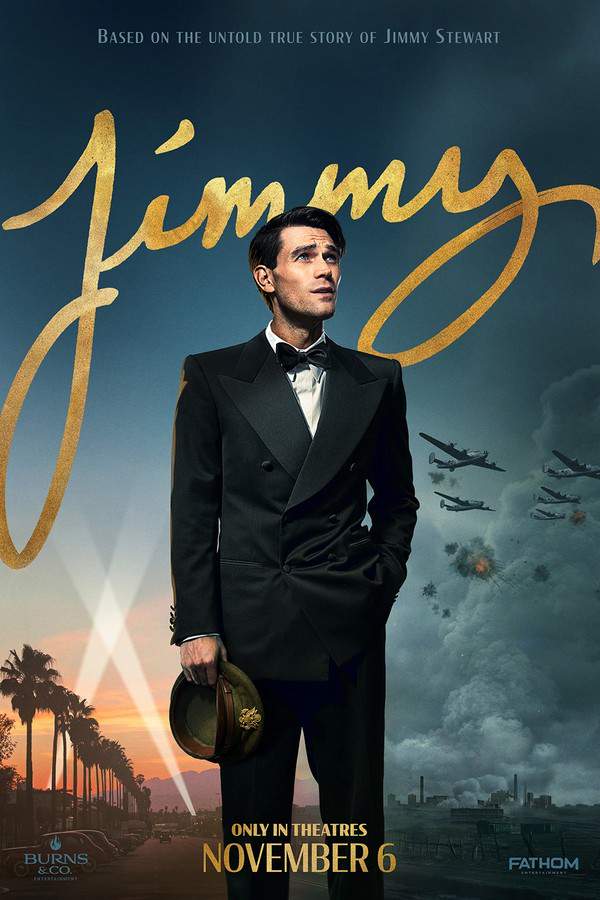
Jimmy (2026) movie poster

Timeline

Jimmy (2026) Timeline Explained – Every Event in Order

Release, runtime and language
2026 · Fathom Events · English
Echo score 57
Loading streaming availability…
Directed by
Aaron Burns
Starring
Rob Riggle, Christopher McDonald, K.J. Apa, Karolyn Grimes, Max Casella, Jason Alexander
Budget
$15M

Jimmy tells the true story of beloved actor Jimmy Stewart and the iconic role that saved him. It follows his rise from winning the Oscar for The Philadelphia Story to enlisting as a pilot at start of World War II, flying missions over Europe and rising to colonel. Broken on his return, he finds redemption as George Bailey in It’s a Wonderful Life.

On this page (5)
  1. 1 Where to watch
  2. 2 Events in order (20)
  3. 3 Timeline questions answered
  4. 4 Movie threads
  5. 5 Every angle
Loading streaming availability…

20 events in order · contains spoilers

Jimmy Timeline: Events in Chronological Order

Every key event of Jimmy (2026) in order, scene by scene, with when and where it takes place. Use it to untangle flashbacks, time jumps and parallel storylines, to refresh your memory before the sequel or to find the exact scene you are thinking of.

  1. Winning the Oscar

    On February 27, 1941, James Stewart wins the Academy Award for Best Actor for his performance in The Philadelphia Story. The honor crowns the peak of his pre-war Hollywood success and marks a triumphant high point in his acting career.

    When
    February 27, 1941
  2. The Draft Letter

    The day after his Oscar victory, Stewart receives a letter from the draft board instructing him to report for military training. The sudden summons upends his celebratory moment and forces him to weigh his career against serving his country.

    When
    February 28, 1941
  3. Declining a Deferment

    At MGM, Stewart informs studio head Louis B. Mayer about the draft letter, and Mayer offers to secure him an 'occupational deferment' from service. After his friend Frank Capra screens him newsreel footage of the Nazi invasion sweeping across Europe, Stewart resolves that he must serve.

    Where
    MGM
  4. A Father's Plea

    Stewart returns to his childhood home in Indiana, Pennsylvania, where his father Alexander, a war veteran himself, tries to persuade him not to serve. Despite his father's heartfelt objections, Stewart's determination to fight remains unchanged.

    Where
    Indiana, Pennsylvania
  5. Enlisting as a Combat Pilot

    Stewart enlists as a combat pilot in the U.S. Army Air Force and reports for training at Moffett Field, where he meets Colonel Terrill. While in training, he also appears in the short film Winning Your Wings to help recruit airmen.

    Where
    Moffett Field
  6. Deployment to England

    In 1943, Stewart departs for the European theater, where he is assigned to fly B-24s from RAF Tibenham as part of the 445th Operations Group. Serving as the squadron's commanding officer, he prepares his men for combat missions over occupied Europe.

    When
    1943
    Where
    RAF Tibenham, England
  7. The Loss of 'Sunflower Sue'

    As commanding officer, Stewart is warned that a German U-boat has been spotted over the Atlantic, and the low-flying 'Sunflower Sue' is shot down. Concerned that lingering near the crash site will endanger the remaining aircraft in the formation, he continues flying on to his base in England. Subsequent search and rescue efforts fail to locate the fourteen-man crew.

    Where
    Over the Atlantic
  8. Grief and Lady Julia

    After arriving at RAF Tibenham, a guilt-ridden Stewart struggles to write personal letters consoling the families of the men killed in action. Seeking solace, he prays at a local church, where he meets Lady Julia Tyndall, an Englishwoman whose husband perished during the war.

  9. The Kiel Raid

    Stewart leads the 703d Bomb Squadron in B-24s on a successful mission to bomb a U-boat factory in Kiel, Germany. In the aftermath, he reconnects with his old friend Frank Capra and begins a romance with Lady Julia.

    Where
    Kiel, Germany
  10. Dogfight Over France

    Stewart leads his squadron on a combat mission over Nazi-occupied France, where they clash with the Luftwaffe in a vicious dogfight. The engagement costs the squadron heavy losses and leaves Stewart further traumatized by the war.

    Where
    Nazi-occupied France
  11. Promoted to Major

    By December 1943, Stewart's leadership in combat earns him a promotion to the rank of major. The recognition, however, offers little comfort as the toll of war continues to mount around him.

    When
    December 1943
  12. Ambush at RAF Tibenham

    Back at RAF Tibenham, the air base is ambushed by Nazi planes, which destroy their aircraft and kill service members of Stewart's squadron. The surprise attack deals another devastating emotional blow to Stewart and his men.

    Where
    RAF Tibenham, England
  13. A Promotion and a Farewell

    By June 1944, Stewart is promoted to lieutenant colonel. He is then ordered to take a mandatory rest and relaxation leave, during which he sees Lady Julia one last time.

    When
    June 1944
  14. Homecoming

    By August 1945, Stewart, now a decorated colonel, returns to his hometown of Indiana, Pennsylvania. Haunted by everything he experienced overseas, he struggles to readjust to civilian life.

    When
    August 1945
    Where
    Indiana, Pennsylvania
  15. A Rocky Return to Hollywood

    Back in Hollywood, Stewart has a hard time reconnecting with his acting career. When Louis B. Mayer proposes that he star as himself in an autobiographical war film about his military service, Stewart declines the suggestion.

    Where
    Hollywood
  16. Offered the Role of George Bailey

    Frank Capra offers Stewart the lead role of George Bailey in his upcoming film It's a Wonderful Life. Unsure that he is the right actor for the part, Stewart is finally convinced when Capra reads him the passage in which Bailey delivers an impassioned speech against Mr. Potter.

  17. Haunted on Set

    During filming, Stewart, still haunted by his wartime memories, struggles to deliver his lines. During breaks, Capra and his co-star Lionel Barrymore privately console him, encouraging him to channel his trauma into his performance.

  18. The Off-Script Prayer

    For the scene in which George Bailey prays for help, Stewart reflects on his fallen comrades. Moved by their memory, he goes off-script to finish the scene, producing one of the film's most heartfelt moments.

  19. Marriage and Family

    In 1947, Stewart meets Gloria Hatrick McLean, and the two marry two years later. He adopts her children, Ronald and Michael, and the couple later welcomes twin daughters, Judy and Kelly.

    When
    1947
  20. Brigadier General — Epilogue

    An epilogue reveals that Stewart eventually reached the rank of brigadier general. He flew his last combat mission during the Vietnam War, completing a life that spanned both Hollywood stardom and dedicated military service.

Last updated: November 28, 2026 at 19:33

Was this helpful?

Timeline questions answered

Jimmy Timeline Explained: Your Questions Answered

When does it happen, and why in that order? The questions people ask about the chronology of Jimmy (2026): time jumps, flashbacks, cause and effect between scenes and the correct order of events, each answered with spoilers.

Q1

Why did James Stewart keep flying after the Sunflower Sue was shot down?

Stewart continued toward RAF Tibenham because remaining near the crash site would have endangered the rest of his formation. He therefore chose to protect the larger group rather than immediately turn back toward the downed bomber. The search-and-rescue effort failed to find the fourteen-man crew, leaving him haunted by the cost of that decision.

Foreshadowing: Stewart's decision to continue to base foreshadows the survivor's guilt that drives his grief letters and later prayer-scene performance.

  • sunflower sue
  • b-24 bomber
  • german u-boat
  • survivor guilt
  • stewart decision
Q2

Why was George Bailey's prayer scene improvised?

During the prayer scene, Stewart began thinking about the airmen he had lost and went off-script to complete the moment with an improvised emotional ending. The performance channeled guilt and grief that he had struggled to express while writing letters to the crews' bereaved families. It became the production's emotional peak because the fictional prayer let him embody his own mourning.

Foreshadowing: His repeated struggle to write to bereaved families directly foreshadows what emerges during the prayer scene.

  • prayer scene
  • improvised performance
  • fallen airmen
  • james stewart
  • george bailey
Q3

How did George Bailey give Stewart a form of redemption?

The role of George Bailey gave Stewart a way to express grief, despair, and hope through a character whose life is repeatedly saved by other people. Its emotional parallels to Stewart's losses turned acting into a form of catharsis rather than a simple return to his prewar career. Jimmy presents the production as meaningful redemption, but not as a cure for his trauma.

Foreshadowing: Stewart's grief over fallen airmen and his difficulty writing to bereaved families foreshadow the release he finds through Bailey's crisis and prayer.

  • george bailey
  • catharsis
  • redemption
  • wartime grief
  • acting comeback
Q4

Why did James Stewart enlist right after winning the Oscar?

In Jimmy, Stewart's decision to enlist is driven by Capra's newsreels showing Nazi forces invading Europe, not by a sudden loss of interest in acting. MGM chief Louis B. Mayer offers an occupational deferment, but Stewart refuses it and chooses military service despite his father's objections. The timing makes his enlistment a deliberate break from Hollywood success rather than a reaction to the draft notice alone.

Foreshadowing: Capra's newsreel screening foreshadows that the European invasion will define Stewart's later combat trauma.

  • james stewart
  • military enlistment
  • world war ii
  • occupational deferment
  • frank capra
Q5

Why did the loss of the Sunflower Sue haunt Stewart?

The loss haunted Stewart because fourteen men died, and his decision to continue toward base meant he left them without immediate rescue. He turned that unresolved guilt into the painful task of writing consolation letters to their families. Those letters made his bereavement personal rather than treating the casualties as an abstract part of the war.

Foreshadowing: His difficulty writing the families' letters foreshadows the emotional release of the improvised prayer scene.

  • sunflower sue
  • fourteen crew members
  • grief letters
  • survivor guilt
  • wartime trauma
Q6

What made Stewart 'broken' when he returned home?

Jimmy attributes Stewart's condition to accumulated combat trauma, not to one isolated defeat. The unrecovered Sunflower Sue crew, the heavy losses in the dogfight over France, and the Nazi ambush at RAF Tibenham each compounded his guilt and grief. The result was a decorated colonel who struggled to resume his Hollywood career and adjust to civilian life.

Foreshadowing: The RAF Tibenham ambush, which destroys aircraft and kills squadron members, is the final wartime blow before his troubled homecoming.

  • stewart trauma
  • dogfight over france
  • raf tibenham ambush
  • homecoming
  • ptsd
Q7

Why did Stewart struggle to perform George Bailey on It's a Wonderful Life?

Stewart struggled because unresolved wartime memories surfaced whenever George Bailey's script required emotional vulnerability. Capra and Lionel Barrymore supported him privately during breaks and urged him to use those memories rather than hide them. As his performance deepened, the production became a way for him to process grief instead of merely portraying it.

Foreshadowing: The consolation letters to bereaved families show that suppressed grief was already affecting his work and relationships before filming began.

  • it's a wonderful life
  • stewart performance
  • lionel barrymore
  • frank capra
  • war trauma
Q8

How did Frank Capra convince Stewart to play George Bailey?

Capra won Stewart over by reading him George Bailey's impassioned speech against Mr. Potter. Although Stewart had doubted that he was right for the role, the passage gave him an emotionally urgent performance to respond to. In Jimmy, that choice becomes the bridge between his damaged war experience and his greatest postwar performance.

Foreshadowing: Capra's use of the Potter speech as the deciding moment foreshadows how the role will unlock Stewart's buried emotions.

  • george bailey role
  • mr potter speech
  • frank capra
  • james stewart
  • it's a wonderful life
Q9

Did James Stewart really fly a combat mission during the Vietnam War?

Yes. Stewart eventually became a brigadier general and flew his final combat mission during the Vietnam War, decades after serving as a B-24 pilot in World War II. Jimmy uses this epilogue to show that his return to acting did not end his military service.

Foreshadowing: His recruitment-film appearance during training foreshadows that military aviation would remain part of his life into the Vietnam era.

  • vietnam war
  • brigadier general
  • final combat mission
  • james stewart
  • military service
Q10

Why did Stewart turn down Louis B. Mayer's war movie?

Louis B. Mayer wanted Stewart to play himself in an autobiographical film about his military service, but Stewart declined and accepted Capra's George Bailey role instead. Jimmy links the refusal to his still-present trauma and inability to return comfortably to prewar Hollywood. The contrast makes the decision part of Stewart's larger struggle to rebuild a postwar identity.

Foreshadowing: His struggle to reconnect with Hollywood foreshadows both Mayer's proposal and Capra's offer.

  • autobiographical war film
  • louis b. mayer
  • george bailey
  • postwar hollywood
  • frank capra
Q11

How did James Stewart meet Lady Julia?

Stewart met Lady Julia Tyndall while praying at a church near RAF Tibenham after the crew losses left him overwhelmed by grief. She had also lost her husband, so their shared bereavement gave him a source of companionship during the war. The connection developed into a romance and ended with a final meeting during his mandatory leave in 1944.

Foreshadowing: His recurring prayers and difficulty comforting grieving families set up his meeting with Lady Julia.

  • lady julia
  • lady julia tyndall
  • raf tibenham
  • wartime grief
  • romance
Q12

Why was the raid on the U-boat factory in Kiel important?

The Kiel raid was important because Stewart's 703d Bomb Squadron struck a factory producing German U-boats, the same submarine threat behind the Sunflower Sue's loss. Hitting their production could reduce the number of submarines operating against Allied forces. The successful mission did not end Stewart's trauma, and the film continues to show that combat success could not cancel the surrounding casualties.

Foreshadowing: The Sunflower Sue's destruction by a U-boat foreshadows why bombing a U-boat factory becomes a strategic objective.

  • kiel raid
  • u-boat factory
  • 703d bomb squadron
  • b-24
  • anti-submarine warfare
Q13

What happened in James Stewart's family life after the war?

After the war, Stewart met Gloria Hatrick McLean in 1947, married her in 1949, and built a blended family with her two sons. The couple later had twin daughters, Judy and Kelly, bringing the household to four children. This quieter domestic life offered a form of stability after his combat trauma and troubled return to Hollywood.

  • gloria hatrick mclean
  • james stewart marriage
  • blended family
  • judy and kelly
  • postwar life
Q14

Why did James Stewart appear in Winning Your Wings during pilot training?

Stewart appeared in Winning Your Wings because it was a military recruitment film and his popularity could help persuade men to become airmen. Taking part marked his public transition from Hollywood star to military representative. It was a recruitment effort rather than a substitute for combat training, which continued until he deployed to Europe.

Foreshadowing: Stewart's appearance in a recruitment film foreshadows the military public role that continues long after the war.

  • winning your wings
  • pilot recruitment
  • army air forces
  • james stewart
  • military training

Movie threads

More Movies Like Jimmy, by Mood & Story

Curated lists built around what makes Jimmy tick: the same mood, the same kind of story or the same emotional payoff. Each list explains why these movies belong together.

Combat trauma and redemption stories like Jimmy

Battle-tested heroes return broken, then discover purpose through sacrifice and service. Explore movies like Jimmy in which warriors return from devastating conflict carrying PTSD, survivor's guilt, and grief. These intense, often biographical dramas pair solemn reflection with hard-won redemption, showing how service, family, or purpose can restore meaning without erasing the scars.

  • combat trauma
  • survivor's guilt
  • grief
  • redemption
  • hard-won hope
  • wartime duty
  • Tone: bittersweet, solemn, grief-stricken
  • Pacing: variable, alternating action and reflection
Why these movies?

The story pattern: The pattern begins with a celebrated or ordinary figure entering a high-stakes conflict, then follows the psychological and moral cost of survival. After a homecoming marked by numbness, grief, or estrangement, the central character must rebuild through a demanding role, renewed service, or compassionate relationships, ending in hard-won hope rather than a clean cure.

Why they belong together: These films share a grave emotional register: combat leaves visible wounds, loss weighs on survivors, and redemption arrives slowly. Their strongest beats pair kinetic danger with quiet aftermath, making the eventual renewal feel earned while preserving an undertone of grief and unresolved trauma.

Movies like Jimmy: War-Forged Performers and Iconic Roles

Performers turn personal loss and wartime scars into defining roles that renew them. Find movies like Jimmy that follow actors through public triumph and private suffering. These biographical stories show how war and personal trauma alter a performer's identity, while a landmark role offers catharsis, reconnects them with their audience, and becomes central to their hard-won redemption.

  • actor biography
  • iconic performance
  • catharsis
  • war trauma
  • creative identity
  • redemption
  • Tone: bittersweet, reflective, cathartic
  • Pacing: variable, brisk passages with reflective pauses
Why these movies?

The story pattern: A performer first experiences artistic success and public recognition, but conflict and loss interrupt that carefully maintained identity. The narrative then moves between urgent external events and reflective personal moments before a defining role channels unresolved pain into catharsis, renewed purpose, and a transformed relationship with the audience.

Why they belong together: The shared focus is the transformation of a public artist by private ordeal. Each story links creative achievement, war or bereavement, and a role or work that carries emotional truth; the result is a reflective, bittersweet portrait of identity, catharsis, and reinvention rather than a conventional rise-to-fame biography.

Every angle

Jimmy (2026) Explained: Plot, Ending, Timeline & Characters

Everything about Jimmy in one place: what happens in the plot summary, the timeline in chronological order, the characters and meaning, the ending explained and a spoiler-free summary. What's After the Movie adds the cast, box office and post-credit scenes.

Coming soon on iOS and Android

The Plot Explained Movie Summary App

Plot summaries, endings explained and timelines on your phone. Catch up on any movie in minutes, save your favorites and never miss a twist again.

Be the first to know when we launch. Your email stays private, always.

Learn more about the app