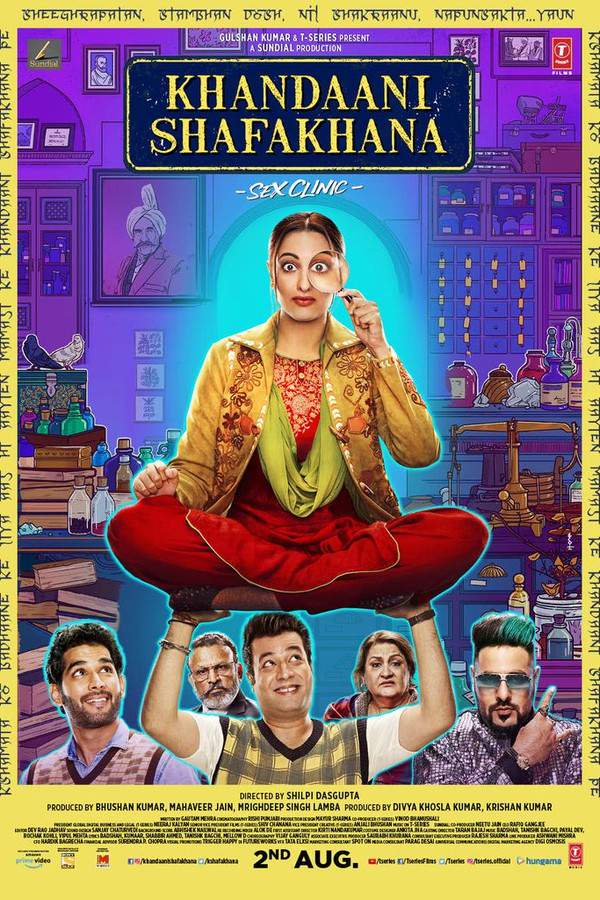
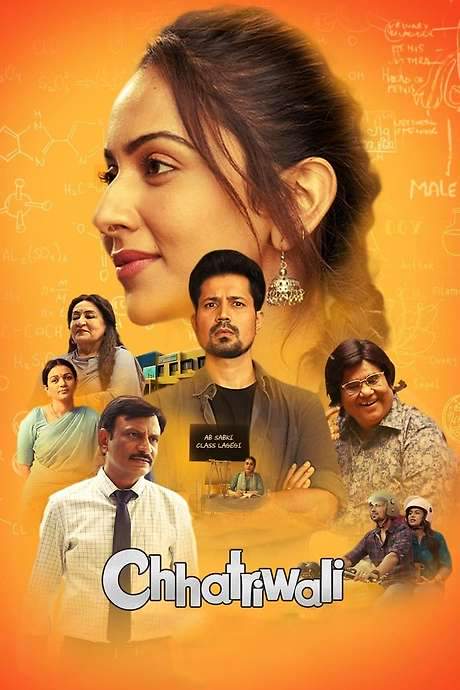
Nushrratt Bharuccha stars as Manokamna "Mannu" Tripathi, a bold and ambitious young woman who lives with her parents and two younger sisters. She is adored by her childhood friend Devi, who loves her but never speaks up about it. To escape the pressure from her family to marry, Mannu lands a high-paying job as a sales executive at a condom manufacturing factory, a path that Mannu’s friend Devi later joins. Mannu shines at the job despite numerous hurdles, and soon she meets and falls for Ranjan Prajapati, a freelance nautanki artist who dwells in a large, traditional joint family led by his overbearing father, Keval Prajapati.
To make their union seem natural in the eyes of a wary family, Mannu and Ranjan bribe a Pandit, since Vijay Raaz as Keval Prajapati is openly against love marriages. After their wedding, the family discovers Mannu’s work and pressures her to quit. Mannu then pivots to a new path—she starts selling plastic boxes, and a pregnant colleague—Rachna, Neha Saraf—dies during an abortion, a tragedy attributed to the elders’ edicts. This shocking turn becomes Mannu’s catalyst for change, fueling her resolve to push for awareness and reform.
This moment spurs Mannu to rejoin her previous line of work, but this time with a purpose: to advocate for protective sex and to argue that women bear the brunt of humiliation, physical harm, and mental strain when society overlooks their safety. The drama intensifies as Mannu’s father-in-law, Keval Prajapati, who is contesting municipal elections, calls Mannu’s parents and demands a divorce, heightening the rift between the couple.
Mannu confronts Ranjan over his reluctance to take a stand and his willingness to divorce to please his father. Ranjan pledges to stand up to Keval, and a courtroom drama follows—the judge asks the couple to reconcile within six months, offering them a slim window to bridge their differences.
In a bold public move, Mannu appears in a TV advertisement to promote condoms as protection for women, challenging the older marketing tradition that framed condoms as primarily male pleasure. A misogynistic reporter tests Mannu, but she responds with poise and clarity, turning the interview and the ad into a heated town conversation. The election day arrives, and Keval’s victory is revealed to be a reflection of public support for Mannu; Keval storms out of the ceremony and throws Mannu and Ranjan out of the house when Ranjan refuses to sign the divorce papers.
Meanwhile, Ranjan’s sister goes into labor. At the hospital, a doctor scolds the husband for conceiving again after a dangerous first delivery, underscoring the risks to both mother and child. Hearing that his daughter’s life is in danger, Keval asks why condoms weren’t used to protect his wife; Dadaji, his father, reminds him that Mannu was trying to promote the same protection, and that he simply could not accept it. The doctor later confirms that both mother and baby are safe.
Realizing his misjudgment, Keval finally accepts Mannu’s work and welcomes her back into the family. The story closes on Mannu addressing the audience directly, urging everyone to be responsible and to use protection, emphasizing dignity, safety, and practical choices for women’s health.
Paritosh Tripathi and Ishtiyak Khan deserve nods for shaping some of the film’s grounded dialogue and social observations, while Brijendra Kala gives life to Aadarniya, a pivotal figure in Mannu’s evolving world. The performances weave a compassionate, provocative tale that blends family dynamics with a public-health message, presenting a clear, hopeful call to action without losing its humanity.